The emergence and spread of cremation cemeteries ̶ so-called urnfields ̶ across Europe represent one of the most significant trans-cultural phenomena of the Bronze Age. While this funerary practice was a shared supra-regional trait across the Danube-Carpathian Basin, Central Europe, and the Italian Peninsula, its adoption followed diverse trajectories, exhibiting distinct regional, local, and community-specific variations.
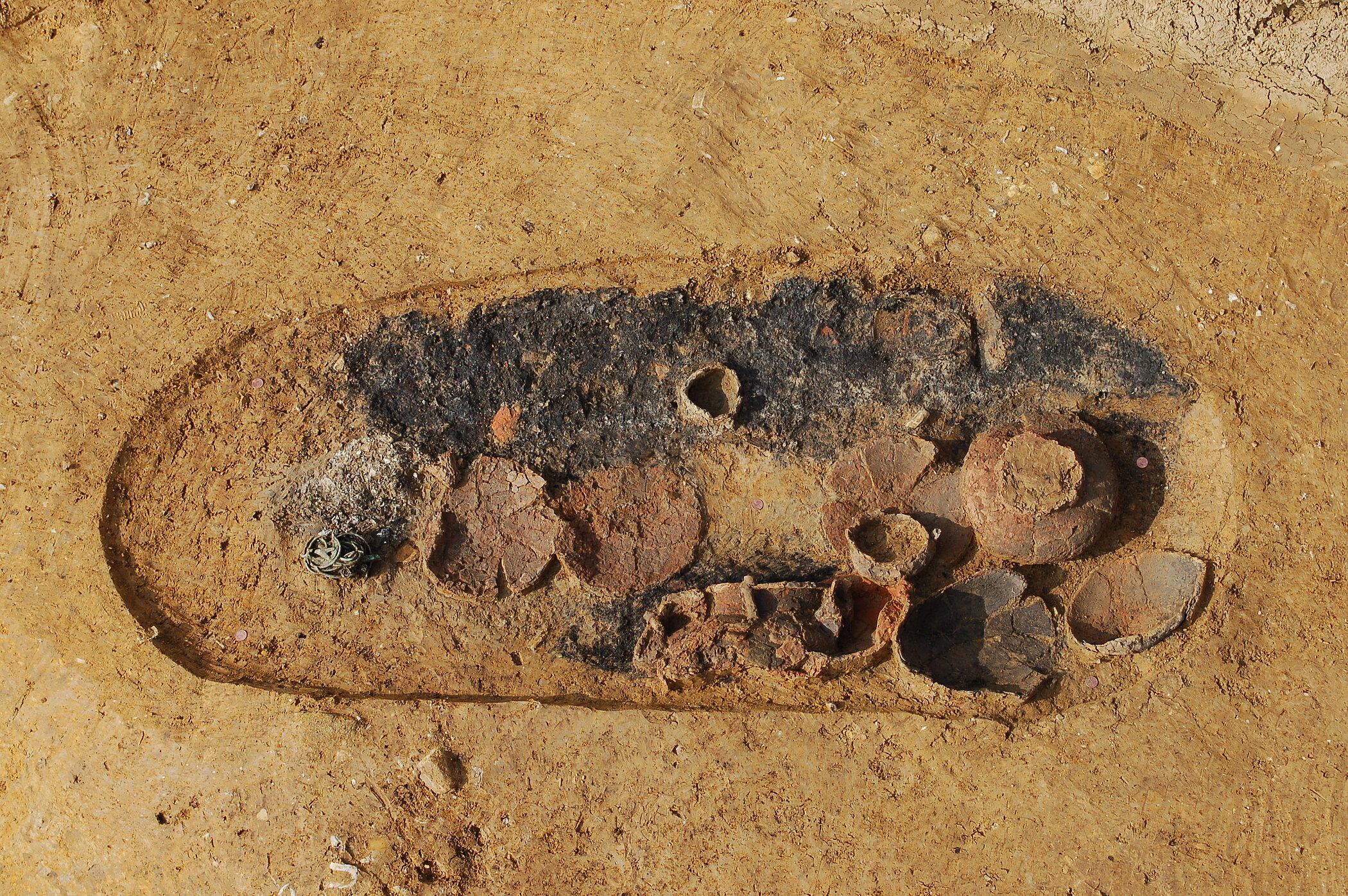
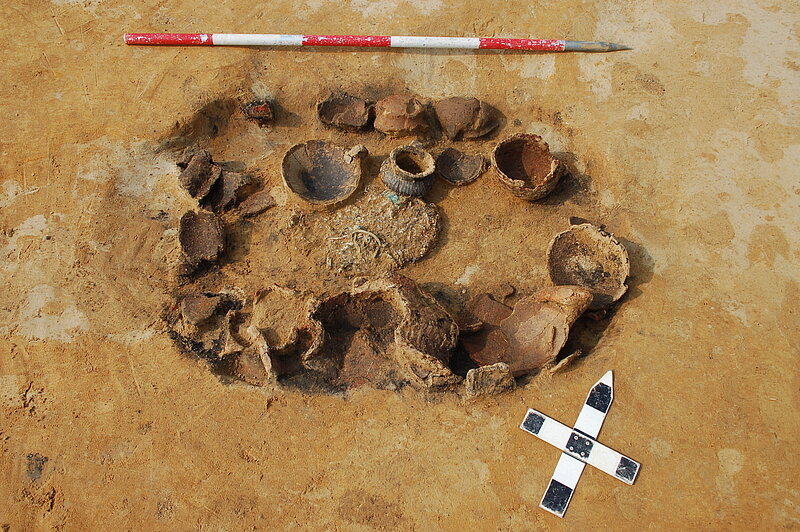
In eastern Austria, the transition from inhumation to cremation was marked by considerable variability and experimentation, closely linked to Middle Bronze Age funerary traditions. Notably, scattered cremated remains within east-west oriented rectangular pits, sometimes lined with stone slabs, reflect a phase of hybridization between old and new practices. This transitional phase is well-documented at several Lower Austrian cemeteries, such as Pitten, Baierdorf, and Horn, excavated in the past century.
In 2013, a rescue excavation at Plaika near Melk uncovered 25 rectangular cremation graves containing rich ceramic and metal grave goods. Despite its significance, the site has only been published in short reports, with no comprehensive analysis to date.
This project aims to conduct an in-depth, multidisciplinary investigation, incorporating archaeological assessment, radiocarbon dating, anthropological analysis, archaeozoology, archaeobotany, archaeometallurgy, and organic residue analysis. The findings will provide a multifaceted reconstruction of mortuary practices at Plaika and contribute to a broader understanding of the pivotal transition towards the classical urnfield tradition in Lower Austria.
2025-2028