Since the 17th century BC, archaeological finds from the Greek mainland show an unprecedented influx of exotic materials in a wide range of forms — resources that would decisively shape the cultural identity of Mycenaean Greece. Among these materials are several types of gemstones not naturally found in the Aegean, including lapis lazuli, one of the rarest and most prestigious stones of antiquity.

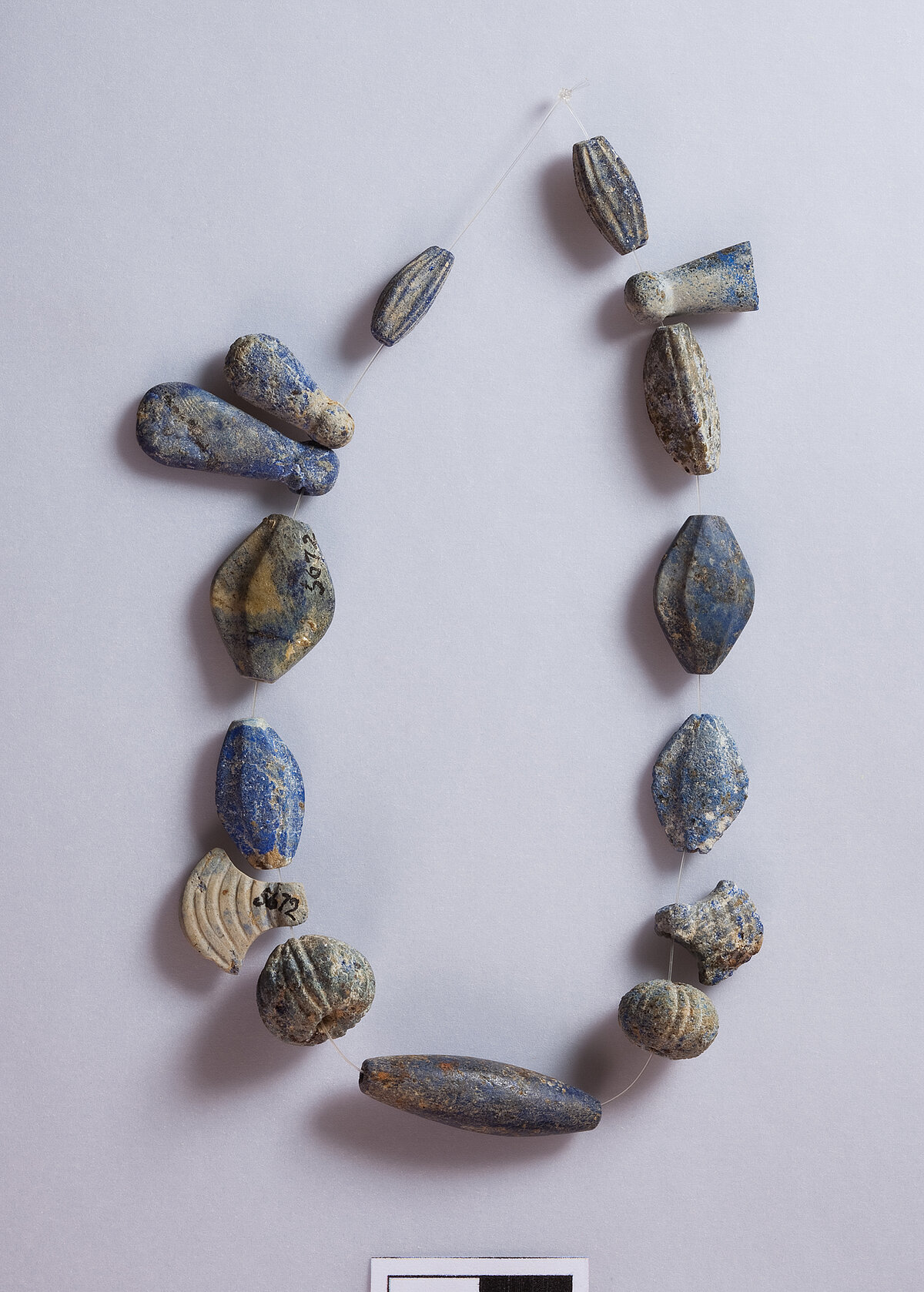
As studies of Mycenaean graves, settlements, and palaces demonstrate, lapis lazuli was reserved exclusively for the highest social strata. The material therefore provides an ideal means of tracing exchange relations, prestige values, and elite strategies in the early Mycenaean world.
Against this background, the pilot project funded by the Dr. Anton Oelzelt-Newin Foundation of the Austrian Academy of Sciences was launched to test, for the first time, a scientific approach to determining the provenance of lapis lazuli artefacts from the Aegean Bronze Age (Fig. 1). The aim is to compare the geochemical composition of archaeological samples with known deposits, thereby reconstructing trade and exchange networks between the Aegean and the source regions of these coveted raw materials.
For this purpose, geological samples from the four known prehistoric lapis lazuli deposits — Afghanistan, Siberia, Myanmar, and Chile — were analysed and compared with archaeological material from the early Mycenaean tholos tombs of Kakovatos. Thanks to the support of the Greek Ministry of Culture and the National Archaeological Museum in Athens, twelve fragments from Mycenaean burial contexts were exported in December 2021 and examined at the University of Graz and the Graz University of Technology using non-destructive methods. (Fig. 2)
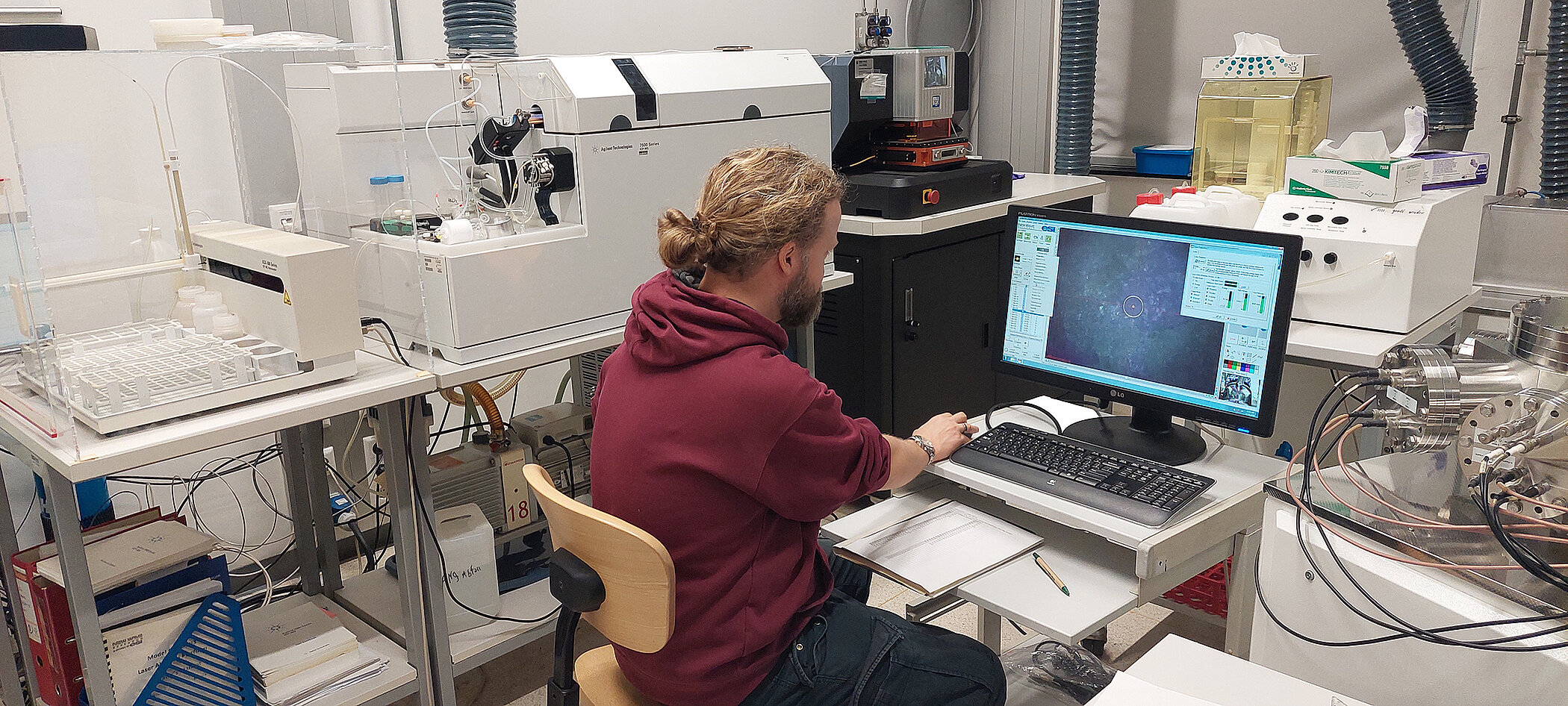
Using Laser-Ablation-ICP-MS (LA-ICP-MS) analyses, 47 trace elements were determined. The geochemical composition of the samples allowed a clear distinction between the investigated sources. Comparison with the Kakovatos samples revealed an unambiguous match with the Afghan source area, providing the first clear evidence for the long-distance import of lapis lazuli into the early Mycenaean world.
The results of this pilot project form an essential foundation for future research on the provenance and distribution of lapis lazuli. A publication of the findings is in preparation and will appear soon in an international scholarly journal.
Since lapis lazuli is an extremely heterogeneous material and its post-depositional alterations remain little studied, one of the main goals of future work is to expand the archaeological and geological database. To this end, a non-destructive analytical protocol based on portable X-ray fluorescence (pXRF) and Fourier-transform infrared spectroscopy (FTIR) has been developed.
Thanks to continued collaboration with the National Archaeological Museum, this method was applied in October 2024 to a larger corpus: in addition to the twelve samples from Kakovatos, 52 further lapis lazuli artefacts from various Mycenaean sites in the Peloponnese — particularly from Mycenae — were examined. Together with Greek colleagues, this research will be extended in the coming years to additional sites across the Aegean, aiming to achieve an unprecedented understanding of the use and circulation of lapis lazuli in the Bronze Age Aegean.
A new collaboration has also been established with the Vorderasiatisches Museum in Berlin, where in summer 2025, forty Bronze Age lapis lazuli objects from Assur were likewise analysed non-destructively. The combined results of these studies will provide new insights into the far-reaching networks of interregional connections during the Bronze Age.
since 2021