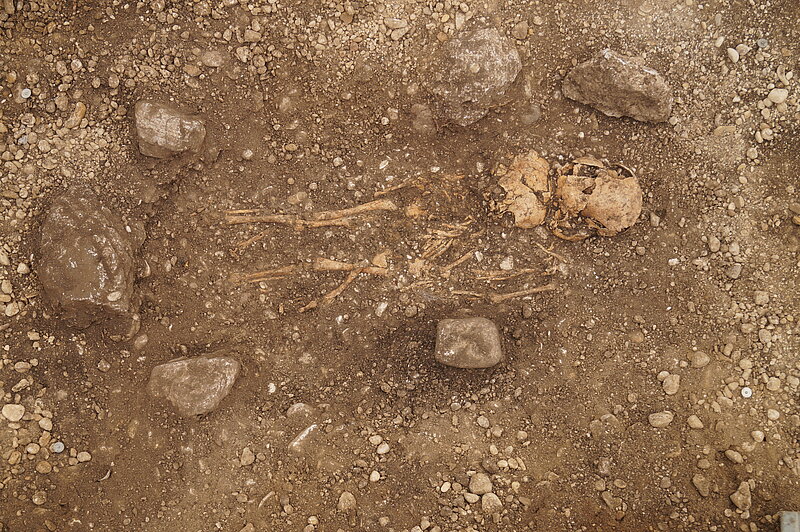
The project explores childhood, growing up and childcare, as well as social perspectives on mothers in Early Medieval (6th–10th c.) societies in present-day Upper Austria through a bioarchaeological approach. It focuses on changing concepts of childhood, varying infant and maternal mortality rates, and burial practices in the multiethnic borderland between the Frankish Empire, Slavs and Avars.
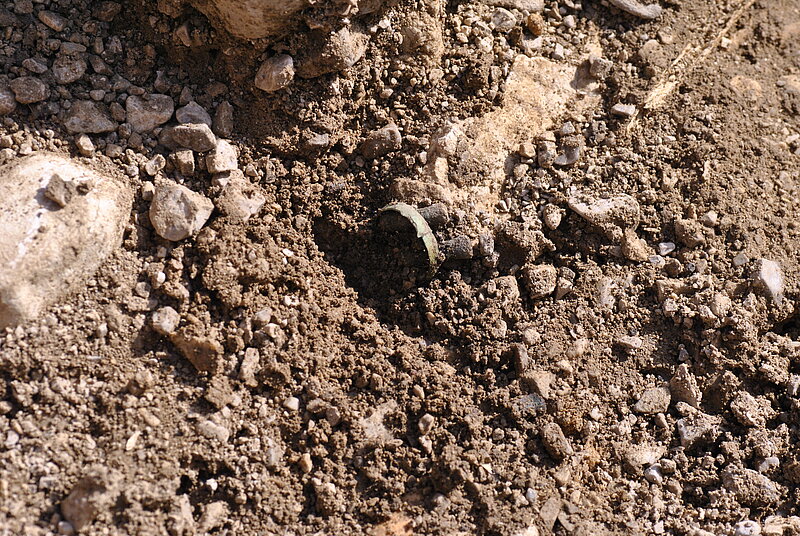
Childhood, motherhood, and parent-infant relationships are among the most basic gears of society. Though the study of past childhood and motherhood recently gained traction there is still a lack of understanding about their perception and the implications of childcare, especially in early medieval societies. Funerary contexts offer valuable insight into these questions as the period’s burial practices are characterized by a wide range of ritual components and a strong emphasis on the representation of identity and social affiliations.
Against this background, the region of present-day Upper Austria between the 6th and 10th century represents a particularly valuable case study. Situated at the intersection of diverse cultural, political, and social spheres, the region formed a dynamic borderland between Frankish and Bavarian powers to the west, the Avar Empire to the east, and Slavic territories to the south and east after the end of Roman rule. Despite limited written evidence, archaeological remains point to an incorporation into Bavarian administrative structures in the late 6th and early 7th century alongside several phases of (Slavic) migration.
Approximately 100 burial sites are currently known from this region, with a spatial distribution that changes over time: the sites of the 6th and 7th century are concentrated in its western part. They are frequently placed in the immediate vicinity of Roman infrastructure and respect the territorial boundaries of the former province of Noricum ripense, while later sites are increasingly located east and north of the Danube. Particularly striking is also the differing representation of infants under three years of age between the earlier sites and the later ones. Initially, but without conclusive data, this was assigned to higher infant mortality and worsened living conditions in the 8th to 10th century.
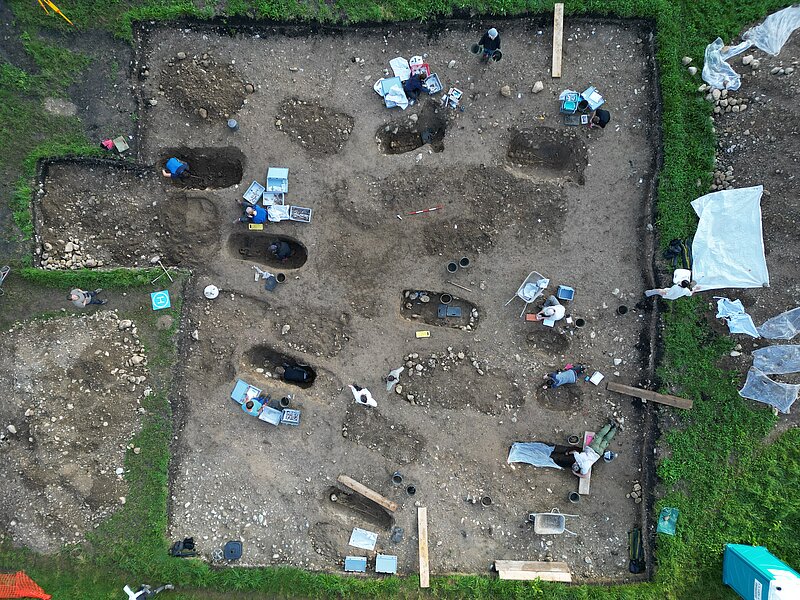
However, these contrasting patterns in infant and child burials form the starting point for this project, which investigates how childhood, motherhood, and parent–infant relationships were socially constructed and expressed in the funerary record based on seven of these sites.
Rather than interpreting the uneven representation of infants solely as a demographic phenomenon, the project asks how biological, social, and cultural factors shaped both childhood experiences and responses to child death. It examines the social position and identity of children, the role of mothers, and the implications of infant care and parent-infant relationships. To address these questions, it follows a bioarchaeological approach by combining archaeological analysis of burial contexts, cemetery structure, and grave goods with anthropological and biomolecular analyses of human remains. Particular attention is given to age-related funerary rites, as well as patterns of health, diet and weaning and the ways and timeframes children became integrated into household activities, social roles, and labour.
The study of women’s burials complements this perspective by examining how female life-course experiences are represented in the funerary record. Demographic patterns, indicators of health an in-/fertility will provide insight into the biological and social dimensions of motherhood.
Overall, the projects seeks to reconstruct the social value and identities of children and mothers, the parent–infant nexus, and the impact of infant care in the different rural societies to contribute to a more nuanced understanding of childhood, motherhood, and responses to child death in the culturally diverse borderlands of the Early Middle Ages.