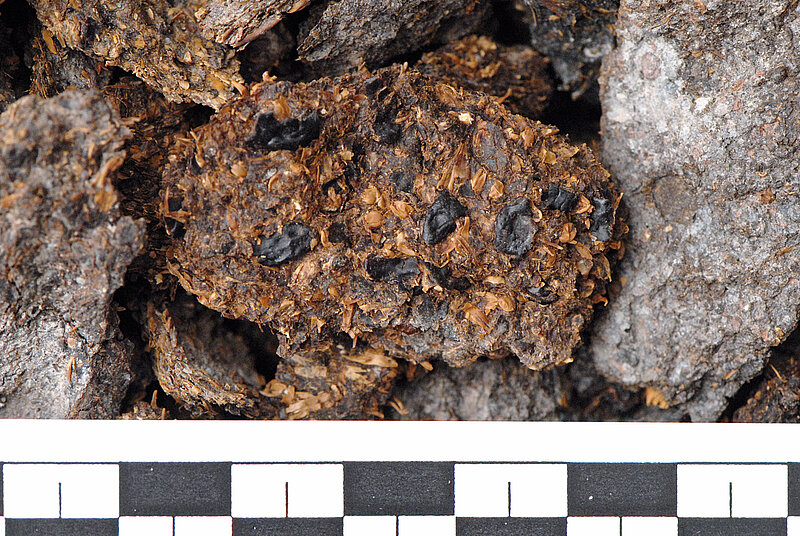
The interdisciplinary study of human palaeofaeces represents one of the most promising fields in prehistoric nutritional research. Palaeofaeces contain a wealth of information about the diet and health of the people who left these faeces behind. Under good conditions, microscopic and molecular analyses can reveal the remains of plant foods and animal products (meat, dairy products) as well as indications of parasite infestation, the intestinal microbiome and even the sex of the person. This opens up the possibility of gaining particularly deep insights into prehistoric dietary patterns, eating and cooking practices.

These special remains are only preserved in specific contexts, e.g. in desert areas, caves, swamps or in salt mines. In fact, salt mines offer particularly good conditions for the preservation of palaeofaeces. Numerous human excrements have been preserved in the prehistoric salt mines of Hallstatt and were excavated as part of the archaeological research of the Natural History Museum Vienna.
As part of the project, 50 faeces from Hallstatt dating back to the Late Bronze Age and Early Iron Age will be analysed. With the help of archaeobotanical macro remain analysis, parasitological investigations, DNA and protein analyses, highly precise nutritional profiles will be created. The use of DNA and protein analyses also provides completely new insights into the complexity of prehistoric cooking and eating habits, as fermented foods and the consumption of dairy products can be detected. The reconstruction of the gut microbiome also promises new data on diet and health of prehistoric people. Finally, DNA analyses can also be used to identify the biological sex of the people who deposited these faeces.
On the basis of these individual and comprehensive nutritional profiles, questions about the complexity of Metal Ages diet and the connection between nutrition and health will be pursued. In particular, we are interested in the following questions:
The research project is funded by the FWF Joint Projects Programme and is a cooperation under the joint leadership of the Austrian Archaeological Institute (ÖAW) and the Institute for Mummy Research (Eurac Research Bolzano). The Natural History Museum Vienna, Geosphere Austria, the Institute for Systems Biology in Seattle Washington, USA, MedUni Vienna, the University of Trento and the University of Vienna are involved in the project as research partners.