During the Early and Middle Neolithic (ca. 6000–5500 cal BC), the emergence of settled farming communities in the Central Balkans fostered new technological and social practices. Among them, pottery played a central role, representing a dynamic technological resource whose life occasionally extended beyond its primary function through intentional recycling into tools.

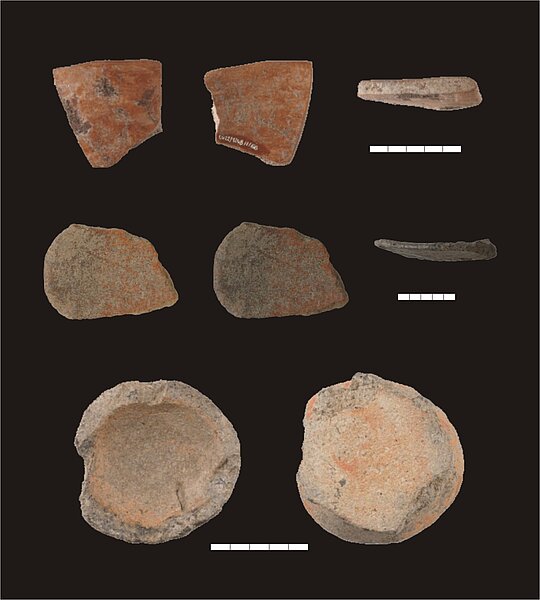
This project explores the patterns of pottery recycling and secondary use in the Early/Middle Neolithic through a comparative analysis of assemblages from two key sites: Svinjarička Čuka (southern Serbia, Starčevo culture) and Amzabegovo (North Macedonia, Amzabegovo-Vršnik culture). By integrating typological, use-wear and contextual analyses, the study aims to reconstruct how and why ceramic fragments were transformed into functional tools, what materials they worked, and whether such practices reflect shared technological traditions or regional adaptations.
Microscopic and experimental analyses carried out at the OeAI’s Archaeological Sciences Unit (Keyence, FTIR, SEM) will be combined with comparative data from the wider Balkan Neolithic to assess the social and economic significance of recycling behaviour. The results will contribute to a broader understanding of technological innovation, resource management, and daily practices in early farming communities.
01/10/25 - 31/03/26