Human skeletal remains from archaeological excavations are the most immediate source of information about life in the past. Even after the death of an individual, these remains offer insights into age, sex, illness, nutrition, origin, family relations and physical activity. The bioarchaeological investigations of the Late Antique up to Mediaeval populations from the Jauntal region aim to obtain information regarding living conditions during the transition from Late Antiquity to the Middle Ages.

The transitional period from antiquity to the early Middle Ages in the 5th and 6th centuries was, in central Europe, strongly characterised by large-scale migrations and the expansion of Christianity. The upheavals that resulted influenced the further development of the cultural, religious and political land map of Europe, as we know it today. In spite of the existence of numerous historical and archaeological sources from this period, many questions regarding the development and structure of the Mediaeval population remain open.
The bioarchaeological investigation of human skeletal remains from Late Antique and Mediaeval grave sites near Globasnitz, as well as from Mediaeval burials near Jaunstein, should enable a comparison of the differing groups that lived in the Jauntal during this dynamic phase of transition. The knowledge gain about factors such as quality of life, dietary conditions and epidemics, migration or violent conflicts represents a central element for the understanding of the behaviours of individuals and groups in this microregion of the eastern Alps. Embedded in their historical and archaeological context, these results will contribute substantially to a better understanding of one of the most important periods in the history of Europe.
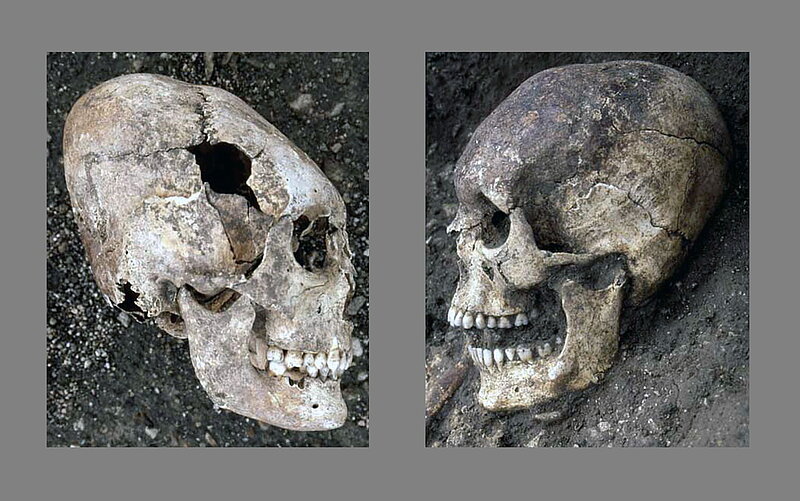
Archaeological finds indicate that at this time period the local population withdrew from the former road station near Globasnitz to the nearby Hemmaberg. At the same time, grave goods and historical sources indicate that at least some of the burials in Globasnitz originate from Ostrogothic military units. These had been established by the Ostrogoth King Theoderic in order to protect the northern border of his kingdom. In this way, both settlements are perfect case studies for the investigation of origin, living conditions and cohabitation of population groups with potentially differing ethnic affiliation.
About 143 human skeletons from the large gravesite on the Hemmaberg and 422 from the burial field near Globasnitz at the foot of the Hemmaberg constitute the main data set of the current analyses. In addition to the traditional methods for determining age at the time of death, identification of sex, and diagnosis of illnesses, modern processes such as the analysis of old DNA (aDNA) and stable isotope (C, N, S, Sr) analysis will be employed, in order to achieve a detailed picture of the dietary composition and also the geographical origin of the individuals.
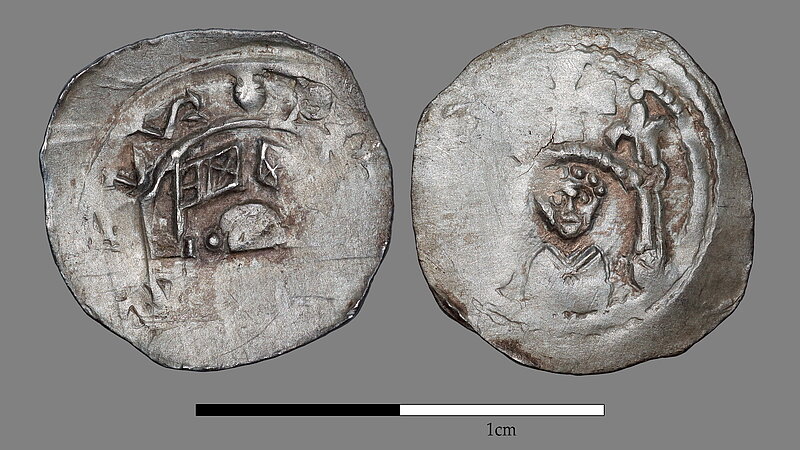
The goal of the systematic investigation of the church and cemetery in Jaunstein is to reconstruct the living conditions in the region in the early and high Mediaeval period, and to clarify the chronology of the church. The evaluation of the 130 burials and the stratigraphy of the church provide the data basis. At first the fine chronology of the burials will be determined, based on the stratigraphy, the dating of informative elements of clothing, as well as 14Cdates. Subsequently, osteological and paleopathological analyses, accompanied by aDNA and isotopic analyses, will provide information regarding diet, stress- and deficiency diseases, pathologies, yet also social and sex-specific differences. This project is closely dovetailed with the investigations of the burial sites at Hemmaberg and Globasnitz, both conceptually and methodologically, which is of special interest particularly for the clarification of questions of continuity.
The chronology of the church building is meanwhile particularly interesting, since until now no Mediaeval church has been archaeologically documented for lower Carinthia, and also written references are generally substantially later. This phenomenon is apparent in similar form also for Jaunstein/Podjuna, where the oldest known burials to date point to a church building in the 8th century, whereas the first written references nevertheless are dated to 1154. The excavations should contribute to elucidating this question, while they should also enable architectonic insights into this early church building.
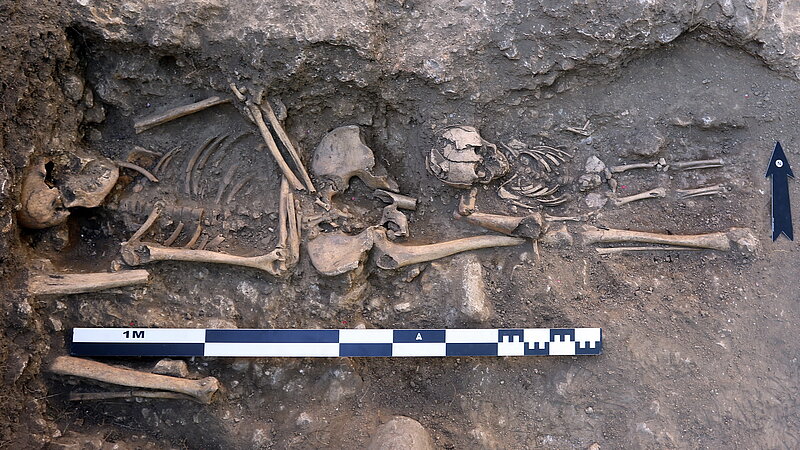
The archaeological site of Globasnitz (Parz. 2083, KG St. Stefan) was discovered in 1913 and fully excavated between 1999 and 2008 under the direction of F. Glaser, in collaboration with the Landesmuseum of Carinthia. It represents the only known cemetery associated with a roadside station in Noricum and ranks among the largest Late Antique burial sites in Austria. The site contains 422 graves, corresponding to a minimum number of 445 individuals, several of whom exhibit intentional cranial deformation, and is dated to the 5th and 6th centuries.
The cemetery is organized around a Christian apsidal church (Building A), which remained in use throughout the burial period. To the north of this structure are the remains of another building (Building B), interpreted as a second church that had already been abandoned by that time. The majority of burials are individual and follow a west–east orientation.
Owing to its exceptional context, the site allows for a renewed examination of the socio-cultural dynamics shaped by the coexistence of local populations and incoming “barbarian” groups during a period of political and social transformation.
Using a multiproxy osteobiographical and archaeothanatological approach, the project aims to reconstruct life courses, patterns of community integration, and funerary treatment within this frontier population. Formed at the intersection of Roman traditions and incoming groups, the community represents a key context for exploring questions of cultural and ethnic identity. The study focuses on demographic composition, individual life trajectories, interactions between biological and environmental factors, and variability in funerary practices linked to individual profiles.
2016–2023