Very few ancient pigment production workshops are known to date. One of these is the Late Hellenistic workshop of Kos in Greece: here, Egyptian blue was produced in a high-temperature workshop, where earth pigments and metals were also processed. However, the natural resources of Kos are limited to a few raw materials – where did the materials used in this workshop come from?
The raw materials required for metal production and Egyptian Blue production probably did not come from Kos, but possibly from surrounding islands or the Greek or Turkish mainland. However, the raw materials for earth pigment production may have come from local deposits. This pilot project investigates whether local resources were used.
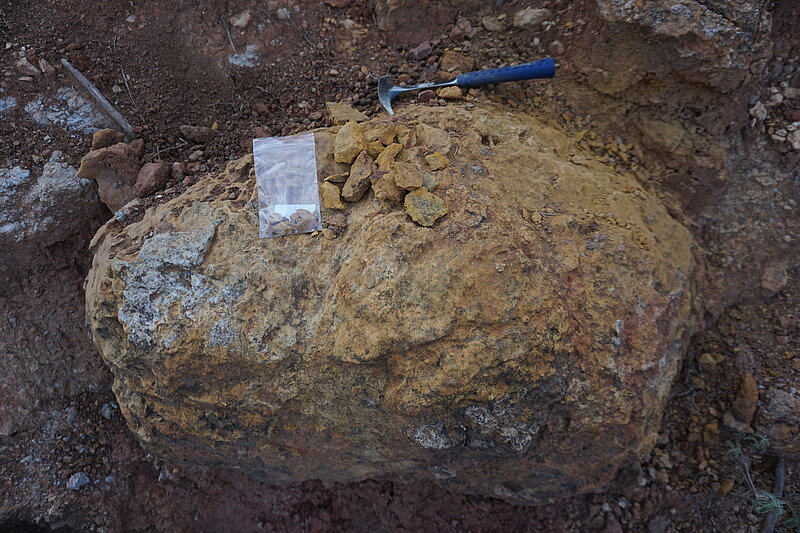
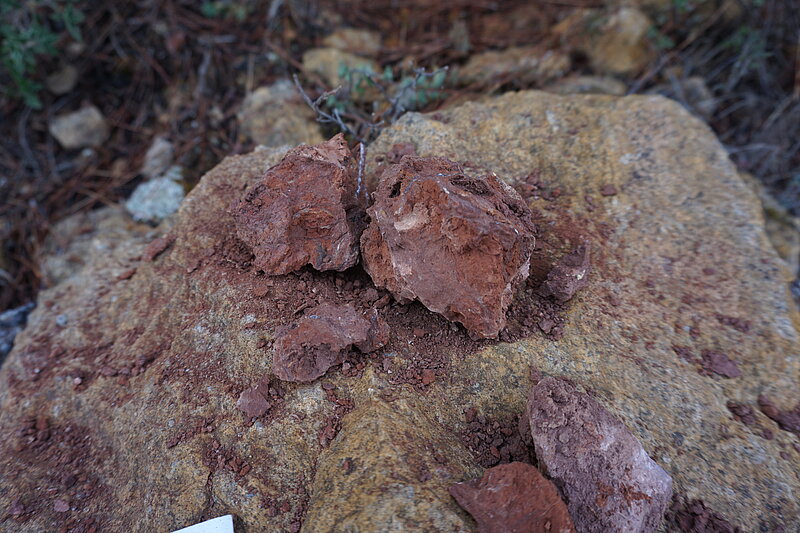
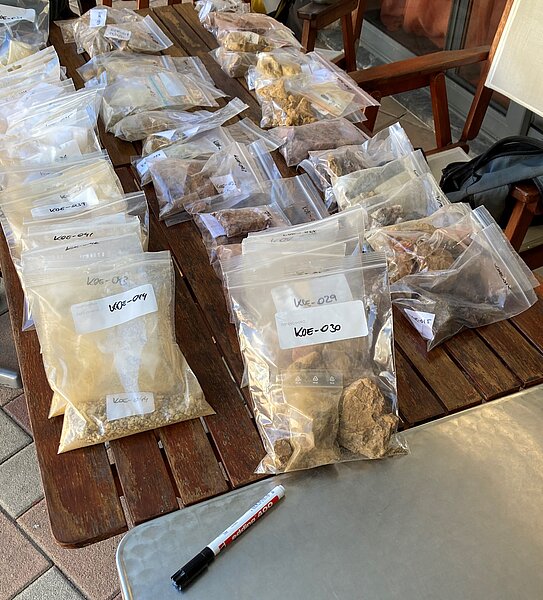
In an extensive geological fieldwork, samples from various ochre deposits were collected to illustrate the geological diversity of the island of Kos. Both yellow and red ochre were included (Figs. 1 and 2). To distinguish between the different deposits, multiple samples were taken from each location. These samples are analyzed for their mineralogical-petrographic and chemical composition. Only if the differences between the different locations are greater than between the samples from each individual location can the geological reference samples (Fig. 3) support provenance analysis.
To examine the use of local raw materials, samples were also taken from archaeological wall paintings from the Agora of Kos and from pigment lumps from the Koan pigment workshop. The results, when compared with geological samples, will allow for discussion of local resource use or importation.
The Greek island of Kos is the third largest of the Dodecanese islands and is located in the southeastern Aegean Sea, close to the Turkish coast. It is characterized by slate, chalk, and occasionally thick layers of volcanic tuff. The western part of the island is characterized by volcanic activity. Volcanic minerals and local iron ore deposits (central Dikaios mountain range) are found there, and smaller ochre deposits may have influenced local production. On the other hand, Kos was conveniently located along important maritime trade routes, which might have helped to bring important raw materials to Kos for further processing.
since 01/2022