Greek and Etruscan vases from two Viennese University collections are the focus of this project. In preparation for the publication in the CVA series, 174 whole and fragmented vessels from the Protogeometric to Early Classical periods were analysed using artistic and scientific methods and, where necessary, restored.
174 complete and fragmented vessels from two university collections (the IKA Archaeological Collection and the IUHA Study Collection) were recorded and scientifically processed so that they could be published comprehensively in the international standard work CVA and thus made accessible to the scientific community.
In accordance with the guidelines of the German-speaking CVA, the editing includes a detailed description of each individual piece, a date and, where possible, an attribution to a workshop, potter, or painter in order to highlight craftsmanship connections. A scholarly commentary on aspects such as chronology, form, ornamentation, or iconography concludes each lemma. Before creating the profile and section drawings and photographs, 75% of all vessels and fragments had to be cleaned and/or restored; some pieces in the archaeological collection in particular had been damaged by faulty restoration and had to be ‘de-restored’, although irreversible damage could not be repaired. The CVA editor was responsible for assembling vessels that had entered the collection in fragmented form, assigning individual fragments to vessels, and removing incorrectly assigned fragments, as well as conducting detailed provenance research in both collections, whereby the additions since the mid-20th century are almost always based on donations.
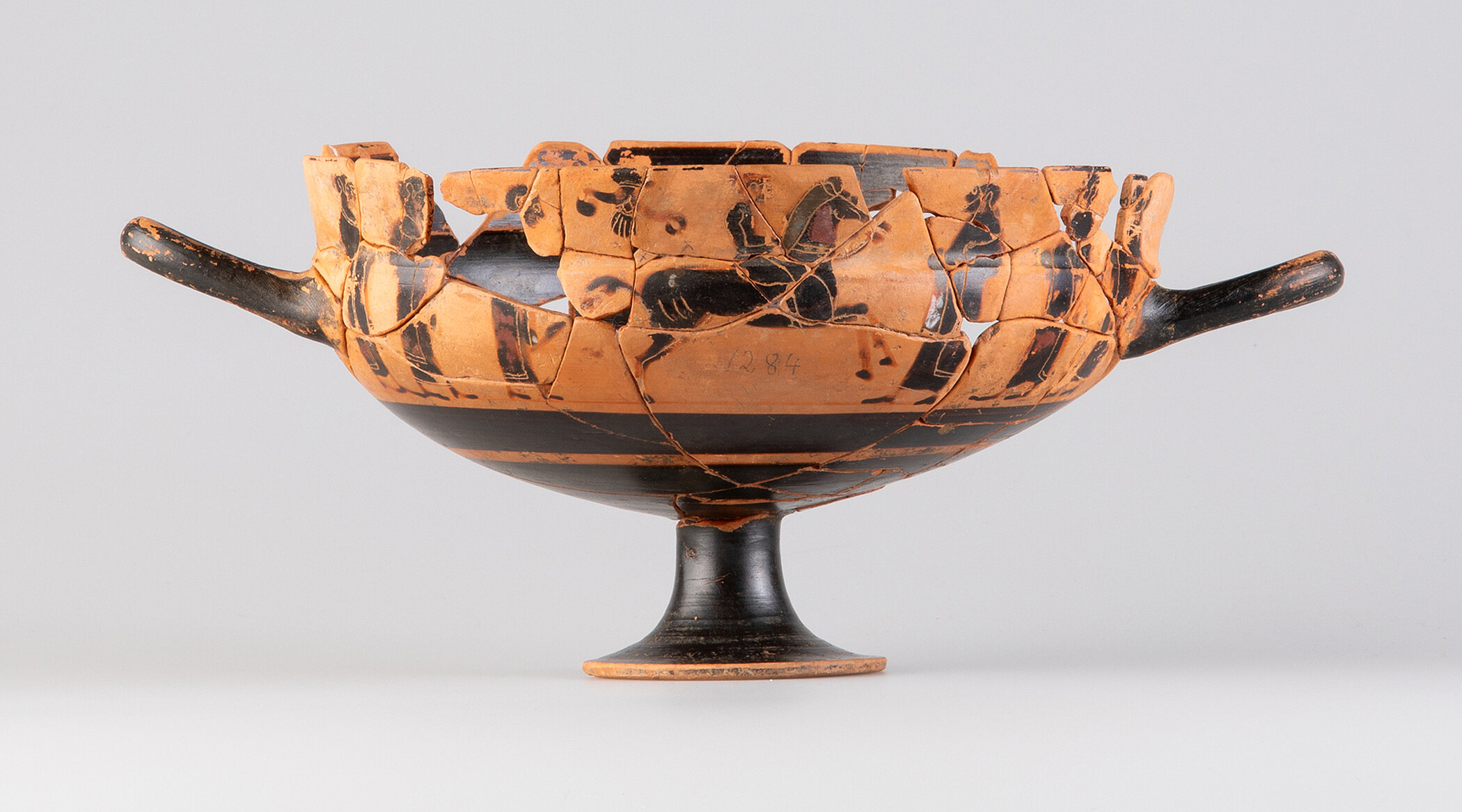
A particularly significant example of the project's success is the collection of shards Arch. Slg. Inv. 1216 (fig. 1), which was donated to the Archaeological Collection as a private gift and was never assembled, probably due to the poor condition of the fragments. In the course of the project, restorer Teresa Wagner was able to reassemble all the relevant pieces, so that the Attic black-figure Siana cup, now clearly recognizable as such, can be dated to 550–540 BC and attributed to the Griffin Painter.
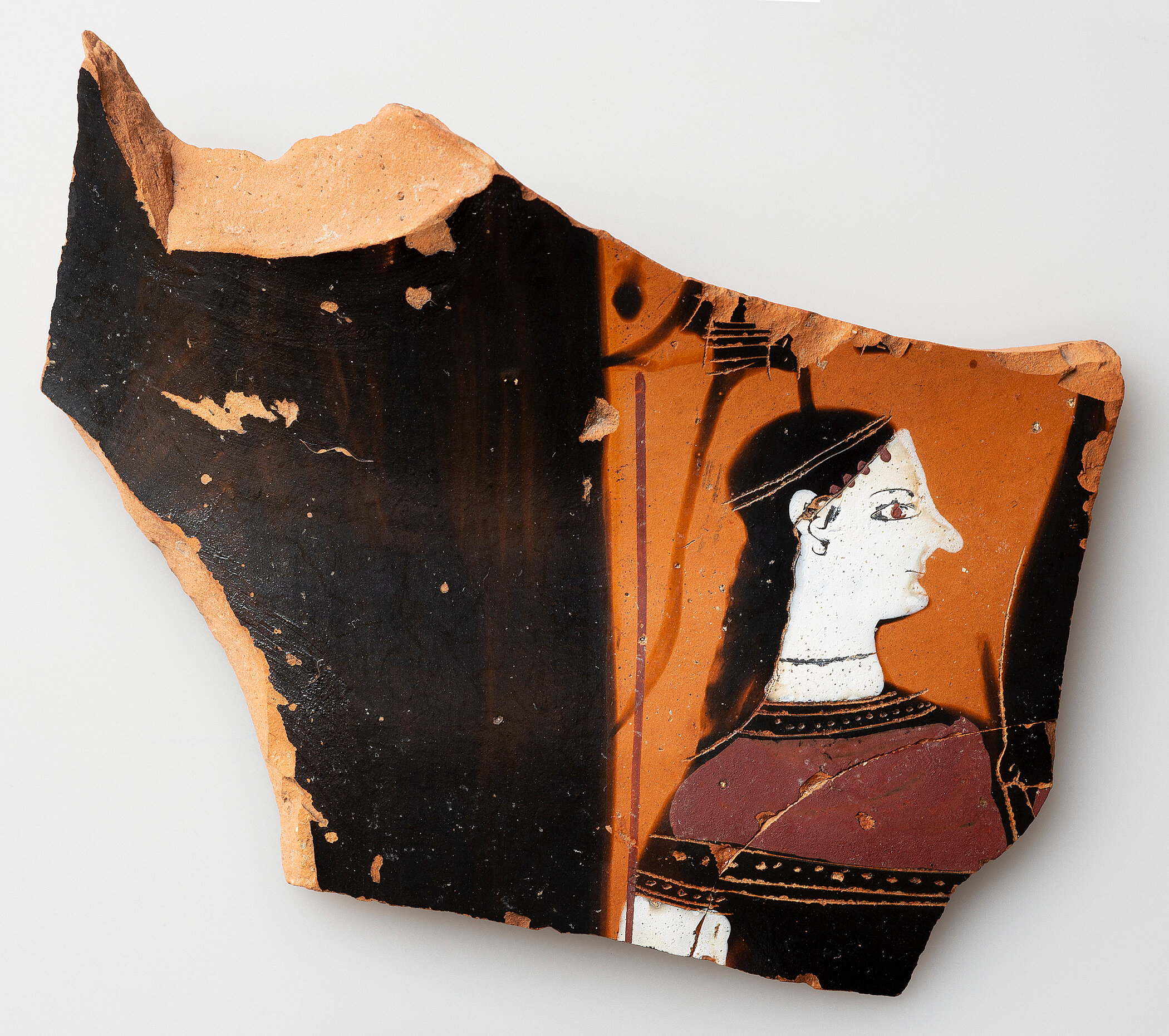
After extensive cleaning, the Attic black-figure amphora fragment Arch. Slg. Inv. 506.1 (fig. 2) is also being presented anew: due to dirt, it was previously impossible to recognize that red overpaint had been used very frequently; in addition, the white overpaint on Athena's skin areas shines in its original brilliance after cleaning in 2022. The fragment, which comes from a donation by Otto Benndorf in 1888, can be attributed to Group E based on the detailed drawings of Athena (face, robe borders, detailed shape of the helmet), which is further supported by the shape of the vessel, a belly amphora of type B.
In addition to the usual humanities methods used in vase research, scientific methods were also used, such as neutron activation analysis (NAA) – albeit invasive – which in some cases made it possible to determine the regional origin based on the identification of clay deposits. The important profile drawings were made manually in exceptional cases, but mostly by LAP (Laser Aided Profiling) or by 3D scans and then processed and digitized. As a profile drawing always also represents a reconstruction of the shape, this also made it possible to calculate volumes even for vessels with missing parts. The redrawing and unrolling of faded ornamental or figurative representations, on the other hand, was carried out by hand, whereby some elements that were no longer visible could be made recognizable again with the help of photographs under the RTI dome (infrared or ultraviolet).
The insights gained in areas such as iconography, manufacturing techniques, and provenance research are exceptionally valuable, as only 24 % of the vessels and fragments to be processed have ever been published before. This will now change with the new CVA volume.
06/2021 – 07/2025