Stress influences health, wellbeing and life experience. However, assessing stress in the past is challenging, as stress biomarkers in soft tissues degrade over time. Recently, the ‘stress’ hormone cortisol has been detected in teeth from living people and archaeological contexts. DE-STRESS is developing dental cortisol methods to reveal stress experience across time, from medieval populations, including plague victims, to people living today.
Although stress can affect nearly every aspect of life experience, interpreting stress in the past is challenging. In studies of living populations, typical measures of stress only reflect recent experiences, from a few hours to a few weeks prior. In archaeological populations, excavated skeletons must be adequately preserved for stress analyses, which are most often examinations of marks or lesions present in bones and teeth. These markers are often challenging to interpret as they are non-specific and indirect measures of stress, potentially masking the presence of »stressed«’ individuals. Therefore, new methods and concepts are necessary to advance investigations of life and stress experience in the past.
Cortisol is a glucocorticoid hormone produced in response to stressors, stimulating changes in multiple bodily systems, including the suppression of the immune system and inflammatory response. Therefore, cortisol acts as a primary pathway through which external stressors become internalized within the body, affecting health and wellbeing. Because cortisol concentrations increase during stress, cortisol is commonly assessed in blood, saliva and hair from living humans and animals as a sensitive indicator of recent stress experience. However, these tissues degrade quickly and are not often available to archaeologists studying excavated skeletons. They also preclude analyses of prenatal, early-life or past stress in living populations. In this way, both contemporary and archaeological studies share a problem accessing an effective method for retrospective analyses of stress.
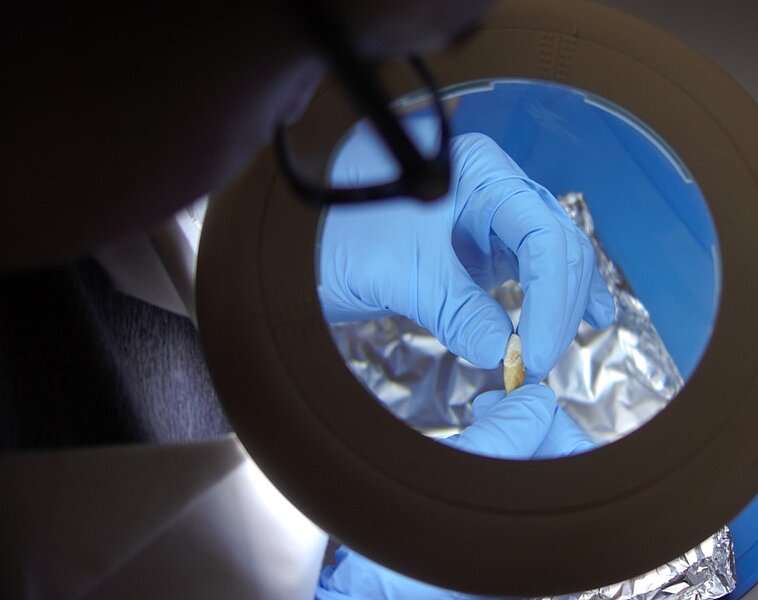
Recently, new research has successfully detected cortisol in teeth from living and archaeological populations. Dental tissues incorporate and preserve exposures and environmental conditions during their development. Because teeth begin development in-utero, they can provide a record of early life experience. Teeth also preserve well archaeologically, overcoming some of the difficulties in retrospective analyses of stress. DE-STRESS will develop dental cortisol methods, addressing challenges in retrospective analyses of stress, both within individual lifetimes and across history, in living and archaeological populations.
DE-STRESS investigates stress in individuals buried in St. Pölten-Domplatz, a city cemetery in Lower Austria dated from the 9th century CE to 1779, to correlate variation in dental cortisol concentrations with stress experience during the Medieval period. In addition to single burials, St. Pölten-Domplatz contains several mass graves, hypothesized to relate to a plague epidemic (the Black Death). Dental cortisol will be assessed in individuals buried within single and mass graves to explore the effects of early-life stress on plague outcomes.
DE-STRESS will also explore the relationship between stress and dental cortisol in teeth from living individuals in collaboration with the Medical University of Vienna and the Dunn Lab at Purdue University in the United States. This research has the potential to provide new ways to understand the skeletal embodiment of stress in past, present and future populations.