The International Conference on Romani Linguistics (ICRL) was founded in Hamburg in 1993 by Yaron Matras and has since been held at approximately two-year intervals in Amsterdam, Prague, Manchester, Sofia, St. Petersburg, Helsinki, Graz, Stockholm, Oslo, Paris, Belgrade (online), and Milan. As the principal forum for scholarly exchange in Romani linguistics, the ICRL typically gathers 40–50 international researchers. Papers focus on descriptive linguistics, language documentation, typology, contact and historical linguistics, sociolinguistics, and other areas. The conference ethos is to encourage the application of methods and theory from general linguistics to Romani, and to identify distinctive issues where the study of Romani has the potential to enrich discussions in general linguistics. Over the past three decades, the ICRL series has seen a generational shift with growing participation from early-career scholars. Its scope has expanded to include experimental and corpus-based methods, ethnolinguistic and anthropological research, and philological work on early printed sources, databases and digital atlases. The range of linguistic varieties has broadened as well, with increasing focus on varieties and contact varieties of Romani from regions including Italy, Britain, Scandinavia, Ukraine, and Iran, as well as historically related dialects of Domari and Lomavren from the Middle East and Caucasus.
This year’s conference invites contributions in all areas relating to Romani linguistics, including aspects of multilingualism and language education involving Romani, language policy, descriptive and historical linguistics and language documentation.
The conference will take place in person on site; online participation is not possible.
09:00-09:30 | Welcome | |||
09:30-10:00 | Institutional Greetings | Univ.-Prof. Dr. Alexandra N. Lenz | Director of the Austrian Centre for Digital Humanities (ACDH) Univ.-Prof. Dr. Thede Kahl | Chairman of the Commission Vanishing Languages and Cultural Heritage (VLACH) | ||
10:00-10:40 | Catalan Romani from Bataillard to Ackerley: The problems of working with secondary sources | Ignasi-Xavier Adiego |
10:40-11:20 | Zuzana Bodnárová, Márton A. Baló | |
11:20-11:50 | Coffee Break | |
11:50-12:30 | Kirill Kozhanov | |
12:30-14:00 | Lunch break | |
14:00-14:40 | The adaptation of Serbian loan verbs in Gurbet Romani: An experimental approach | Marko Simonović, Bojana Ristić, Mirjana Mirić |
14:40-15:20 | Marco Forlano | |
15:20-15:50 | Coffee Break | |
15:50-16:20 | From RMS to DRD: Advances in upgrading the database of Romani dialects | Ioana Aminian Jazi, Yaron Matras, Sascha Mundstein, Jakob Wiedner |
16:20-16:50 | Yaron Matras, Kamal Kelzi, Moe Kitamura, Romany Finn Amber |
09:00-09:40 | Where does the second mora go: Unpacking length in Eastern Uzh Romani | Michael Beníšek |
09:40-10:20 | Laura Colombi | |
10:20-10:50 | Coffee Break | |
10:50-11:30 | Quasi-perfective copula forms and suffixes in Central Romani | Viktor Elšík |
11:30-12:10 | The synthetic future tense: Discussion of the origin of the morpheme -a | Katarina Katavić |
12:10-12:50 | Mirjana Mirić, Boban Arsenijević | |
12:50-14:30 | Lunch break | |
14:30-15:10 | Clitic pronouns in Abruzzian Romani: Between Indo-Aryan legacy and contact induced innovations | Andrea Scala |
15:10-15:50 | Svetlana Ćirković | |
15:50-16:20 | Coffee break | |
16:20-16:50 | A Veneto Dialect in Emilia: Linguistic traces of Sinti mobility across Northern Italy | Paola Trevisan, Carlo Ziano |
16:50-17:20 | Exploring Posha language vocabulary in terms of language contact | Nurettin Demir, Melike Üzüm |
09:00-09:40 | Contact-induced differential object marking in Abruzzian Romani | Giulia Meli |
09:40-10:20 | Ioana Aminian Jazi, Yaron Matras | |
10:20-10:50 | Coffee break | |
10:50-11:30 | Translanguaging with Romani in monolingual environments: Celebration and setbacks | Eszter Tarsoly, János Imre Heltai |
11:30-12:10 | Romany Finn Amber & Seth Dani Katenkamp | |
12:10-12:50 | Yaron Matras, Kamal Kelzi | |
12:50-14:30 | Lunch break | |
14:30-15:10 | Linguistic taboo, apology, and gender in Gabor Roma communities | Andrea Szalai |
15:10-15:50 | Juan F. Gamella, Vasile M. Muntean, Julieta Rotaru | |
15:50-16:20 | Coffee break | |
16:20-16:50 | Language attitudes of Greek Roma women in the Arlia community | Georgia Kalpazidou, Angeliki Alvanoudi |
16:50-17:20 | Concluding Discussion |
Ignasi-Xavier Adiego | University of Barcelona
This paper addresses the issues arising from working with secondary sources, focusing on Frederik George Ackerley's article on Catalan Romani, published in the Journal of the Gypsy Lore Society (JGLS) in 1914-15. Ackerley incorporated information from various unpublished earlier manuscripts, including those collected by Bataillard. However, he did not publish these sources verbatim but instead presented an elaborated synthesis of their content alongside other references. Having located and examined one of Bataillard's original works, I have identified errors and omissions in Ackerley's use of the material. Some of these omissions are particularly relevant for our knowledge of Catalan Romani, and this paper will present and analyze these findings in detail. By emphasizing the importance of accurately editing and presenting original sources, the study underscores how errors in secondary interpretation can affect linguistic research.
References:
Zuzana Bodnárová | University of Graz
Márton A. Baló | Eötvös Loránd University
In this study, we attempt to analyse the Romani variety of Nagyoroszi from a dialectological perspective, based on Iván Nagy’s 1852 manuscript titled Czigány Nyelvtan. Romani Cshibjakero Sziklaribe (Nagy 1852), which is held in the Manuscript Collection of the National Széchényi Library, and, as Landauer (2016) notes, has so far escaped the attention of linguists. A thorough comparison of the manuscript with data from South Central Romani varieties (Elšík 2008), as well as with sources contemporary with the manuscript allows us to identify its authentic parts, which, although they amount to only about ten pages, support the claim that the Romani data they contain indeed originate from Nagyoroszi in Nógrád County.
In order to classify this variety in relation to neighbouring dialect areas, we examine innovations and archaisms also found in Romani varieties spoken today in the immediate and wider surroundings of Nagyoroszi. Our findings provide new insights into the development of certain linguistic changes. The method applied in this study—namely, the comparison of historical sources with contemporary data—represents a significant advance on earlier studies, which were constrained by the scarcity of available data. Finally, we also address the question raised by Landauer (2016: 44, 123): how is it possible that the title of the manuscript bears a strong resemblance to that of Archduke Joseph’s grammar published in 1888 (Archduke Joseph 1888), despite the fact that the Archduke makes no mention of the manuscript in his work?
References
Kirill Kozhanov | Potsdam University
The classification of Romani dialects is a frequently debated topic in Romani linguistics (for an overview, see Elšík & Beníšek 2020). Different classifications — and even underlying models of linguistic divergence — appear to depend on the choice of features used as classificatory criteria.
In this talk, building on extensive work in dialectometric research (for an overview see Wieling & Nerbonne 2015), I present a cluster analysis of Romani dialects based on linguistic distances derived from an aggregate analysis of multiple features. The dataset comprises 60 Romani varieties annotated for 160 features across four linguistic domains — lexicon, phonetics, morphology, and syntax (40 features per domain). Linguistic distances are computed using the Jaccard similarity coefficient applied to categorical variables. The resulting distance matrix is visualized through multidimensional scaling and hierarchical clustering techniques.
I then compare the linguistic distances with three types of external distances: (i) genealogical, based on established dialect groupings (cf. Boretzky & Igla 2004); (ii) geographical, measured as linear distance ("as the crow flies"); and (iii) contact-related, based on currently shared contact languages.
Using Mantel tests, I evaluate the correlation between linguistic and external distances. Results show that while genealogy, geography, and contact all correlate significantly with linguistic distances, their explanatory power is weak to moderate: for instance, geography accounts for 11.5% of overall linguistic variation, while syntax alone shows a stronger correlation with geography and contact. In contrast, morphology shows stronger genealogical retention, and lexical distances remain only marginally influenced by contact languages.
These findings are in line with cross-linguistic studies of diachronic stability of different linguistic features (e.g., Nichols 1995; Dediu & Cysouw 2013): syntax is more diffusible, while lexical and phonological patterns better preserve genealogical signals. This study contributes to broader typological debates on vertical inheritance vs. horizontal diffusion (Skirgård et al. 2023; Gast & Koptjevskaja-Tamm 2022), and highlights the methodological potential of feature-level disaggregation for modeling linguistic diversification in contact-rich environments
References
Marko Simonović | University of Graz
Bojana Ristić | University of Ljubljana
Mirjana Mirić | Serbian Academy of Sciences and Arts
The study investigates the adaptation strategies of Serbian verbs in Gurbet Romani (GR) by Serbian-Gurbet Romani bilinguals. GR spoken by bilinguals in Serbia is characterized by a high number of Serbian loan verbs, for which various indirect insertion strategies (Wohlgemuth 2009) are used. Previous studies show that Serbian verbs are integrated using two so-called characteristic vowels: either -o- (Serbian čitati ‘read’ > Romani čitol) or i- (Serbian raditi ‘work’ > Romani radil), the latter seemingly being the more common, default strategy (Mirić & Ćirković 2022, Simonović 2024). However, the factors determining the integration patterns have not yet been systematically studied.
In the current study, we test whether the choice of the adaptation strategy for Serbian verbs is influenced by: 1. the theme vowel class of the Serbian verb (as suggested by Mirić & Ćirković 2022), and/or 2. the morphological complexity of the Serbian verb (as suggested by Simonović 2024). To test this, with the help of a native speaker, we created a sentence completion task which crosses Theme Vowel class (including the 3 most common classes in Serbian: i-i, a-a, a-je) and Morphological Complexity (complex verbs, i.e., containing a suffix, simple verbs, i.e., without a suffix). If the adaptation strategy depends on the theme vowel of the Serbian verb, we expect more i-class adaptations with i-i verbs. If the adaptation strategy depends on the morphological complexity of the Serbian verb, we expect more default (and arguably easier) i-class adaptations with complex verbs.
The experiment was administered in person with 20 Serbian-Gurbet Romani bilinguals residing in Knjaževac, eastern Serbia (through the Psytoolkit software). At each trial, the participants heard a researcher utter a sentence in Romani without a verb, followed by the Serbian verb to be adapted in order to complete the sentence, see examples (1)-(6). The verb forms were balanced across person (first/third), number (singular/plural) and tense (present/past). The number of examples was controlled to avoid attention drop (48 experimental items, 20 fillers).
i-i class (simple)
Svako djive me __________ (čistim) amaro ćher. ‘Every day I clean our house.’
a-a class (simple)
Anglal duj breš mo dad __________ (ofarbao je) amari ograda. ‘Two years ago, my father painted our fence.’
a-je class (simple)
Akana but __________ (kajem se) kaj irisaljem kate. ‘Now I regret returning here.’
i-i class (complex)
Kana mi phej dija ma o poklono, me __________ (oduševila sam se). ‘When my sister gave me the present, I was thrilled.’
a-a class (complex)
Kana avel o milaj, me čhave _________ (planiraju) te džan po bazento. ‘When summer comes, my children plan to go to the swimming pool.’
a-je class (complex)
Kana sama ande Nemačka mo dad thaj mi dej __________(školovali su). ‘When we were in Germany, my parents sent me to school.’
Given the specific socioeconomic and educational status of the participants, a language background questionnaire was administered in addition to the experiment. The in-person methodology allowed us to include the participants who don’t read or write in the two languages.
The statistical analysis using linear regression revealed a significant effect of Morphological Complexity, as complex loan verbs from Serbian tend to be integrated with the characteristic vowel -i- in Gurbet Romani more, regardless of the theme vowel class to which the Serbian verb belongs, e.g. oduševisaljem, planirin, školuisarda. Additionally, the analysis showed an interplay of Theme Vowel and Morphological Complexity, such that the complex verbs in the a-je class are less frequently adapted by the vowel -i- in comparison to complex verbs in the i-i and a-a classes. However, this result requires further analysis or a larger sample size, given that loan verbs in the a-je class presented a challenge for participants, resulting in several missing answers or resorting to different verbs, either Romani or Serbian, which will also be discussed.
The obtained results will be interpreted in relation to the corpus analysis of 1,315 loan verb tokens across 246 lemmas of Serbian loan verbs in GR (Mirić, Ćirković & Simonović, forthcoming), which showed that both complex and simple loan verbs, at the lemma- or token-based level, tend to adapt into the i-adaptation class in Gurbet Romani, supporting the previous indication of the -i- characteristic vowel as the default strategy in this Romani variety. It should be noted that in our experimental data, the characteristic -i- vowel was used even with the simple loan words in around half of the cases.
Overall, the results shed more light on factors shaping loan verb adaptation processes in this under-investigated bilingual group, suggesting that both morphological complexity (Simonović 2024) and potentially the theme vowel class of the Serbian verb (Mirić & Ćirković 2022) guide the adaptation of Serbian verbs into GR.
References:
Marco Forlano | University of Pavia
This paper analyzes verbal borrowing processes in Lombard Sinti, a Romani variety spoken in Northern Italy by Romani-Italian bilinguals, with a focus on verbs of Italo-Romance-origin. Verb morphology is central to anchoring predication, and bilingual speakers adopt specific integration strategies to maintain this anchoring when inserting verbs from a contact language in discourse (Matras, 2020). In Romani, the predominant strategy is likely "indirect insertion" (Wohlgemuth, 2009), where contact-language verb roots are accommodated into recipient-language morphology through specific morphemes known as 'loan verb markers' (see Ćirković & Mirić, 2022: 93-96 for an overview). As shown by Meli (2023), Lombard Sinti aligns with these patterns, incorporating Italo-Romance verbs via the loan verb markers -ar- and -o- (*-ov-), their selection being partially governed by verb valency. Moreover, in many languages, specific verb forms may grammaticalize into discourse markers. These processes often become more visible when such forms are used in another language discourse, with bilingual speech acting as a kind of "reagent" foregrounding ongoing changes in the source language (Dal Negro, 2015; see also Matras, 1998).
This study adopts a corpus-driven and usage-based approach to language contact (Adamou, 2016; Backus, 2021). More specifically, it partially replicates a methodology introduced by Dal Negro (2015) to analyse verbal borrowing in German-speaking enclaves in Italy. The analysis is based on a free-speech corpus of approximately 40,000 word-tokens, consisting of interviews with a sociolinguistically stratified sample of Lombard Sinti speakers in the city of Pavia. For this study, I systematically extracted all occurrences of Italo-Romance-origin verbs from Romani-dominant stretches of speech and subjected them to both qualitative and quantitative analysis. Qualitatively, I annotated grammatical features (e.g., verb mood, tense, person) and integration strategies. Quantitatively, I considered the absolute frequency and diffusion of these verbs across speakers. I also evaluated the usage patterns of some of these verb forms in Italian.
643 Italo-Romance-origin verb tokens were identified in the Lombard Sinti corpus. Of these, 81% appear integrated into the Lombard Sinti morphology, while the remaining 19% are not.
Integrated verbs are finite, spanning a broad array of lemmas (n=181) most of which are hapaxes. These forms occur in several persons, tenses and moods (i.e., indicative and subjunctive). The data confirm the presence of two integration strategies: one using the verbaliser -ar- (see 1), and the other using the verbaliser -o- (see 2).
(1) caminarela kjake
walk.3sg like_this
‘(she) walks like this’
(2) finola mistu, finola
end.3sg well end.3sg
‘(it) ends well, (it) ends’
Given the variety of lexical bases to which they apply, I propose that these integration strategies represent entrenched schemas allowing bilingual speakers to maintain fluent speech in Lombard Sinti despite today’s substantial reduction of their inherited vocabulary. The analysis is also consistent with previous findings that ‑ar- is being generalized to intransitive verbs at the expense of -o- (Meli, 2023), although much variation is observed. In this talk, I will discuss possible motivations behind this trend (such as the reanalysis of -o- as inflectional rather than derivational), and explore preliminary constraints affecting variation (e.g., person marking).
In contrast, non-integrated verb forms have a radically different status in Lombard Sinti speech. These are primarily cognition verbs (such as pensa ‘think’, sai ‘(you) know’, dipende ‘(it) depends’), perception verbs (such as guarda ‘look’), or speech-related verbs (e.g. diciamo ‘let’s say’); see example (3) with dipende.
(3) dipende ar kamea kares=la
depend.3sg how want.2sg do.2sg.sbjv=2sg.obl
‘it depends on how you want to do it’
These forms are drawn from a limited set of lemmas (n=8), each with an equally restricted number of types (at most 4 per lemma). Nevertheless, they often reach high token frequency and broad diffusion across speakers, resulting in a much lower lemma-to-token ratio if compared to integrated verbs. In Italian, many of these verb forms have undergone (or are undergoing) grammaticalization, acquiring discourse-related functions that are partially or fully detached from their verbal paradigms. Such forms are replicated in a Lombard Sinti discourse as unanalysed, morphologically intact chunks, contrasting with prototypical, integrated verbs.
This study shows that the insertion of full-form verbs and the integration of verbal stems into recipient-language paradigms represent quite distinct phenomena in language contact. The former is relatively rare and highly related to the pragmatic context, although certain forms may become deeply entrenched at the level of the individual and eventually of the community. The latter is more frequent and productive, though often limited to isolated occurrences. I argue that in this second case, what becomes entrenched is not the borrowed form itself, but rather the abstract schema that facilitates its incorporation into a recipient-language discourse. More generally, this study provides insights into processes of lexical innovation and change in bilingual communities.
References
Ioana Aminian Jazi | Austrian Centre for Digital Humanities
Yaron Matras | Aston University, University of Haifa, University of Hamburg
Sascha Mundstein | Austrian Centre for Digital Humanities
Jakob Wiedner | University of Graz
The Romani Morpho-Syntax Database (RMS) was initiated and set up by Yaron Matras and Viktor Elšík at the University of Manchester between 2001-2006. It has since served as a basis for numerous comprehensive comparative studies of Romani, among them Matras (2002), Elšík and Matras (2006), Sonnemann (2022) and others. In 2022 the University of Manchester abruptly disconnected the RMS database from its servers, giving no explanation and depriving dozens of specialised users, researchers and users of access to the facility. An interim solution in the form of a static display of much of the data has been offered by a consortium drawing on a server provided by the University of Cologne. Currently, the project The Documentation of Zargari: A Missing Link in Romani Dialectology, at the Austrian Centre for Digital Humanities and Cultural Heritage (ACDH-CH), Austrian Academy of Sciences, is working to create a new Database of Romani Dialects that will incorporate these data but take the data technology to a new level. Basing its approach on using a graph database it aims to offer a multi-point access to data items and a new standard for a variety of linguistic datasets that will be able to support the documentation of multiple languages, in multiple formats. In our talk, we will introduce the methodological thinking behind the resource and its concept, demonstrate some key features developed so far and outline its potential for the future.
References
Yaron Matras | Aston University, University of Haifa, University of Hamburg
Kamal Kelzi | Gothenburg
Moe Kitamura | University of Tokyo
Romany Finn Amber | Yale Faculty of Arts and Sciences
Drawing on first-hand data collected among the Dom communities of Jerusalem and Aleppo, we present current efforts to create a comprehensive online corpus of the Domari language. We review the type of fieldwork conducted in situ and in diaspora communities, the adoption and adaptation of transcription systems, and technical methods to gloss and parse data using tools such as Python and ELAN, and introduce our plans to use the cross-platform tool Kwaras (Caballero, Carroll and Mach, 2019) to make a dynamic corpus of Domari accessible on http://www.domari.org
References
Michael Beníšek | Charles University
My presentation traces the diachrony of vowel length in Eastern Uzh Romani, an eastern fringe of the North Central Romani dialect continuum spoken in and around Uzhhorod, Transcarpathian Ukraine (Beníšek 2017). The dialect is used in a complex multilingual environment involving Slovak, Hungarian, Ukrainian, and Russian, providing a natural laboratory for contact-induced change. The analysis is based on first-hand fieldwork data, including several hundred tokens recorded specifically for acoustic measurement; the methodology combines acoustic and perceptual phonetics with phonological and morphophonological interpretation.
Eastern Uzh Romani still contrasts short /a/ with long /ā/ (e.g. bar ‘stone’ :: bār ‘fence’), whereas the historical long mid vowels */ē/ and */ō/ were broken—plausibly under local Hungarian influence (cf. Lizanyec and Horváth 1981)—into the diphthongs /ei̯/ and /ou̯/. Acoustic data, however, show that the off-glides of these segments reach approximant-typical formant loci, supporting a consonantal interpretation, e.g. khejre (< *khēre) ‘at home’ and lovlo (< *lōlo) ‘red’. Morphophonological constraints, such as those governing complex codas in verb derivation (e.g. čovr-el ‘steals’ versus čov-ker-el ‘steals frequently’), provide further evidence that these diphthong-like elements are VC sequences. A parallel decomposition affects the long high vowels: although /ī/ and, less often, /ū/ may still be realised phonetically as long monophthongs, closer examination points to their analyses as /ij/ and /uv/ (e.g. mijro ‘my’ and phuvro ‘old’). Native-speaker perception—reflected, for example, in spontaneous orthographic practices—also supports the biphonemic interpretation. I argue that this reanalysis is triggered by contact with East Slavic languages, which lack phonemic vowel length.
The decomposition of long vowels is discussed within the framework of moraic phonology. Since long vowels are bimoraic, contact-driven destabilisation of vowel quantity leads the dialect to conserve both morae by externalising the second mora onto an adjacent approximant rather than deleting it, thereby retaining the bimoraic template. The outcome is unpacking, whereby a single segment develops into two, each inheriting part of the original feature bundle (cf. Crowley 1997: 46–47; Trask 2000: 357). Whereas unpacking has been widely documented in loanword adaptation (e.g. Paradis and Prunet 2000), I show how the same mechanism can restructure inherited phonemes in a language contact setting. The moraic account also explains the treatment of certain loanwords in which the source geminate is rendered as a singleton preceded by a VC sequence, e.g. Hungarian illik → ijľin- ‘to suit’.
By treating vowel breaking (diphthongisation) and unpacking (biphonemic decomposition) as two interconnected processes, I demonstrate how distinct contact pressures act sequentially on the same phonological resource and argue that a commitment to mora preservation—rather than mere segmental substitution—drives the contact-induced restructuring of segmental quantity in Eastern Uzh Romani.
References
Laura Colombi | University of Milan
Abruzzian Romani, a Romani dialect spoken by the Roma community, settled in Abruzzo, Molise, and the surrounding areas since the 16th century, shows significant innovations in the domain of the phonological rules, which appear to have been largely borrowed from Abruzzese dialects (Scala 2018). The recordings stored in the Database of Romani Dialects (Molise IT-007 and IT-010; precedingly in the Romani Morpho-Syntax Database) attributed to two informants from Campobasso, Molise, show that another phonological rule has been borrowed from Abruzzese: phono-syntactic reduplication (PR). PR is a peculiar trait of Italian among the Romance languages and consists of the reduplication of the initial consonant of a word after a trigger word. Amidst the important parameters to be considered in the description of PR are the typology of the triggers and targets involved, as well as the syntactic restrictions related to the phenomenon. Regarding triggers, the traditional synchronic classification distinguishes between regular and irregular reduplication according to the presence of a stress mark (Loporcaro 1998: 1):
All polysyllabic oxytones | [fa'ro b:ene] “I’ll do well” | regular reduplication |
All strong monosyllables | ['sto b:ene] “I’m well” |
|
Some weak monosyllables | [a l:ui] “to him” | irregular reduplication |
Some polysyllabic paroxytones | [come t:e] "like you" |
|
PR also occurs in the dialects spoken in the Centre and South of Italy, and sardo, with significant differences to Italian. Historically, PR has to do with the loss of Latin final consonants, and this is particularly significant for the dialects spoken in Southern Italy, where almost all targets for PR had Latin final consonant and the position of the stress does not seem to play a role. Those dialects do not know regular reduplication and only a small number of lexemes are able to trigger PR. In D’Ovidio’s list for Campobassano only monosyllables perform as triggers (the polysyllables ogne ['oɲ:e] “every”, cacche ['kak:e] “some”, cumme ['kum:e] “like” can trigger PR only on the surface; in fact due to the postponed particle e “and”) and a small number of particles is involved: a (Latin AD), che [ke] (QUID, QUOD), chə [kə] (CUM), cchiù ['c:u] (PLUS), e (ET), ggià ['d:ʒa] (JAM), je (EST), nne (NEC), no, pə (PER), sé (SI), so (SUM, SUNT) (D’Ovidio 1878 §173-4). The possible triggers for PR Abruzzian Romani are summarized in the following table (examples from the questionnaires will be discussed):
Some polysyllables | kákkə “some”, úɲɲə “every” |
All monosyllables | də/di “of”, du/dújə “two”, i “the (feminine, singular)”, ke/ki “that”, ki “to”, kkjù [c:u] “more”, ku/kə “with”, li “the (plural)”, ni “a”, pe “for”, (a)sí “is (to be)”, su/so “what”, ti “can, must”, tri “three”, u “the (masculine, singular)” |
The rule of PR is clearly borrowed from Campobassano, with some triggers directly borrowed from the contact dialect (e.g. kákkə, də) and some other words belonging to the Indo-Aryan legacy (e.g. i, ki). The presence of the polysyllabic triggers kákkə “some” and úɲɲə “every” testifies that a lexical selection of the trigger is operating, and it does not matter if only prepositions could trigger PR in a diachronic prospective. Every word
that can produce PR in the model language also works for the replica-language and the lexical borrowings that led PR in the model language also trigger PR in Abruzzian Romani. However, Romani has proceeded to extend the mechanisms by which the rule is applied, at least as regards the possible triggers. In the summary above, in fact, a series of monosyllables that are not able to trigger PR in the model appear, such as də “of" (which is also borrowed from the contact dialects), the determinative articles u, i, li and the indefinite article ni, the interrogative pronoun su/so “what". Moreover, it seems that all the monosyllables included in the repertoire of the replica can activate PR in the contexts where it is expected (the list does not include monosyllables ending with -a since it is not possible to determine with certainty whether in these cases the reduplication is caused by the presence of the trigger or by an underlying prosthesis). PR in Abruzzian Romani also shares some features with Abruzzese as regards the presence of a syntactic restriction associated with the rule. In the dialects spoken in the South of Italy PR occurs only in case of a strong syntactic link between the trigger and the target, e.g. Abruzzese [c:u f:orte də te] “stronger than you”, with reduplication, but [forte c:u də te], where [c:u] “more” does not trigger PR (Loporcaro 1998: 109). Similarly, in Abruzzian Romani the rule of PR can involve a noun or verb phrase but does not occur without a strong syntactic link: [ku ˈlːentə] “with them”, but [ku mur ˈpraːlə] “with my brother”; [tiˈ dːa] “I must give” but [aˈsi li dːʒeˈne] “(they) are the people”. Finally, some remarks can be made as regards the targets of PR. The tendency of occlusive consonants to accommodate reinforcement more easily than momentary consonants is observed in the contact dialect (Loporcaro 1998: 100); this also happens in Abruzzian Romani, where the occlusive ones, when needed in the initial word position, always activate reinforcement except for a few exceptions – more often with /p/ and /t/ (as regards the momentary, we recallthat the affricate consonants always take length in intervocalic position in Abruzzian Romani). In most cases PR in Abruzzian Romani involves the consonant in attack of tonic syllable (compare the questionnaire in Pellis 1936), a fact that would find correspondence to what happens to a word, where the reduplication occurs in tonic attack with momentary consonants and not with continuous. An interesting fact is that also in PR, and not only in tonic syllable, this opposition is realized. In conclusion, some important considerations can be made particularly about the triggers involved in the phonological rule. Whereas in the Italian-speaking systems of the Southern area PR is produced only in presence of some monosyllables, in Abruzzian Romani each one can trigger the reduplication. Proof is the fact that a monosyllable which does not trigger reduplication in the contact dialects such as də "of" operates as trigger in Abruzzian Romani: this means that the reduplication triggered here by də cannot have been produced from a novel model but, in fact, testifies that the rule has been imported into Abruzzian Romani with an autonomous extension to all the monosyllables included in its repertoire. Unlike the contact dialects, reduplication occurs here even in a post-article position. Abruzzian Romani proceeded in the direction of an extension of the phonological rule: the reduplication is fully incorporated into the phonological level of the language, while in the model language it was applied at the phono lexical level. In other words, as far as PR is concerned, what works only with a restricted set of words in the Italo-romance dialects becomes valid in Abruzzian Romani for an entire category of phonologically defined words: those formed by a single syllable.
References
Resources
Viktor Elšík | Charles University
The Romani copula, a word with verbal inflection, is irregular in a number of respects (e.g. Boretzky 1995; Elšík 2020: 162–163). One of the irregularities is the deponency of some indicative copula forms, which share certain formal morphological properties, especially person–number markers, with perfective forms of content verbs, without however expressing the perfective aspect (e.g. Elšík 2020: 162–163).
Some varieties of (South and North) Central Romani have developed quasi-perfective indicative copula forms which, in addition to quasi-perfective person–number markers, contain separative quasi-perfective suffixes (e.g. Boretzky 1999: 237–239, Elšík et al. 1999, Matras 2002: 230). These quasi-perfective copula forms vary across varieties in three parameters: a) the shape of the quasi-perfective suffixes, viz. ‑(i)n‑, ‑l‑, or ‑t‑ (and their palatalised allomorphs); b) the categorial distribution of the quasi-perfective suffixes, which may occur in first- and second-person indicative copula forms, e.g. s‑iň‑am, s‑ľ‑am, s‑ť‑am [cop.ind-pfv-1pl] ‘we are’ and s‑iň‑am‑ahi, s‑ľ‑am‑ahi/as, s‑ť‑am‑ahi/as [cop.ind-pfv-1pl-rem] ‘we were’, and/or in third-person past forms, e.g. s‑iň‑a, s‑ľ‑a, s‑ť‑a [cop.ind-pfv-3sg] ‘s/he was’ and s‑in‑e, s‑l‑e, s‑t‑e [cop.ind-pfv-3pl] ‘they were’; and c) the presence of the remoteness suffix in third-person past forms, e.g. s‑ľ‑a [cop.ind‑pfv‑3sg] vs. s‑ľ‑á‑hi [cop.ind-pfv‑3sg-rem] ‘s/he was’ and s‑l‑e [cop.ind-pfv‑3pl] vs. s‑l‑é‑hi [cop.ind-pfv-3sg-rem] ‘they were’.
The objective of the presentation is to describe the formal variability and geographical distribution of quasi-perfective copula forms and suffixes within Central Romani and to propose a diachronic scenario for their development. The presentation is based on data from several hundred varieties of Central Romani (Elšík et al., in prep.).
References
Katarina Katavić | Zagreb
In the Romani language, the future tense is expressed by means of two types of grammatical constructions – the analytic and the synthetic. The analytic construction consists of the present tense form, preceded by the particle ka(m), i.e., me ka džav 'I will go', a construction that most probably originates from the future tense construction used in the Balkan languages (cf. Serbian hoću da idem, Romani kamav te džav '[I] want to go'). The synthetic form, on the other hand, consists of the present tense form and the morpheme -a added to its end, i.e., me džava 'I will go' (see Mirić, Ćirković 2022: 123‒125; Đurić 2005: 226‒227; Matras 2002: 87‒88; Boretzky, Igla 1994: 396; Boretzky 1994: 76, 2003: 67; and others).
However, the synthetic future tense form is not used as such in all Romani dialects. In Lombardi Sinti, Arli, Bugurdži, and Sepeči, for instance, it is used as the present tense, while the form without -a (which is the present tense form in other dialects) is used as the subjunctive (Boretzky, Igla 1994: 394; Matras 2002: 156‒157; Scala, 2023). This matter has been discussed by Scala at the 15th International Conference on Romani Linguistics in 2023, in his paper called The two presents of Romani: historical and typological investigations, where he presented his hypothesis of the historical development of this structure. He states that “it is very probable that it [the morpheme -a] derives from a process of grammaticalization of some originally free and later cliticised form, but the very reduced phonological form makes difficult to individuate an ancestor in MIA or OIA” and that “a first step in this way could be a better definition of the original meaning of -a in verbal inflection” ‒ which he did by presenting the arguments highlighting the progressive aspect of this morpheme and the possibility that this verbal form is, in fact, a progressive present that has shifted to the future tense in some dialects (Scala, 2023).
However, the etymology of the morpheme -a is still not confirmed, but since the future tense forms in other New Indo-Aryan languages have a structure similar to that of Romani ‒ consisting of the present or subjunctive form, which stems from the Old Indo-Aryan present, with a particular morpheme attached to its end (see Bloch 1934/1965: 287‒288; Bubenik 1995: 3‒6; Oberlies 2005: 43) ‒ I would like to present a comparison of the Romani future form with those of other Indo-Iranic languages and offer my hypothesis on the etymology of the morpheme -a.
Bibliography
Mirjana Mirić | Serbian Academy of Sciences and Arts
Boban Arsenijević | University of Graz
Romani complementizers are lexically marked for the opposition between propositional and state-of-affairs clausal complements. The two most frequent Romani complementizers are the non-factual complementizer te and the factual complementizer kaj, used alongside some borrowed complementizers, such as ke (Matras & Tenser 2016), cf. (1-3). In certain contexts, Romani complementizers can be omitted, cf. (4).
(1) Non-factual complementizer te: ‘We aren’t allowed to do that.’
Ni | tromas | gova | te | ćeras. |
NEG | be_allowed_to.1PL | that | COMP | do.1PL |
(2) Factual complementizer kaj: ‘They think that we really speak German.’
Von | mislin | kaj | čače | nemački | pričos. |
they | think.3PL | COMP | really | German | speak.1PL |
(3) Borrowed complementizer ke: ‘My father said that he will give me four thousand.’
Phenda | mo | dad | ke | ka | del | ma | štar | milje. |
say.PAST.3SG | my | father | COMP | FUT | give.3SG | I.ACC | four | thousand |
(4) Omitted complementizer: ‘I cannot understand you.’
Me | našti Æ | razumiv | tumen. |
I | cannot | understand.1SG | you.PL |
In this study, we aim to explore (extra)-linguistic factors that influence complementizer omission in the Gurbet Romani (GR) variety.
The data for the study are taken from the corpus of narratives in GR, recorded in eastern Serbia from bilingual Romani-Serbian speakers: 13 adults and 20 elementary-school children, containing app. 16,000 word tokens. The corpus was searched for all instances of verbs selecting complement clauses with either overt or omitted complementizers. The total number of excerpted sentences is 100 from the adults’ and 132 from the children’s sample.
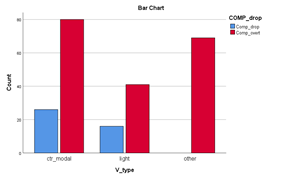
In the analysis, the dependent variable was the complementizer, with values: Comp_overt or Comp_drop. The following independent variables were considered: selecting verb type (modal, e.g. šaj ‘can’, tromal ‘be allowed to’; light, e.g. džal ‘go’, lel ‘take’; other, e.g. phenel ‘say’, džanel ‘know’), negation (affirmative, negative), selecting verb inflection (inflected, uninflected), tense, person and number of the selecting verb, tense of the complement verb, contact position between the selecting and complement verb, independent subject in the complement clause, impersonal construction, speaker’s age (adults, children).
In the sample, three complementizers: te, kaj, and ke were detected, along with clauses with Comp_drop. The complementizer te is used with modal and light verbs, while other verbs take clauses introduced by the complementizer kaj or ke, but never by te or a dropped complementizer. The overall rate of the Comp_drop is 18.1%.
The statistical analysis by means of Pearson's Chi-square test revealed that the following factors significantly affect the frequency of Comp_drop:
Verb type (χ2=22.023, df=2, p=.000): Only modal and light verbs allow for the Comp_drop.
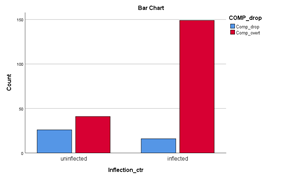
Inflection (χ2=27.233, df=1, p=.000): The complementizer tends to be overt more frequently with inflected selecting verbs. In the group of modal verbs, only uninflected verbs allow for the Comp_drop. Tense of the selecting verb (χ2=14.761, df=5, p=0.011): The complementizer is less frequently omitted in the past tense. Person of the selecting verb (χ2=25.806, df=3, p=.000): Comp_drop is more frequent with the uninflected forms. Number of the selecting verb (χ2=28.937, df=2, p=.000): The complementizer is more frequently overt when the verb is in the singular form. Tense of the complement verb (χ2=5.686, df=1, p=0.017): The complementizer is more frequently overt when the complement verb is in the present tense.
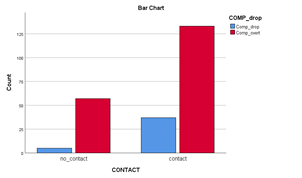
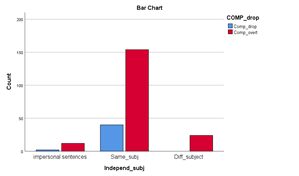
Contactposition (χ2=5.751, df = 1, p = .016): Comp_drop is more frequent when the selecting and complement verbs are in the immediate contact position. Independentsubject (χ2=6.271, df=2, p=0.043): Comp_drop occurs more frequently when the subjects of the matrix and complement clauses are the same. Age of speakers (χ2=7.392, df = 1, p = 0.007): Adults tend to omit the complementizer more frequently (26% vs. 12.1% in the children’s sample).
The obtained results indicate that complementizer omission in GR is infrequent and strongly influenced by various linguistic factors, with selecting verb type (Figure 1), inflection (Figure 2), contact position (Figure 3) and independent subject (Figure 4) being the most notable ones. Comp_drop exclusively affects the non-factual complementizer te and never occurs with the factual complementizer kaj and ke. Only uninflected modal and inflected light verbs allow for the Comp_drop, while it never occurs with inflected modals and with other verbs. The effect of age suggests a relatively late maturation of Comp_drop. These findings will be discussed in light of the complement clause structure in Gurbet Romani. In addition, we will compare the findings obtained for GR with those of a study on the complementizer da omission in the Torlak variety of south-eastern Serbia, with which GR is in contact, based on an analysis of the same factors (Mirić & Arsenijević 2024).
References:
Andrea Scala | Università degli Studi di Milano
The clitic personal pronouns in Abruzzian Romani (and more in general in Southern-Italy Romani) show some strong phonetic and lexical innovations that make them rather peculiar in the landscape of Romani dialects. Here is the inflection of object clitics (Soravia 1977, 2019):
| romaní d’Abruzzo |
1s | mǝ, cfr. [dik'kammǝ] "I see me" |
2s | tǝ [dik'kattǝ] "I see you" |
3s | lǝ (m), la/lə (f) [dik'kallǝ] "I see him/her " |
1pl | čǝ [dik'kenʧǝ] "they see us" |
3pl | lǝ [dik'kenlǝ] "they see them" |
The phonetic form of these clitics can be partially explained through phonological rules borrowed from Italo-Romance coterritorial varieties. In Abruzzese (Giammarco 1960: 20 and 41-45) all the vowels in post-tonic syllables tend to be centralized to [-ə], and only /-a/ shows some resistance to this change. Abruzzian Romani behaves identically (Scala 2018: 174-176). The rule acts in the phonological word, therefore clitics are always affected by vowel centralization and in fact they are accessible to speaker only in the forms listed above.
As a consequence of vowel centralisation the form of some Romani clitic pronouns became identical to Abruzzese personal pronouns (1s mə, 2s tə, 3s and 3pl lə). The consonantal part of the clitic pronouns was already identical in Proto-Romani and Abruzzese, in some cases for etymological reasons (1s, 2s, and originally 1pl as well), i.e. for deriving all these pronouns from I.-E. forms continued both in Latin and in Old Indo-Aryan, and then in Romani and Abruzzese. In 3s, 3pl the identity of the consonantal part of the pronouns is by chance. Here pronouns deriving from different I.-E. roots became identical through a different evolution, that resulted in the same outcome, i.e. the lateral /l-/. Finally, the 1pl object clitic čǝ of Abruzzian Romani cannot be traced back to an Indo- Aryan etymology and the 2pl tǝvǝ is rather problematic as well.
The paper will describe the genesis of the current inflection of clitic pronouns in Abruzzian Romani, proposing that the 1pl čǝ has been borrowed by Abruzzese for lexical therapy, i.e. in order to avoid the homophony between mə (1s) and *mə (1pl). Typological wide explorations show that neutralization of number in 1st person pronouns must be very rare, if existing (Siewierska 2004: 92; Corbett 2000, 64-65), and that can explain the lexical replacement of this clitic. The borrowing of a personal pronoun is a very uncommon, although not impossible, outcome of contact (Thomason 2001, 83-84; Matras 2009, 157), but in this case it has surely been enhanced by the strong formal identity between other clitic pronouns of Abruzzian Romani and Abruzzese. In a paradigm where already 4 cells were identical the step towards a still closer similarity can be short. Finally, the 2pl clitic pronouns təvə, that cannot be explained through regular phonetic evolution, seems the outcome of a crossing process between Romani tume(n) and Abuzzese və or a new transparent form created combining te+və, i.e. Abruzzian Romani and Abruzzese 2s clitic and Abruzzese 2pl clitic, that becomes here a simple plural marker.
The innovating series of Abruzzian Romani clitic pronouns results from a complex set of factors and processes. The most important is the convergence with Abruzzese clitics, based on common etymological origin, phonetic changes producing by chance the same outcomes starting from different sounds and borrowing of Abruzzese phonological rules. All these factors created the conditions not only for the homophony between 1s and 1pl, and the subsequent borrowing of Abruzzese clitic form of 1pl, but also for the emergence of the form of 2pl təvə. In the sometime surprising dimension of language contact rare combinations of factors can open the way to rare outcomes. And that can be observed in Abruzzian Romani clitics as well.
Bibliography
Svetlana Ćirković | Serbian Academy of Sciences and Arts
The presence of the Romani language in the media is an outcome of the realization of Roma’s national minority language rights at the state level (c.f. Bašić 2018, Ćirković 2023). Two public services broadcast programs in Romani – Radio Television Vojvodina (RTV) and Radio Television Serbia (RTS). On RTV’s second channel, news programs are broadcast daily in the languages of national minorities, including in Romani, while specialist programs have a distinct programming schedule. Radio Belgrade 1 broadcasts the show "Romano Them" every day, featuring the most important national and international news in Romani and Serbian. It is important to note that the RTV website is available in the languages of national minorities, including Romani. There are more TV and radio shows in Romani, which are broadcast on local TV and radio channels (c.f. Sorescu-Marinković, Mirić, Ćirković 2020, Selvelli 2022, Ćirković, Mirić in print).
This study aims to present the results obtained from the sociolinguistic VLingS Questionnaire 1.0 (Mirić et al. 2025), specially created for the project "Vulnerable Languages and Linguistic Varieties in Serbia" and applied in several Roma communities. The questionnaire encompasses questions related to the media in Romani in Serbia, which assess whether Romani speakers follow TV and radio shows, and which shows they follow. Additionally, the sociolinguistic questionnaire includes questions related to other media mainly on the internet, such as Facebook pages and groups, Internet blogs, forums, etc.
The Questionnaire was applied in 12 Roma communities and encompassed 344 native speakers. All speakers are bilingual in Serbian and Romani.
The preliminary results of the applied sociolinguistic questionnaire show that Romani speakers watch TV shows (53% of all participants) and listen to radio programs (46% of all participants) in Romani, follow Facebook groups and pages, YouTube channels, and other digital content in Romani (45% of all participants). What draws attention is the perception of the media and media content. While most speakers mentioned official media, such as TV and radio shows, others referred to entertainment shows that include Romani weddings, Romani music, and are broadcast on channels with national licenses.
The presentation will shed light on a few factors which may influence the result of the research:
the dialectological heterogeneity of Romani speakers in the studied communities, as well as the dialectological proximity or distance of the variety used in official media,
the nature of TV and radio content (i.e., news versus entertainment programs),
the perceived irrelevance of the content broadcast on TV and radio for certain Romani communities (for example, coverage of activities by Romani organizations in Serbia or the National Council of the Roma National Minority, topics that may not be pertinent to all Romani speakers or communities)
the general perception among Romani speakers that TV and radio programs are primarily forms of entertainment, such as shows featuring Romani weddings or Romani music, rather than sources of official news and information relevant to the Roma.
A discussion of the aforementioned factors could contribute to a more informed selection of content in official media, as well as encourage consideration of the most effective approach to addressing the dialectal plurality among Romani language speakers.
References
Paola Trevisan & Carlo Ziano | Università degli Studi di Milano
This paper investigates the dialectal features of the variety known as Sinto, spoken by members of the Sinti communities who live in Reggio Emilia, Modena, and Bologna (Trevisan 2009). Despite the glottonym, this variety does not belong to Romani—the Indo-Aryan language family traditionally spoken by Roma and Sinti groups in Italy—but is instead a purely Italo-Romance dialect.
The analysis—based on several hours of free conversation with speakers of different ages—has revealed a number of distinctive features: (a) 1st person plural verb endings in -no; (b) a velar infix in the 1st person singular present indicative of certain verbs (vago ‘I go’); (c) neutralization between the second and third conjugation in the imperfect indicative (vegnevo ‘I was coming’); (d) shortened, analogical forms modeled on the paradigms of stare and dare (favo ‘I was doing’, fando ‘doing’, ghevo ‘I had’); (e) the demonstrative adjective stele (‘these’); (f) the 3rd person plural pronoun lori (‘they’); (g) the so-called doubly-filled complementizer quanto che (‘when’); (h) the reflexive pronouns ma, ta, sa.
Where do these phenomena point to? One might expect that the Emilian Sinti speak an Emilian dialect, but these phenomena point instead to a different dialectal area, located between Verona, Ferrara, and Mantua—more specifically, the Polesine region—as described by Zamboni (1974), Barbierato (1995), and Sparapan (2007). The Sinti communities of Reggio Emilia, Modena, and Bologna thus represent a newly documented case of internal heteroglossia, a phenomenon defined by Telmon (1992) as the use of a dialect from a different region due to internal migration.
Notably, this group constitutes an exception within this category. As Telmon (1992:146) notes, «the internal minorities that have most successfully preserved their linguistic, social, and cultural traits are those of rural origin». By contrast, the Sinti families reside in urban contexts. Yet they have maintained a high degree of linguistic conservatism, thanks to strong internal cohesion and a marked social separation from the surrounding gadgé population.
Furthermore, preliminary findings suggest that the daily use of this Veneto dialect has gradually replaced what the speakers of this community call sinto stretto, namely the local variety of Romani. This shift probably began in the 1960s, when many Sinti families entered the world of travelling entertainment, which required a certain degree of obfuscation of their origins.
The linguistic data also provide insights into the routes of the Emilian Sinti across Northen Italy. While the movements of the Sinti population are relatively well documented up to their arrival in Italy, their internal trajectories remain less clear. It is known that the Sinti initially settled in western Lombardy and later moved to eastern Lombardy and Piacenza. One might therefore hypothesize that the Emilian Sinti reached their current position through a west-to-east trajectory, along the Via Emilia. However, the use of a Veneto dialect among the Sinti of Reggio Emilia, Modena, and Bologna—unlike their counterparts in Piacenza—suggests a different route: after arriving in western Lombardy, they moved eastward into southern Veneto, remained there long enough to acquire the local dialect, and only later settled in Emilia. This implies that the Sinti of Reggio Emilia, Modena, and Bologna came not from the west (via Piacenza), but from the northeast (via the Veneto region).
Bibliography
Nurettin Demir & Melike Üzüm | Hacettepe University
The Gypsies—historically referred to as Romani people—comprise the Rom, Dom, and Lom groups, who dispersed from India around the 6th century. These groups followed different trajectories: some remained in the Middle East, offering services to Arab and Persian communities; others were sold into slavery; and a third group returned to India. During a later migration wave between the 14th and 15th centuries, Romani groups traveled to Europe, working as blacksmiths, fortune tellers, and mercenaries (Kenrick 2007, p. 38).
Throughout their migration, these nomadic communities settled temporarily in various regions, interacting with diverse cultures and languages. However, these settlements were not prolonged enough for full societal integration. In Central Asia, this nomadic community was known as Dom, a designation that later evolved into Lom in Armenia. By the time they reached Greece, they came to be identified as Rom, a name that has since gained global recognition (Soravia 1984, pp. 21-22).
According to Marsh (2008, p. 23), the Lom may have separated from the Romani population in the 11th century, choosing to remain in Eastern Anatolia during the Seljuk and Ottoman periods rather than migrating westward. Another designation for these groups, particularly in Armenia, is Posha or Bosha. Studies indicate that Christian Romani communities following the Armenian Church are known as Bosha (Asatryan & Arakelova 2002), while other research identifies Armenian Gypsies as Lom or Bosha (Scala 2014). While significant research has been conducted on the Romani language, there remains a notable gap in linguistic data regarding the current status of the Posha language.
In Northeastern Türkiye, particularly in the Eastern Black Sea region, Georgia, and Armenia, some small groups are known as Poshas. While some Posha groups are monolingual in Turkish, a significant portion continues to preserve their ancestral language in a restricted area. In Çankırı, located in Central Anatolian, a small group of people designate themselves Posha. The Posha community has their own language and were unknown as Poshas until our research in 2010. Between 2010 and 2015 we conducted a documentation project on the language of the Poshas in Çankırı.
In the linguistic literature, the language referred to as Posha or Lomavren is classified as a mixed language with Armenian influence (see Balabanian 2024; Paspati 1870; Finck 1907; Patkanoff 1908; Voskanian 2011; Scala 2014; Matras 2002). However, the variety spoken by the Poshas in Çankırı exhibits significant contact-induced linguistic phenomena influenced by Turkish, the dominant language in the region. From a language contact perspective, tracing the migration routes of the Posha community suggests that their language consists of an Armenian grammatical structure with Indo-Aryan and Turkish lexical elements.
Our previous studies focused on the grammatical features of the Posha language in Çankırı, providing linguistic examples and analysis. In this study, we examine its vocabulary within the framework of language contact, using data collected from Çankırı. The analysis is based on both sentence translations and a Turkish-Posha word equivalency inquiry. Vocabulary extraction from the corpus aimed to identify simple lexical forms, resulting in a dataset of235 lexical entries. We will also investigate derived words that are inflected or modified beyond their base form. This study contributes to understanding the linguistic influences shaping the Posha language and its interaction with Turkish.
References
Giulia Meli | Università degli Studi di Milano
Differential object marking (DOM) is a Proto-Romani feature which can be still observed in a large number of spoken Romani varieties (cf. Matras 2002: 85-87). In dialects that retain nominal and pronominal case system, pronominal and animate nominal direct objects are in fact expressed by means of the oblique form, whereas inanimate direct objects are expressed in the nominative form, for instance:
(1) Russian Roma, Database of Romani Dialects (DRD), RUS-003, n. 461, 929
me dykxjom manušes(man.obl.m.sg) kaj geja pir e ulica ‘I saw a man walking down the street’
me ni magu te krasinav o kxer (house.nom.m.sg), o gadžo krasinel les (3sg.obl.m.sg)pal mande ‘I cannot paint the house, the gadžo paints it for me’;
The dialects that have lost nominal case marking - such as for instance Lombard Sinti, Piedmont Sinti, and Abruzzian Romani - usually have also lost inherited DOM. The paper will address Abruzzian Romani, which nonetheless exhibits innovative DOM. In Abruzzian Romani, DOM is active in nouns and pronouns, but it is realised in two distinct ways depending on the word class. Nominal objects, as already noted by Kozhanov & Seržant (to appear), are introduced by the preposition ki or ku ‘to (the)’:
(2) Abruzzian Romani, DRD, IT-007, n. 502
me pindžikará ki ddá də klá štárə ččavuré ‘I know the mother (lit. to the mother) of those four girls’
Pronominal marked objects, instead, are expressed by doubling the pronoun, which appears in the clitic forms followed by the locative:
(3) Abruzzian Romani, DRD, IT-007, n. 519
ta así vvále tumé karén-džəamméndə ‘if it’s early, you call us (lit. you call us to us)’.
Such strategies are clearly not inherited, and they are allegedly induced by the contact with Southern Italo-Romance dialects. In these varieties, in fact, marked objects introduced by the preposition a (< lat. ad) are quite spread (cf. Rohlfs 1969: 7-9; Ledgeway 2016: 268, Loporcaro 2009: 131). Here some examples from the Abruzzese and Molisian area:
(4) Torricella Peligna (Chieti Province)
kwillə vaitə a mmɛjə‘he watches me (lit. to me)’;
jojə vaitə a kkwillə ‘I see that one (lit. to that one)’;
so camætə frattə ‘I have called your brother’
Roccasicura (Isernia Province)
ɛjə camatə a kirə vaʎʎonə ‘I called that child (lit. to that child)’
ɛjə camatə a nə vaʎʎonə ‘I called a child (lit. to a child)’
ɛjə camatə a re kɔɐnə‘I called the dog (lit. to the dog)’
ɛj viʃtə nə kɔɐnə ‘I saw a dog’ (Manzini & Savoia 2002: II, 505, 506).
In southern Italo-Romance dialects, DOM exhibits a high degree of micro-variation, involving pronouns and nouns, and features like animacy and specificity, in distributional settings that, according to Ledgeway 2003, may be related to the progressive extension of the DOM within the Determiner Phrase (DP, i.e. from DP heads to DP phrasal categories).
The paper will offer a detailed account of Abruzzian Romani DOM based on all the available sources (e.g. DRD, Ascoli 1865, Morelli & Soravia 1998). The analysis will focus on the distribution of the DOM, which appears to be tied to the animacy of the object, and it will examine its development as the result of an interesting case of pattern replication.
References
Ioana Aminian Jazi | Austrian Centre for Digital Humanities
Yaron Matras | Aston University, University of Haifa, University of Hamburg
Zargari stands out among the dialects of Romani through its contemporary contacts with a Turkic and Iranian language (Azeri and Persian, respectively). Drawing on recent materials collected as part of the project Documenting Zargari: A Missing Link in Understanding Romani at the Centre for Digital Humanities and Cultural Heritage, Austrian Academy of Sciences, we review three layers of contact with Azeri, that we match to a distinction made in Matras’s (2009/2020) theoretical model of contact: As examples of Matter replication, we draw attention to the inventory of function words found across the board as borrowings in Romani dialects. Zargari is notable for the simultaneous compatibility of many of these forms with both of its contemporary contact languages. At the level of Fusion we address the wholesale replication of inflection with borrowed Azeri verbs, which closely resembles the contact between Romani dialects and Turkish in the Balkans and the Black Sea region. At the level of Pattern replication, we examine the emergence of postpositions from inherited material likely modelled on Early and Balkan Romani prepositions. We interpret these findings in light of the twofold process of Convergence and Compartmentalisation identified for Romani dialects by Matras (2002), suggesting that Zargari reflects both deep integration with its contact languages and the maintenance of distinct structural layers.
References:
Eszter Tarsoly | Károli Gáspár University of the Reformed Church in Hungary, University College London
János Imre Heltai | Károli Gáspár University of the Reformed Church in Hungary
This paper discusses the outcome of a collaborative pedagogical implementation project in which local Romani (a transitional variety) was introduced to a school setting where Hungarian-monolingual teachers work with Romani-Hungarian bilingual pupils and their families. The project was based on a long-term collaboration between the school’s staff and students as well as university-based researchers and teacher trainees. While this is not the only attempt to frame multilingual practices involving Romani in terms of translanguaging (cf. Augier et al. 2018), to our knowledge, this remains the only project which aimed to introduce translanguaging as an overarching institutional stance in the education of bilingual Roma pupils.
The aims of the proposed paper are two-fold. First, we showcase the ways in which translanguaging with Romani was implemented in a highly monolingual educational environment by looking at a video-recorded classroom moment in which translanguaging had a mediating role between a Hungarian-monolingual school-based practice and the pupil’s home language, Romani (from the video-repository accompanying the multi-authored monograph on the translanguaging project; Heltai and Tarsoly 2023). Second, we examine the long view of this project, particularly the situated ethical dilemmas of framing Romani-Hungarian bilingualism in terms of multilingual conviviality both in education settings and along the “multilingual city” model (cf. Matras 2024). We contrast writing for the aforementioned volume by one of our long-term Romani-speaking collaborators on her school experience with two accounts provided by former educational leaders in the collaborative ethnography journal Duj Dzséne – Ketten ‘two together’ (Alföldi Kulcsár 2025; Lévai Kerekes 2025). The latter address the options and dilemmas of a nursery and school headteacher committed to giving equal value to pupils’ home language and employing bilingual Roma in a monolingual institutional environment. From the intersection of these case studies, we elaborate the societal challenges which hinder the sustainability of projects involving Romani in institutional domains.
References:
Romany Finn Amber & Seth Dani Katenkamp | Yale University
Domari is a language spoken by nomadic communities in the Middle East, including Jordan, Jerusalem and Aleppo. Like many nomadic languages, Domari has experienced heavy contact with local languages which have had profound effects on the structure and lexicon of the language. In this talk, we investigate verbs that have been borrowed from Arabic into Domari (based on data collected by Matras, 2012), given that these languages form verbal constructions in very different ways to one another. We think this is the first analysis of borrowing between languages which have both this degree of linguistic structural difference and extensive social contact.
All of the world’s languages feature what linguists refer to as ‘concatenative’ morphology, where sequences of phonological material are added to the beginning or end of stems to add meaning to the word. For example, in Domari, several suffixes may be added to the end of xiz ‘laugh’ to create the form ‘I had made them laugh’ (1):
(1) xiz | -naw | -id | -om | -san | -a |
laugh | -CAUS | -PST | -1SG | -3PL | -REM |
“I had made them laugh” | |||||
However, many languages also have non-concatenative morphology. Arabic is particularly famous for what is called templatic morphology. In templatic morphology, a verb root is composed of three consonants, and any spoken word is built by sticking other consonants and vowels before, after, and between these three consonants and sometimes by duplicating one of the consonants. Some examples with the Arabic root slm are shown below.
(2) Some Arabic words
(a) salaam ‘peace’
(b)‘aslamu ‘I am safe’
(c) sallamat ‘she protected’
The examples in (2) are full words, and it is important to note that the root, slm, never appears on its own. Domari, like other Indo-Aryan languages, does not have templatic morphology. This difference raises the question of what happens when speakers of Domari borrow from Arabic: do they borrow surface forms like those found in (2), or more abstract root/stem forms?
Arabic has had significant cultural and political influence around the world, so it’s worth considering what other languages without templatic morphology usually do when borrowing from it. While variation does occur, “most languages that borrow verbs from Arabic select the so-called masdar or verbal noun form” (Matras, 2012:241). Then, if the language community needs to use an Arabic borrowing as a verb, they will often use a native auxiliary verb with the borrowed noun rather than borrow some version of the verb root/stem. Some examples are shown below with the borrowed noun in bold.
(3) Verbal use of nouns borrowed from Arabic
(a) Persian: ta’lim dādan
instruction give ‘to teach’
(b) Turkish: teşekkür etmek
gratitude/thanks do/make ‘to thank’
Domari is somewhat unique in that when it borrows verbs from Arabic, it does not borrow a standard form. Sometimes, a verb that has been borrowed into Domari is identical to a word that exists in Arabic. The most common form is the active non-past, such that the Domari root in (4a-b) are comprised of an Arabic word inflected for active-non-past, plus a verbalising suffix -hr or -k. (4c-e) shows some Domari forms that are borrowed from different Arabic bases.
(4) | Domari root | Dom. meaning | Arabic base | Arabic meaning |
a) | šbiqk | ‘to precede’ | šbiq | ‘precede’ (active non-past) |
b) | šukkahr | ‘to suspect’ | šukka | ‘doubt, mistrust’ (active non-past) |
c) | ɣannik | ‘to sing’ | ɣanni | ‘hummed’ (active participle) |
d) | manaʕk | ‘to prevent’ | manaʕ | ‘hindered, prevented’ (active past) |
e) | šliḥk | ‘to undress’ | šliḥ | ‘act of undressing’ (noun) |
Most remarkably, some Domari forms seem to have no corresponding template forms in Arabic, suggesting that they must be able to abstract away from those attested forms and apply a novel template.
(5) | Domari root | Dom. meaning | Attested stem forms in Arabic |
(a) | rabbik | ‘raise, rear’ | rbiib, rabbib, rabbab, rubbib |
(b) | ɣayyirk | ‘change’ | taḡayyir |
The fact that the most common verb stem for borrowed verbs is the active non-past suggests that there may be some frequency effects at play, i.e. Domari speakers borrow the verb form that they encounter the most often, even if they will go on to use it in novel ways, such as putting Domari past tense marking on a verb form that, in Arabic originally, was exclusively non-past. Meanwhile, the fact that the Domari borrowed verbs tend to match Standard Arabic forms rather than South Levantine Arabic forms (the local colloquial variety), suggests Domari contact with Arabic varieties outside of their immediate social context.
But most important is the question of why we see this borrowing behavior throughout Domari when it is so rare in other languages. There is nothing in the grammar of Domari to predict this- it must be the result of social factors. Thus it would seem that high levels of multilingualism and code-switching afford more salient access to abstract, underlying forms of words across separate linguistic systems.
References
Yaron Matras | Aston University, University of Haifa, University of Hamburg
Kamal Kelzi | Gothenburg
In his grammar of Jerusalem Domari, Matras (2012) identified a tentative set of isoglosses that appeared to separate that variety from related varieties attested fragmentally in more northern regions (Syria, Lebanon and the Caucasus). That observation inspired Herin (2014, 2016) to speak of a ‘genetic split’ within Domari, which he has since referred to as Northern and Southern ‘branches’ respectively. Our recent extensive documentation of the Dom language of Aleppo in Syria leads us to new insights in this area. Drawing on new data we reconstruct key aspects of a Proto-Domari variety which, we believe, featured variation from which the present-day differences have arisen. We distinguish between those, and local innovations, many of which can be attributed to the stronger impact of Arabic on the ‘southern’ varieties. We survey features in various areas of structure and conclude that most of the differences between the Domm varieties of Aleppo and Jerusalem are likely to have emerged in situ, involving loss of a structure inherited from Proto-Domari rather than the innovative development of a new structure. We therefore see no need to postulate separate linguistic-genetic branches within Domari and we see no evidence for the historical presence of a distinct ‘Northern Domari’ branch of the language, notwithstanding the geographical spread that we find among certain features in the rather scanty material collected on other Dom varieties so far.
References:
Andrea Szalai | Hungarian Research Centre for Linguistics
This paper explores selected aspects of the Romani ideology surrounding "bad language," with particular attention to linguistic taboos related to the concept of pollution or impurity (marhime). It addresses methodological challenges associated with studying stigmatized linguistic behaviors—specifically, the paradox of collecting data on the mention of the “unmentionables” (Philips 2000). While social anthropological research has devoted considerable attention to the ideology of defilement among various Roma and Traveller communities, its interactional dimensions remain underexplored. This study aims to fill that gap by focusing on taboo-related practices in everyday interaction.
Treating linguistic taboo as a pragmatic and interactional phenomenon, the analysis highlights the redressive strategies through which Romani speakers seek to mitigate the potentially harmful relational and interactional consequences of referring to taboo topics (Culpeper 2019). One such strategy involves the use of conventionalized apology routines (e.g., apology + blessing) to excuse previous or anticipated taboo-related utterances. Examples include expressions such as Jertisar, t’el vuži tji faca the tjo khăr! (’Forgive me, may your face and your house be clean!’) and Jertin, baxt del tumen o Del (’Forgive me, may God give you luck!’) (Suszczyńska 2005). The paper presents a case study based on linguistic anthropological fieldwork conducted in multilingual Gabor Roma communities in Transylvania, Romania. The data set includes material from participant observation, spontaneous face-to-face and online Romani interactions, as well as metapragmatic discourse collected through audio-recorded interviews.
Given the complexity of linguistic taboo as a phenomenon embedded in social and cultural contexts (Allan & Burridge 2006; Allan 2019; Pizarro Pedraza 2018), the study also considers how communities construct and maintain taboos through belief systems, knowledge regimes, and language ideologies. Conversely, it also examines how these taboos shape social structure. Through analysis of excerpts from Romani discourse on mahrime taboos, the paper demonstrates how the taboo-related use of apology contributes to the reproduction of gender and moral order in Gabor Roma communities (Kádár et al. 2019).
Finally, the paper offers brief reflections on the broader implications of (im)purity taboos in intercultural communication—particularly in education, healthcare, and religious contexts—underscoring the socially engaged, applied relevance of the research.
References
Juan F. Gamella | University of Granada
Vasile M. Muntean | University of Granada
Julieta Rotaru | NALCO – National Institute for Oriental Languages and Civilizations
Formal oaths are a key component of social cohesion and dispute resolution in many Roma communities. They are examples of the performative use of language and ritual. This paper is based on the initial study of a corpus of 42 Roma oaths collected in the long-term collaborative ethnography of a Roma diaspora originating in the Romanian regions of Transylvania and Banat, as well as 9 examples from other groups observed in digital media. Our study looks at the internal variance of oaths as speech events observed today by thousands of people on the Internet. We confirm that Roma oaths have two main ceremonial modes: affirmative (solax) and threatening-cautioning (del armaja). They differ primarily in whether the conditional curses they contain are aimed at self or others. The affirmative oath (solax) may refer to the past and present to establish an important truth, or to the future and support a pledge. Thus, we identified three main types of Roma oaths corresponding to three different illocutionary goals: achieving social truth, promising a course of action, or issuing a caution or a threat. These three types of oaths serve different purposes, have varying temporal orientations, and are associated with distinct gender expectations. They also encompass distinct forms of speech acts integrated into the complex pragmatics of speech events. In this paper, we present examples of each type of oath, together with a complete transcription of their verbal forms, to illustrate the model and to contribute to future linguistic analysis.
Keywords: Romanian Roma, oaths, performative language, truth rituals, speech-act theory, speech events, conflict resolution, Eastern Orthodox religion.
References:
Georgia Kalpazidou | Democritus University of Thrace
Angeliki Alvanoudi | Aristotle University of Thessaloniki
The present paper reports the findings of a pilot study that attempts to shed light on the language attitudes of Roma women who speak the Arli dialect, one of the Greek Romani dialects belonging to the Balkan Romani subgroup and spoken within the Romani community of Dendropotamos, Thessaloniki.
Specifically, in this study we seek to examine the language attitudes of Roma women from the Arlia community towards the use of the minority language in order to better understand the role of women in language maintenance or shift in this particular community and the factors that determine this process. Furthermore, our aim is to allow marginalized voices to be heard in Greek linguistic research, which remains largely 'Greek-centric', ignoring the linguistic diversity in the Greek space.
For our pilot study, we employed a direct method of eliciting language attitudes, the semi-structured interview (Karatsareas 2022), and a questionnaire with mainly open-ended questions. Five Roma women voluntarily participated in the research. The interviews were audio-recorded and transcribed according to conversation analytic conventions. For the qualitative analysis of the data, we followed the principles of thematic analysis (Braun & Clarke 2006) and used the tools of discourse analysis (Liebscher & Dailey-O’Cain 2009; Dailey-O’Cain & Liebscher 2011), focusing both on the content of the responses and on the semiotic resources used by the speakers to answer the questions.
Our analysis focused on the following issues: code-switching depending on social context and speakers’ preferences for the use of Romani and Greek, the role of social identity, prejudices and stereotypes in shaping the speakers’ linguistic behavior as well as their attitudes towards the maintenance of Romani. Our analysis shows that trends of both language maintenance and language shift are recorded in the specific sample of speakers in the Arli community.
References
Liebscher, G., and J. Dailey-O’Cain. 2009. “Language Attitudes in Interaction.” Journal of Sociolinguistics 13(2): 195–222.
23-25 September 2025
Seminar room 1,
Campus of the Austrian Academy of Sciences,
Bäckerstraße 13, 1010 Vienna
Austrian Centre for Digital Humanities (ACDH),
in cooperation with Vanishing Languages and Cultural Heritage (VLACH)