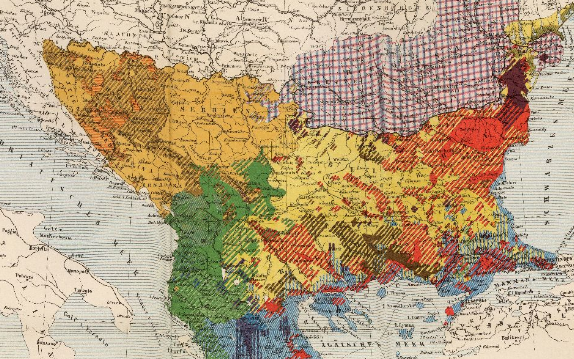
Das Projekt basiert auf der Analyse des über Musik Geschriebenen, insbesondere den Berichten über das musikalisch-kulturelle Leben sowie über die Konzert- und Theatergastspiele, die in den Zeitungen der Region entlang der südlichen Militärgrenze der Habsburgermonarchie in deutscher („Esseker Lokalblatt und Landbote“, „Slawonische Presse“ in Slawonien; „Groß-Becskereker Wochenblatt“, „Pancsovaer Wochenblatt“, „Banater Post“ im Banat), in serbischer („Glas“, „Pančevac“), in kroatischer („Virovitičanin“, „Sriemski Hrvat“) und ungarischer Sprache („Torontál“) erschienen sind. Einbezogen werden ferner Festschriften von Gesangvereinen und Theatern, Einführungstexte zu musikalischen Aufführungen, Bücher über Musik sowie die frühesten professionellen Musikzeitschriften (u. a. „Gudalo“) und die Schriften über Musik von den ersten professionellen Musikwissenschaftlern (u. a. Franjo Kuhač), sofern sie in den Städten an der südlichen Grenze des Reiches entstanden und erschienen sind. Dieser besonders geschützte Grenzraum, in dem die Slawonische (1747–1881) und die Banater (1751–1873) Militärgrenze zum Schutz des Imperiums vor den osmanischen Militäroperationen errichtet wurden, ermöglichte einen vielschichtigen Kulturtransfer mit dem entfernten Zentrum des Reiches (Wien), mit den lokalen Zentren der königlichen Freistädte Pannoniens und zwischen den wichtigsten Städten diesseits wie jenseits der Grenze zum Osmanischen Reich.
Es wird davon ausgegangen, dass die Schriften über Musik in dem multiethnisch, mehrsprachig und multireligiös (christlich-katholisch, christlich-orthodox, protestantisch, jüdisch) komplexen südlichen Grenzgebiet entlang des unteren Donauraums eine Vielfalt an kosmopolitischen, imperialen, panslawischen und nationalen Narrativen enthalten, die die durch das Netzwerk kultureller und administrativer Institutionen operierenden Machtmechanismen offenbaren. Primäre Quellen wie die oben erwähnten zeitgenössischen Texte sowie historische Dokumentationen zum Musikleben entlang der Militärgrenze sind in den Archiven des Museums von Slawonien und in den Stadtarchiven von Osijek und Pančevo, wo sich die Magistrate in den Grenzzonen befanden, erhalten. Sie erlauben einen umfassenden Überblick über die verschiedenen Formen des Nationalismus im imperialen Kontext (im Habsburgerreich lebende Deutsche und Kroaten) ebenso wie in der Diaspora (Serben, die beiderseits der Grenze zwischen dem Habsburgerreich und dem Osmanischen Reich lebten), unter Einschluss von Formen des Panslawismus respektive Austroslawismus. Diese Materialien werden in einem theoretischen Rahmen analysiert, der auf Machtverhältnisse und auf Konstruktion von Volkssprachen zielt sowie ein herkömmliches Verständnis von Identität hinterfragt, um tiefere Einblicke in kulturelle Praktiken auch jenseits der dominanten Nationalismuskonzepte zu erlangen. Auf diese Weise werden auch nationale Ansätze und die durch die heute bestehenden Territorien bedingten, zwangsläufig fragmentierten Sichtweisen hinterfragt und durch einen innovativen Zugang ersetzt, der vielschichtige imperiale und nationale Standpunkte als Grundlage von Formen der Selbst-Repräsentation freilegt. Dies gilt für die nationalen Gemeinschaften ebenso wie für die zahlreichen Minderheiten, wobei auch die kulturellen und musikalischen Aktivitäten der Siedler im Gebiet zwischen den beiden Imperien, sei es der Slawen (Serben, Kroaten, Slowaken), sei es der Ungarn, Deutschen, Rumänen und Juden in den Blick genommen werden.




This article examines the “Lives in Musicology” column in Acta Musicologica (introduced in 2017 by Federico Celestini and Philip V. Bohlman) as a lens for reflecting on the discipline of musicology. Eight renowned scholars – including pioneers in musicology, ethnomusicology, and music theory – from the United States, Europe, East Asia, Africa, and Australia – revisited their careers, revealing the construction and trajectory of the field. Their autobiographical accounts, analyzed through the theory of autobiography by Jaume Aurell, trace the discipline’s expansion from the Western canon to diverse research areas, the establishment of new concepts, and the radical shift in Acta Musicologica editorial policy from conservative positivism focused on the Germanic canon toward a pluricultural and multilingual global musicology.
After the pandemic break (2020–2021) the journal TheMA continues with the presentation of research results relating to the cultures, literature, theater, music, and arts of and on southeast Europe. Furthermore, the next three volumes will be dedicated to herstory in the mesoregion, with the focus on women’s studies. Starting with this volume, female cultural enterpreneurs, Maecenases, authors, artists, composers, and performing artists, as well as the characters in literary, dramatic, and musical works, will be presented in papers by international scholars.
In order to shed light on cultural exchange in a meta-national context, Michel Espagne coined the term ‘cultural transfer’ with respect to exchange between ‘cultural zones’. The migration of cultural objects and individuals, signified by their appropriation and transformation in new contexts, is a process of continuous reinterpretation of travelling ideas and concepts. Such transnational approach provided by cultural transfers assumes transdifference, cultural hybridization, and interpenetration of cultural zones beyond the traditional dichotomy of centre-periphery: the nodes of the formed networks are proliferated (in some cases, temporary) centres, including also certain mediatory points. Two case studies of Serbian, i.e., Yugoslav musicians – the violin player Dragomir Krančević (1847 – 1929) and especially the soprano Karola Jovanović (1879 – 1958) – will be explicated in this theoretical framework in relation to their positions at music theatres. Both were well-known artists and had successful careers in Vienna and other cities in the Habsburg Monarchy (Budapest, Olomouc, Graz) and its successor states, Krančević mainly as a soloist and Jovanović as an opera and concert singer. These two musicians are understood here as agents of cultural transfer and this paper will show how they were transformed by adjustment to their new environments, i.e., to the dominant cultural policy expressed through repertoire, gender policy, guest performances, and other aspects. By doing so, they contributed to network building networks all over Europe, beyond territorial or national borders.
Markovic, T. (Speaker)
Markovic, T. (Speaker)
Markovic, T. (Speaker) & Markovic, T. (Speaker)
Markovic, T. (Speaker)
Markovic, T. ((Co-)Author)
Markovic, T. ((Co-)Author)
Markovic, T. (Speaker)
Markovic, T. ((Co-)Author)
Markovic, T. (Speaker)
Markovic, T. ((Co-)Author)
Markovic, T. (Speaker)
Markovic, T. (Speaker)
Markovic, T. ((Co-)Author)
Markovic, T. (Speaker)
Markovic, T. (Speaker)
Markovic, T. (Speaker)
Markovic, T. (Speaker)
Markovic, T. (Speaker)
Markovic, T. (Speaker)
Markovic, T. (Speaker)
Rebeka Pál-Ádány (bis 09/2024)
Österreichischer Wissenschaftsfonds (FWF) 10.55776/P32695
10/2019–08/2026
Hungarian Research Network | Research Centre for the Humanities, Institute of Musicology