The projects in the "Textual Networks and Cultures of Translation" working group examine multilingual textual sources, which are analysed using historical methods in close cooperation with the respective linguistics, philologies and literary studies. The multilingual textual material represents currently one of the most important research topics in interdisciplinary and transdisciplinary medieval research. It allows us to gain valuable insights into complex processes of identity formation and transformation in individuals and social groups, and into the dynamics of theological and political discourses in which social perspectives on the future were negotiated. An integral part of the research work of the working group is the development of primary sources - source editions, codicological and historical studies. The majority of the multilingual texts of the Latin Middle Ages were written in the field of tension between theology and Christian catechesis, and their transmission is often very extensive and complicated. An important part of the research work is therefore comparative studies, in which translations of the most widespread texts are analysed in their individual linguistic variants.
The methodological and theoretical basis for a transdisciplinary approach to the multilingual source material is constantly being developed and the field of research expanded. The most important building blocks of the research approach in the working group are concepts of social identity formation, the theory and practice of translation in the Middle Ages, cultures of reading and the formation of interpretative communities. The language of theological discourse is analysed in its political dimension, as such it represents a bridge between the reflection of the past and the understanding of the present.
The textual material researched in the individual projects is ideally suited for the research, development and testing of various tools and methods of digital humanities, including AI, especially the tools of automatic recognition of handwritten texts and automatic recognition of text reuse, both areas that are of key importance for the further development of medieval studies and will help to shape the field in the near future. The exploration of tools within the digital humanities is continuously integrated into the supervision of project development, which is carried out at many levels within the group, from undergraduate students to senior postdocs.
The core work of the working group concerns the multilingual sources of the Latin Middle Ages; it is always considered in the context of global history. Intra- and inter-institutional co-operation finds productive expression in the Cluster of Excellence Eurasian Transformations, in which the working group is strongly involved.

Constanza Cordoni
A Rabbinic Project
The Brill Reference Library of Judaism, Band 76
Leiden: Brill 2024
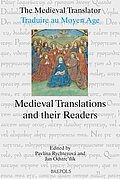
Pavlína Rychterová / Jan Odstrcilik (Hg.)
The Medieval Translator, vol. 20
Turnhout: Brepols 2023
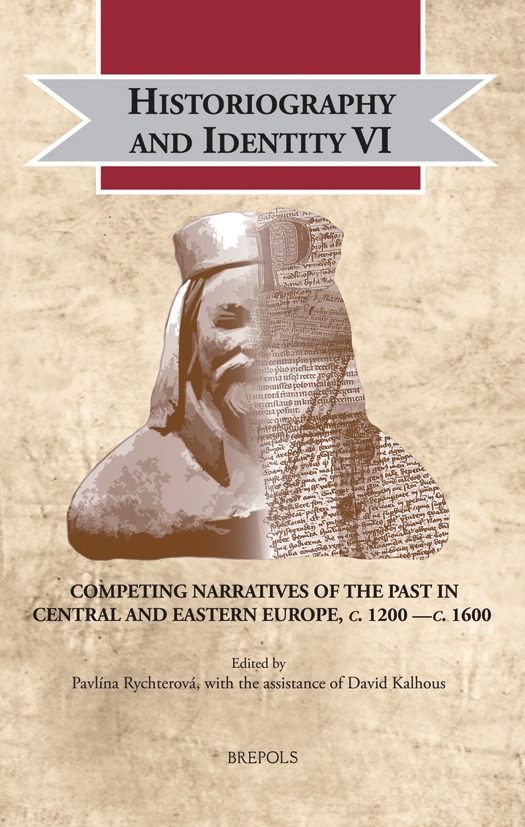
Pavlína Rychterová / David Kalhous (eds.)
(Turnhout: Brepols 2021)
Cultural Encounters in Late Antiquity and the Middle Ages (CELAMA 32)
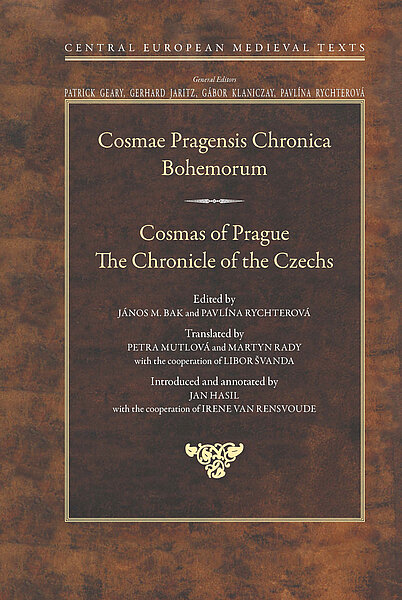
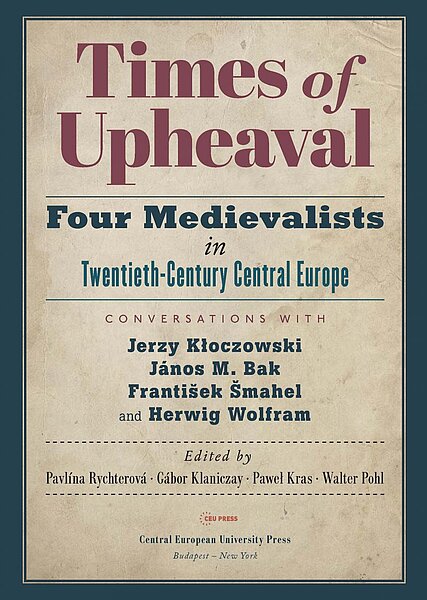
Pavlína Rychterová/Gábor Klaniczay/Paweł Kras/Walter Pohl (Hg.)
Four Medievalists in Twentieth-Century Central Europe.
Conversations with Jerzy Kłoczowski, János M. Bak, František Šmahel, and Herwig Wolfram
(CEU Press 2019)
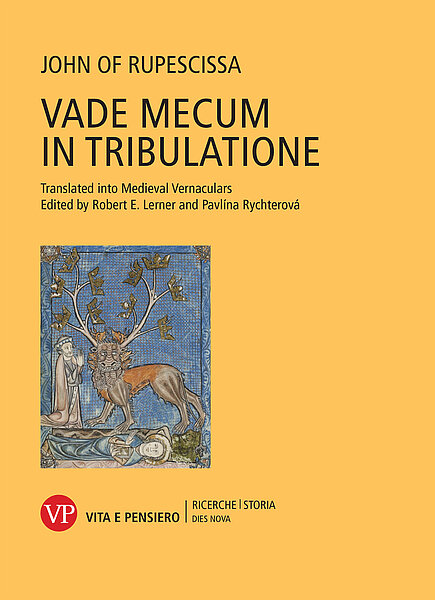
Robert E. Lerner / Pavlína Rychterová (Hg.)
Translated into Medieval Vernaculars
Ricerche. Storia – Dies Nova 4
(Milano | Vita e Pensiero 2019)
Pavlina Rychterová (Hg.)
Religious Education in Late Medieval Central and Eastern Central Europe
(Brepols 2018)
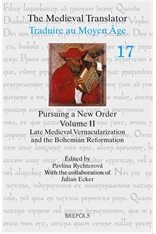
Pavlina Rychterová (Hg.)
Late Medieval Vernacularization and the Bohemian Reformation
(Turnhout: Brepols 2019)
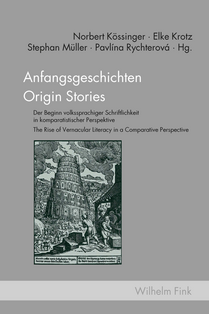
Norbert Kössinger / Elke Krotz / Stephan Müller / Pavlína Rychterová (Hg.)
Der Beginn volkssprachiger Schriftlichkeit in komparatistischer Perspektive
The Rise of Vernacular Literacy in a Comparative Perspective
MittelalterStudien 31
(Paderborn: Verlag Wilhelm Fink 2018)
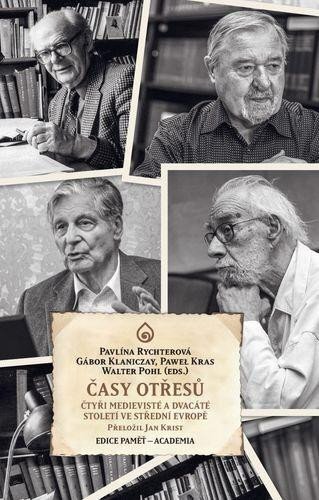
Pavlína Rychterová / Gabor Klaniczay / Walter Pohl / Pavel Kras (Hgs)
Čtyři medievisté a dvacáté století ve střední Evropě
Paměť 151
Praha: Academia 2024
a) Religious educational discourse and the transfer of ideas
b) Multilingual Sermon Collections
c) Late Medieval Narratives of the Past
d) The challenge of Digital Humanities
Tools and Methods for the Medieval studies
e) Coordination of internal and interinstitutional cooperation projects
OVERMODE – Origins of the Vernacular Mode. Regional Identities and European Networks in Late medieval Europe (ERC Staring Grant- Consolidator Group)
NEOPLAT – Neoplatonism and Abrahamic Traditions. A Comparative Analysis of the Middle East, Byzantium and the Latin West (9th-16th Centuries) (ERC Consolidator Grant)
COST – Action IS1301 New Communities of Interpretation: Contexts, Strategies and Processes of Religious Transformation in Late Medieval and Early Modern Europe
ARITHMETIC – German Arithmetical Treatises in Manuscripts of the Late Middle Ages (1400-1522). A Study on Philology, History and Culture based on a Digital Edition of the Treatises (ERC Starting Grant)
Die Null im Blickpunkt (Herta-Firnberg Grant FWF)
The Land of Israel in Geonic Times (stand -alone grant FWF : P 34307-G)