Ziel dieses Projekts war es, ganz Europa in die Gestaltung einer wünschenswerten und nachhaltigen Zukunft einzubinden. BürgerInnen in 30 Ländern leisteten einen einzigartigen Beitrag zur Gestaltung der europäischen Forschungsförderung.
CIMULACT steht wörtlich für "BürgerInnen und Multi-Akteurs Konsultation für das europäische Forschungsförderungsprogramm Horizon 2020". Das Projekt band mehr als tausend BürgerInnen in 30 europäischen Ländern und eine Vielzahl anderer Akteure in die Gestaltung einer wünschenswerten, nachhaltigen Zukunft ein. Der stark partizipative Prozess identifizierte langfristig relevante Forschungsthemen, förderte den Dialog und ein gemeinsames Verständnis zwischen allen beteiligten Akteuren und leistete damit einem wertvollen Beitrag zu verantwortungsvoller Forschung in der EU.
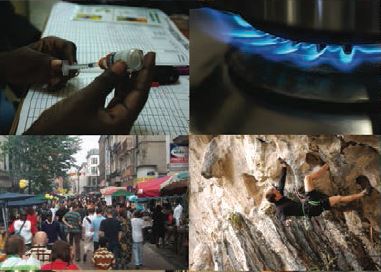
Das ITA lud 40 in Österreich wohnhafte Personen zum BürgerInnen-Visionen Workshop ein. Die Teilnehmenden haben gemeinsam Visionen für eine nachhaltige und wünschenswerte Zukunft entwickelt. Dabei wählten sie jene Aspekte aus, die aus ihrer Sicht am wichtigsten sind, wenn es darum geht sich eine gute und lebenswerte Zukunft vorzustellen.
Ziel von CIMULACT war es, gemeinsam konkrete Visionen zu entwickeln. Sie sollten die Basis für europäische Forschungsprogramme sein die so gestaltet sind, dass sie auch den Interessen der Allgemeinheit Rechnung tragen. Der BürgerInnen-Visionen Workshop in Wien fand am Freitag, 27. November 2015 statt. Die nach festgesetzten Kriterien ausgewählten Teilnehmenden stellten einen möglichst diversen Querschnitt der Bevölkerung dar.
Jedes der 30 europäischen Länder, die an CIMULACT teilnahmen, führten einen standardisierten BürgerInnen-Visionen Workshop mit ca. 40 TeilnehmerInnen durch. So haben mehr als tausend Menschen Visionen für eine wünschenswerte Zukunft im Jahr 2050 formuliert. Es war ein kreativer Prozess, der auch dazu diente sich die Frage zu stellen, was die Visionen der BürgerInnen konkret bedeuten könnten: Was würden Menschen der Zukunft essen, welche Technologien gäbe es und wie würden diese den Alltag bestimmen? Wie würde das Verhältnis Mensch-Umwelt aussehen, welche Regulierungen würde es geben?
Die Ergebnisse - also 179 Visionen aus 30 Ländern - wurden in nationalen Berichten zusammengefasst und schließlich zusammengeführt. So konnten Unterschiede in den verschiedenen Ländern ebenso wie Ähnlichkeiten oder widersprüchliche Vorstellungen dargestellt werden. Im nächsten Schritt befassten sich ExpertInnenen, BürgerInnen und VertreterInnenn von verschiedenen Interessensgruppen mit den Ergebnissen. Sie hatten die Aufgabe, Wünsche, Hoffnungen und Befürchtungen der BürgerInnen in konkrete Forschungsthemen und Inputs für Forschungsprogrammen zu transformieren. Diese Vorschläge wurden schließlich der EU-Kommission, den nationalen Parlamenten und EntscheidungsträgerInnen sowie den nationalen Forschungsförderungsagenturen präsentiert.
Der intensiv diskutierte Begriff Transformation bezeichnet den umfassenden Umbau gesellschaftlicher Strukturen, um gesellschaftliche Herausforderungen durch tiefgreifende Veränderungen der Energie-, Verkehrs-, Produktions- und Agrarsysteme zu adressieren. Da solch komplexe Transformationen stets mit Unsicherheiten über Effekte und Folgen einhergehen, setzen sich die Beiträge kritisch mit den Chancen und Risiken dieser Prozesse auseinander und diskutieren Möglichkeiten und Grenzen der Technikfolgenabschätzung im Kontext gesellschaftlicher Transformationsprozesse. Der Band versammelt die wissenschaftlichen Beiträge der 8. internationalen Konferenz des Netzwerks Technikfolgenabschätzung, die vom 7. bis 8. November 2018 in Karlsruhe stattfand.
Traditionally, expert-based forward looking has been applied to anticipate future challenges, solutions and strategic decisions, but limitations to this approach have become obvious – especially when considering long term perspectives – e.g. failing to include a comprehensive array of opinions. Aiming at producing sustainable strategies for responsible socio-technical change, research funding can benefit from combining forward looking and public participation to elicit socially robust knowledge from consulting with multi-actors, including citizens. In this paper, we give insights into the EU project CIMULACT – Citizen and Multi-Actor Consultation on Horizon 2020. In CIMULACT, more than 4500 citizens, stakeholders and experts from 30 European countries engaged online and offline to co-create research topics. These are supposed to serve as input for the next round of calls in Horizon 2020, national research agendas as well as the ninth framework programme in the making. We investigate key results of this transdisciplinary process focussing on the topic “democratic education” with regard to two levels: What issues concerning the topic were raised? Can we find a common European imaginary for “democratic education”? Our analysis shows that the results contribute to defining and describing challenges for the currently prevailing imaginary of democratic education in Europe.
Set within the fields of participatory foresight and technology assessment, this cumulative dissertation consists of five articles that describe and discuss theory, method development and case studies with regard to the CIVISTI-method (Citizens’ Visions on Science, Technology and Innovation) - a relatively new long term participatory foresight method for needs-based program development that has barely been discussed in literature to date. Part one is an assessment of the original CIVISTI method, describing the framework conditions in which it was first developed and applied: advising for EU STI policy making by using exemplary results and critically discussing method and outcomes. Part two extends the method’s theoretical basis by an extensive literature review building upon the interdisciplinary fields of Futures Studies, Sustainability Science, Science and Technology Studies (STS) and Technology Assessment (TA) and presents method adaptations by using the example of two recent cases that advanced and applied the method in comparison to the original method. Part three provides in depth insights one of these case studies, a participatory foresight project that investigated how transdisciplinary agenda setting through means of including citizens, experts and stakeholders can provide orientation for long-term planning on the future of ageing in the city. Part four presents a deeper view on results and process innovations developed and applied during second recent case study, delivering insights into the results of a participatory foresight study that engaged multiple actor groups to uncover and discuss emerging issues and future challenges of the (Austrian) food system. Part five finally further reviews relevant literature regarding participatory foresight and the role of forward looking studies in relation to shaping research agendas, while presenting initial results of the method’s most recent application, again set within an advisory process for EU-STI policy making
-> Science, technology and innovation (STI) should increasingly contribute to solving societal problems.-> Orienting STI towards societal needs is necessary.-> Research programmes can therefore benefit greatly from open, participatory agenda-setting in which citizens, experts, policy-makers and other stakeholders co-create objectives.
-> Forschung, Technologie und Innovation (FTI) soll vermehrt einen Beitrag zur Lösung gesamtgesellschaftlicher Probleme leisten.-> Die Orientierung von FTI an gesellschaftlichen Bedürfnissen ist dabei notwendig.-> Forschungsprogramme können daher sehr von offenem, partizipativem Agenda-Setting profitieren, in dem BürgerInnen, ExpertInnen, EntscheidungsträgerInnen und andere Interessensgruppen gemeinsam Zielsetzungen erarbeiten.
Current governance structures are increasingly showing inability to address complex issues such as the Grand Challenges. Dealing with these highly interrelated, cross cutting, extensive and potentially open ended issues requires research, development and innovation to be oriented towards societal needs and demands. Here, developing and applying sustainable long term strategies for socio-technical change on the basis of socially robust knowledge seems inevitable and using the tools of anticipatory governance—forward looking and participation—is essential in order to govern innovation actively and responsibly. Yet, expert-based forward looking has its limits, especially when considering long term perspectives, and may fail to include all necessary opinions. Thus, stakeholder engagement has become a norm over the last decades, but including laypeople into forward looking science, technology and innovation (STI) governance is underexplored. Here, strategy and policy programme development may be well suited to function as early entry point for public needs and values into the innovation process. This paper will briefly review the theoretical basis for transdisciplinary forward looking and provide first insights into an ongoing highly deliberative and reflexive foresight and co-creation process engaging science, society and policy makers, CIMULACT—Citizen and Multi-Actor Consultation on Horizon2020. We will especially focus on the role of technology within a collective visioning exercise that allowed for shared explorations of desirable futures, thereby collecting tacit knowledge as well as social needs and values. Integrating these with stakeholders’ and experts’ knowledge serves for co-creating socially robust knowledge for orienting policy and strategy programming towards needs based science, technology and innovation.
Gudowsky-Blatakes, N. (Speaker) & Rosa, A. (Contributor)
Sotoudeh, M. (Speaker)
Gudowsky-Blatakes, N. (Speaker) & Peissl, W. ((Co-)Author)
Gudowsky-Blatakes, N. (Speaker) & Peissl, W. ((Co-)Author)
B Rosa, A. (Contributor), Cuhls, K. (Contributor), Warnke, P. (Contributor) & Gudowsky-Blatakes, N. ((Co-)Author)
Gudowsky-Blatakes, N. (Speaker), Warnke, P. (Contributor), Rosa, A. (Contributor), Häuser, N. (Contributor) & Peissl, W. ((Co-)Author)
Gudowsky-Blatakes, N. (Speaker), Peissl, W. ((Co-)Author), Sotoudeh, M. ((Co-)Author) & Bechtold, U. ((Co-)Author)
Peissl, W. (Speaker) & Gudowsky-Blatakes, N. ((Co-)Author)
Gudowsky-Blatakes, N. (Speaker)
Gudowsky-Blatakes, N. (Speaker)
Gudowsky-Blatakes, N. (Speaker)
Gudowsky-Blatakes, N. (Speaker)
Gudowsky-Blatakes, N. (Speaker) & Sotoudeh, M. ((Co-)Author)

This project has received funding from the European Union's Horizon 2020 research and innovation programme H2020-ISSI-2014-1 under grant agreement No [665948]
("Citizen and multi-actor consultation on Horizon 2020")
06/2015 - 03/2018