PACITA
Das Projekt "Parlamente und Zivilgesellschaft in der TA" (PACITA) beleuchtet TA Aktivitäten in Europa und ihre Rolle bei der Wissensvermittlung für die Politik
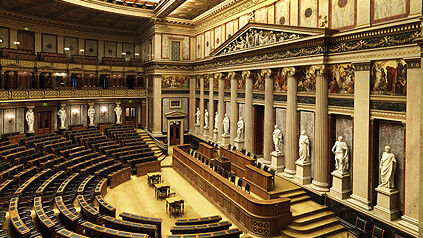
Bereits jetzt passieren auf dem Gebiet der TA in Europa eine Vielzahl von Aktionen: von interdisziplinären ExpertInnenstudien über die Beteiligung von Interessenvertretungen, bis zu BürgerInnen-Beteiligungsverfahren oder parlamentarischen Anhörungen und Diskussionen. All das soll durch PACITA genutzt und ausgebaut werden.
Technikfolgenabschätzung (TA) soll in Zukunft in noch mehr Ländern Europas einen Beitrag zur Forschungs- und Technologiepolitik leisten. 15 europäische Partner analysieren im Rahmen von PACITA die Situation und schlagen Wege zur Etablierung von TA vor.
Dokumentation
PACITA wird zunächst die bestehenden Methoden und Ansätze dokumentieren, und danach die Möglichkeiten für deren Einsatz auf europäischer Ebene beschreiben. Dabei sollen ein Trainingsprogramm für NutzerInnen und Ausführende sowie ein Web-Portal für europäische TA entstehen.
Diskussion
Auf nationaler Ebene soll eine Debatte über parlamentarische TA in jenen Ländern entstehen, die noch keine formelle TA-Institution haben. Auf europäischer Ebene wird eine Debatte unter Einbeziehung von ExpertInnen, VertreterInnen der Zivilgesellschaft und PolitikerInnen angeregt.
Aktion
Schließlich werden drei große Beispielprojekte unter Nutzung verschiedener Ansätze durchgeführt. Eine effiziente Kommunikationsstrategie soll dazu beitragen, dass auch Medien und Öffentlichkeit das Thema mitverfolgen.
Der gesamte Prozess wird von einem externen Evaluator begleitet. Das ITA ist der österreichische Partner von PACITA, koordiniert wird das Projekt von einer international anerkannten TA-Institution, der Danish Board of Technology Foundation. Das ITA trägt zu allen Arbeitspaketen bei und ist federführend beim Modul „Training TA“ und beim Aufbau des TA-Portals.
VOLTA-Magazin als gemeinsame Publikation
Im Rahmen der PACITA Kooperation wird auch ein neues TA-Magazin herausgegeben: VOLTA beschäftigt sich mit Wissenschaft, Technologie und Gesellschaft in Europa. Regelmäßige Artikel zu TA-relevanten Themen bieten Entscheidungsträgern wertvolle Informationen für eine wissensbasierte Entscheidungsfindung.
Publikationen
Publikationen
- . (2019). Wrinkles and Smiles — What is Good Aging? A Technology Assessment Perspective. Obm Geriatrics, 3, 26. doi:10.21926/obm.geriatr.1902058
- . (2015). Doing Cross-European Technology Assessment. In L. Klüver, Nielsen, R. Ø., & Jørgensen, M. L. (Eds.), Policy-Oriented Technology Assessment Across Europe. Expanding Capacities (pp. 77-88). London: Palgrave Pivot. doi:10.1553/ita-pa-WP-15-2DOIWebseiteDownloadRISENWBIB Kurzfassung
The authors give a case-based state-of-play account of cross-European TA cooperation in service of national parliaments as well as the European Parliament. Most TA units have formed their role around the specific needs of their national or regional parliaments and other national or regional target groups, making it challenging to shift focus and create new roles for themselves in a European sphere. This article presents recommendations on how cross-European TA can be done in the future with a focus on three aspects of cross-European TA: (1) the added value of cross-European work and lessons from past experiences; (2) the identification of effient and credible modes of cooperation to conceptualize cross-European TA; (3) the identification of relevant target groups and addressees and the bringing about of impact on the European level.
- . (2015). E-Infrastructures for Technology Assessment. In L. Klüver, Nielsen, R. Ø., & Jørgensen, M. L. (Eds.), Policy-Oriented Technology Assessment Across Europe. Expanding Capacities (pp. 147-156). London: Palgrave Pivot. doi:10.1553/ita-pa-MN-15-3DOIWebseiteDownloadRISENWBIB Kurzfassung
Nentwich gives an in-depth account of developments within the TA community towards a common e-infrastructure for technology assessment (TA). The author argues that while technology development is genuinely international, there are too few endeavours to address technology assessment (TA) issues internationally; likewise, there are no sustainable online platforms for knowledge sharing, dissemination and public debate as yet. The PACITA project partners therefore worked to establish such an infrastructure by means which the article details. Creating and sustaining a strong, interactive e-infrastructure for cross-European TA is both greatly challenging and worthwhile as it would ultimately help to nuance and possibly even democratize European science, technology and innovation policy. Nentwich therefore argues for the continuation of these efforts by central actors in and supporters of TA.
- . (2015). Seeing Technology Assessment with New Eyes. In L. Klüver, Nielsen, R. Ø., & Jørgensen, M. L. (Eds.), Policy-Oriented Technology Assessment Across Europe. Expanding Capacities (pp. 18-36). London: Palgrave Pivot. doi:10.1553/ita-pa-MN-15-2DOIWebseiteDownloadRISENWBIB Kurzfassung
Van Est et al. present a ‘relational’ model for analysing technology assessment (TA) institutions. Expanding on metaphor of TA as a bridge between science, society and policy, the authors describe how such bridges are established in terms of network relations. European TA institutions in various ways link parliaments and governments with civil society and science. In part, TA projects provide such linkages, but importantly, TA institutions in themselves also provide informal personal links between societal spheres. With in-depth examples from diffrent European member states, Van Est et al. provide institutional entrepreneurs with rich material for imagining institutional TA arrangements that might fi within their own national arenas.
- . (2015). Citizens´ view on sustainable consumption. ITA-Dossier no. 16en (October 2015; Authors: Leo Capari, Mahshid Sotoudeh). Wien. doi:10.1553/ita-doss-016enDOIDownloadRISENWBIB Kurzfassung
-> More than 1000 citizens in eleven European countries discussed consumption policy within a standardised setting.
-> Citizens demand environmentally friendly, socially responsible and economically affordable products and services.
-> Their main opinion: policy-makers should take ambitious steps to foster sustainable and environmentally friendly consumption in Europe. - . (2015). Reden wir über Konsum. ITA-Dossier Nr. 16 (Oktober 2015; AutorInnen: Leo Capari, Mahshid Sotoudeh). Wien. doi:10.1553/ita-doss-016DOIDownloadRISENWBIB Kurzfassung
-> Über 1000 BürgerInnen aus elf europäischen Ländern diskutieren über Konsumpolitik im Rahmen eines standardisierten Beteiligungsverfahrens.
-> Die BürgerInnen fordern umweltfreundliche, sozialverträgliche und leistbare Produkte und Dienstleistungen.
-> Die Politik sollte aus Sicht der BürgerInnen ambitionierte Ziele verfolgen, um umweltbewussten und sozialverträglichen Konsum in Europa zu fördern. - . (2015). Bye Bye VOLTA Magazin. Ita-Newsfeed. Retrieved from http://www.oeaw.ac.at/ita/deatil/news/bye-bye-volta-magazin
- . (2015). Teleassistenz in einer alternden Gesellschaft. Von gedachten Szenarien zu realen Empfehlungen (PACITA Kurzbericht) (p. 31). doi:/10.1553/ITA-pb-e25-3
- . (2015). Cross-European Technology Assessment: Visions for the European TA Landscape. Technikfolgenabschätzung – Theorie Und Praxis, 24, 68-74. Retrieved from http://www.tatup-journal.de/tatup151_peba15a.phpWebseiteRISENWBIB Kurzfassung
The whole of Europe is getting more closely connected and, with the rapid technological development, there seems to be a need for establishing networks and knowledge bases in a cross-European manner. This can be advantageous for both the national and regional levels of policy making as well as for the European one. This paper discusses the past, present and future of cross-European work going on in the field of parliamentary technology assessment (PTA). The main questions to be dealt with will be: What did we learn from past cross-European projects? What is the additional value provided by cross-European TA? And how can cross-European TA be structurally established in the long term? To answer them, we analyse the existing framework conditions for cross-European projects, compare ten cases of previous cross-European projects and draw some lessons. In the final part we present conclusions and recommendations for fostering cross-European cooperation within the TA community.
- . (2014). Showing initiative for sustainable consumption. Ita-Newsfeed. Retrieved from http://www.oeaw.ac.at/ita/en/projects/project-news/breites-engagement-fuer-nachhaltigen-konsum
- . (2014). Was Sie schon immer TA wissen wollten: Zwei neue Webportale. TAB-Brief Nr. 44. Retrieved from http://www.tab-beim-bundestag.de/de/pdf/publikationen/tab-brief/TAB-Brief-044.pdfWebseiteRISENWBIB Kurzfassung
Um die Sichtbarkeit von Technikfolgenabschätzung in der Wissenschaft und der interessierten Öffentlichkeit zu erhöhen, wurde Ende 2012 das DFG-geförderte Projekt »Kooperativer Aufbau eines Fachportals Technikfolgenabschätzung auf Basis dezentraler Informationsressourcen«, kurz openTA, begonnen. Auf europäischer Ebene verfolgt das EU-Projekt »Parliaments and Civil Society in Technology Assessment« (PACITA) das Ziel, die Kapazitäten und institutionellen Voraussetzungen für wissensbasierte politische Entscheidungsfindung zu erweitern und die parlamentarische TA in Europa zu fördern. In diesem Zusammenhang ist das PACITA TA-Portal entstanden, das in gewisser Weise die europäische Sicht auf TA im Web ergänzt. Entwicklungsstand und Nutzungsmöglichkeiten beider Portale sind Gegenstand dieses Beitrags.
- . (2014). Embracing Variety: Introducing the Inclusive Modelling of (Parliamentary) Technology Assessment. Journal Of Responsible Innovation, 1, 292-313. doi:10.1553/ita-pa-MN-14-5DOIWebseiteDownloadRISENWBIB Kurzfassung
This article introduces an inclusive way of modelling (Parliamentary) Technology Assessment, (P)TA as developed in the European PACITA project. It incorporates interdependencies between and diversity among existing and potential (P)TA practices in a more inclusive and fine-grained way than existing literature does. We model (P)TA as a mediating function between the spheres of parliament, government, science and technology, and society. We suggest that this mediation takes place through a set of interaction mechanisms that include institutional, organizational and project dimensions. In this way, we distinguish among 15 potential interaction models for (P)TA. Our more inclusive way of modelling may be used to map and discuss fruitful evolutionary pathways for (P)TA in countries and regions where (P)TA already exists or where the ambassadorship for (P)TA is about to take off. In the conclusion, we reflect on the relevance of our modelling for the discourse on and practice of responsible innovation.
- . (2014). How technology can support the ageing society. ITA-Dossier no. 12en (October 2014; Authors: Niklas Gudowsky, Ulrike Bechtold). Wien. doi:10.1553/ita-doss-012enDOIDownloadRISENWBIB Kurzfassung
-> The world’s population is ageing rapidly: in 2050, there will be three times as many people over the age of eighty than today.
-> Consequently, the demand for care and social services will rise. Meanwhile, disposable resourceswill decrease: social and healthcare budgets are shrinking as is the number of skilled personnel.
-> Great hope is projected on technology to support solutions for these challenges. But how do we need to shape technology in order to really support the elderly and meet their needs? - . (2014). Wie Technik Älteren helfen kann. ITA-Dossier Nr. 12 (Oktober 2014; AutorInnen: Niklas Gudowsky, Ulrike Bechtold). Wien. doi:10.1553/ita-doss-012DOIDownloadRISENWBIB Kurzfassung
-> Die Weltbevölkerung altert rapide: Bis 2050 wird es drei Mal so viele Menschen über achtzig geben wie heute.
-> Der Bedarf an Gesundheits- und Sozialleistungen wird als Folge steigen. Die dafür verfügbaren Ressourcen werden gleichzeitig knapper: Sozial- und Gesundheitsbudgets schrumpfen ebenso wie die Zahl qualifizierter Arbeitskräfte.
-> In der Auseinandersetzung mit diesen Herausforderungen gilt Technik als große Hoffnungsträgerin. Wie müssen wir Technik aber gestalten, damit sie älteren Menschen tatsächlich nützt und ihren Bedürfnissen gerecht wird? - . (2014). PACITA Deliverable 6.6: National report – Scenario workshop in Austria (p. 50). doi:/10.1553/ITA-pb-e25-2
- . (2014). European Wide Views - Die Ergebnisse!. Ita-Newsfeed. Retrieved from http://www.oeaw.ac.at/ita/projekte/news/european-wide-views-die-ergebnisse
- . (2014). CIVISTI Method for Future Studies with Strong Participative Elements. (T. Michalek, Hebáková, L., Hennen, L., Scherz, C., Nierling, L., & Hahn, J., Eds.), Technology Assessment and Policy Areas of Great Transitions, Proceedings from the PACITA 2013 Conference. Prague: Technology Centre ASCR. Retrieved from http://pacita.strast.cz/en/outputs/outputs-list/proceedings-from-the-pacita-2013-conference-in-prague
- . (2013). Was kann Big Data?. Ita-Newsfeed. Retrieved from http://www.oeaw.ac.at/ita/projekte/news/was-kann-big-data
- . (2013). Voller Erfolg in Prag – Europäische Konferenz zu TA. Ita-Newsfeed. Retrieved from http://www.oeaw.ac.at/ita/veranstaltungen/veranstaltungs-news/voller-erfolg-in-prag
- . (2013). Politik und TA. Ita-Newsfeed. Retrieved from http://www.oeaw.ac.at/ita/veranstaltungen/veranstaltungs-news/politik-und-ta
Konferenzbeiträge/Vorträge
Konferenzbeiträge/Vorträge
-
27.02.2015
, Berlin
Michael Nentwich:
Statement am Podium: Visions of Parliamentary TA in Europe in the Light of the PACITA Experience
2nd European TA conference: The Next Horizon of Technology Assessment; Session "Visions of TA" -
26.02.2015
, Berlin
Ulrike Bechtold:
Future Technologies – Current Challenges: Future Assistive Technologies as Drafted by Engineers, their Effects upon Users and some Further Implications
PACITA, 2nd European TA Conference -
26.02.2015
, Berlin
Mahshid Sotoudeh, Ulrike Bechtold, Niklas Gudowsky-Blatakes, Leo Capari:
The public view on an ageing society. Insights from two participatory case studies in Austria
PACITA, 2nd European TA Conference -
26.02.2015
, Berlin
Michael Nentwich:
The PACITA TA Portal. Poster Presentation
2nd European TA conference: The Next Horizon of Technology Assessment; Poster Session -
26.02.2015
, Berlin
Michael Nentwich:
Statement am Podium: Experiences and Challenges for Austrian TA
2nd European TA conference: The Next Horizon of Technology Assessment; Plenary Session "What's Next fo TA? Experiences, Perspectives, Outlooks" -
25.02.2015
, Berlin
Mahshid Sotoudeh, Ulrike Bechtold, Niklas Gudowsky-Blatakes, Leo Capari:
Participatory Foresight – Experiences with a Qualitative Demand Side Approach
PACITA, 2nd European TA Conference -
25.02.2015
, Berlin
Michael Nentwich:
The PACITA TA Portal – Achievements and Challenges Ahead
2nd European TA conference: The Next Horizon of Technology Assessment; Session "E-Infrastructures for TA" -
04.06.2014
, Wien
Mahshid Sotoudeh, Leo Capari:
PACITA Fallstudie “Teleassistenz in einer alternden Gesellschaft”: Ein Szenario-Workshop mit Stakeholder-Beteiligung
Internationale Konferenz NTA6-TA14: Responsible Innovation – Neue Impulse für die Technikfolgenabschätzung? -
05.07.2013
, Budapest
Michael Nentwich:
From shared science-government involvement in TA to a Parliament developing a permanent TA advisory system
2nd PACITA Workshop -
15.03.2013
, Prag
Walter Peissl, Mahshid Sotoudeh:
CIVISTI method for future studies with strong participative elements
Technology Assessment and Policy Areas of Great Transitions (1st PACITA Conference), Session XVIII: 'Participation: Practical Cases' -
15.03.2013
, Prag
Michael Ornetzeder, Petra Wächter:
Transition pathways to a sustainable energy future in Austria: Socio-technical scenarios and structural challenges
Technology Assessment and Policy Areas of Great Transitions (1st PACITA Conference), Session XIII: 'Energy Transition' -
14.03.2013
, Prag
Alexander Bogner:
The paradox of participation in new and emerging technologies
Technology Assessment and Policy Areas of Great Transitions (1st PACITA Conference), Session XII: 'Participatory Methods' -
08.03.2013
, Namur
Michael Nentwich:
TA en Autriche
Les nouvelles technologies en débat. Colloque inaugural des "Midis du Technology Assessment" au Parlement Wallon -
12.11.2012
, Karlsruhe
Walter Peissl:
TA Vision 2020
Workshop on Cross European TA -
13.09.2012
, Sofia
Walter Peissl:
Having Impact
2nd National Policy Workshop 'Technology Assessment in Public Policy in Bulgaria: Goals, Stakeholders, Added Value, and Impact' -
21.06.2012
, Copenhagen
Walter Peissl:
What is the added value of European projects and motives for cooperation for national TA bodies? Introduction to the workshop Cross European TA: Experiences and Prospects
PACITA Consortium Meeting -
22.05.2012
, Budapest
Michael Nentwich:
Technology Assessment in the framework of an Academy of Science – The Case of ITA
PACITA Workshop -
20.04.2012
, Sofia
Walter Peissl:
Technology Assessment at the German Parliament
PACITA Workshop -
20.04.2012
, Sofia
Walter Peissl:
ITA – The Institute of Technology Assessment: Organisation and Vision
PACITA Workshop -
20.04.2012
, Sofia
Walter Peissl:
PRISE – Privacy and Security: Supporting activity outline
PACITA Workshop