

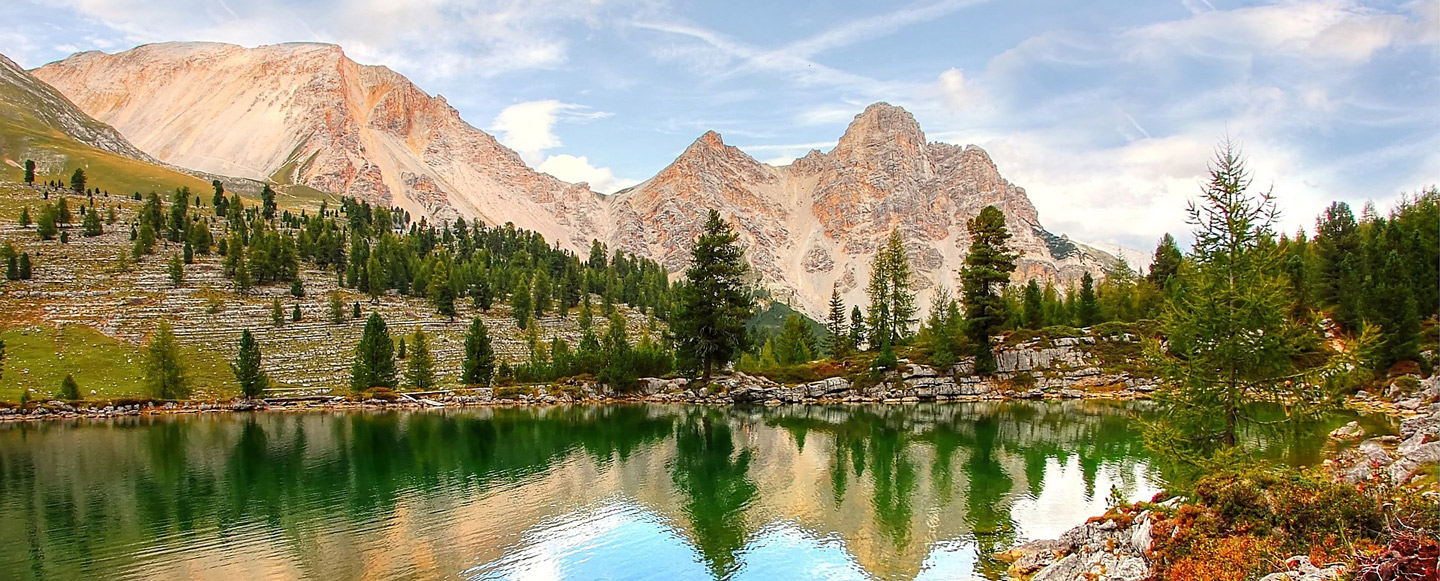
The Earth System Sciences (ESS) research programme, led by the OeAW for the Federal Ministry of Education, Science and Research, aims to research the earth as a system. Calls are published for funded research projects at the cutting edge of science. ESS thus seeks to fill gaps in the Austrian research landscape, for instance with regard to interdisciplinary projects, long-term research projects and pioneering research.
The three thematic orientations of the ESS programme are global change, geo/hydrosciences and UNESCO Man and the Biosphere. All three are administered by a national committee.
The national committees are composed of renowned scientists and representatives of ministries and organisations of the federal states. They coordinate the research activities, observe the Austrian research landscape, analyse research needs and formulate ideas for new programme foci. Together, the national committees also shape the scientific orientation of the ESS calls.
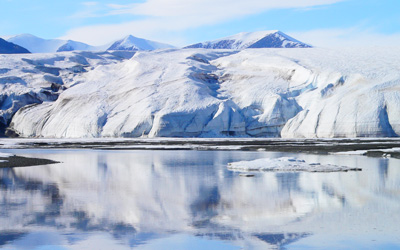
The research foci of the National Committee for Global Change include global change in all its facets, mountain research, geogenic risks, environmental security and the long-term monitoring of ecosystems. Along with the funding awarded by ESS calls for projects, the National Committee also provides funding for smaller research projects, such as pilot projects opening up new fields of research, for research excursions or expeditions.
Information on applications: joerg.boeckelmann(at)oeaw.ac.at.
Since taking on the agendas of earlier programmes such as Alpine Research, Global Change or International Strategy for Disaster Reduction, the National Committee has also represented Austria in several international research programmes, cooperation programmes and networks, including for example Future Earth, the World Climate Research Programme, the International Scientific Committee on Research in the Alps and Long Term Ecosystem Research (LTER). It is also a co-organisor of the “ForumAlpinum/Alpweek”, one of the renowned conference series on alpine research.
Chair: Verena Winiwarter (Universität für Bodenkultur)
Vice Chair: Roland Psenner (University of Innsbruck)
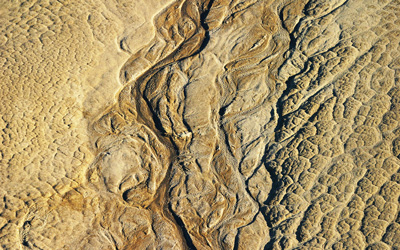
The research foci of the National Committee for Geo/Hydrosciences include issues related to global change, all areas of hydrology and water management, quartenary research and research on mineral and groundwater resources. The National Committee funds scientific projects within the thematic foci of the UNESCO IGCP programme.
Application information: joerg.boeckelmann(at)oeaw.ac.at.
In 2013 the National Committee for Geo/Hydrosciences took over the agendas of the former programmes Geophyics of the Earth’s Crust, the UNESCO International Hydrological Programme (IHP) and the UNESCO International Geoscience Programme, which in Austria also represents the UNESCO geoparks.
Chair: Helmut Habersack (BOKU)
Chair: Werner Piller (University of Graz)
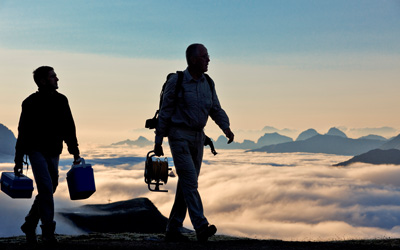
The UNESCO Man and the Biosphere (MAB) programme, founded in 1971, is devoted to the relationship between humans and their environment and the sustainable use of natural resources. The aim is to create a balance between protecting biological diversity, promoting economic and social development and preserving cultural values – in short: sustainable development of the relationship between humans and the environment.
MAB promotes interdisciplinary and internationally connected research, modelling and training in sustainable use of natural resources. The concept of worldwide biosphere reserve networks is one of the key components of the MAB programme for realising sustainable shaping of the relationship between humans and the environment. These internationally recognised areas serve as a kind of “outdoor laboratory” in which models for integrated sustainable development of the region while at the same time protecting the environment are designed, tested and put into practice.
669 regions in 120 states worldwide form a network of biosphere reserves, including three Austria model regions, the Wienerwald, the Grosses Walsertal and the region “Salzburger Lungau & Kärtner Nockberge”. The Austrian MAB National Committee focuses on these Austrian biosphere reserves in its research projects, but also promotes cooperation within the network of UNESCO world biosphere reserves. MAD research projects are awarded on the basis of calls.
Chair: Verena Radinger-Peer (BOKU)
Vice Chair: Michael Getzner (Technische Universität Wien)
National committee for Global Change
National committee Geo/Hydro-Sciences
National committee „Man and the Biosphere“
February 2024
Quality control is ensured by an international Earth System Sciences Advisory Board. It advises the national committees, the OeAW and the Science Ministry on programme development and related scientific questions. In Juli 2017 the ESS Advisory Board published a paper that reflects the philosophy of the ESS programme:
International Programmes
Dr. Ignaz Seipel-Platz 2
1010 Vienna
Dr. Jörg Böckelmann
T +43 1 51581-2772
joerg.boeckelmann(at)oeaw.ac.at