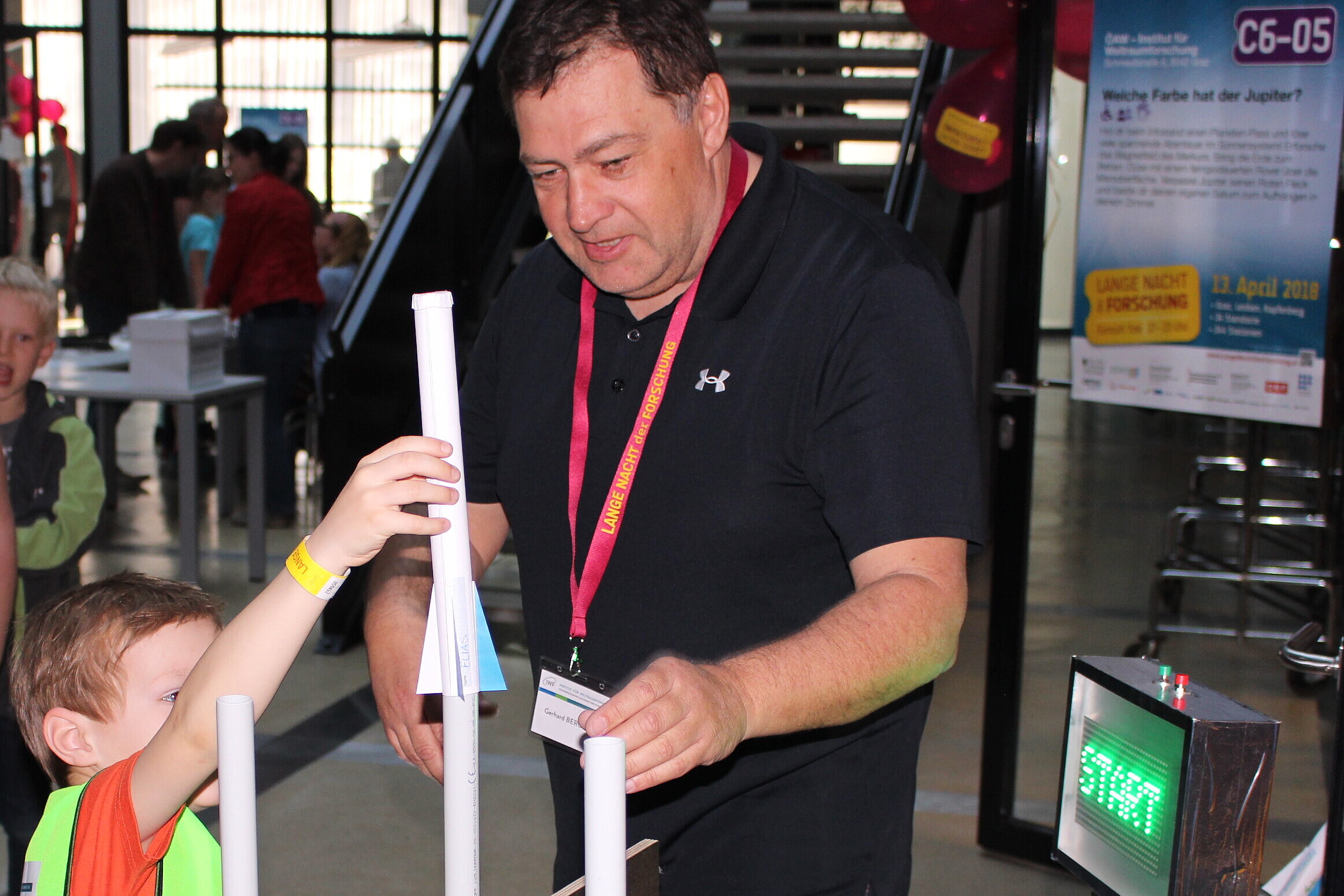

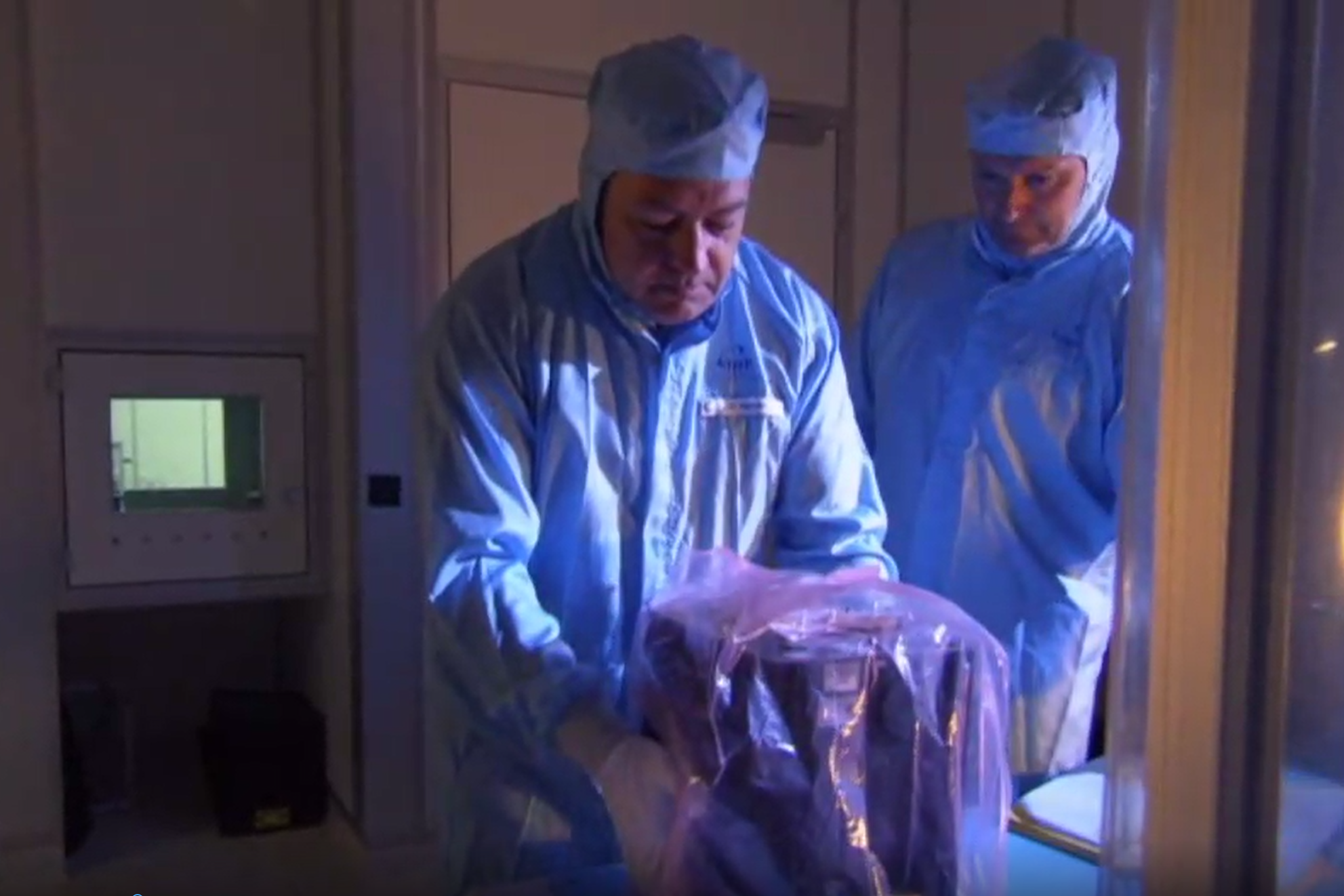
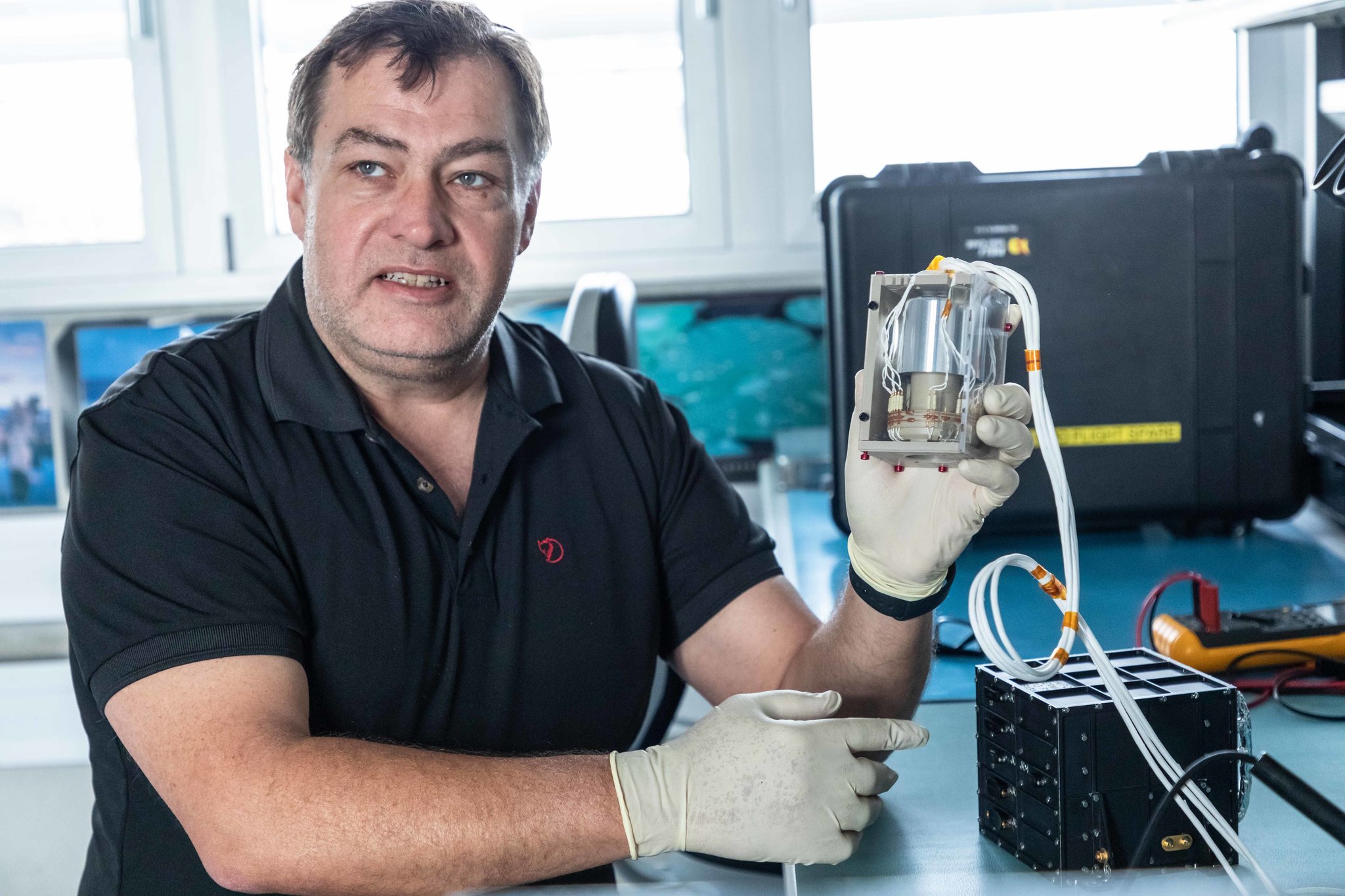


Gerhard Berghofer began his professional career at the Space Research Institute of the Austrian Academy of Sciences on 1 October 1984, immediately after completing a two-year college course in communications engineering and electronics.
At the beginning, Gerhard worked on the instrumentation for a balloon measurement campaign. Since this campaign could not be realised, he switched to developing hardware and software for the Soviet space projects that were being planned at the time and became a permanent member of the institute's magnetometer group.
At a very young age, Gerhard took over the technical management of the development of one of the two magnetometers for the Russian Mars 96 mission. In this role, he not only developed important parts of the electronics for this instrument, but also wrote the associated software. He was also responsible for the integration of the electronics and the performance tests of the entire instrument. Gerhard was able to demonstrate his distinctive talent for communicating objectively, competently, calmly and in a friendly manner during the intensive collaboration with German, Belgian, Hungarian and Russian project partners. Due to a technical defect in the upper stage of the rocket, the project unfortunately failed just a few hours after launch. The space probe was unable to leave Earth's orbit and Gerhard's intensive work over several years ended up in the Pacific.
Fortunately, this was the only setback in Gerhard's professional career, as his work on the Rosetta mission began immediately afterwards with comet 67P/Churyumov-Gerasimenko as its final destination. Gerhard developed the processor unit and the software for the magnetometer on the Philae lander. Rosetta began its long journey in 2004. Ten years passed before Philae finally landed on "Chury" on 12 November 2014 and made space history. Gerhard witnessed this event, which was followed around the world, live at the Philae control centre in Germany to monitor the instrument he helped develop. As the landing probe could not be anchored to the comet's surface, together with the magnetometer it staggered across the surface for around two hours. This mishap turned out to be a stroke of luck for the magnetometer, which was able to measure the magnetic properties of the comet much better - thanks in part to the flawless functioning of Gerhard's hardware and software.
Other highlights included the technical management of the magnetometer on ESA's Venus Express spacecraft, which was built in a record time of just three years and orbited Venus from 2006 to 2014, and the technical management of the magnetometer on the planetary spacecraft of the BepiColombo mission, which was launched in October 2018 but will not enter a stable orbit around Mercury until December 2025. Gerhard's technical talent and knowledge as well as his experience and management skills were of great importance for the timely completion and successful operation of the two magnetometers in space.
Gerhard also supported the magnetometer group in numerous other instrument developments, such as the optical magnetometer on the Jupiter mission JUICE or the magnetometer for the CubeSat mission Foresail.
Recently, Gerhard has been mainly involved in preliminary studies for the magnetometer on ESA's Vigil space probe, which is intended to significantly improve the prediction of space weather phenomena from 2031. The construction phase of this instrument was only recently launched. Gerhard was delighted that this long-planned project is finally being realised. A joy that was unfortunately abruptly interrupted. We will carry out the work for the construction of the Vigil magnetometer and the data analysis of "his" Mercury magnetometer in his memory.
In Gerhard - our "Bergi" - we have lost an extremely experienced, qualified, conscientious and courteous employee, who was also very close to many colleagues at the IWF and our partner institutes.
Our sincere sympathy and deepest condolences are with Gerhard's family.