Cities continue to face diverse societal challenges and changes in the 21st century, which are the focus of the research group "Migration and Urban Diversity." Regardless of city size, they are characterized by diversity, segregation, spatial separation, and inequalities in economic, social, and political dimensions.
The diversity of urban societies is a multifaceted phenomenon (related to migration, age, gender, religion, and social background), and intersectional analysis holds significant importance within this research group. The group is also interested in the concept of the post-migrant city, where migration is considered a norm but remains socially and politically contested. Migration is thus not seen as an exceptional phenomenon but as a vital force shaping urban development, intercultural coexistence, and individual and group identities. Methodologically, the group focuses on qualitative research methods and the development of arts-based research approaches. At the same time, the team has expertise in quantitative methods and combines these in innovative mixed-methods designs. The following key research themes are particularly relevant to the group:
Analysis of Urban Inequalities: In the context of migration and diversity, the goal is to analyze and understand social, spatial, economic, and political inequalities intersectionally. How are cities and urban societies transformed by migration in terms of spatial, social, and cultural structures? Which actors play a role in this process, and how are these changes perceived by different groups? What are the impacts of these changes on social cohesion, the labor and housing markets, neighborhoods, or subjective well-being?
Public Space: From a migration-, diversity-, and everyday-life perspective, public spaces are viewed not only as physical locations (streets, parks, squares, theatres) but also as social spaces where belonging, exclusion, and power dynamics become visible and negotiable. How should public spaces (physical, media-based, and digital) be designed to promote democracy, belonging, and social interactions while countering societal polarization? What role do art and cultural institutions play in the context of urban cultures and public spaces, and how do they respond to, influence, and shape these spaces? How can public spaces be empirically studied in their social, spatial, and symbolic dimensions, and how can existing methods be further developed towards transdisciplinary, mixed-methods, and arts-based research approaches?
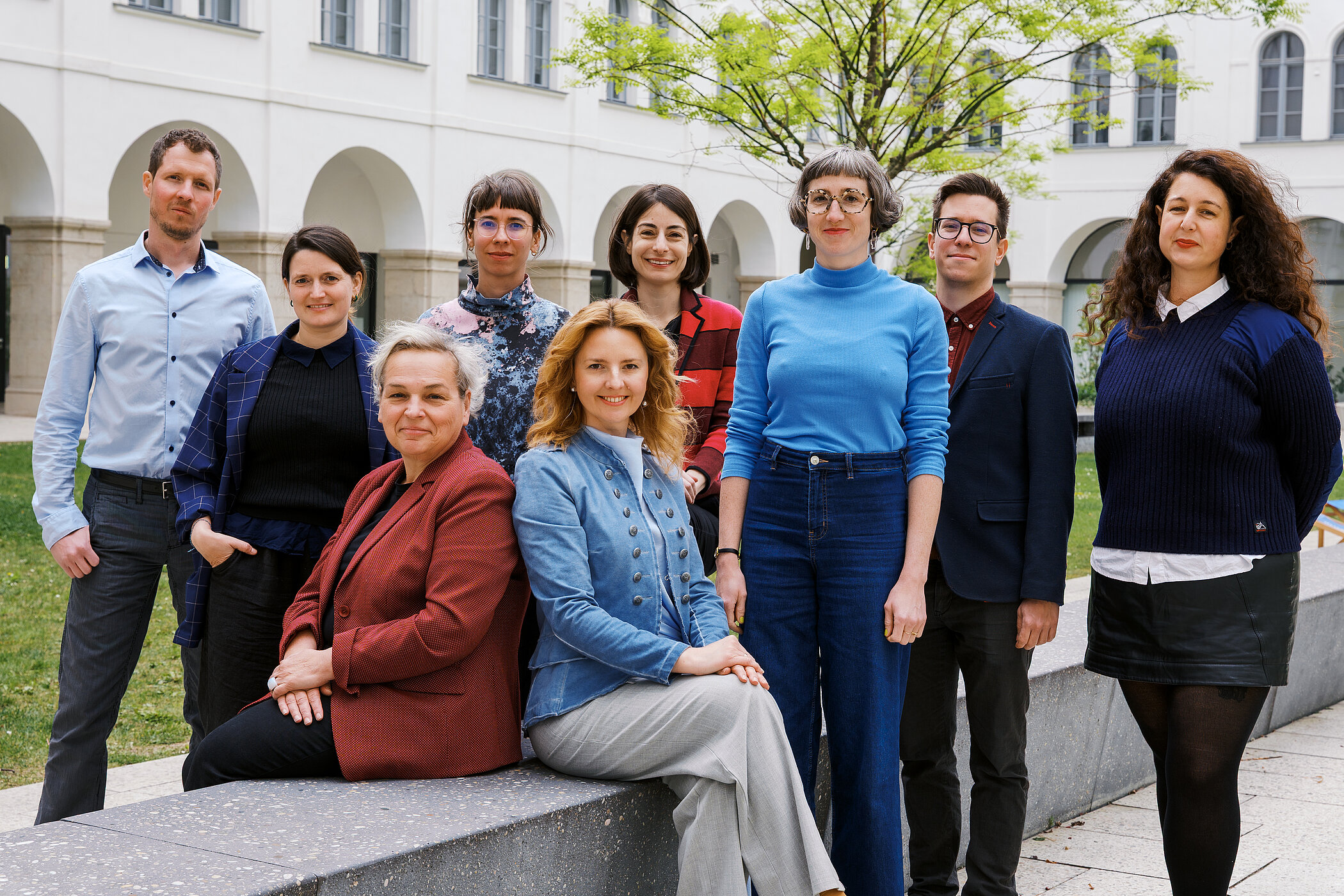
Team