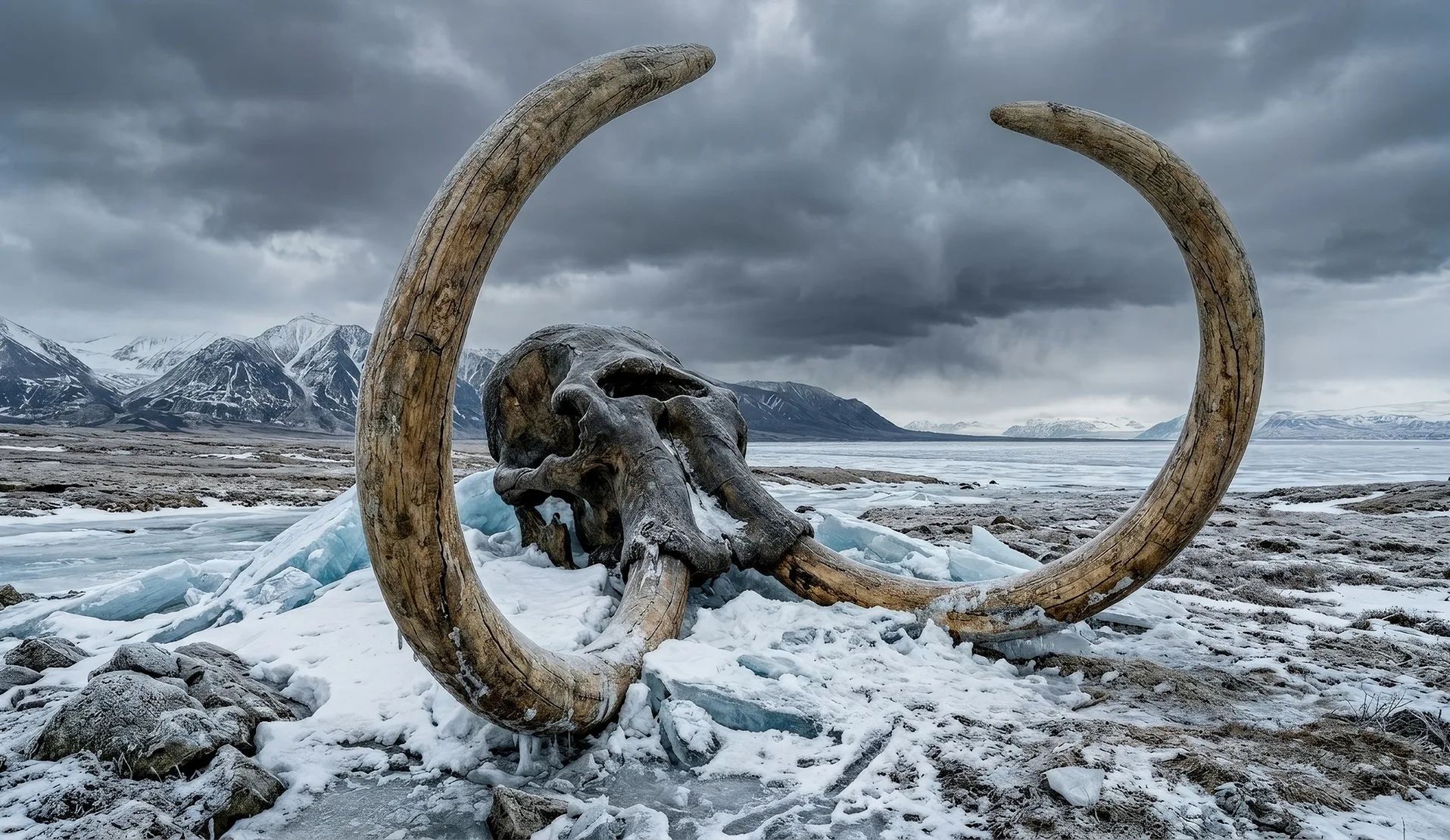
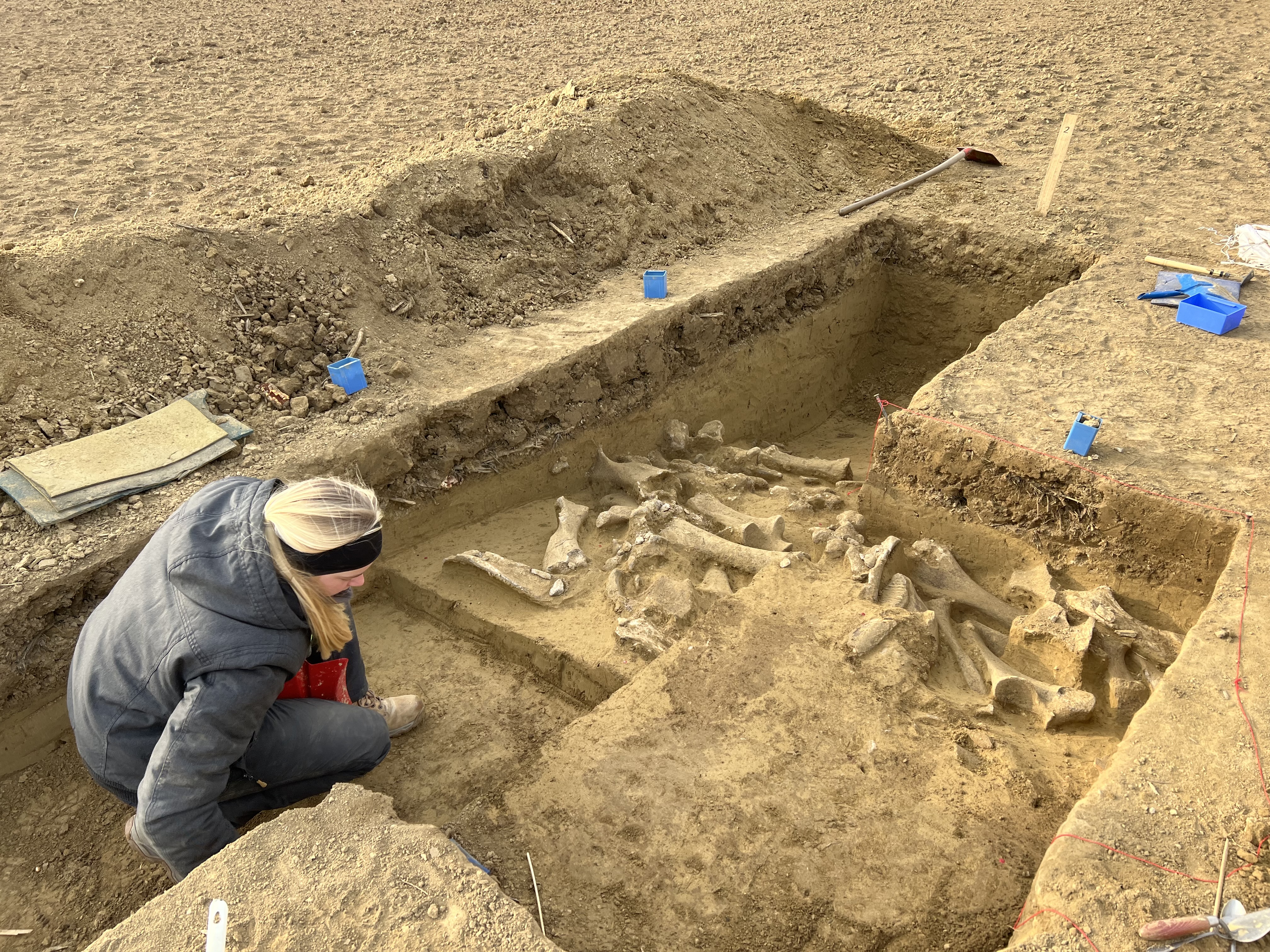
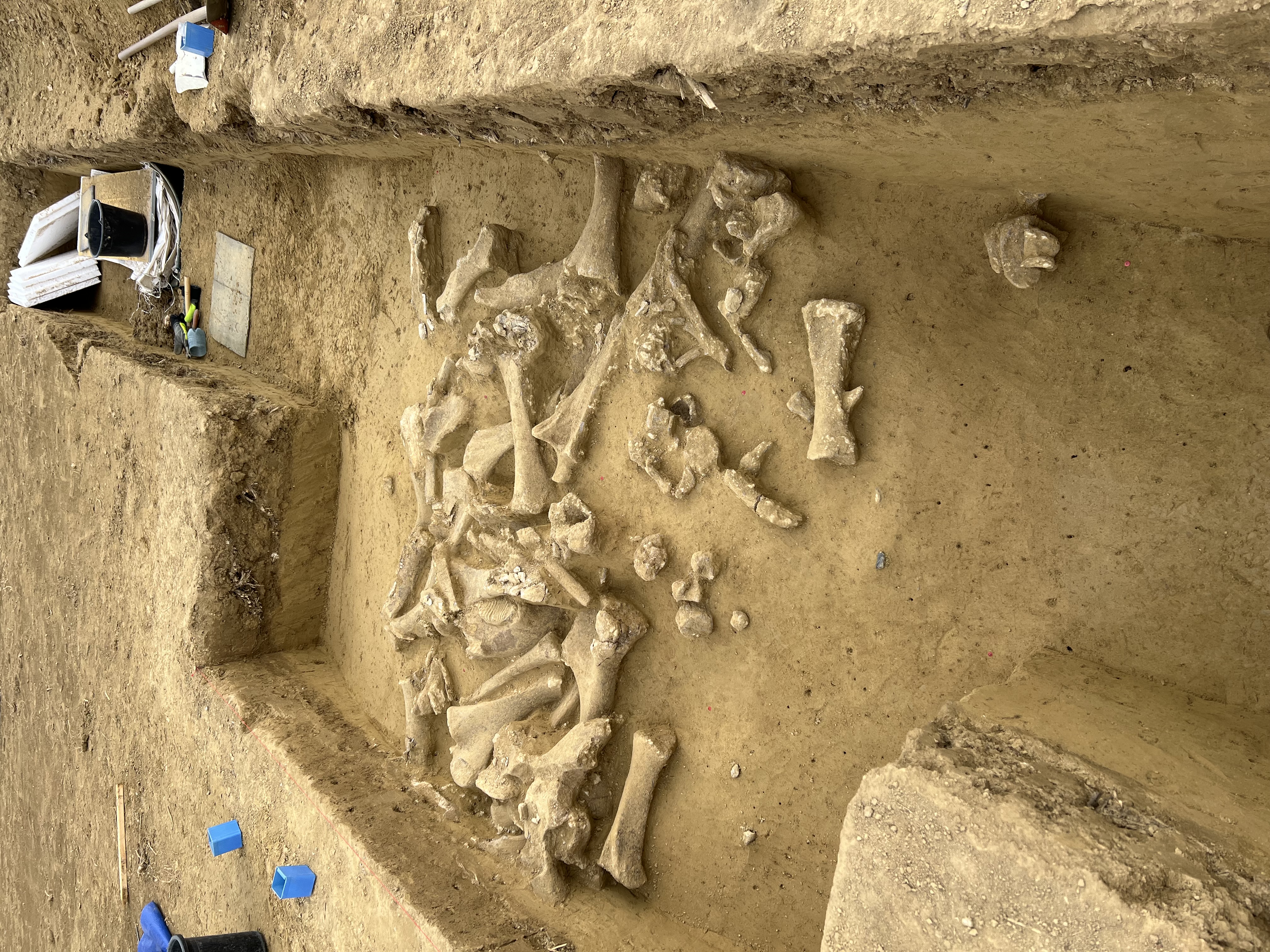


For early humans during the so-called Upper Palaeolithic – that is, the period between around 45,000 and 12,000 years ago – mammoths were an important resource. Hoards of mammoth bones are now among the most impressive artefacts from the Ice Age. A globally networked research team has now analysed the ancient DNA from these bone finds and has arrived at a surprising conclusion: whilst the remains of individual mammoths found scattered across the landscape are significantly more likely to come from male animals, the mammoths examined from bone accumulations – which are attributed to hunting by humans – are predominantly female. The study, in which the Austrian Archaeological Institute of the Austrian Academy of Sciences (OeAW) is also involved, has been published in the journal »Current Biology«.
The researchers analysed the genomes of a total of 521 woolly mammoths from Europe, Asia and North America. One hundred animals came from eleven archaeological sites with large bone accumulations – thus showing evidence of human influence – whilst 421 animals represent scattered finds from predominantly natural contexts, suggesting that the latter died of natural causes. The genetic sex could be determined for all individuals.
The result is clear: amongst the scattered finds, 66.5 per cent of the animals were male. In the bone accumulations showing evidence of human influence, by contrast, 70 per cent were female. »The contrast between the two find contexts is particularly fascinating,” says OeAW archaeologist Marc Händel, who is a co-author of the study. »In natural contexts, we find mainly male mammoths, whereas at sites shaped by human activity, we find mainly females. This suggests that Ice Age humans selected which mammoths they utilised – apparently favouring female animals or herds in which females were more common.«
The preference for hunting female animals is also supported by archaeological evidence, such as that found at Austria’s most important site in Langmannersdorf, Lower Austria: There, as at other sites with accumulations of mammoth bones, stone artefacts, strike marks and possible cut marks on bones, as well as evidence of fire such as charcoal and burnt bones – which cannot be detected in the natural context of the finds – have been discovered. At some sites, stone projectile points were also found embedded in the mammoth bones. »Also noteworthy is the distribution of the bones at the Langmannersdorf site, which indicates that the animals were probably killed and roughly butchered outside the area examined so far, and then further processed at the site after being transported there,« explains Marc Händel of the Austrian Academy of Sciences (OeAW).
The researchers emphasise that the current study cannot yet provide a definitive answer as to why female mammoths in particular were hunted more frequently than males. One possible explanation lies in the social structure of mammoths: much like modern elephants, female mammoths are thought to have lived in herds with their young, whilst adult males left the herds and tended to travel alone or in small groups. Herds of females may therefore have been easier for hunters to track down than solitary males, and their movements were more predictable. Females with young may also have been less mobile and thus easier to hunt.
The researchers therefore do not rule out the possibility that humans did not deliberately target female mammoths, but simply encountered female-dominated herds more frequently.
Whether mother-calf groups or specific age groups were in fact specifically targeted for hunting is now to be investigated further through a combination of genetic sex determination and osteological age determination. This will enable the structure of mammoth herds to be reconstructed – for example, whether male animals found at anthropogenic sites are predominantly juveniles. Supplementary strontium and oxygen isotope analyses are also expected to provide insights into the migrations and seasonal patterns of the mammoths’ movements – which our distant ancestors may have been aware of and could have exploited to successfully hunt the animals.
Publication:
Hannah M. Moots et al.: “Paleogenomic sex inference of mammoth remains sheds light on the anthropogenic nature of bone accumulations”, Current Biology 36 (2026), 1–10.
DOI: 10.1016/j.cub.2026.07.023
Contact:
Sven Hartwig
Head of Public Relations and Communications
Austrian Academy of Sciences
T +43 1 51581-1331
sven.hartwig(at)oeaw.ac.at
Scientific Contact:
Marc Händel
Austrian Archaeological Institute
Austrian Academy of Sciences
+43 1 51581-6138
marc.haendel(at)oeaw.ac.at
