
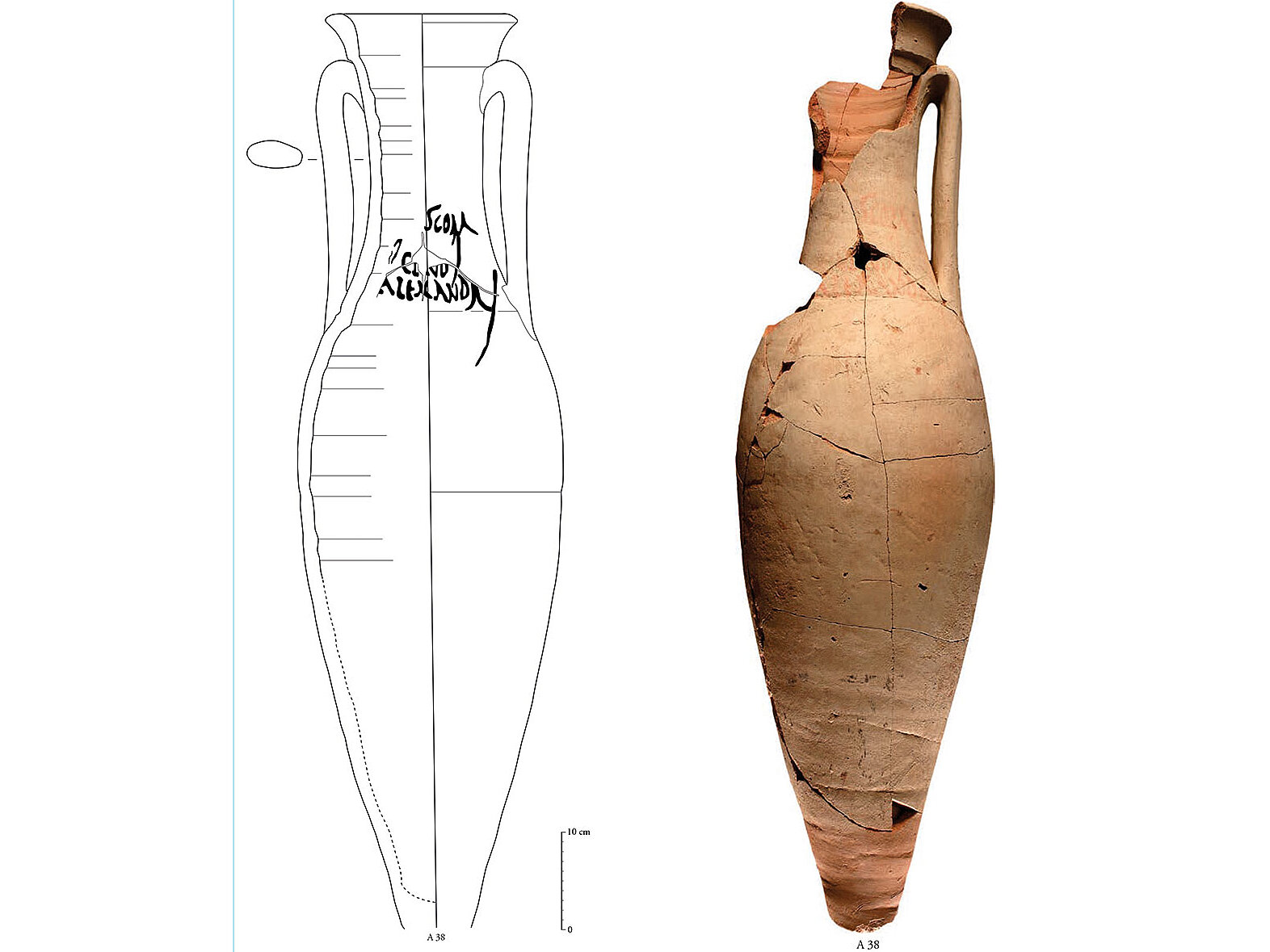

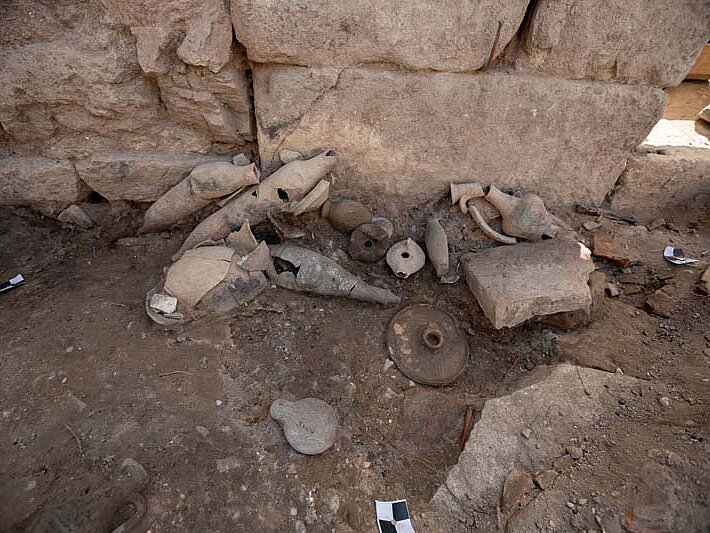


What may look like a simple piece of pottery to the untrained eye can offer researchers endless information about life in antiquity. This is true of the amphorae discovered in Ephesos, in modern-day Turkey. Joan Tuset Estany is a postdoctoral researcher at the Austrian Archaeological Institute of the Austrian Academy of Sciences (OeAW) and studies amphorae in Ephesos. He explains why amphorae were important in antiquity and what they reveal about trade relations in the Mediterranean.
Why is Ephesos a fascinating place to study amphorae?
Joan Tuset Estany: Ephesos was a huge metropolis. It was a very important port of consumption, but also of redistribution of products. That's why a very rich variety of amphorae were found here. Some come from as far away as present-day Spain, Gaza, or the Black Sea.
What is the focus of your research?
Tuset Estany: In Ephesos, I am part of a project named Crossing the Sea. The aim of this project is to study pottery material from Asia Minor in Athens. My small team within this project is responsible for amphorae studies.
When we talk about amphorae, we have to forget about the amphora and think about what was inside.
What are some of the popular misconceptions about amphorae?
Tuset Estany: The most common question regarding amphorae is: why are they pointed? They don't stand. Because they are designed to travel. In antiquity, this mainly meant ships, especially for long distances. They were designed to fit inside the ship and also between each other. Normally, amphorae were stacked one on top of the other. It's like a perfect puzzle that has to be super stable. They used to put some kind of vegetal fibers or other materials between them to compress all that and turn it into a unit. Nothing could move inside a ship.
Why are amphorae such interesting objects to study?
Tuset Estany: An amphora was important cargo. When a ship departed from a port, that was a risk. There were many operators in the chain of an amphora traveling — from the producer of the amphora itself and the workshop that made the pot, to the owner and the producer of the content, the process of fitting that into a boat, and sailing the boat. Merchants, and also the state, took part in this process. So, amphorae were part of a transaction of high economic value.
There are many, many ways to undo the puzzle of an amphora.
What can you learn from an individual amphora?
Tuset Estany: Based on the different features they have, we can tell more or less in which century, or even half or quarter of a century, they were produced. So, we can also use them to date. And then we put that all together with other pottery finds, as well as with human remains, glass, metal finds, and archaeozoological material that constitute the archaeological context. When you put this together with other finds in Ephesos, with other contexts in the Aegean or in the Mediterranean, you start to see trends and dynamics. We can talk about macroeconomy, about big transport routes, but we are also talking about what the people from this shop, or this house, or this retail area in Ephesos were consuming at the time. So, there are many, many ways to undo the puzzle of an amphora.
Joan Tuset Estany holds a BA and an MA in Archaeology, and a PhD from the University of Barcelona. He is currently a Postdoctoral Researcher at the Austrian Archaeological Institute of the Austrian Academy of Sciences (OeAW). His research focuses on the study of ceramics and the economy of the Roman and Late Antique Mediterranean. He has participated in interdisciplinary and international research projects in Greece, Turkey, Catalonia and Mallorca, among other regions. His work also addresses urban and rural settlement patterns in Late Antiquity, with a particular interest in archaeological stratigraphy and excavation methodology.
