


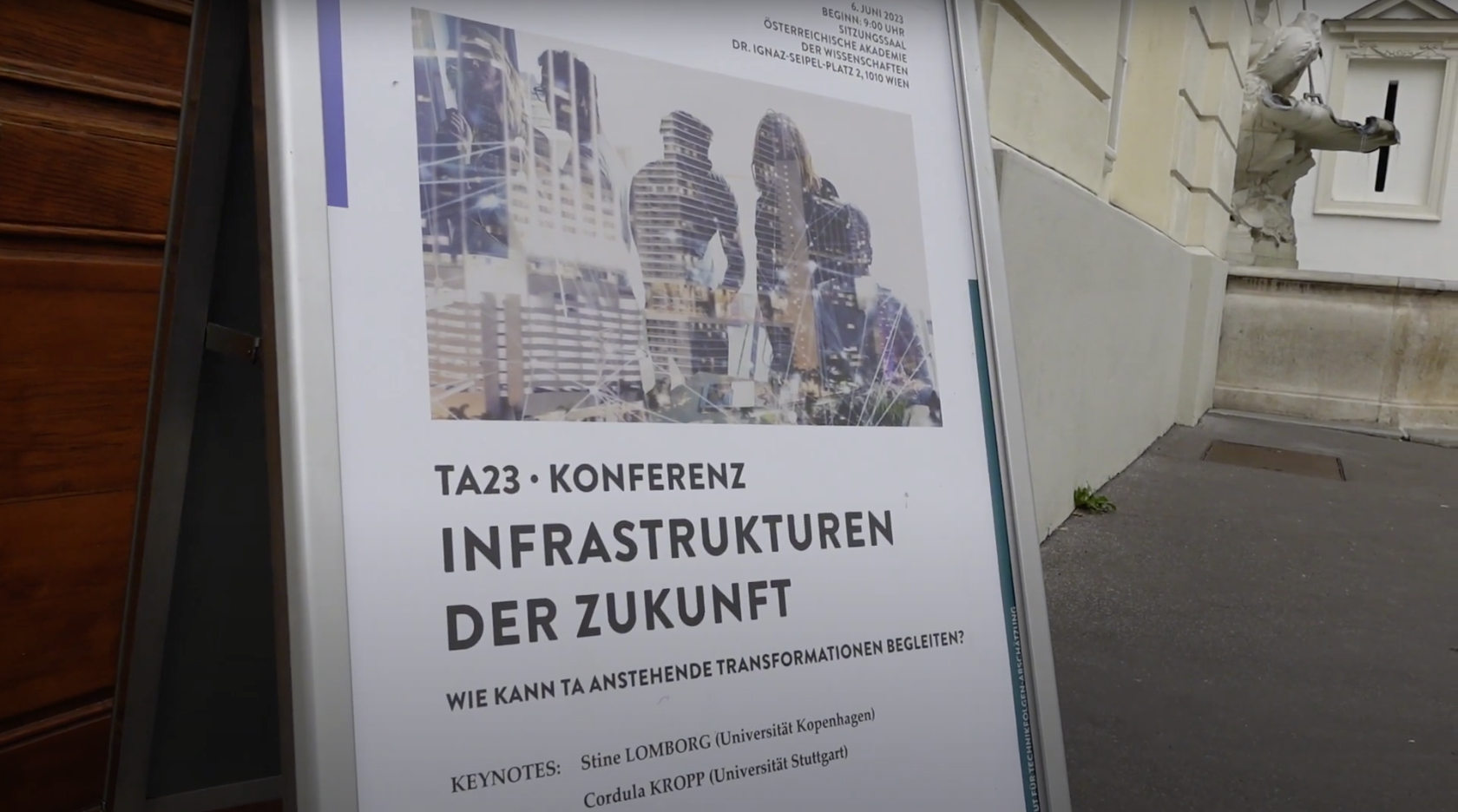
For our society to function, infrastructures for energy, food, mobility, knowledge and social services are essential. The energy transition and digitalization raise fundamental questions about how these supply systems will change. "How sustainable are our infrastructures and how can technology assessment accompany upcoming transformations?" therefore asked the Institute of Technology Assessment (ITA) of the Austrian Academy of Sciences at a conference in Vienna on June 6.
On climate justice and a better life
The diverse conference contributions made clear how important it is to take a close look at the social contexts in which infrastructures are integrated. The "optimization fantasies" of BigTech would ignore what it takes to live a good life, said media researcher Stine Lomborg in her keynote.
Infrastructures that enable climate-just social practice should break away from quantitative security of supply and the compulsion to grow, also emphasized risk researcher Cordula Kropp in the second keynote lecture. The central guiding principles, according to Kropp, must be supply and distribution justice in order to guarantee equivalent living conditions in the future.
About categories and people
"Supply systems of various kinds, be it the welfare state or energy supply, are increasingly evolving via a certain 'datafied' knowledge," emphasized Doris Allhutter, organizer of TA23 and Senior Scientist at ITA. "It is important not to lose sight of the social contexts in which these infrastructures are embedded." Allhutter is currently working on the Automating Welfare project, which was also presented at the conference. With her team, she is researching the effects of the algorithmization of welfare, for example in job placement or the provision of social benefits.