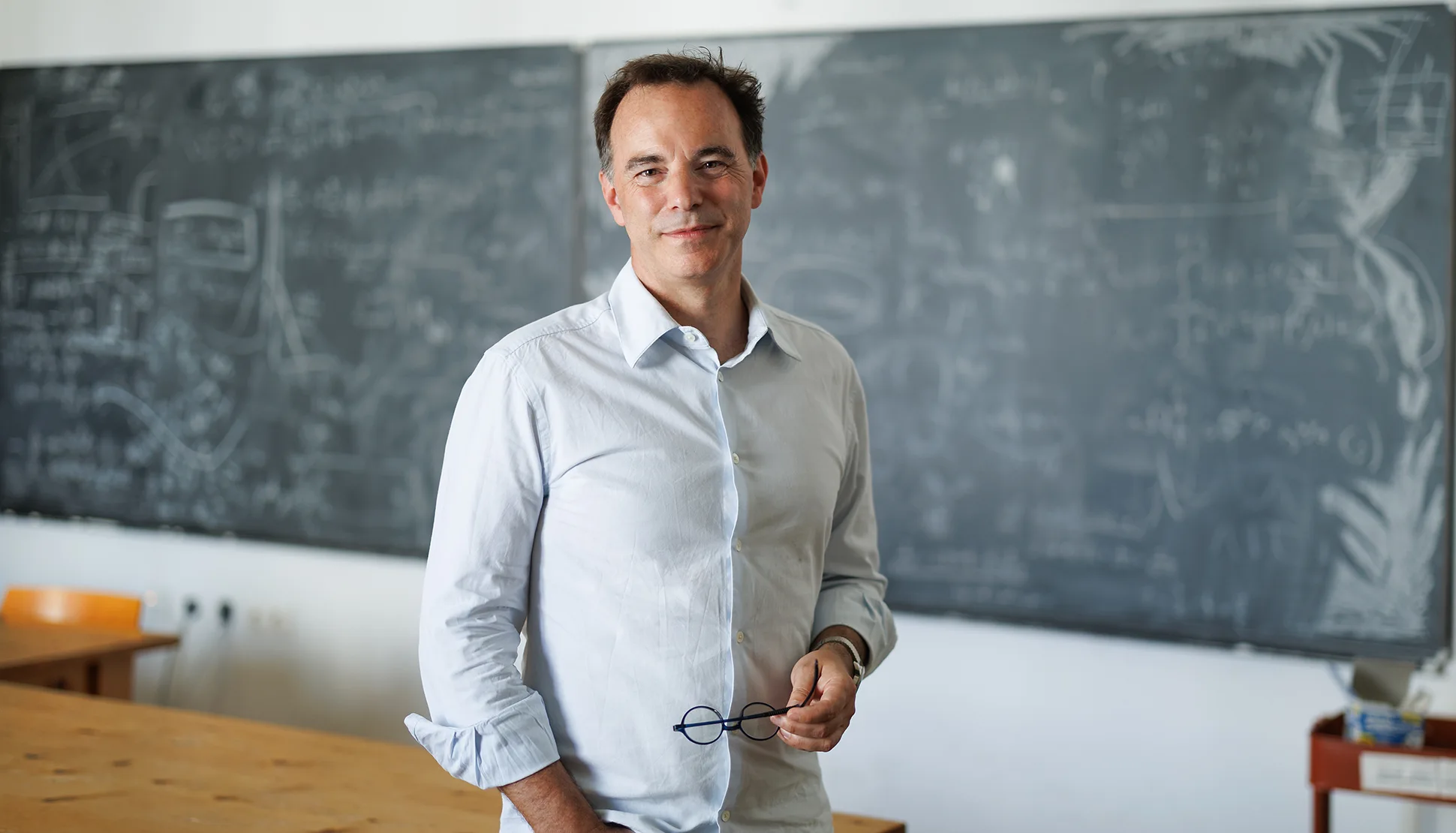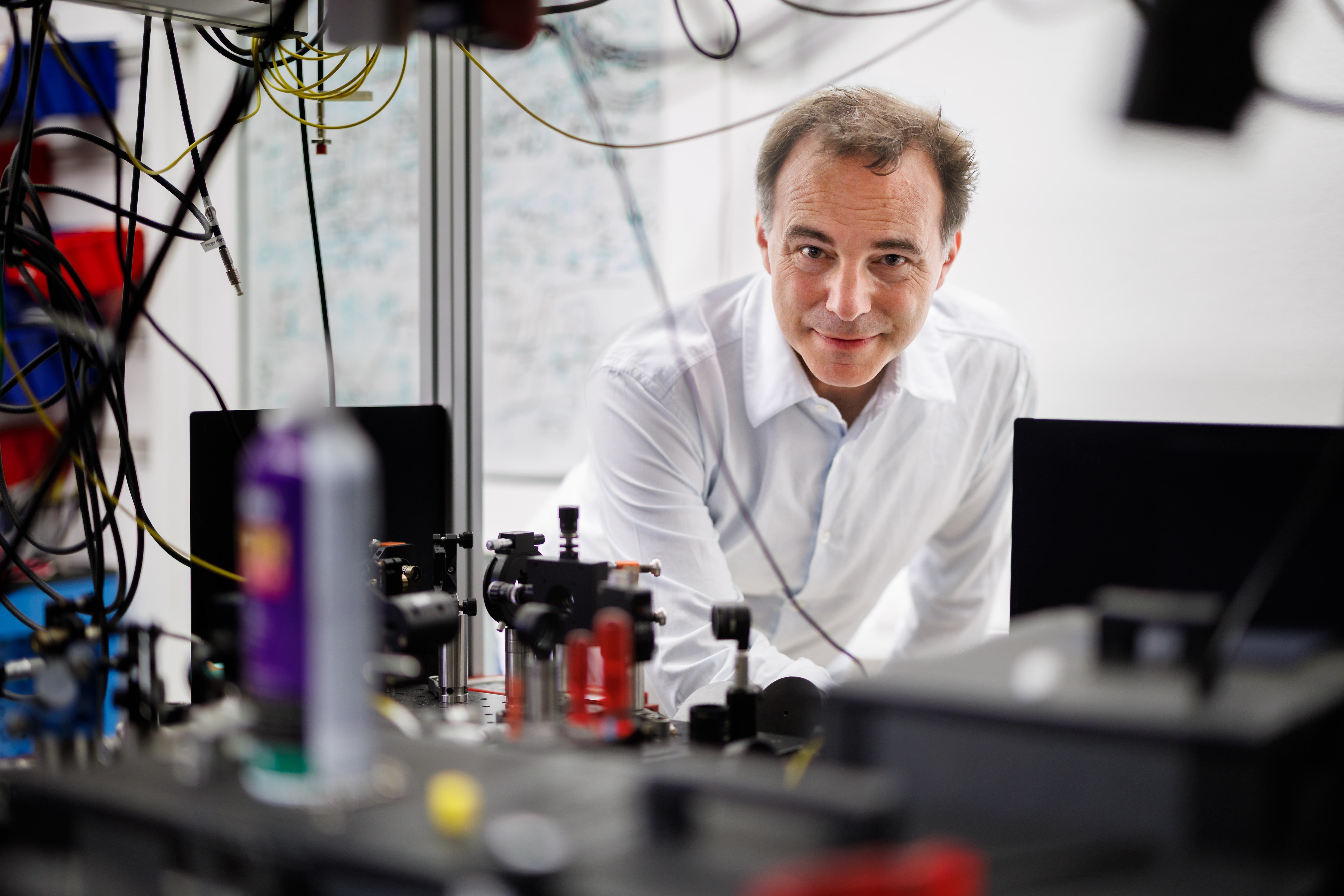
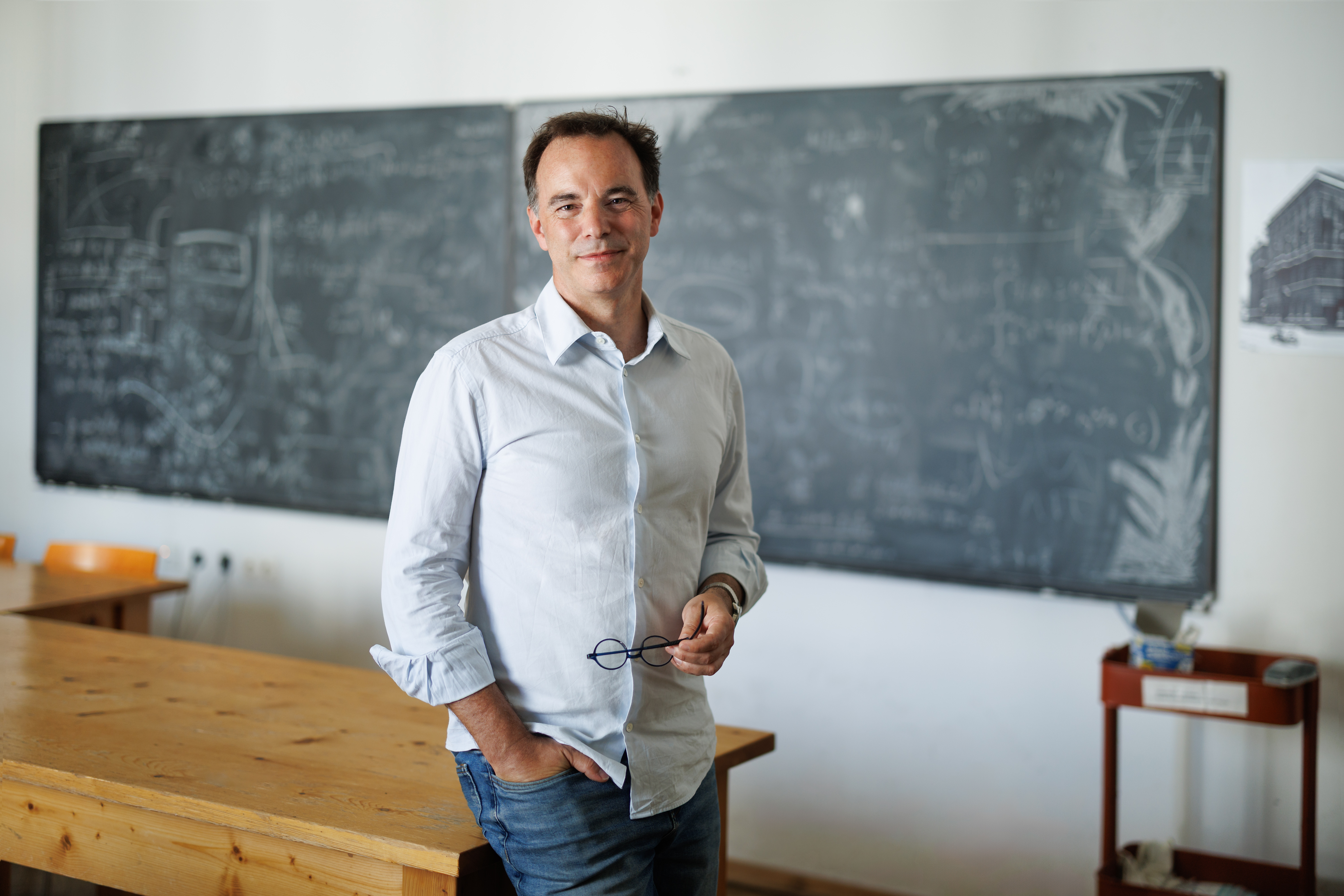
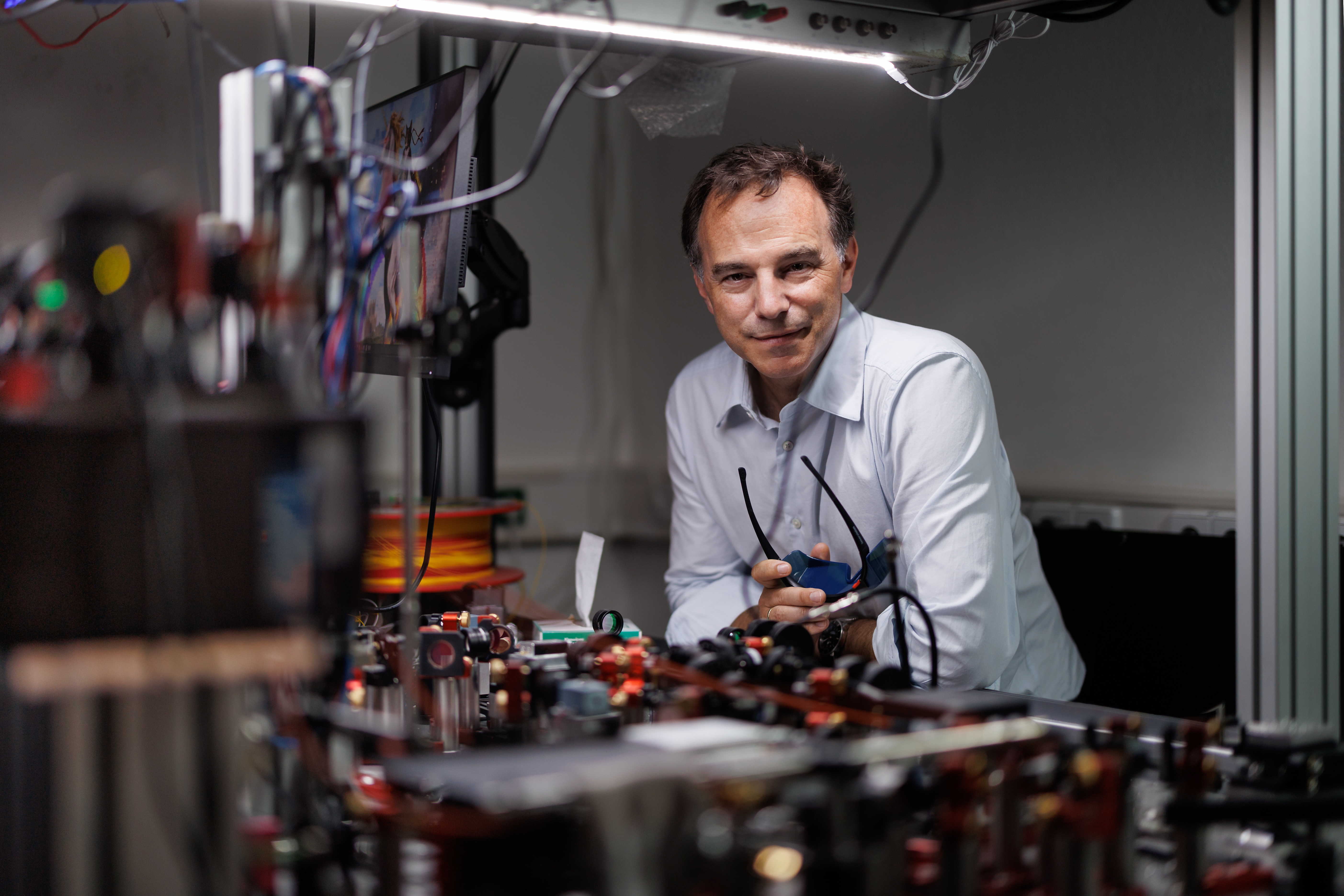

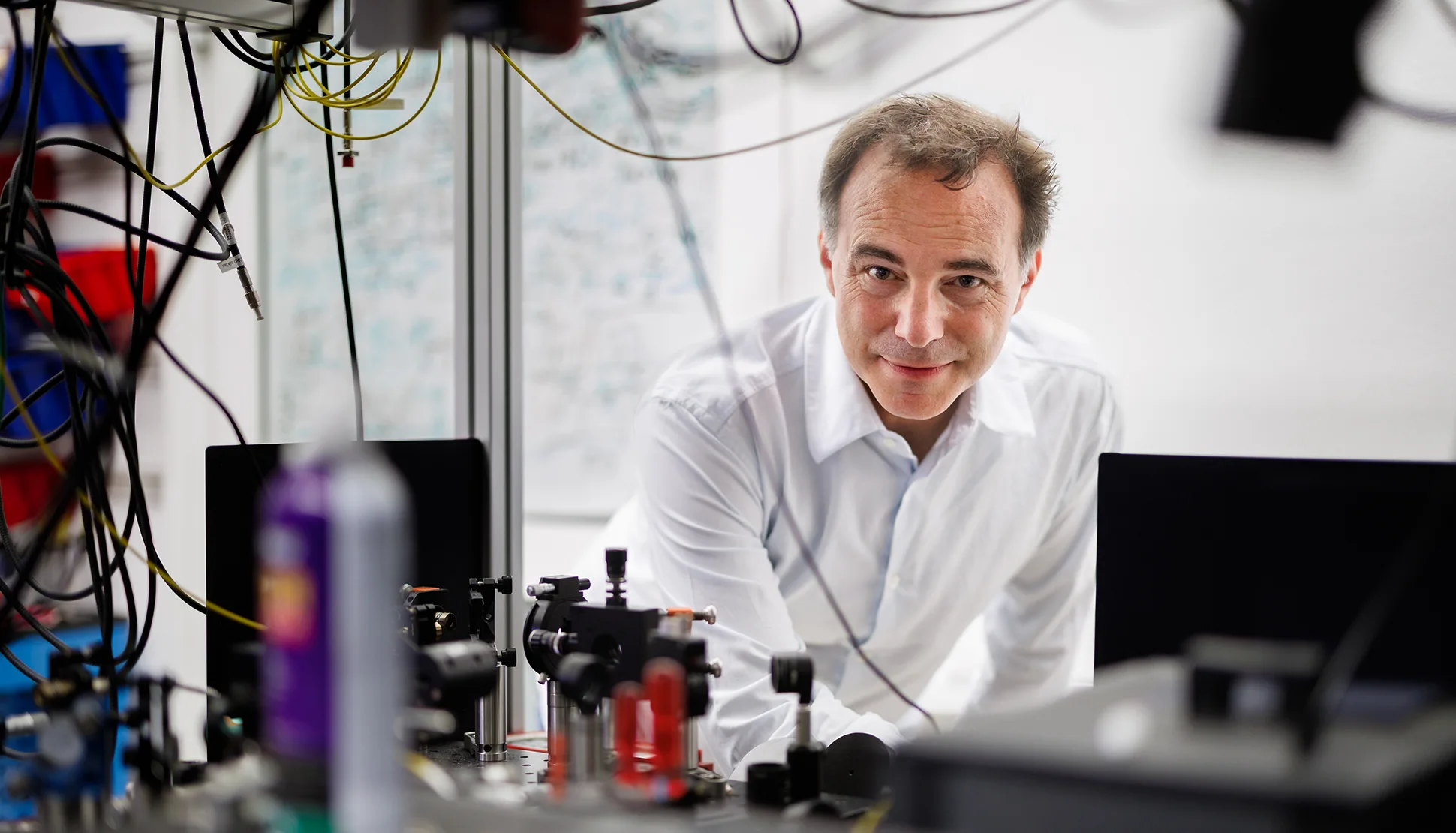
Can gravity and quantum mechanics be unified? This is the question physicist Markus Aspelmeyer has devoted himself to—and through his experiments, he is pursuing a quantum-physical understanding of Einstein’s General Theory of Relativity. For his groundbreaking work, the professor at the University of Vienna and Director of the Institute for Quantum Optics and Quantum Information Vienna (IQOQI Vienna) at the Austrian Academy of Sciences (OeAW) has now been awarded the Wittgenstein Prize of the Austrian Science Fund (FWF), Austria’s highest individual research award, endowed with €2 million.
“I congratulate Markus Aspelmeyer on this outstanding achievement. For years, he has conducted excellent fundamental research and has made a significant contribution to establishing Austria as a leading international location for quantum physics. This success also demonstrates the importance of adequate funding for basic research through the FWF and at universities. To secure Austria as a research location, we need planning certainty, a clear commitment from the federal government to internationally competitive universities, and sufficient funding for the period 2028–2030,” says Sebastian Schütze, Rector of the University of Vienna.
“With Markus Aspelmeyer, a physicist dedicated to the most fundamental questions of physics is being honoured. The Wittgenstein Prize is a richly deserved recognition of his outstanding research achievements. It also highlights the successful cooperation between the Academy and research-intensive universities such as the University of Vienna. My heartfelt congratulations go to Aspelmeyer as well as to OeAW START Prize recipient Isabella Fritz,” says Heinz Faßmann, President of the Austrian Academy of Sciences.
Modern physics rests on two pillars: quantum mechanics, which describes the behaviour of nature’s smallest building blocks, and general relativity, through which Albert Einstein explained gravity as a property of space and time more than 100 years ago. Both theories rank among the greatest achievements in science, yet they speak different languages. While quantum mechanics is characterised by probabilities and superposition states, Einstein’s theory describes a continuous fabric of space and time. Understanding how gravity behaves in the quantum realm therefore remains one of the greatest unsolved questions in modern physics.
“We are trying to bridge this gap from both sides,” says Markus Aspelmeyer. Together with his team, he develops experiments that make quantum-mechanical effects visible in ever larger objects. Using highly precise laser and vacuum technologies, they control microscopic and mesoscopic systems that simultaneously generate measurable gravitational fields.
“We are pursuing a research programme that is unique worldwide because it combines precision gravitational measurements with quantum experiments involving massive objects,” Aspelmeyer explains. His team has already succeeded in placing levitated solid objects consisting of billions of atoms into quantum states and measuring the gravitational field of a gold sphere only a few millimetres in size—a signal around 30 billion times weaker than Earth’s gravity.
In the long term, these experiments are intended to determine whether the laws of quantum physics also apply to gravity. If successful, this could provide decisive evidence for a theory of quantum gravity. Such a unification is considered one of the most important goals of fundamental research and would elevate our understanding of nature to an entirely new level. “The Wittgenstein Prize gives us the freedom and the opportunities to take the next major steps,” says Aspelmeyer.
After studying physics and philosophy, Markus Aspelmeyer earned his doctorate in physics from Ludwig Maximilian University of Munich in 2002 and subsequently moved to the University of Vienna, where he worked in the research group of Nobel Prize laureate Anton Zeilinger.
Since 2009, he has been Professor of Physics at the University of Vienna, and since 2019 he has served as Director of the Vienna Institute for Quantum Optics and Quantum Information (IQOQI) of the Austrian Academy of Sciences. He is also a board member of the FWF Excellence Cluster “Quantum Science Austria.” Aspelmeyer has received numerous international awards for his work, most recently the 2025 Prize for Fundamental Aspects of the European Physical Society for his pioneering contributions to quantum optomechanics. A three-time ERC grant recipient, he is a Fellow of the American Physical Society and a member of both the Austrian Academy of Sciences and the Academy of Sciences and Humanities in Hamburg.
This year’s ASTRA Prize awards also brought success for both the Austrian Academy of Sciences and the University of Vienna: four ASTRA Prizes were awarded to researchers at the University of Vienna and one to a researcher at the Academy.
In his ASTRA project, mathematician Matija Bucic of the University of Vienna will investigate the so-called Pass-to-Expander Paradigm, a central concept in graph theory. Astrophysicist Katja Fahrion will explore a new approach to measuring cosmic distances using star clusters—dense collections of stars found in galaxies.
At the Centre for Microbiology and Environmental Systems Science of the University of Vienna, Bettina Glasl will study how the microbial world inside animals functions, while Sarah Pati’s ASTRA project will investigate the origins of pollutants in drinking water and how they behave in the environment.
Linguist Isabella Fritz of the Austrian Academy of Sciences has been awarded an ASTRA Prize to examine how similarities in the sound systems (phonologies) of languages influence language comprehension and speech production.
Institut for Quantum Optics and Quantum Information Vienna of the OeAW
Media Contacts
Sven Hartwig
Head of Public Relations & Communications
Austrian Academy of Sciences
+43 1 51581-1331
sven.hartwig(at)oeaw.ac.at
Alexandra Frey
Media Relations
University of Vienna
T +43 1 4277-17533
alexandra.frey(at)univie.ac.at