

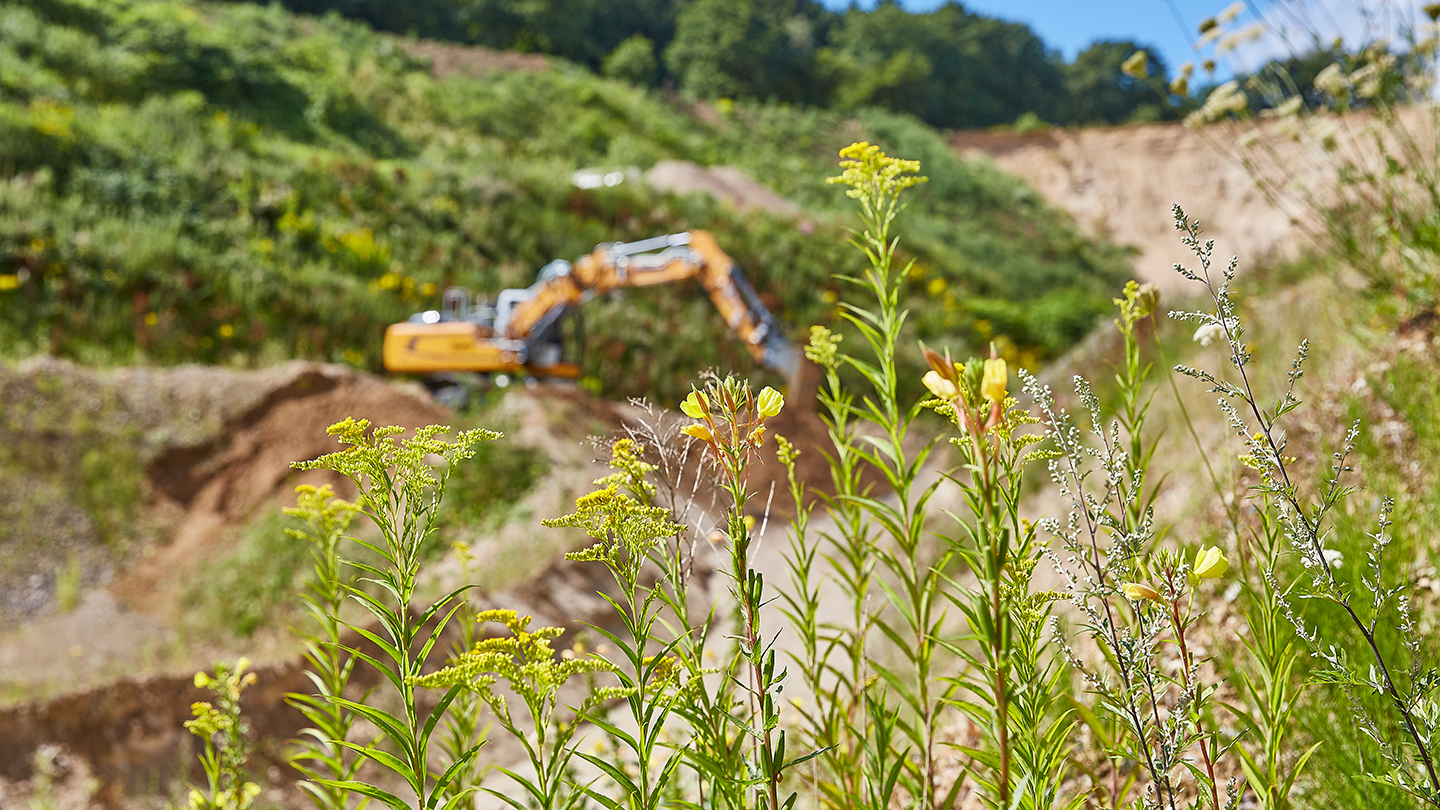
A drained peatland, a straightened river, monotonous agricultural landscapes, or overheated cities: many ecosystems across Europe are severely degraded. More than 80 percent of protected habitat types are in poor ecological condition. This is precisely where the EU Nature Restoration Regulation comes in. It requires Member States to restore degraded ecosystems to a better ecological condition.
By 1 September 2026, EU Member States must submit their national restoration plans, outlining how they intend to implement the objectives of the Regulation. A recent commentary by the European Academies Science Advisory Council (EASAC), an association of European national science academies hosted by the Austrian Academy of Sciences (OeAW), describes nature restoration not merely as a conservation measure, but as a strategic investment in Europe's security, public health, and economic stability. Simone Gingrich, a member of the EASAC Environment Steering Panel and a social ecologist at BOKU University, explains what is at stake if Europe delays implementation.
From Drained Peatlands to Straightened Rivers
Ms Gingrich, the EU Nature Restoration Regulation is intended to restore degraded ecosystems across Europe. What does "restoration" actually mean in practice?
Simone Gingrich: The EU Nature Restoration Law is based on the observation that more than 80 percent of protected habitat types in Europe are in poor ecological condition. A poor ecological condition means that a habitat differs substantially from a reference condition regarded as being in good ecological condition—for example, in terms of its species composition or the ecological processes taking place within it. Restoration therefore means improving the ecological condition of areas that are degraded or even destroyed. In other words, it involves moving them closer again to this reference condition, this favourable conservation status.
I see the EU Nature Restoration Regulation as a kind of umbrella framework under which local land-use decisions are made.
Can you give an example?
Gingrich: A drained peatland is a good example. Peatlands are ecosystems in which water plays a crucial role. They retain water. When peatlands are drained, this water is deliberately removed from the ecosystem. Allowing water to return and blocking the drainage ditches created to dry out the peatland are examples of restoration measures.
Another classic example is channelised rivers. Here, restoration can involve removing engineered structures or other modifications so that a river ecosystem can once again support a greater diversity of habitats. This, too, is a form of nature restoration.
A European Framework for Local Decision-Making
Why is a dedicated EU law needed for this?
Gingrich: Many decisions on land use are made at the local level. In Austria, for example, municipalities play a central role in land-use planning. Local and economic considerations are also key factors in decisions about agricultural and forestry land use. There are many reasons why local actors might decide to drain peatlands—for instance, to intensify grassland use or to generate greater economic value from the land. That is precisely why a broader framework is needed. The EU framework does not ask, What is the best local, short-term solution? Instead, it asks: What can—and must—we afford as a European Union when it comes to maintaining functioning ecosystems? What limits do we need to respect? I therefore see the EU Nature Restoration Regulation as a kind of umbrella framework under which local land-use decisions are made.
By 1 September 2026, Member States must submit their national restoration plans. What will show whether these plans are truly ambitious?
Gingrich: One of the key challenges in Austria is that nature conservation falls within the competence of the federal provinces. The provinces are responsible for implementing nature conservation policies, while potential funding mechanisms may come from the federal government or even the EU. This requires close coordination: Who is responsible for implementation? Where will the funding come from? How will the provinces, the federal government, the EU, and municipalities work together?
Another important question is how affected communities are brought on board. Do people support the proposed measures? Are public participation processes in place, or are they planned? This is particularly relevant for agriculture and forestry, but also for municipalities, cities, and the people who live there. After all, the Nature Restoration Regulation applies to all terrestrial and aquatic ecosystems—not only to designated protected areas.
Finally, the level of detail in the implementation plans will be crucial. Is there a legal framework to support them? Do the plans merely meet the Regulation's minimum requirements, or do they go beyond them? These are the key questions that will need to be examined.
In Austria, alpine ecosystems, for example, play a particularly important role, as do forests.
Sharing Land Instead of Segregating Nature
From a scientific perspective, where do you see the greatest leverage for action?
Gingrich: That varies from country to country. Every country in Europe has different habitats that are particularly threatened or in need of protection. In Austria, for example, alpine ecosystems are especially important, as are forests—almost half of the country's land area is forested.
One of the strengths of the Nature Restoration Regulation, in my view, is that it addresses all ecosystems: forests, rivers, peatlands, agricultural land, and urban areas alike. A key concept here is land sharing. The idea is not simply to designate protected areas while allowing intensive land use elsewhere. Ecological processes should also be maintained and biodiversity promoted on land where people live and work.
In agricultural landscapes, this might mean preserving hedgerows, stone walls, or other small landscape features that enhance biodiversity while also reducing soil erosion. A scientific term often used to describe key implementation measures under the Nature Restoration Regulation is nature-based solutions. These are solutions that address pressing challenges—such as flooding, natural hazards, or extreme heat—by working with functioning ecosystems. Examples include restoring regulated rivers so they can retain more water, or increasing urban green spaces to mitigate heat. Ultimately, the goal is to identify solutions that maintain or strengthen ecological processes—in cities, in agriculture, in forestry, and across other ecosystems.
The Law as an "Insurance Policy"
The EASAC commentary describes nature restoration not as an "ecological luxury," but as a "strategic investment." Why is this shift in perspective so important?
Gingrich: One figure from the commentary illustrates this very well. It argues that restoring ecosystems will cost around €150 billion, to be financed by various stakeholders—including national governments, municipalities, and the EU. However, these costs are outweighed by an estimated €1.8 trillion in benefits for society as a whole. These benefits include improved public health, greater economic resilience, and better protection against natural hazards.
I share the argument made in the commentary: nature restoration is a kind of insurance policy that we take out as Europeans. Put differently, choosing not to take out that insurance would entail enormous risks. It would be a bit like destroying the anchor of a ship. Functioning ecosystems are the foundation of our lives. Not only because we, as human beings, need clean air and clean water to stay healthy, but also because they underpin our economic and social activities—from food security to the protection of critical infrastructure.
Biodiversity conservation is therefore about much more than protecting individual species that we might observe through binoculars on a hike in the mountains. It is about safeguarding the core functions of ecosystems: climate mitigation, because healthy ecosystems such as peatlands and forests can absorb more carbon; climate adaptation, because functioning river systems and peatlands can retain floodwaters much more effectively than heavily regulated rivers; and ultimately the protection of human health. Heatwaves make this particularly clear: the more green spaces there are in urban areas, the better people are able to cope with high temperatures.
We would be missing a major opportunity if we did not pursue nature restoration comprehensively now.
The law has been politically controversial. What is at stake if its implementation is delayed or weakened?
Gingrich: We would be missing a major opportunity if we did not pursue nature restoration comprehensively now—not to mention that this is a legally binding regulation that we are required to fulfil. Particularly in biodiversity conservation, timing plays a crucial role. Measures often take a very long time before their effects become visible in the species composition of ecosystems.
In research, there is a term for this: extinction debt. It refers to the fact that species often do not actually become extinct until decades after an intervention has taken place. Conversely, this means that today’s intensity of land use can continue to have negative effects on biodiversity for decades into the future. This is why it is all the more important to act quickly, so that these future debts do not fully materialise.
But, as I said, this is not only about protecting individual species. It is about the resilience of societal activities, about health, economic security, security of supply, and the protection of buildings and infrastructure. This is not a luxury we pursue simply because we like seeing colourful flowers and birds or hearing birdsong. It is truly about the foundations of our lives.
At a Glance
Simone Gingrich is Professor of Environmental History at BOKU University in Vienna. She conducts research at the Institute of Social Ecology on long-term social-ecological developments in the field of land and resource use. Gingrich is a member of the Austrian Academy of Sciences (OeAW) Commission for Biodiversity in Austria and the EASAC Environment Steering Panel. She contributed as a reviewer to the commentary “Opportunities in Nature Restoration” prepared by the EASAC Environment Steering Panel, which describes the implementation of the EU Nature Restoration Regulation as a strategic investment in Europe’s security, health, and economic resilience.
EASAC is a network of Europe’s (national) science academies that brings together leading scientists from across the continent to provide independent scientific advice to European policymakers on key issues affecting policy and society. EASAC works to ensure that decisions within the institutions of the European Union are based on robust scientific evidence.
- Happy birthday, EASAC!
 Scientific Policy AdviceClimate, Energy, AI & more
Happy birthday, EASAC!