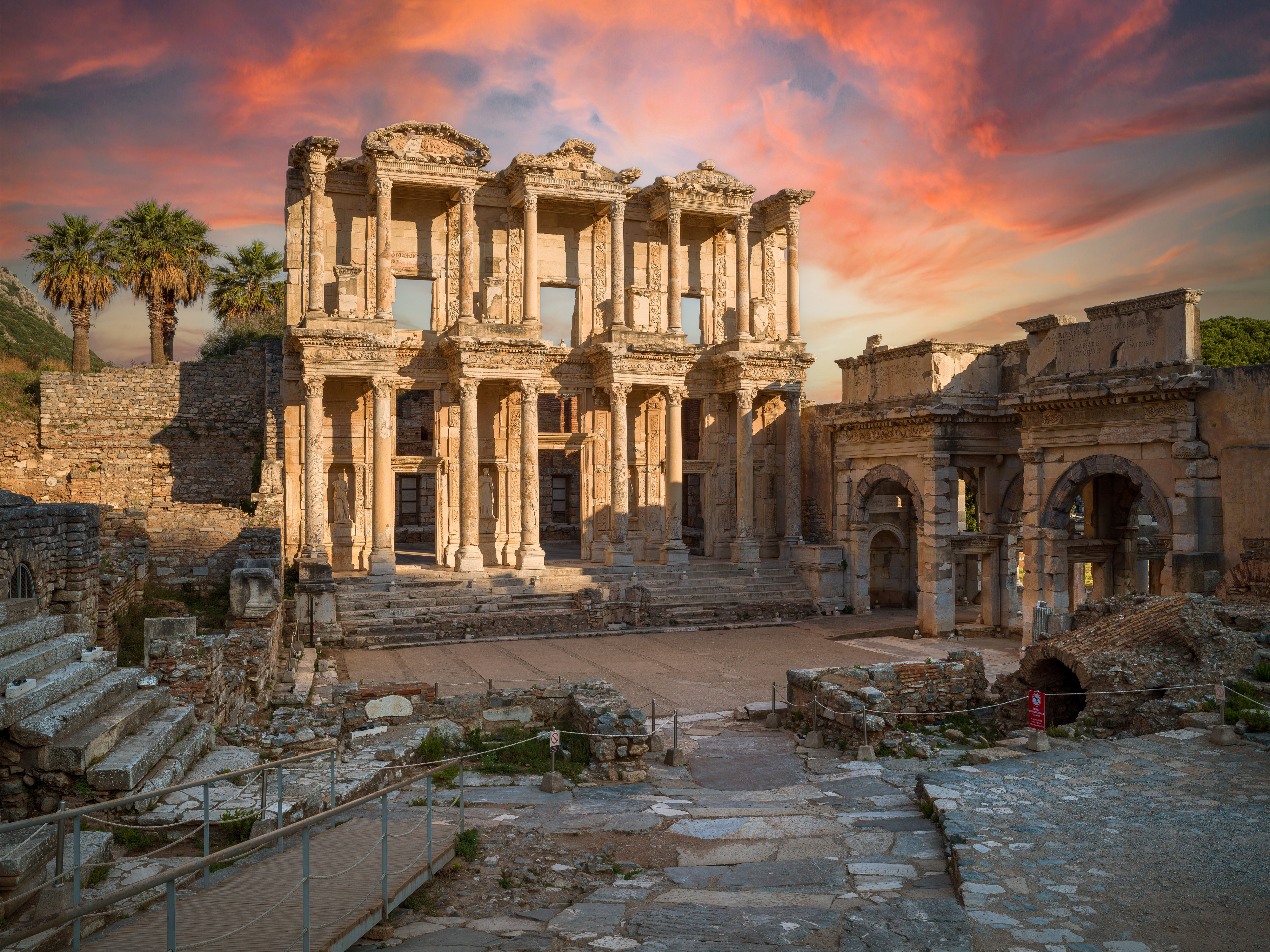
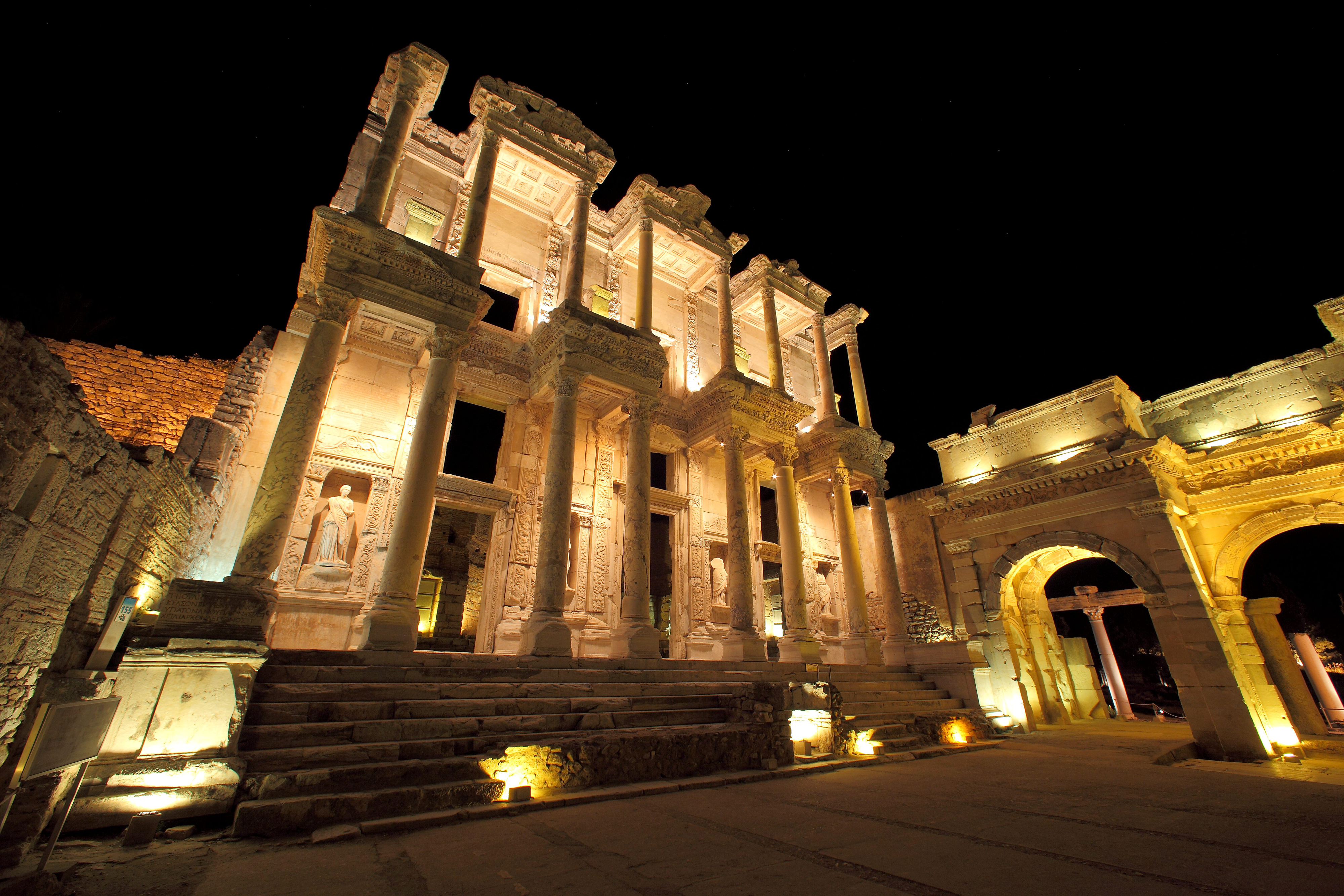



The impressive Celsus Library is located in the ancient city of Ephesos, at the end of Curetes Street. It was built in the 2nd century AD by Gaius Iulius Aquila in honour of his father, the Roman senator Tiberius Iulius Celsus Polemaeanus, and is considered the most famous ancient building in Turkey. The library, which was built over the burial chamber of the deceased, once housed around 10,000 papyrus scrolls.
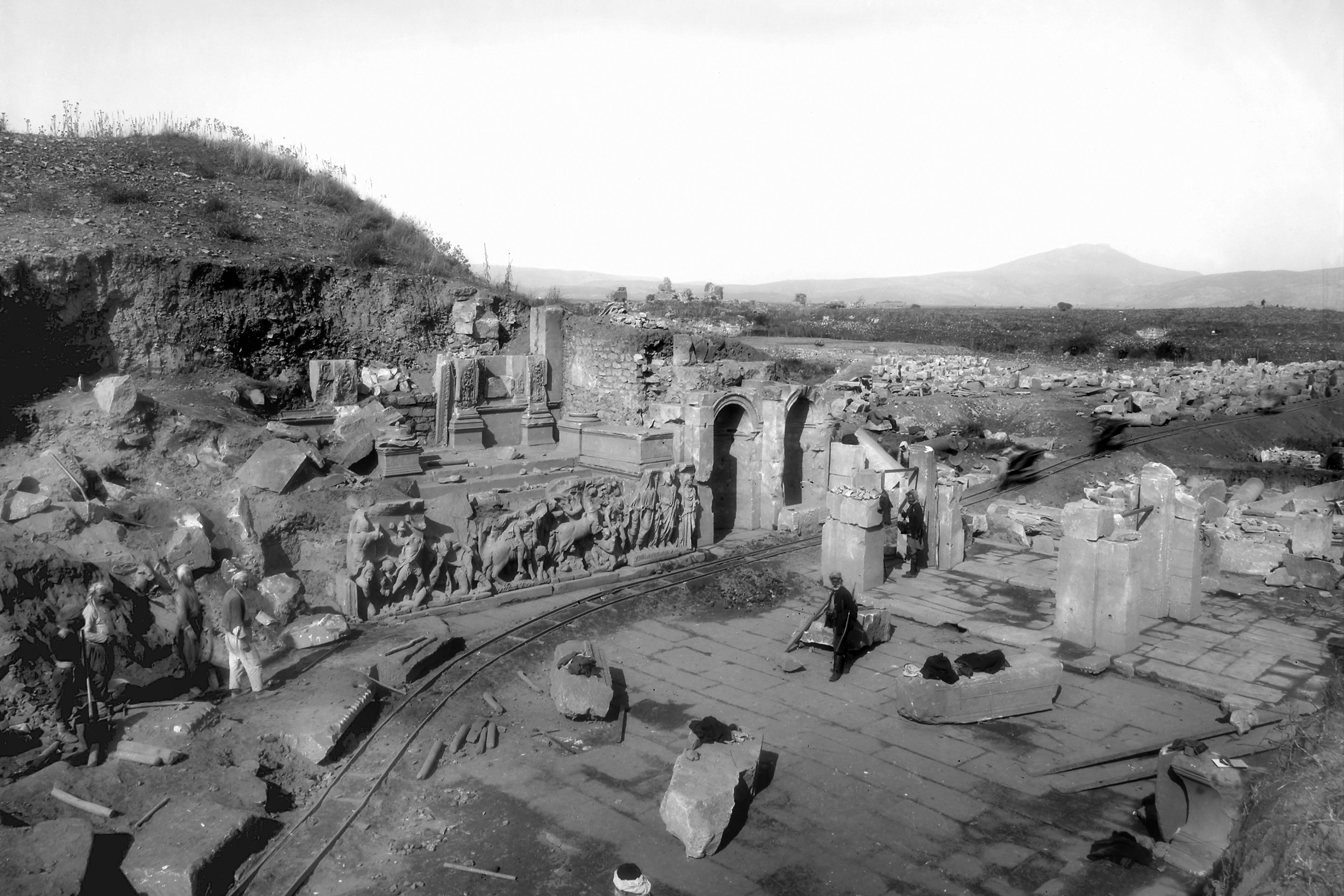
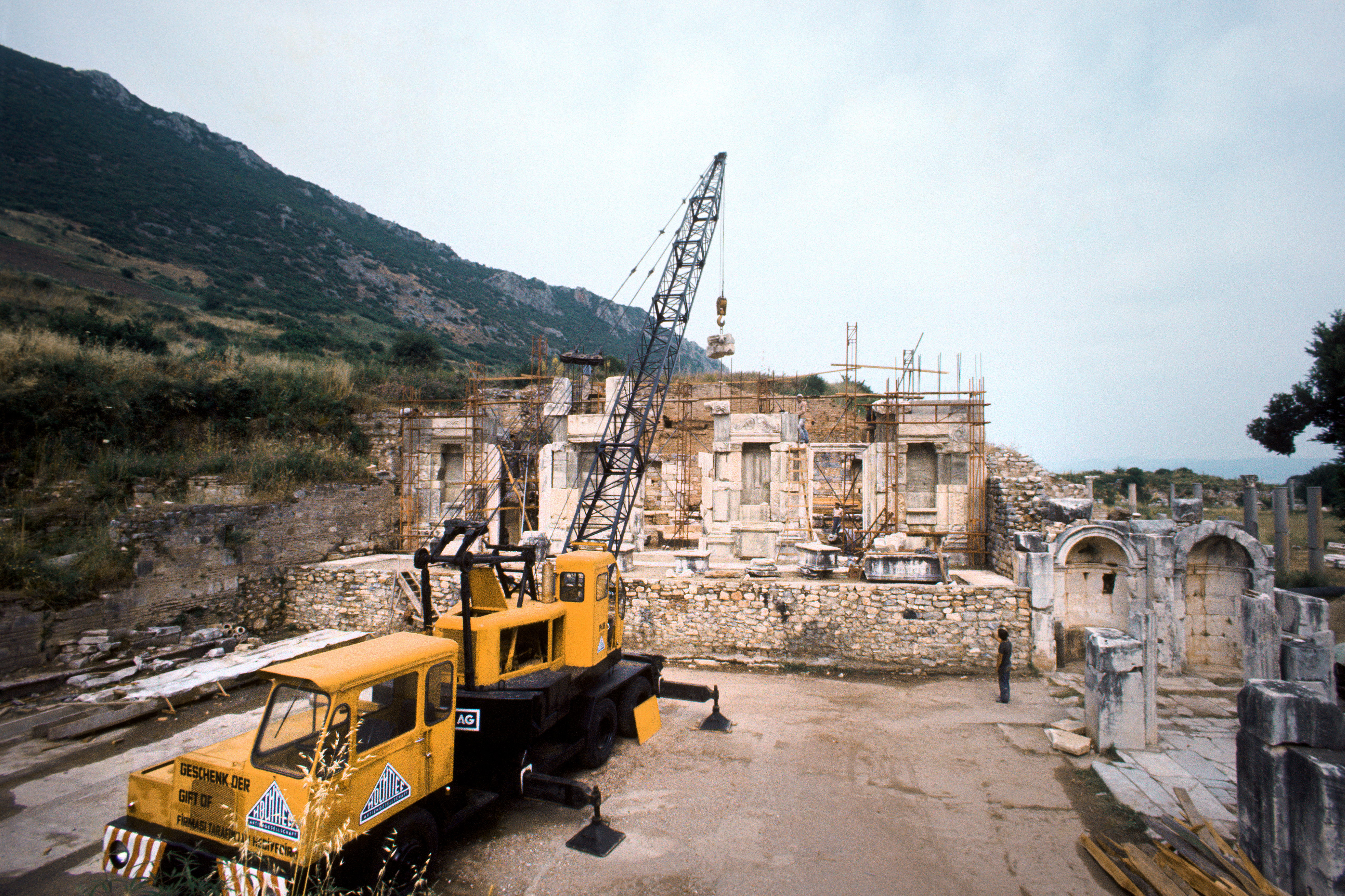
Following severe damage caused by an earthquake around 270 AD, the library appears to have been abandoned. In late antiquity, the rest of the building was converted into a fountain complex, while the still standing magnificent façade served as a display wall. After the excavation at the beginning of the 20th century, the Celsus Library was reconstructed between 1970 and 1978 using original parts and additional materials. Since then, it has been a magnet for the public and a landmark of the UNESCO World Heritage Site of Ephesus. 50 years after its elaborate reconstruction, it is now showing clear signs of age.
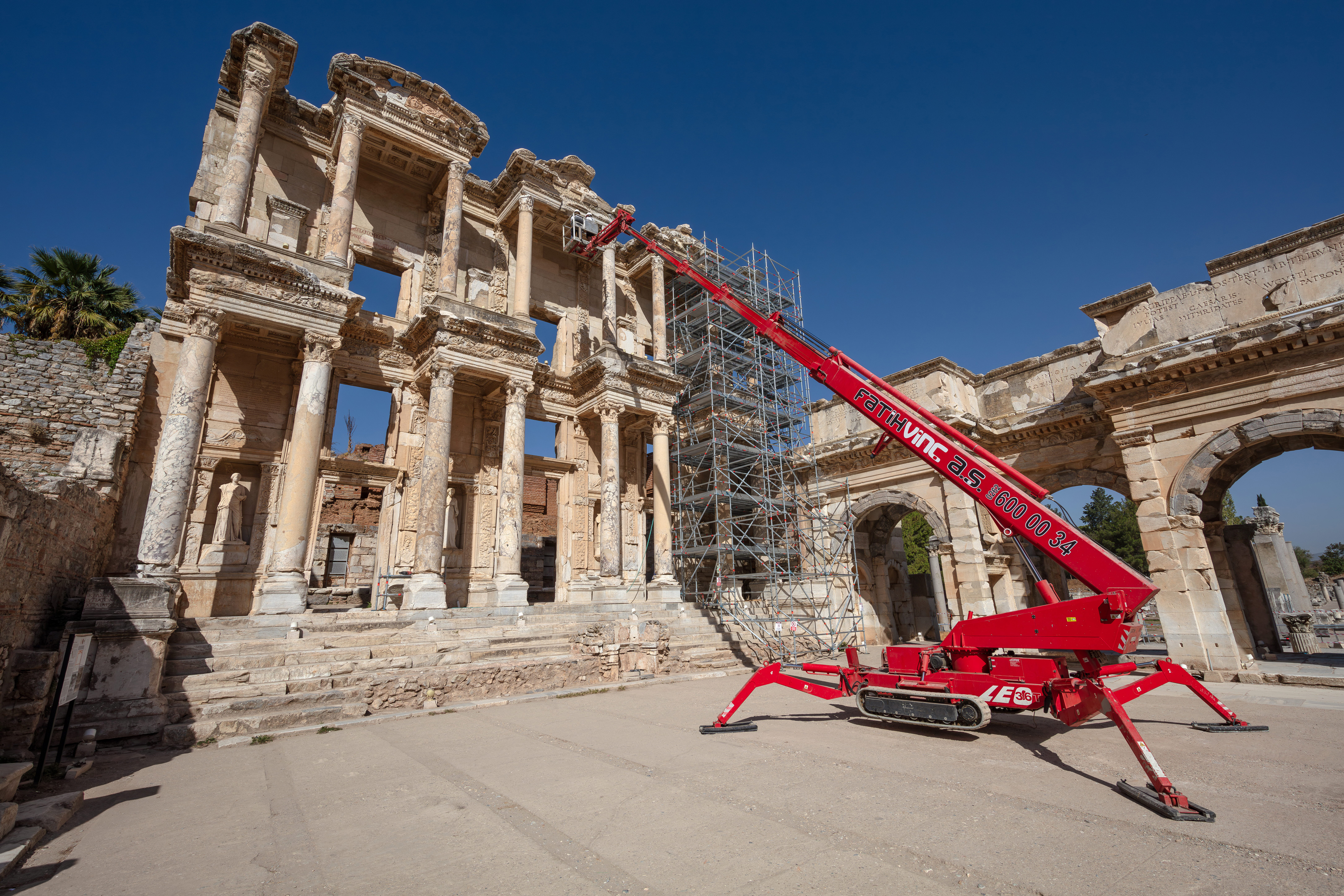
The Austrian Archaeological Institute at the Austrian Academy of Sciences (OeAW), which has been conducting research in Ephesos for around 130 years, is therefore launching a multi-year conservation project. In October 2024, a team of architects, conservators and structural engineers carried out an inventory. After all, the ravages of time are gnawing away at the magnificent building along with the wind and weather. The experts documented damage such as cracks, scaling and sugar corrosion on the marble surfaces. Initial safeguarding measures were carried out and the façade was partially scaffolded in order to take samples to analyse the condition of the components in more detail.
The results of these investigations form the basis for a comprehensive conservation programme, which will be available shortly. The aim is to ensure the structural integrity of the building and thus preserve it for decades to come. The conservation work should be completed by the end of 2027.
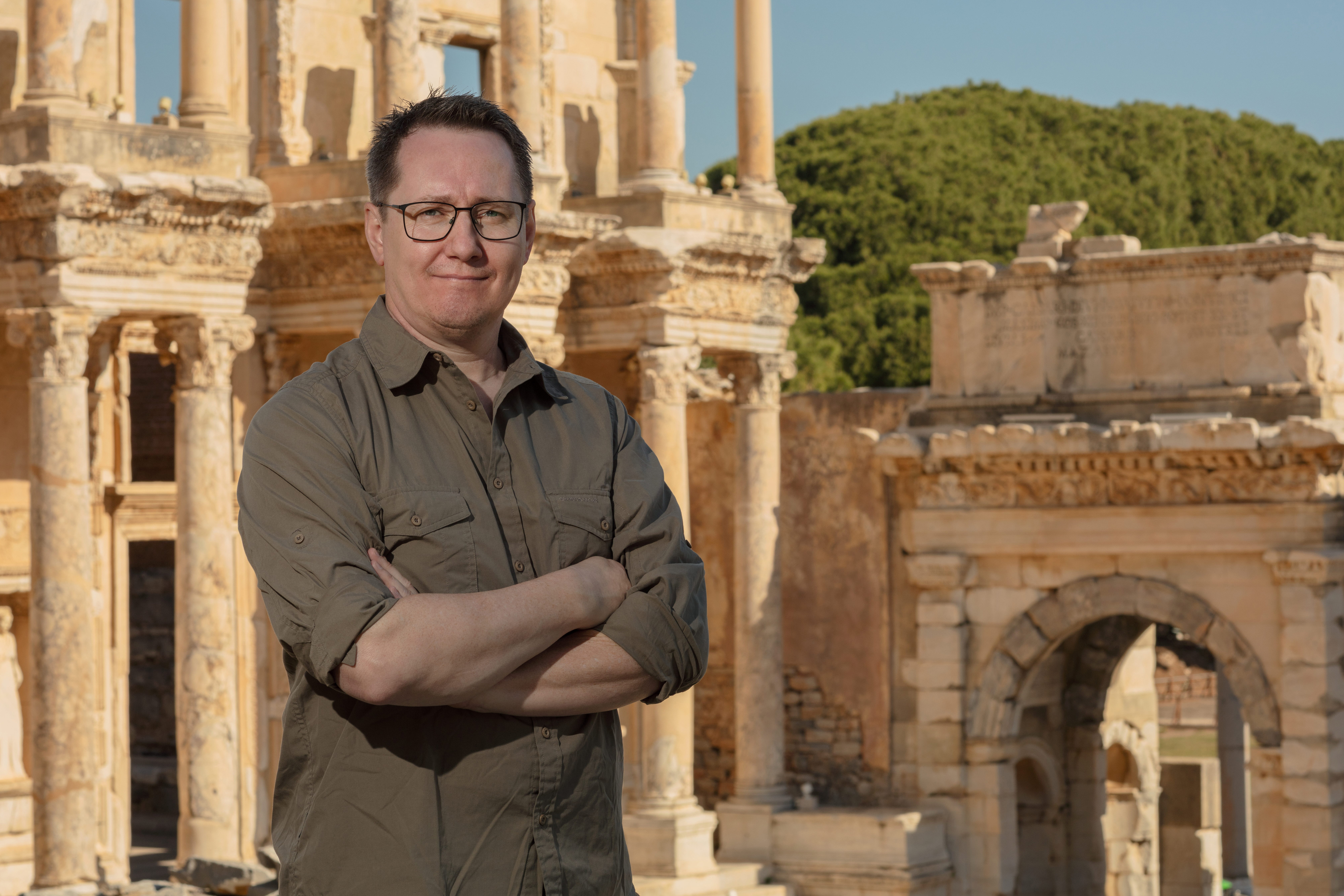
‘The Celsus Library is certainly the icon of the Ephesos excavation. Its reconstruction was undoubtedly an architectural masterpiece by the Austrian team of the 1970s. Now it is important to preserve this unique monument for future generations,’ says Martin Steskal, OeAW director of the excavation.
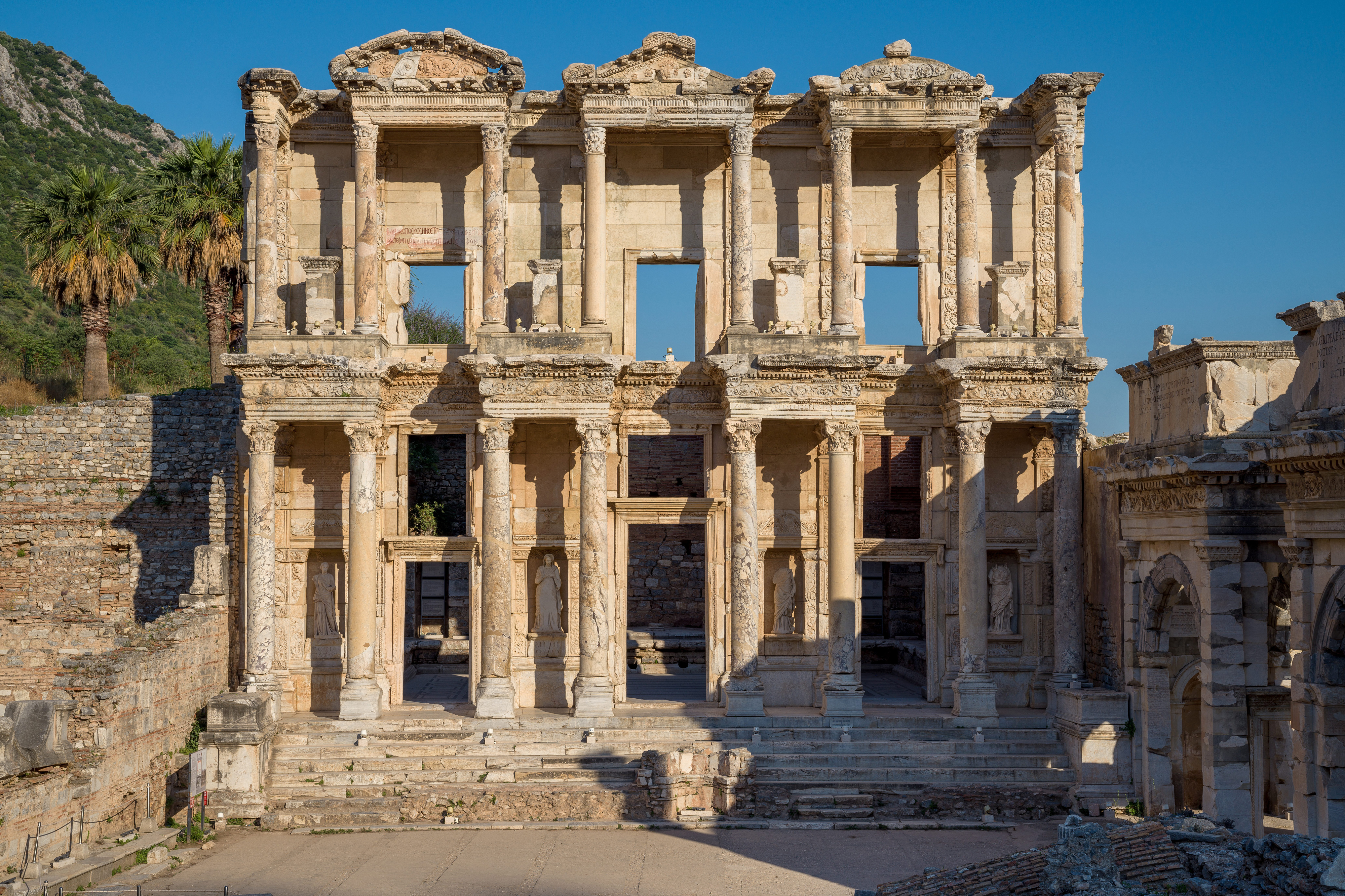
The Celsus Library was once located in the centre of the ancient metropolis of Ephesos and bordered the south gate of the Tetragonos Agora, the trading market of the time. The two-storey library façade was made of marble and is 21 metres wide and over 16 metres high. An optical widening of the façade (illusory perspective) was achieved by the curvature of the horizontal structural elements and the consistent elevation of the vertical structural elements towards the centre axis.
Niches in the wall of the basement contained statues of the Four Virtues Sophia (wisdom), Arete (virtue), Episteme (knowledge) and Ennoia (intellect). The originals are now in the Kunsthistorisches Museum in Vienna.
Access was via an imposing nine-step staircase and three symmetrically arranged doors that led into a vestibule. The centrepiece of the library, the 178 square metre hall, had shelves and niches for the scrolls on two floors, which were accessible via corridors supported by columns. One corridor led diagonally down to the small burial chamber of Celsus with his sarcophagus.
The upcoming conservation and research will preserve the Celsus Library for decades to come and ensure safe access for visitors. The reconstruction in the last century was only possible thanks to the financial support of Austrian companies. The Austrian Archaeological Institute is also launching an international fundraising project for the current conservation and research project together with the Society of Friends of Ephesos and is asking for support. Further information is available at www.ephesos.at
