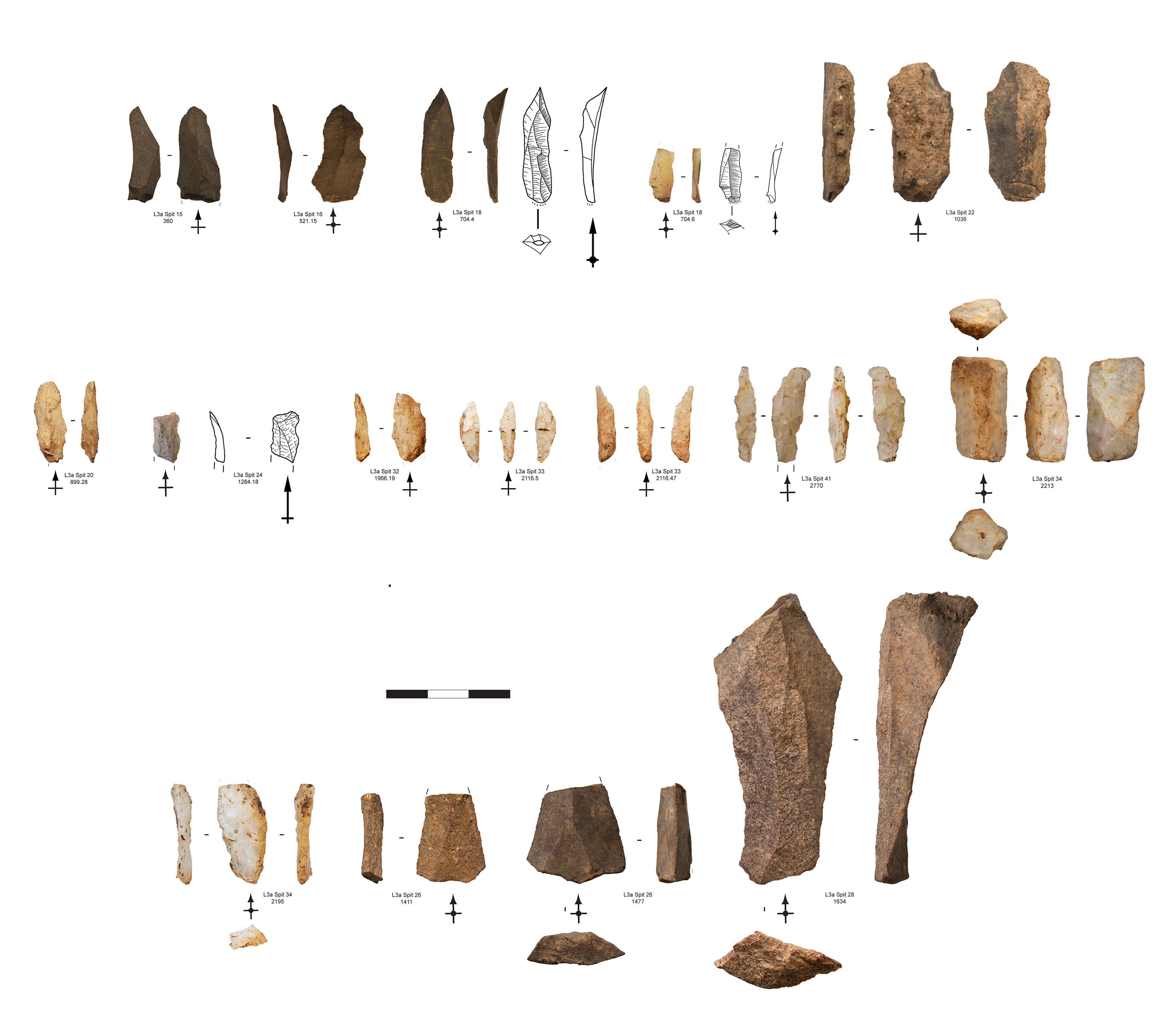
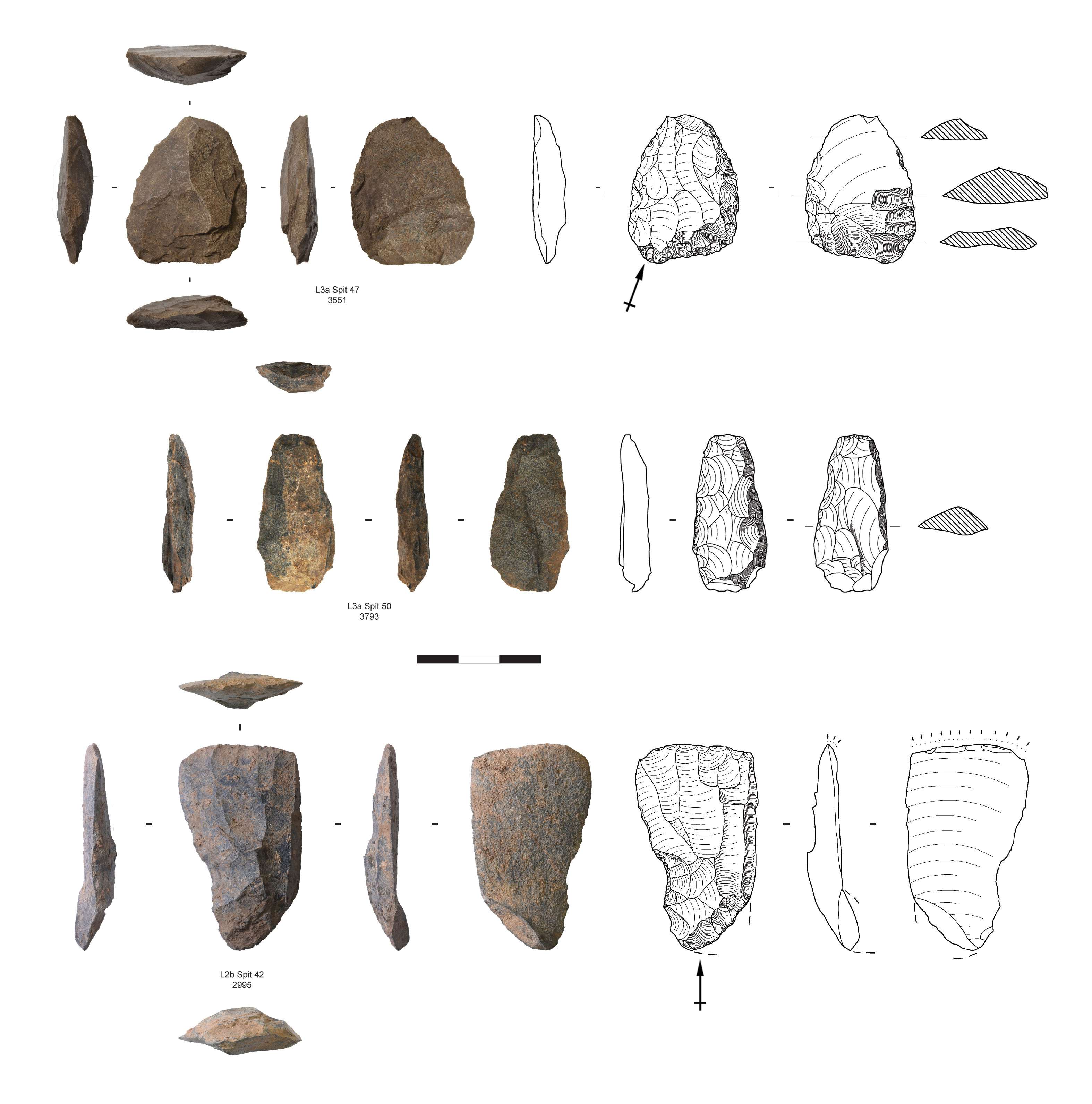
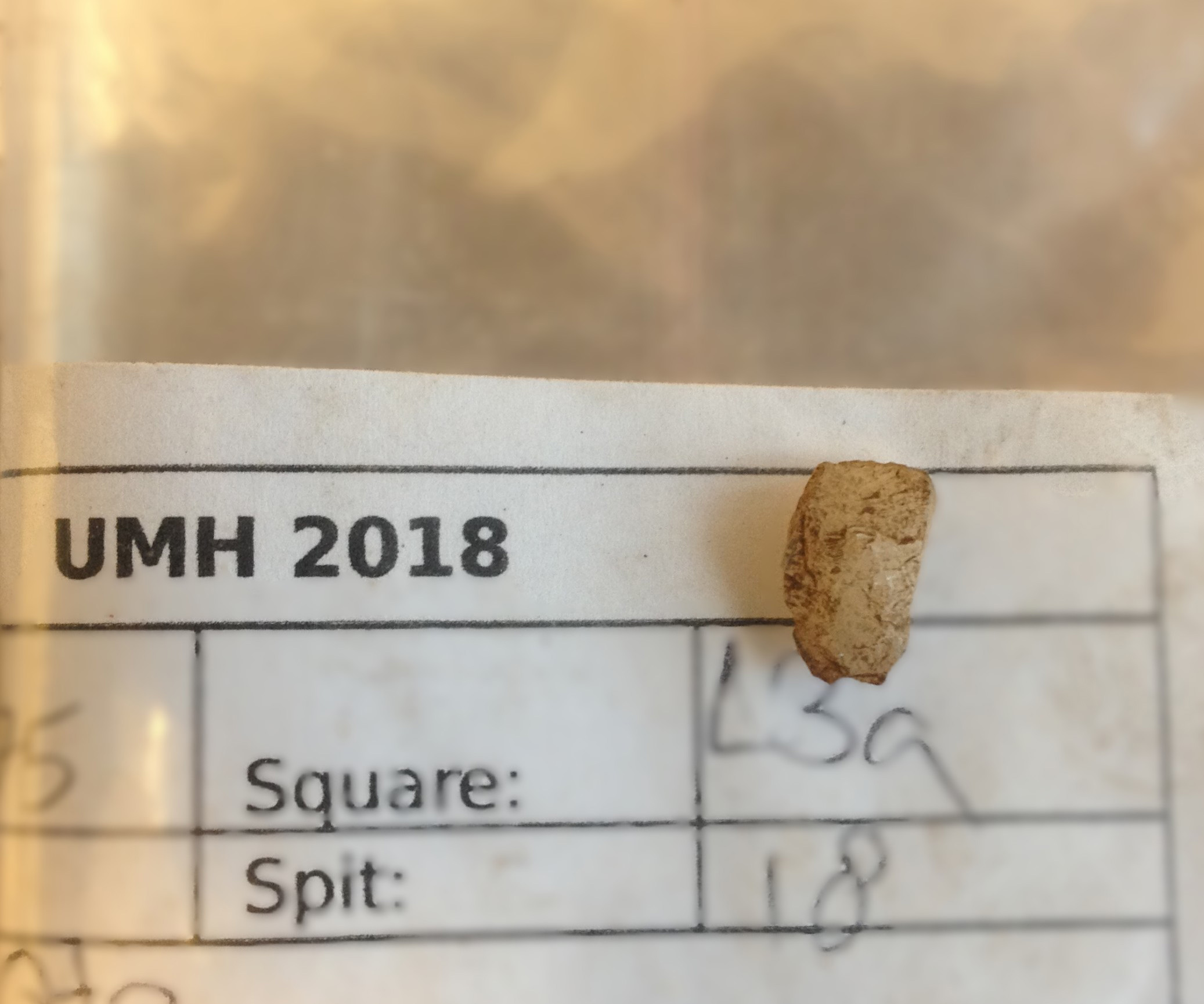


The study focuses on tiny quartz artefacts from the Umhlatuzana rock shelter in KwaZulu-Natal province. Detailed analysis of the finds demonstrates that between approximately 50,000 and 20,000 years ago, key aspects of Stone Age lifestyles gradually changed: techniques for manufacturing stone tools, design of the tools and the use of raw materials were transformed step-by-step. Features of the Middle and Later Stone Age coexisted for a long period of time.
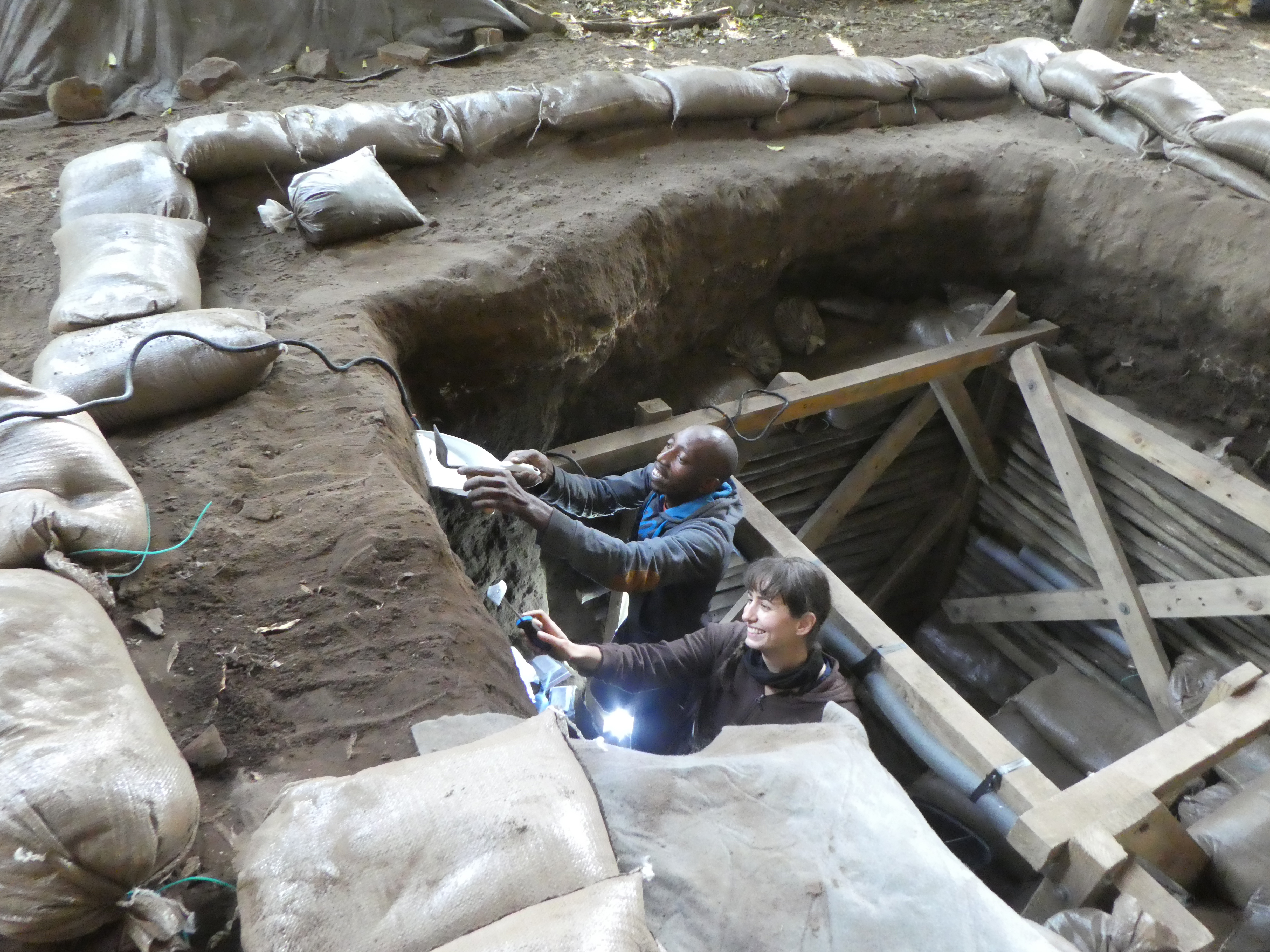
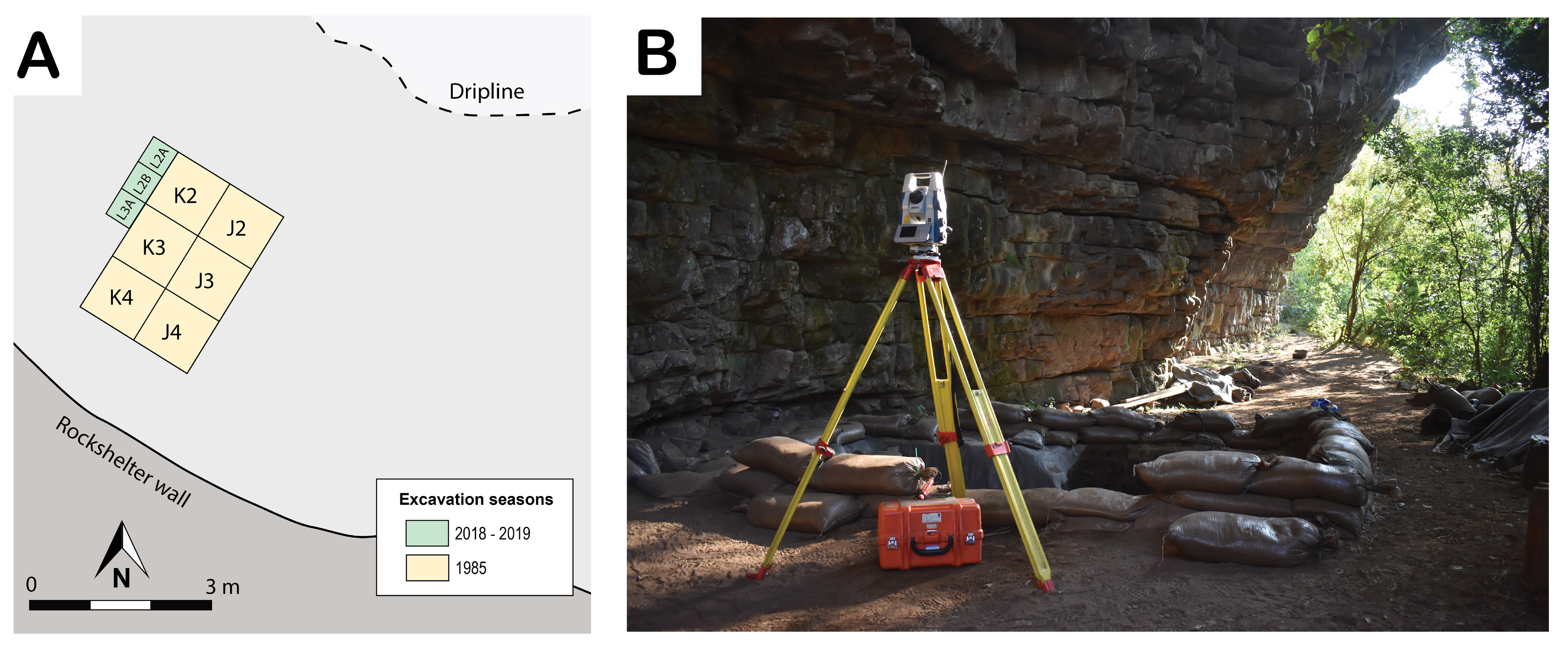
The finds examined originate from high-resolution excavations carried out by Leiden University in 2018 and 2019 under the direction of Gerrit L. Dusseldorp. The results of the international research team, with the participation of the Austrian Academy of Sciences (ÖAW), have now been published in the journal Quaternary Science Reviews.
‘The findings from Umhlatuzana show that hunter-gatherers gradually adapted their mobility, their strategies for food and raw material procurement, and their tool production,’ says Viola Schmid, lead author of the study from the Austrian Archaeological Institute of the Austrian Academy of Sciences. The change thus affected not only individual types of tools, but the entire technological, economic and presumably also social system.
For a long time, the advent of the Later Stone Age was linked to the emergence of biologically and behaviourally modern humans – that is, with ways of life similar to those of hunter-gatherer groups today. However, it is now clear that Homo sapiens corresponded anatomically to modern humans and developed complex behaviours much earlier.
The new data contradicts the idea of a sudden ‘leap forward’. Instead, it points to a gradual change in the system: existing technological principles – such as the use of local raw materials (e.g. quartz pebbles from river gravels), bipolar knapping with anvils, or the targeted miniaturisation of tools – were recombined and developed further. Small stone bladelets increasingly served as modular elements of composite tools.
A comparison with other sites in southern Africa additionally exhibits that this change did not occur simultaneously or uniformly. The transition from the Middle to the Later Stone Age varied in terms of both time and place. Researchers interpret this as the result of diffusion coupled with local innovations in loosely connected groups.
Thus, the end of the Middle Stone Age does not appear as a sharp cultural break, but rather as a multi-layered, regionally varying process of adaptation. This laid the foundation for the later hunter-gatherer societies in southern Africa – and shows how dynamic and adaptable human societies were even tens of thousands of years ago.
Publication:
Wind(ow) of change: The end of the Middle Stone Age and the beginning of the Later Stone Age at Umhlatuzana rockshelter showcasing concurrent technological and techno-economic shifts, V.C. Schmid, I. Sifogeorgaki, T. Abruzzese, S. Blik, L. Huang, G.L. Dusseldorp, Quaternary Science Reviews 2026.
DOI: doi.org/10.1016/j.quascirev.2026.109806