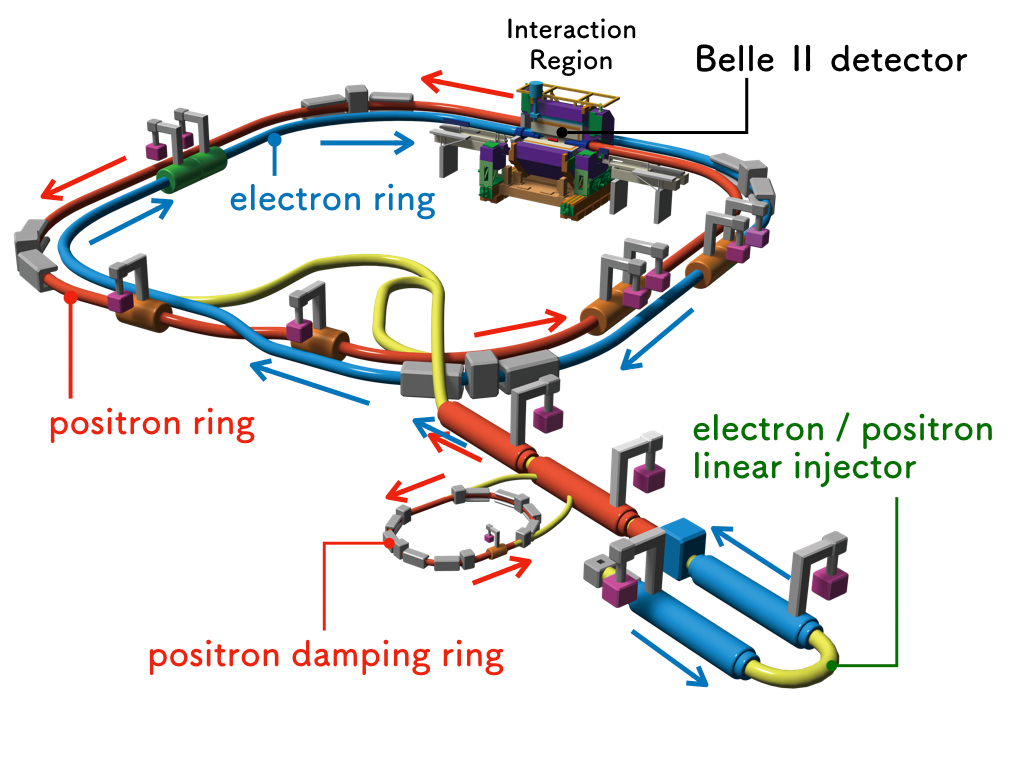


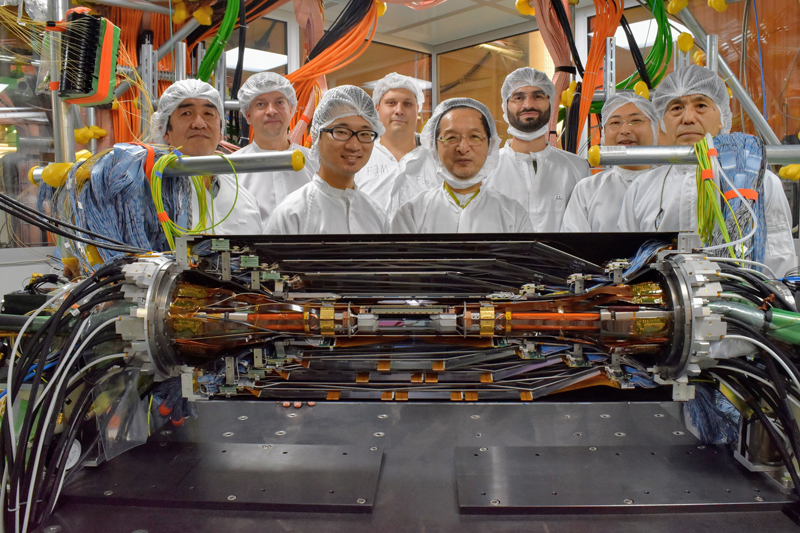
After years of preparation and a successful test run in the first half of 2018, the new Belle II experiment on the SuperKEKB collider has begun. The particle accelerator in Tsukuba, Japan, near Tokyo, consists of an underground ring about three kilometers long, in which electrons and their antiparticles, called positrons, are accelerated in opposite trajectories. The particles collide in the interior of the detector.
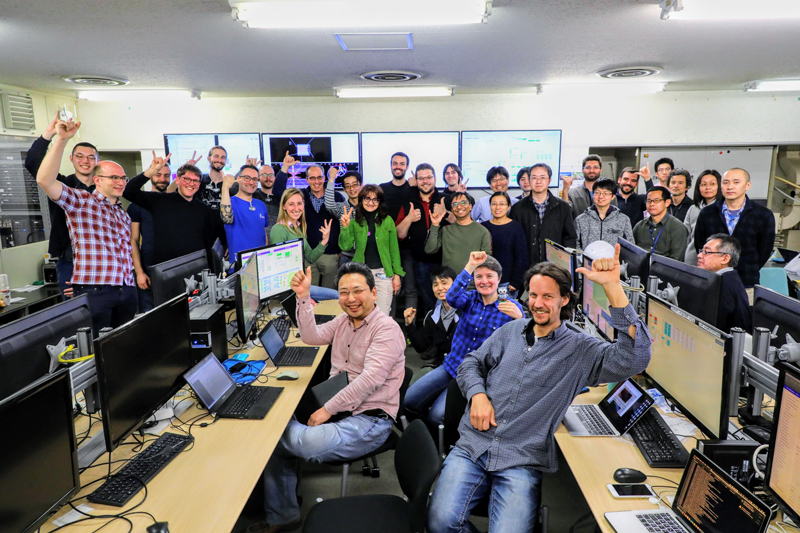
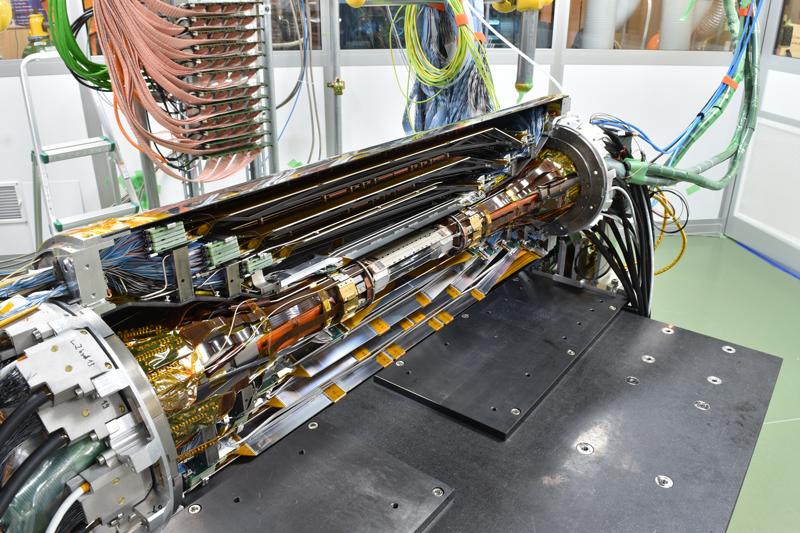
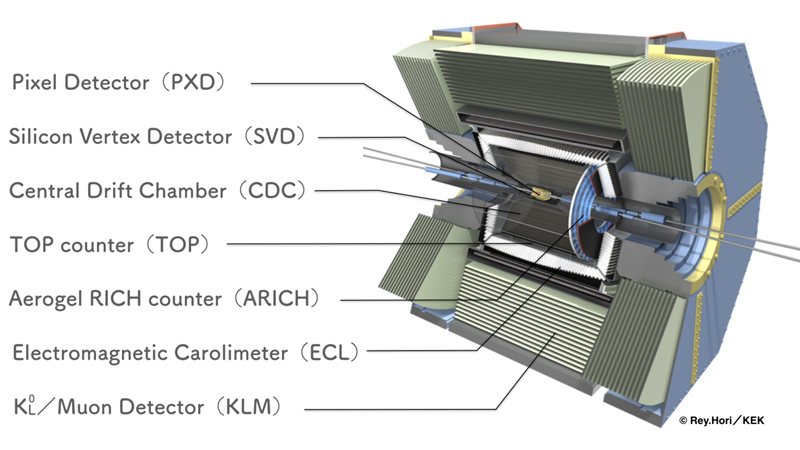
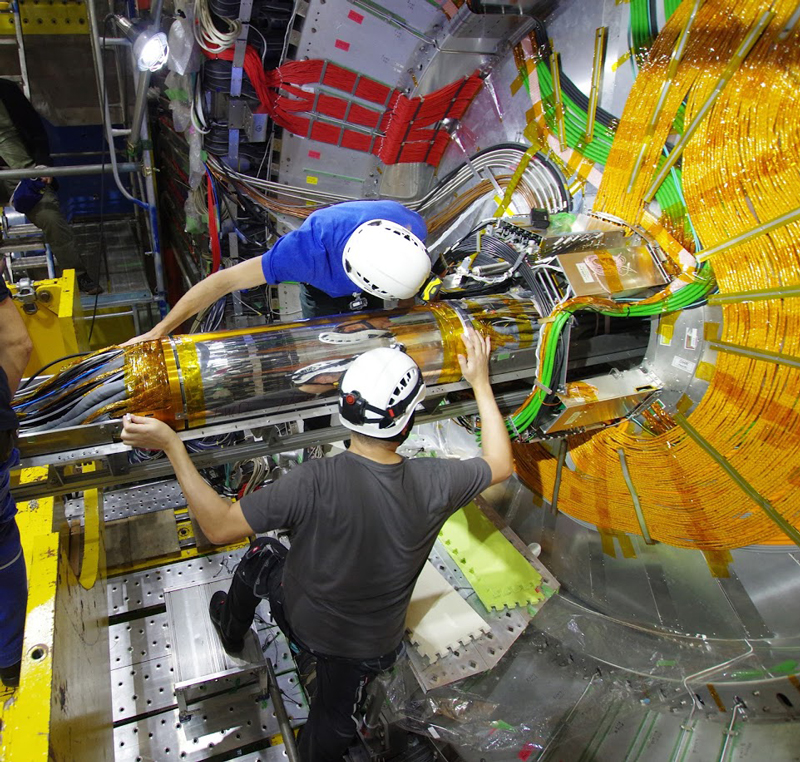
Now, on March 25, 2019, the first electron-positron collisions were registered in the Belle II experiment, which is now fully equipped with a state-of-the-art vertex detector. This instrument measures the particle trajectories near the collision point with an accuracy of a few micrometers.
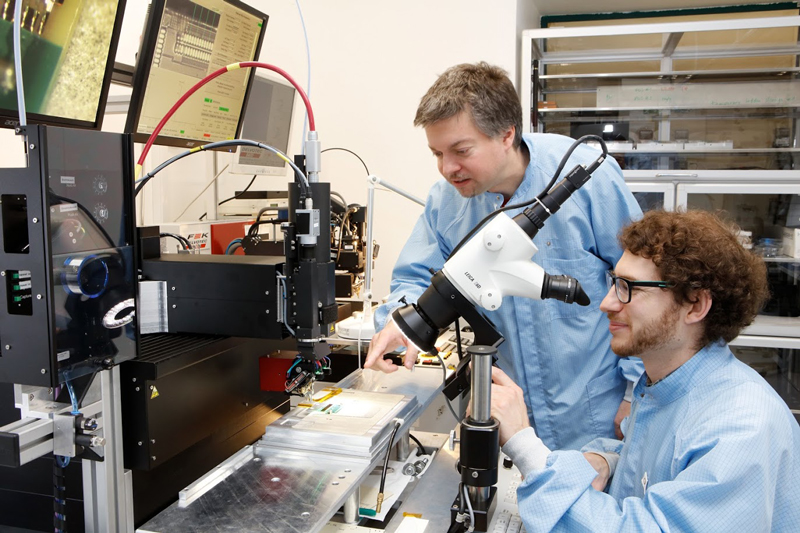
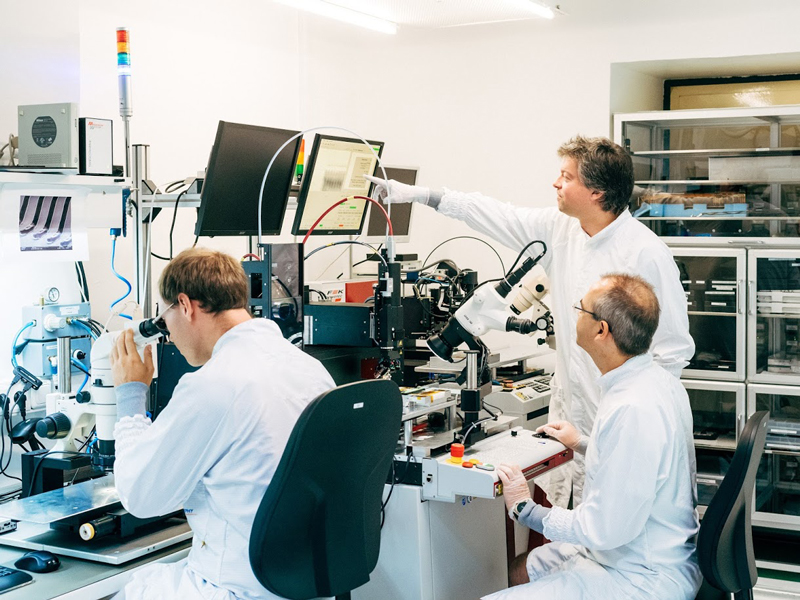
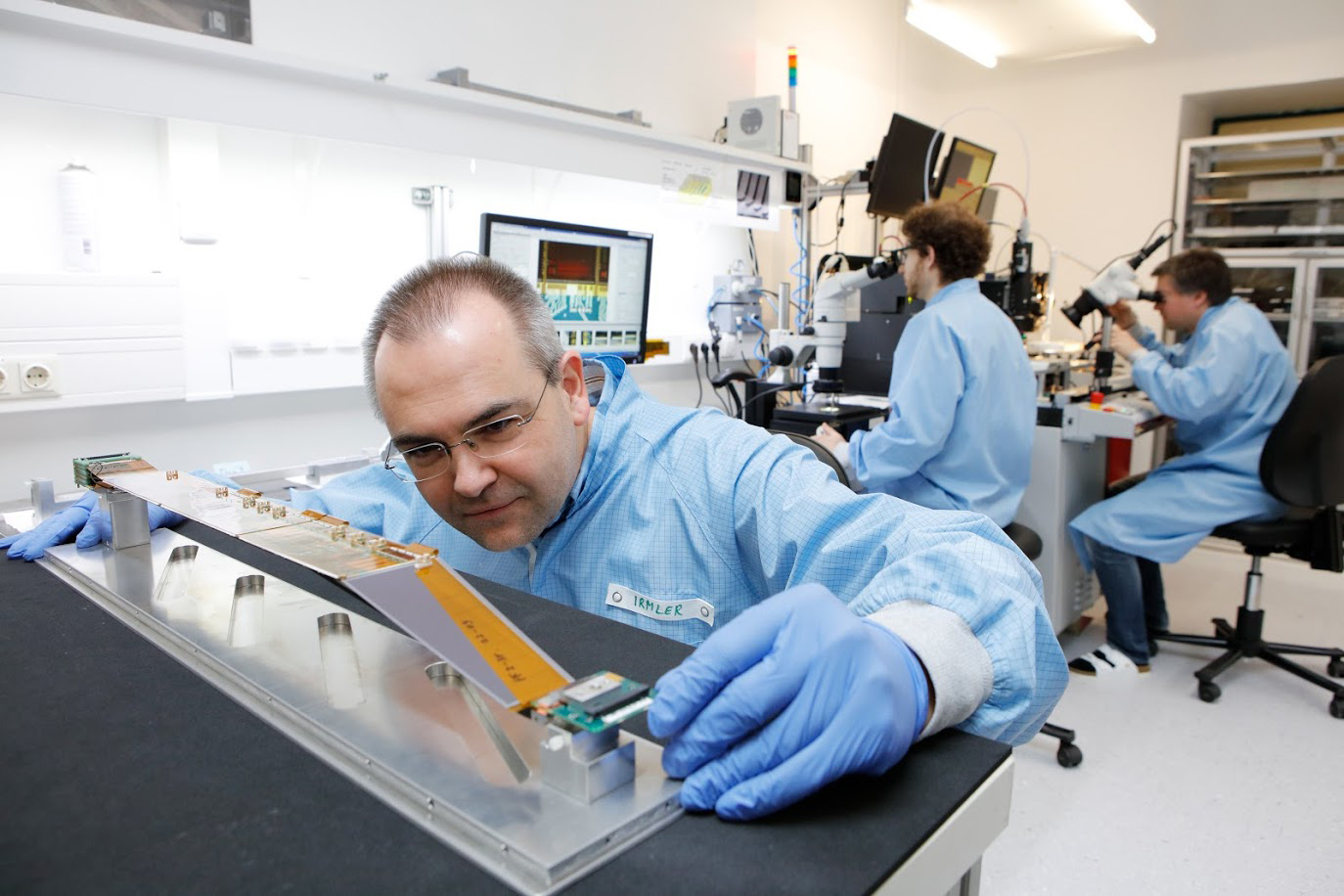
The Institute of High Energy Physics of the Austrian Academy of Sciences (OeAW) has been involved in experiments in Japan since 2001 and led the development and construction of part of the vertex detector, the so-called silicon vertex detector (SVD). As in previous years, the physicists from the OeAW will also be involved in evaluating the Belle II data, in particular for the search for dark matter.
Predecessor experiment received the Nobel Prize
Belle II is supported by the Japanese research organization KEK and operated by an international collaboration of 113 research institutes with around 500 scientists, about a third of them from Europe. In the experiment using the SuperKEKB particle accelerator, targeted collisions of electrons and positrons produce pairs of so-called B mesons, which are extremely short-lived and whose decay products are recorded even more precisely by the detectors than in the predecessor experiment KEKB.
What differentiates the SuperKEKB from the LHC particle accelerator at CERN in Switzerland, for example, is the lower energy combined with a higher number of particle collisions, enabling highly precise measurements. The Belle II experiment aims to collect 50 times more data than its predecessor Belle, which was in operation until 2010 and laid the foundation for the 2008 Nobel Prize in Physics for Makoto Kobayashi and Toshihide Maskawa.
Eleven-strong Austrian research group in Japan
"With previous knowledge, we can describe only about five percent of the energy content of the universe, but not the properties of dark energy and dark matter. With this new detector, we hope for results beyond the previously known standard model of physics", says Christoph Schwanda from the OeAW, who heads the eleven-member Austrian research group at the SuperKEKB.
The current phase of the Belle II experiment will run until 2027 – physicists from the OeAW will be involved in evaluating the data over the entire period.