Project leader:Daniel Kiener
The ideal structural material should excel in both strength and toughness - a combination that represents the Holy Grail in materials science. Strength determines a material's resistance to deformation under stress, while toughness defines its ability to resist fracture through energy dissipation. These properties are mutually exclusive: While microstructural refinement to the nanometer scale dramatically enhances strength, it simultaneously causes a severe drop in ductility and damage tolerance. This inverse relationship has prevented the development of materials that combine both properties effectively, forcing engineers to compromise by using relatively soft metals in safety-critical applications such as airframes and pressure vessels. This fundamental limitation has tremendous economic implications.
Tungsten is a material with exceptional properties, having the highest melting point of any metal, outstanding thermal conductivity, and superior strength at elevated temperatures. It is a prime candidate for extreme environment applications, particularly as a plasma-facing material in nuclear fusion reactors. However, its inherent brittleness severely restricts component design and operating conditions, limiting its full potential in these demanding applications.
Our research group has previously demonstrated novel pathways to enhance toughness in nanostructured materials through various innovative approaches:
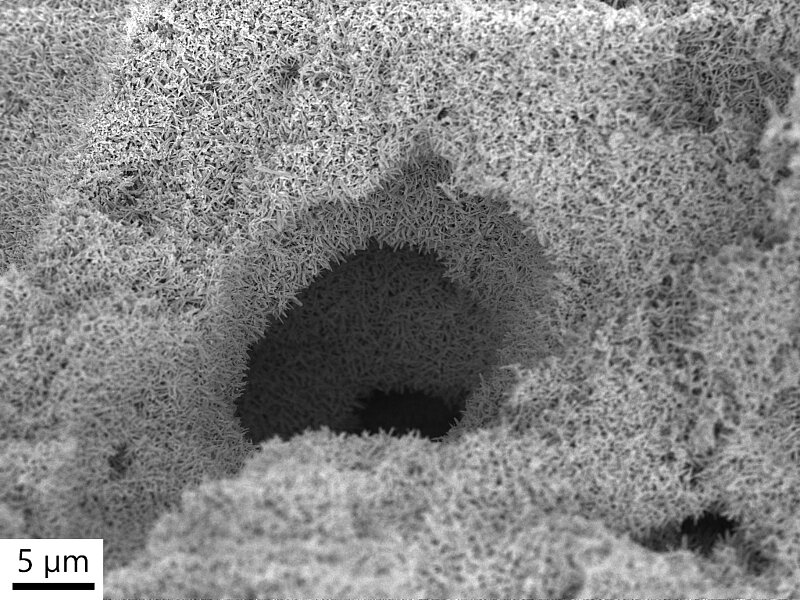
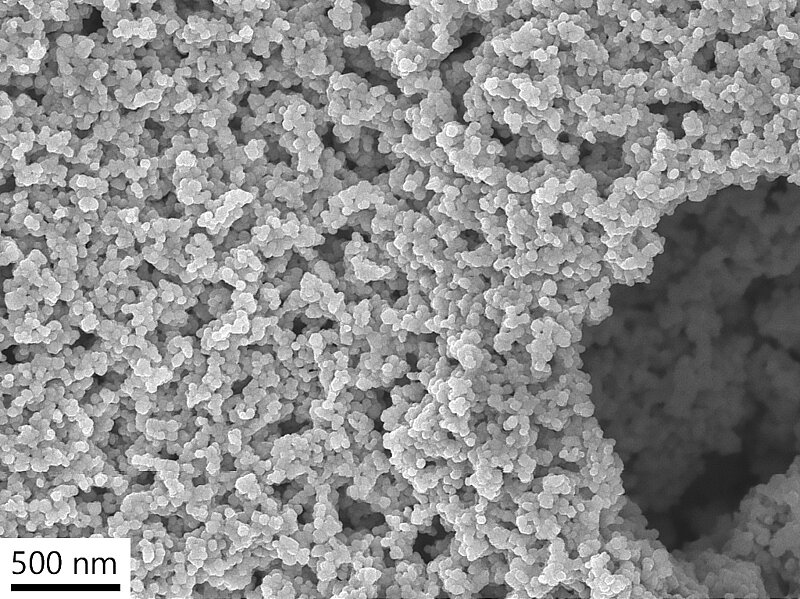
The objective of this project is to translate these fundamental insights into economically viable nanostructured bulk tungsten materials. By synthesizing nanostructured tungsten with tailored interfaces using industrially scalable processes, we aim to demonstrate the feasibility of combining high strength with enhanced toughness in bulk materials. This advancement would be particularly valuable for applications in extreme environments where traditional materials reach their operational limits.
Our approach combines innovative synthesis techniques with cutting-edge characterization methods to bridge the gap between fundamental materials science and industrial applications. By focusing on scalable processing routes and industrially relevant materials systems, this project aims to overcome one of the most persistent challenges in the design of structural materials.
This project was funded by the European Research Council (ERC) (grant agreement no.: 101146534)

01.05.2024 - 31.10.2025
All publications and download links can be found on ResearchGate or ORCiD.