


by Natalia Królikowska, Warsaw
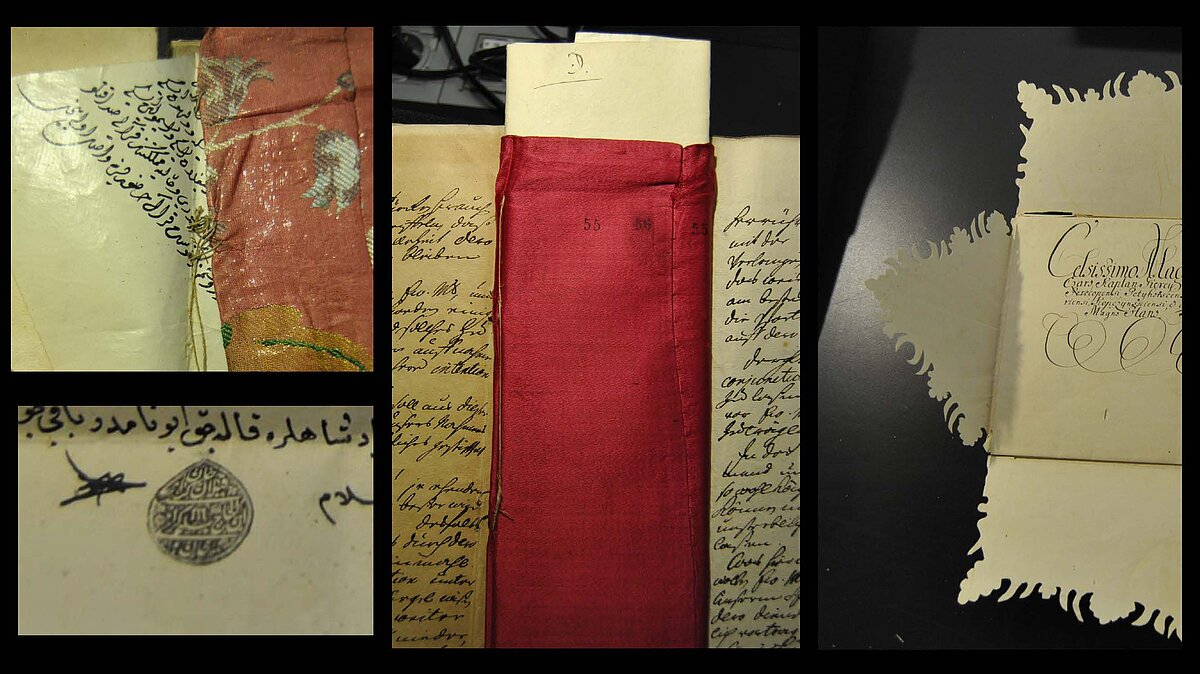
Following the Prut campaign (1711) and particularly after the Treaty of Adrianople (1713), Augustus II focused on improving relations with the Ottoman Empire and the Crimean Khanate, both of which perceived him as a Russian puppet. A key priority was securing recognition as the legitimate ruler of the Polish–Lithuanian Commonwealth. To achieve this, Augustus II aimed to persuade the Sublime Porte and the Tatars to withdraw their support for his rival, Stanisław Leszczyński, who—together with his patron Charles XII—had taken refuge in the Ottoman Empire following the Battle of Poltava. As part of these efforts, Augustus II sent multiple envoys to Istanbul and Bakhchisaray in 1713–1714 and also received Muslim diplomats at his own court.
In this blog post, I turn my attention to one such envoy: Sefer Shah Agha, the treasurer of Khan Kaplan Giray and a seasoned diplomatic agent in his service. He arrived at the Polish court in August 1714, departing for the Crimea in October the same year. Drawing on findings from my ongoing research (DIPLOWIDE and SMALLST projects), I examine a range of primary sources—among them Ottoman Turkish documents penned by Sefer Shah Agha, records generated by the Crimean chancellery upon his return, and seldom-studied Saxon and Polish reports (HStA Dresden, 10026 Geheimes Kabinett Loc. 3491/1, Loc. 3553/2; RGADA, Moscow, Fond 89/4/3; AGAD, Warsaw, AKW, dz. Tatarskie).
For a long time, the devastating fire that burned down the palace in Baghchasaray during the 1737 Russian invasion led many researchers to conclude that no Crimean archives survived. Yet documents related to Sefer Shah Agha’s mission—preserved in Dresden and Moscow—offer critical insights into how the khan’s chancellery managed foreign correspondence and produced internal records that shaped Crimean Tatar diplomacy. These materials let us see the negotiation process from the Crimean officials’ perspective, whereas, for other missions, we only have the European side of the story. Furthermore, these collections reveal the Crimean Tatar chancellery’s role as an intermediary between Poland–Lithuania and the Ottoman Empire, as they include notes and translations prepared by the Tatars for the Sublime Porte.
Sefer Shah Agha’s Diplomatic Writings to the Polish Court and the Khan
Most likely, the first two of the Ottoman Turkish documents under discussion were notes prepared by Sefer Shah Agha or a member of his retinue. They presented the Tatar perspective on four main issues, which the envoy was supposed to discuss. As they are preserved in Dresden among other materials concerning the diplomatic activity of Poland–Lithuania in union with Saxony, they must have been handed over to the chancellery before the envoy’s first meeting with the ministers and senators on August 8, 1714. This meeting took place in Rydzyna—a conveniently located town for Augustus II on the route between Warsaw and Dresden, yet still within the boundaries of the Commonwealth. Sefer Shah Agha arrived there in the company of Johann Spiegel, a diplomatic agent sent by Augustus II to the Crimea and the Sublime Porte in the summer of 1714. By reaching Rydzyna, the Tatar envoy must have become well aware that the political situation in the Commonwealth remained complex, since on his way to the court, he met the Crown Hetman, Adam Sieniawski—supposedly a political adherent of the king. From him, Sefer Shah Agha learned about the limited support for the king’s policy in the Commonwealth. This did not sit well with the envoy, who felt that the hetman was trying to hinder negotiations with Augustus II, so he issued him a stern warning that the khan and the sultan favored the king more than any other Poles and would not tolerate any disturbances. The same sentiments are repeated in the notes written in Ottoman Turkish, which are preserved in two versions. Their contents remain similar, without any differences in actual meaning. Most likely, the more concise version was translated before the meeting by Simon Bekiera, a translator in the king’s service. The note outlines four primary points, which—according to various preserved language accounts of the meeting (in German, Polish, Italian, French, and Latin)—were indeed addressed by the envoy. First, it repeats the Ottoman guarantees for the integrity of Polish–Lithuanian territory against Russian encroachment. Second, it stipulated that Charles XII should be permitted to return to Sweden via the Commonwealth’s territory. Third, the king was urged to dissolve his alliance with Russia, with the khan promising to remain his devoted friend. Fourth, the Sublime Porte, the khanate, and the Commonwealth were to act in unison to exact vengeance on their adversary, namely, Russia, described as an emerging power.
These four points are followed by additional remarks on the proposed Polish–Tatar–Ottoman alliance against Peter the Great. The khan pledged to support Augustus II with his entire army without the usual financial demands of earlier Polish–Tatar agreements. The note also highlights that the Tatar envoy to the Sublime Porte witnessed negotiations led by Johann Spiegel in Istanbul, confirming the sultan’s promise to remain “a friend to the friend and an enemy to the enemy” of Augustus II. Moreover, it urges the king to make peace with Charles XII, promising that any breach by the Swedish side would face the khan’s displeasure. Finally, Sefer Shah Agha reminded Augustus II that, for the Commonwealth’s benefit, the sultan had ended his support for the Cossacks and graciously relinquished any claims to Ukraine, previously taken from Russian control.
The letter of the envoy to the khan informing of the Polish response—now preserved in RGADA—centers on ending the Polish–Russian alliance. According to the envoy, the king defended his ongoing alliance with Russia as a measure against Sweden. Sefer Shah Agha further notes that Augustus II raised concerns about Charles XII’s supporters nearing the Polish border in the vicinity of Kamjanec’ (in today’s Ukraine). The king stressed that he had yet to secure a peace treaty with Sweden. This perspective, as described in Sefer Shah Agha’s letter, aligns with the accounts of the meeting prepared for the Polish and Saxon chancelleries. The letter’s focus on this point underscores what the Tatar side viewed as the mission’s true diplomatic objective. A second preserved letter from Sefer Shah Agha to Khan Kaplan Giray, likely sent earlier, reports Russian troop movements in what is now Latvia, as well as rumors concerning Habsburg forces in Hungary. Thus, it offers additional insight into the broader geopolitical context of the negotiations.
Immediately after the two official meetings with Polish statesmen, Sefer Shah Agha received a farewell audience (August 14) followed by confidential negotiations, including ones with ministers and Spiegel, which did not lead to any decisive conclusions. According to the Russian resident at the Polish court, Augustus II was said to have urged the khan to influence the Porte to start a war with the tsar, which Poland would also join, to capture Smolensk, Kyiv, and the lands formerly belonging to the Commonwealth. If the Poles resisted this, then the Turkish power would force them to declare themselves against Russia. For the time being, Augustus II was to wait for the Tatar and Turkish resolutions on this matter and keep the Saxon army in Poland. A few days after Sefer Shah Agha’s departure, the king sent la Verdonnière, the Captain of the Royal Guard, to determine whether Kaplan Giray would make any new proposals. He was to decide on the spot whether to return to the Commonwealth or to proceed to Constantinople to continue the negotiations with the Sublime Porte.
Where did the letters end up? Following the diplomatic correspondence brought by Sefer Shah Agha to Kaplan Giray
Two days after leaving Rydzyna, Captain la Verdonnière caught up with Sefer Shah Agha as he neared Kalisz in what is now central Poland. From that point onward, the two traveled together, giving the king’s envoy a chance to observe the Tatar envoy more closely. La Verdonnière echoed the favorable impression shared by Polish–Saxon officials, who had previously described Sefer Shah Agha—already familiar from an earlier mission to the Commonwealth—as a courteous and capable negotiating partner. What particularly drew la Verdonnière’s attention were Sefer Shah Agha’s feasting customs. He noted in his report: “Passing through that town [Kalisz], General Fritze sent word inviting the Sefferschabey [Sefer Shah Agha] to join him for a meal, but he declined because Ramadan had already begun. During this time, the Tatars do not eat, drink, smoke tobacco, or even look upon their wives until the stars appear. As I had not yet commenced any Turkish observance, I gladly accepted what the Sefferschabey had refused and then went to rejoin him at his quarters, where I paid him a visit at once. When the stars began to appear, he served supper and invited me; I thanked him humbly and withdrew to my lodging, where I lay down on a bundle of straw until daybreak.”
They continued their journey through Lviv, Hotin, and Iași to the khan’s military camp on the Dniestr River, where la Verdonnière was granted an official audience on October 22, the day after their arrival. From documents preserved in Dresden and Moscow, we get a clear picture of how the king’s envoy was received and what became of the materials carried by him and Sefer Shah Agha. A note (qaime) from Kaplan Giray to the Sublime Porte reveals that the khan halted his vizier, Hadji Ali Agha—who had just been dispatched to the sultan—as soon as he learned of Sefer Shah Agha’s approach. This pause allowed the Crimean ruler to prepare translations of all the letters brought by his envoy on behalf of the king, “the Commonwealth,” and Crown Hetman Adam Sieniawski. Additionally, the Tatar envoy to the Sublime Porte listened to an oral message conveyed to Sefer Shah Agha by the last official so that it could be passed on to the Ottomans.
A November 13, 1714, note from the aforementioned Hadji Ali Agha reveals that all information—both written and oral—collected by Sefer Shah Agha in Poland–Lithuania was subsequently delivered to Istanbul. The same communication informed the khan that the Sublime Porte had dispatched the head doorkeepers (kapıcı başı) to discuss the next diplomatic steps regarding the Commonwealth. As la Verdonnière observes, this came as a surprise, since the khan had expected his own envoy to return with Ottoman decisions concerning northern affairs. Yet for the captain, it was a welcome development; the khan had forbidden him from returning to Poland–Lithuania until official instructions arrived from Istanbul, forcing him to spend the late autumn in challenging conditions on the Northern Pontic Steppe. Besides bearing Kaplan Giray’s official letters to the Commonwealth, la Verdonnière also carried missives from Sefer Shah Agha addressed to Johann Georg von Flemming, who was one of Augustus II’s most influential ministers; to Johann Spiegel; and to his wife. While the first of these letters is known only from a French translation, the last one survives in its original Ottoman Turkish version in Dresden, likely indicating that it was never actually delivered.
Preliminary insights from Sefer Shah Agha’s mission
Even at this early stage of research into Sefer Shah Agha’s 1714 mission, several intriguing hypotheses and preliminary conclusions emerge. First and foremost, it appears that the khan had at his disposal a diplomat who was highly knowledgeable about Polish affairs—someone who knew how to make a favorable impression on his hosts. Sefer Shah Agha employed these strengths not only to gather information on the progress of negotiations but also to keep abreast of current political and military developments. He then relayed his findings to the khan as quickly as possible via Tatar couriers.
With regard to the negotiations themselves, it is noteworthy that Sefer Shah Agha did not limit his communication with the Polish–Saxon side to in-person discussions. He also provided an Ottoman Turkish version of the khan’s proposals in written form. Fortunately for the receiving side, they had a sufficiently skilled translator to process these documents.
Particularly fascinating is what happened to the materials that Sefer Shah Agha brought back to the khan: They were translated into Ottoman Turkish without delay and promptly sent on to the Sublime Porte. This demonstrates the khanate’s possession of capable translators while also highlighting the khan’s role as a crucial intermediary between Poland-Lithuania and the Sublime Porte. Indeed, the khan made sure that the sultan was fully informed—both in writing and orally—of all the intelligence received.
Taken as a whole, this case study offers valuable insights into the mechanisms of Crimean diplomacy in the early 18th century. It also enhances our broader understanding of Ottoman–Crimean relations and the pivotal role that smaller dependent states could have played in Ottoman diplomacy.