Jump to

  • Header (Main-Nav & Top-Nav)
  • Content
  • Footer
Logo Logo
  • News
  • Events
  • Press
  • Intern
  • DE
  • EN
Open search bar
Open Main navigation
  • OeAW
    • The OeAW at a glance
    • Your contact person
    • Job vacancies at the Austrian Academy of Sciences
    • Academy
      • The OeAW at a glance
      • Statute & By-laws
      • Performance reports & strategy
      • Politik- & Gesellschaftsberatung
      • Gender & Diversity
      • Your contact person
    • Presidium
    • Bodies
      • Academy Council
      • Research Board
      • Board of Directors of OeAW Institutes
      • Senate of the OeAW
      • Works Council
      • Arbeitskreis für Gleichbehandlungsfragen (AKG)
    • International
      • The OeAW International
      • International academy associations
      • International science conferences
    • Career at the OeAW
      • Working at the OeAW
      • Job vacancies at the Austrian Academy of Sciences
      • Welcome Center (englisch)
    • Press
      • ÖAW Instagram Link
      • Public Relations and Communications
      • Science Care
      • News
      • Makro Mikro - der Podcast
  • Members
    • Divisions
    • Young Academy
    • All OeAW members
    • Learned Society
      • Divisions
      • Young Academy
      • Frauen in der Geschichte der Gelehrtengesellschaft
    • Commissions
    • Committees
    • Scientific publication series
    • Association of the Friends of the OeAW
  • Research
    • Wissenschaftsbarometer ↗
    • Research at the OeAW
      • The OeAW institutes
      • ERC Grants
      • Die ÖAW in Exzellenzclustern
      • Themenplattformen
    • Archives, Library, Collections
      • BAS:IS AT THE OEAW
      • Phonogrammarchiv
      • Österreichisches Historisches Institut in Rom
    • Verlag
      • Austrian Academy of Sciences Press
    • Open Access
      • Open access at the OeAW
      • Open-Access Funding at OeAW
      • Institutional Repository
    • Wissensvermittlung
      • New Generation Science
      • Wissenschaftsbarometer ↗
      • Q - Dein Raum für Wissenschaft
      • Keine Forschung, keine Antwort
  • Funding
    • Joint Excellence in Science and Humanities ↗
    • Österreichische Studienstiftung
    • Stipendien & Preise
      • Talente fördern
      • Joint Excellence in Science and Humanities ↗
    • Funding Programmes
      • Österreichische Studienstiftung
      • Hannes Androsch Foundation at the OeAW
      • Die Förderprogramme der ÖAW
    • Wettbewerbe
      • OeAW Prize Question
    • Wissenstransfer
      • Spin-Offs
  • Events
    • Lectures: Akademievorlesungen
    • Current events
    • Live
    • Event archive
      • Veranstaltungen 2026
      • Veranstaltungen 2025
      • Veranstaltungen 2024
      • Veranstaltungen 2023
      • Veranstaltungen 2022
    • Rooms & Architecture
    • Veranstaltungsreihen
      • Lectures: Akademievorlesungen
      • Hans Tuppy-Lectures
      • Lectures mit ISTA & IIASA
      • Lectures mit Statistik Austria
      • Weitere Reihen
    • OeAW newsletter
    • News
    • Events
    • Press
    • Intern
    • DE
    • EN
Open search bar
  • OEAW - Home
    • Suche
    • OeAW
    • Members
    • Research
    • Funding
    • Events

Suche

  • Share via email
  • Share on LinkedIn
  • Share on Facebook
  • Share on Bluesky

Filter

The search via the website www.oeaw.ac.at is a faceted search:
In the first input field you can enter a search term and use the filters (facets) below to limit the result.

Make a selection under the Person facet in order to find specific members or employees. With the page type facet you can select "Events" for a search for OeAW events, "News" for news from the OeAW and "Pages" for fixed pages within the OeAW website.

Searched for IMBA - Institute of.
Displaying results 121 to 130 of 2646.
  • News
    Mögliche Schwachstelle des Coronavirus entdeckt
    12.08.2021
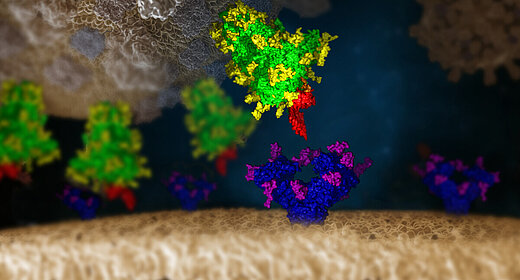
    einen so genannten Glykosylierungsmechanismus. Dadurch werden bestimmte Stellen des Spike-Proteins mit einer Zuckerhülle versehen. Ausgehend vom Wissen über Lektine - das sind Proteine, die speziell an Zuckermoleküle binden - machten sich die Forscher/innen um IMBA-Gruppenleiter Josef Penninger, der auch Direktor des Life Science Institute an der University of British Columbia (UBC) in Vancouver, Kanada, ist, auf die Suche nach einer entscheidenden Schwachstelle des Virus im ...
  • Event
    Europäische Forschung für alle - virtuell und interaktiv
    27.11.2020
    Wien 15:20 – 15:40 Coronavirus – ist der Erreger schon mutiert? CeMM – Forschungszentrum für Molekulare Medizin 16:00 – 16:20 Dunkle Materie und wie wir sie finden Institut für Hochenergiephysik 16:20 – 16:40 Gesundheit – überschätzen wir unseren Körper? Wittgenstein Centre for Demography and Global Human Capital (Institute für Demographie der ÖAW, IIASA und Universität Wien) 16:40 – 17:00 Verschwörungstheorien – gibt es sie schon seit Jahrtausenden? Institut für ...
  • News
    Hirnorganoide lüften Ursache seltener Neuroentwicklungsstörung
    27.01.2022
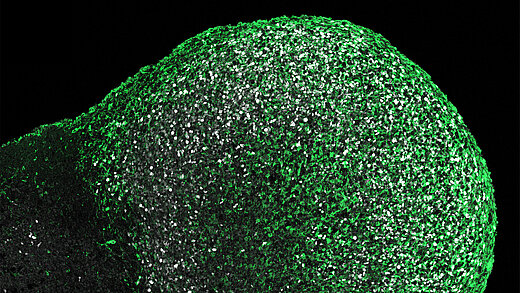
    ng, findet sich in der besonderen Biologie des menschlichen Gehirns. Zu diesem Ergebnis kommen Forschende des IMBA – Instituts für Molekulare Biotechnologie der Österreichischen Akademie der Wissenschaften (ÖAW) in der aktuellen Ausgabe von Science. Für die Erforschung wurden die am IMBA entwickelten mikroskopisch kleinen Labormodelle des menschlichen Gehirns – Organoidmodelle genannt – adaptiert. Diese werden aus Stammzellen erzeugt, die aus Blutproben von Patient/innen ...
  • Event
    Glaube, Wissenschaft, Aberglaube
    04.05.2022
    Freissmuth, Vorstand des Zentrums für Physiologie und Pharmakologie, Medizinische Universität Wien, Ulrich Elling , IMBA - Institut für Molekulare Biotechnologie der ÖAW, Dorothee von Laer, Vorständin des Instituts für Virologie, Medizinische Universität Innsbruck, Rüdiger Lohlker, Professor am Institut für Orientalistik, Universität Wien, und Gerhard Langer, Vorstand des Instituts für Judaistik, Universität Wien. Ein Podiumsgespräch aller Vortragenden unter der Leitung von ...
  • News
    Brain Gain: ÖAW holt Spitzenforscherinnen nach Österreich
    06.10.2022
    mit ihrem Stipendium als PostDoc am IMBA – Institut für Molekulare Biotechnologie der ÖAW eine 3D-Plattform entwickeln, die die Gebärmutter nachahmt, um bestimmte Aspekte der Implantation menschlicher Embryonen zu modellieren. Mit dieser Technologie soll die Grundlage für eine Pipeline zur Entdeckung von Medikamenten gelegt werden, die bei der Familienplanung und Fortpflanzung helfen sollen. Marjolein Bosch untersucht am Österreichischen Archäologischen Institut der ÖAW die ...
  • News
    Kinder – Knochen – Kirchen
    19.06.2018
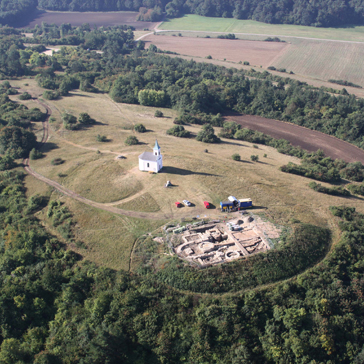
    n und Säuglingen als Erwachsene begraben. Margit Berner vom NHM Wien, Herbert Böhm von der Universität Wien und Elisabeth Rammer von der Donau-Universität Krems stellen ihre Befunde in einem Vortrag zum Thema „Kinder – Knochen – Kirchen“ am Österreichischen Archäologischen Institut der ÖAW im Rahmen der Vortragsreihe „Neue Bioarchäologische Forschungen“ vor. An diesem außergewöhnlichen Bestattungsplatz für Kinder fanden die Forscher/innen auch noch Münzen, Tierknochen und ...
  • News
    "Glückshormon"-Baustein aktiviert Immunzellen
    07.11.2018
    eigene Immunsystem gezielt zu aktivieren, kann sich der Körper eigenständig gegen Krebszellen und andere Eindringlinge wehren. Aktuelle Forschungen eines internationalen Teams rund um Josef Penninger vom IMBA – Institut für Molekulare Biotechnologie der Österreichischen Akademie der Wissenschaften (ÖAW) – und Clifford Woolf vom Boston Children's Hospital in Harvard nähren die Hoffnung auf eine baldige Verwirklichung dieses Vorhabens. Sie entdeckten Neues über die Biologie ...
  • News
    Mit neuer Methode der Mikrozephalie auf der Spur
    30.10.2020
    möglich, das Gehirn – schneller als je zuvor – nach Gendefekten zu durchleuchten. Das ist, als ob wir bisher versucht hätten, eine dunkle Höhle mit einzelnen Zündhölzern auszuleuchten und nun auf einmal einen Scheinwerfer haben,“ erläutert Christopher Esk, Co-Erstautor und Postdoktorand am IMBA der ÖAW. Von Fliegen inspiriert Genetische Screens an der Fruchtfliege sind in der modernen Biologie ein bewährtes Werkzeug für genomweite Analysen und haben in Wien Tradition. Die ...
  • News
    Ägyptische Mumien - vom prädynastischen Abydos bis zum koptischen Kloster deir el-Bachit
    20.05.2019
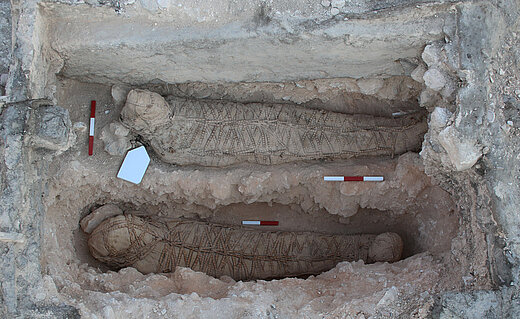
    Mumien sind außergewöhnliche, aber auch sehr fragile Zeugen längst vergangener Zeiten. Das EURAC-Institut für Mumienforschung in Bozen ist das weltweit einzige Institut dieser Art. Dessen Leiter, der Anthropologe, Humangenetiker und Bioarchäologe Albert Zink berichtet auf Einladung des Instituts für Kulturgeschichte der Antike der ÖAW zusammen mit der Archäologin Estelle Hower-Tilmann und der Rechtsmedizinerin Sandra Lösch von der Universität Bern über „Neue Erkenntnisse aus ...
  • News
    Wie Fledertiere sich gegen tödliche Viren wehren
    23.05.2025
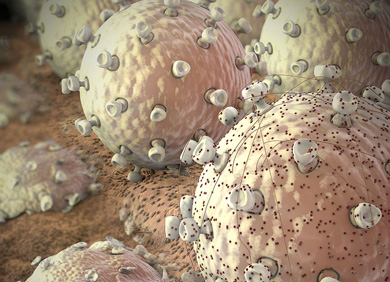
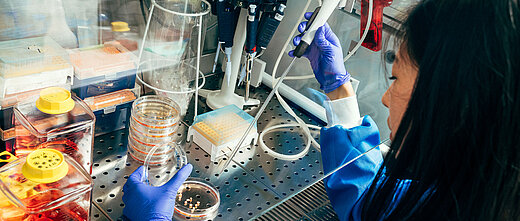
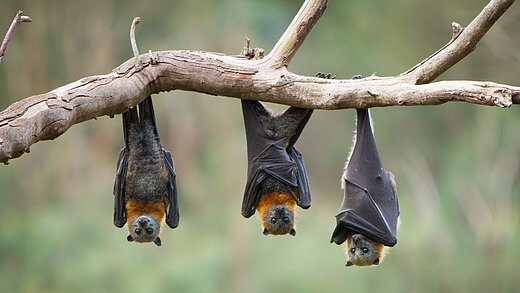
    Ein internationales Forschungsteam um Max Kellner und Josef Penninger – wissenschaftlicher Geschäftsführer des Helmholtz-Zentrums für Infektionsforschung (HZI) und Gruppenleiter am IMBA – Institut für Molekulare Biotechnologie der Österreichischen Akademie der Wissenschaften (ÖAW) – hat eine innovative Organoid-Forschungsplattform entwickelt, mit der sie die zellulären antiviralen Abwehrmechanismen in den Schleimhäuten von Fledertieren genauer untersuchen konnten. Die ...
  • ....
  • 8
  • 9
  • 10
  • 11
  • 12
  • 13
  • 14
  • 15
  • 16
  • 17
  • ....
Science
Newsletter

Austrian Academy of Sciences
Dr. Ignaz Seipel-Platz 2
1010 Vienna

+43 1 51581-0
[email protected]

  • ÖAW onFacebook
  • ÖAW onInstagram
  • ÖAW onBluesky
  • ÖAW onYoutube
  • ÖAW onLinkedIn
  • ÖAW onSpotify
  • News
  • Events
  • Press
  • Internal
  • Jobs at the OeAW
  • Open Calls

Imprint Data Protection

© Copyright OEAW

Searchbar

Notice about cookies

This site uses cookies. They ensure essential functionalities of the website and enable us to continuously optimize content. Help us by agreeing to the collection of statistical data and the presentation of external multimedia content. You can change your cookie settings at any time. Further information can be found in the privacy settings and by clicking the Data Protection Link.

These cookies are required for the smooth functioning of our website.

Name Purpose Storage duration Type Provider
CookieConsent Remembers your consent to the use of cookies. 1 year HTML Web Consent
fe_typo_user Assigns your browser to a session on the server. This only affects the content you see and is not evaluated or processed by us - HTTP Web User

With the help of these cookies, we strive to make our offer even more attractive for you. The user flow can be analyzed and assessed using pseudonymised data from website users. This gives us the opportunity to optimize website content.

Name Purpose Storage duration Type Provider
_pk_id Used to store a few details about the user like unique visitor ID. 13 months HTML Matomo-id
_pk_ref Used to store information about the user's referring website. 6 months HTML Matomo-ref
_pk_ses Short-term cookie to save temporary data from the visit. 30 minutes HTML Matomo-ses
_pk_cvar Short-term cookie to save temporary data from the visit. 30 minutes HTML Matomo-cvar
_pk_hsr Short lived cookie used to temporarily store data for the visit. 30 minutes HTML Matomo

With the help of these cookies, we strive to improve the information we offer users by providing multimedia or interactive content such as videos.

Name Purpose Storage duration Type Provider
YouTube A connection to YouTube will be established to view videos. - Connection YouTube
SoundCloud A connection to SoundCloud will be established to play audio files. - Connection SoundCloud
Twitter A connection to Twitter will be established to display tweets. - missing translation: type. Twitter
_cs_c Indicates whether the user has consented to ContentSquare tracking. 394 days missing translation: type. Spotify (ContentSquare)
_cs_id Stores a unique user ID for ContentSquare session analysis. 394 days missing translation: type. Spotify (ContentSquare)
_ga Used to distinguish users. 400 days missing translation: type. Google Analytics
_ga_BMC5VGR8YS Used by Google Analytics to persist session state. 400 days missing translation: type. Google Analytics
_ga_S0T2DJJFZM Used by Google Analytics to persist session state. 399 days missing translation: type. Google Analytics
_ga_ZWG1NSHWD8 Used by Google Analytics to persist session state. 400 days missing translation: type. Google Analytics
_ga_ZWRF3NLZJZ Used by Google Analytics to persist session state. 400 days missing translation: type. Google Analytics
_gid Used to distinguish users. 1 days missing translation: type. Google Analytics
_ScCbts Stores temporary session or playback preferences. 6 days missing translation: type. Spotify
_scid Spotify advertising ID used for analytics and retargeting. 395 days missing translation: type. Spotify
_scid_r Spotify advertising ID used for analytics and retargeting. 395 days missing translation: type. Spotify
eupubconsent-v2 Stores the IAB Transparency & Consent Framework string. 364 days missing translation: type. IAB / Spotify
OptanonAlertBoxClosed Saves the state of your data protection consent. 364 days missing translation: type. OneTrust
OptanonConsent Saves the state of your data protection consent. 365 days missing translation: type. OneTrust
sp_adid Spotify advertising identifier. 365 days missing translation: type. Spotify
sp_landing Tracks which page the user landed on within Spotify. 1 days missing translation: type. Spotify
sp_m Stores the user’s market region (Spotify). 399 days missing translation: type. Spotify
sp_t Session token used for Spotify playback and access. 365 days missing translation: type. Spotify