


The Role of Functional Analysis in Understanding Late Pleistocene Lithic Technology
World Archaeology Seminars
»The Role of Functional Analysis in Understanding Late Pleistocene Lithic Technology. State of the Art, Advances, and Challenges«
Noora Taipale, Dries Cnuts | TraceoLab, University of Liege
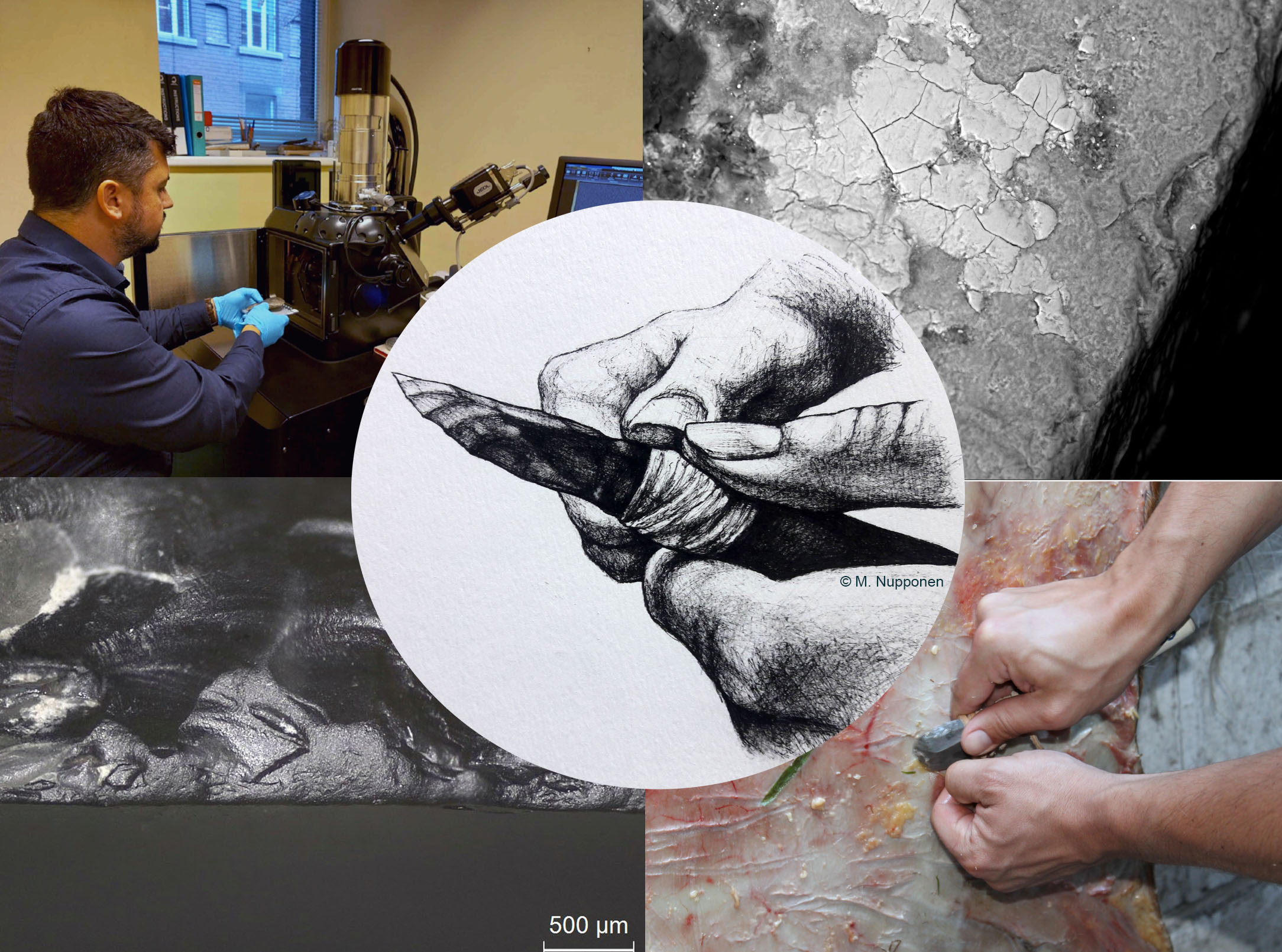
When a stone tool is used, residues and mechanical wear traces form on it that preserve a memory of its use. This means that the wealth of stone tools that have been unearthed at archaeological sites over the last centuries amount to an immense archive of past human behaviour. They have the potential of informing us about the manual capacities, the technical know-how, the use of natural resources and the settlement organisation of our ancestors, as well as changes in all these aspects in the course of our evolutionary history. However, squeezing this behavioural information out of stone tools requires specialised and time-intensive analytical methods, experimental support, and a detailed understanding of the various taphonomic processes that can affect archaeological sites and destroy or alter use-related residues and wear on stone tools. Developing such methods has not been without complications and controversy.
In this presentation, we offer our perspective on the current state of the art in lithic use-wear and residue analysis. We discuss recent developments that have improved the reliability of archaeological interpretations and opened up new research questions and agendas. We highlight the crucial role of combining different microscopic techniques in detecting and assessing functional wear and residues on stone tools. Additionally, we emphasize the importance of integrating various aspects of the methodology—such as chemical residue analysis, experimental archaeology, and microscopic methods—into a comprehensive functional analysis protocol, while stressing the importance of contextual information in the interpretation of functional evidence. This integrated approach enhances both the reliability and precision of archaeological interpretations. We also address ongoing challenges and identify subfields that require further development. These issues are examined through our recent methodological innovations and archaeological case studies, with a focus on the Palaeolithic in Europe and the Stone Age in Africa.
Informationen
Termin
29. Januar 2025, 17.30 CET
Ort
Otto-Wagner Postsparkasse, Georg-Coch-Platz 2, 1010 Wien, Seminarraum 1, 3. Stock
und via Zoom
ZOOMLINK
Meeting-ID: 632 8100 9253
Kenncode: Jc2ADN
Veranstalter
ÖAW-ÖAI
Kontakt
Sigrid Pratsch