


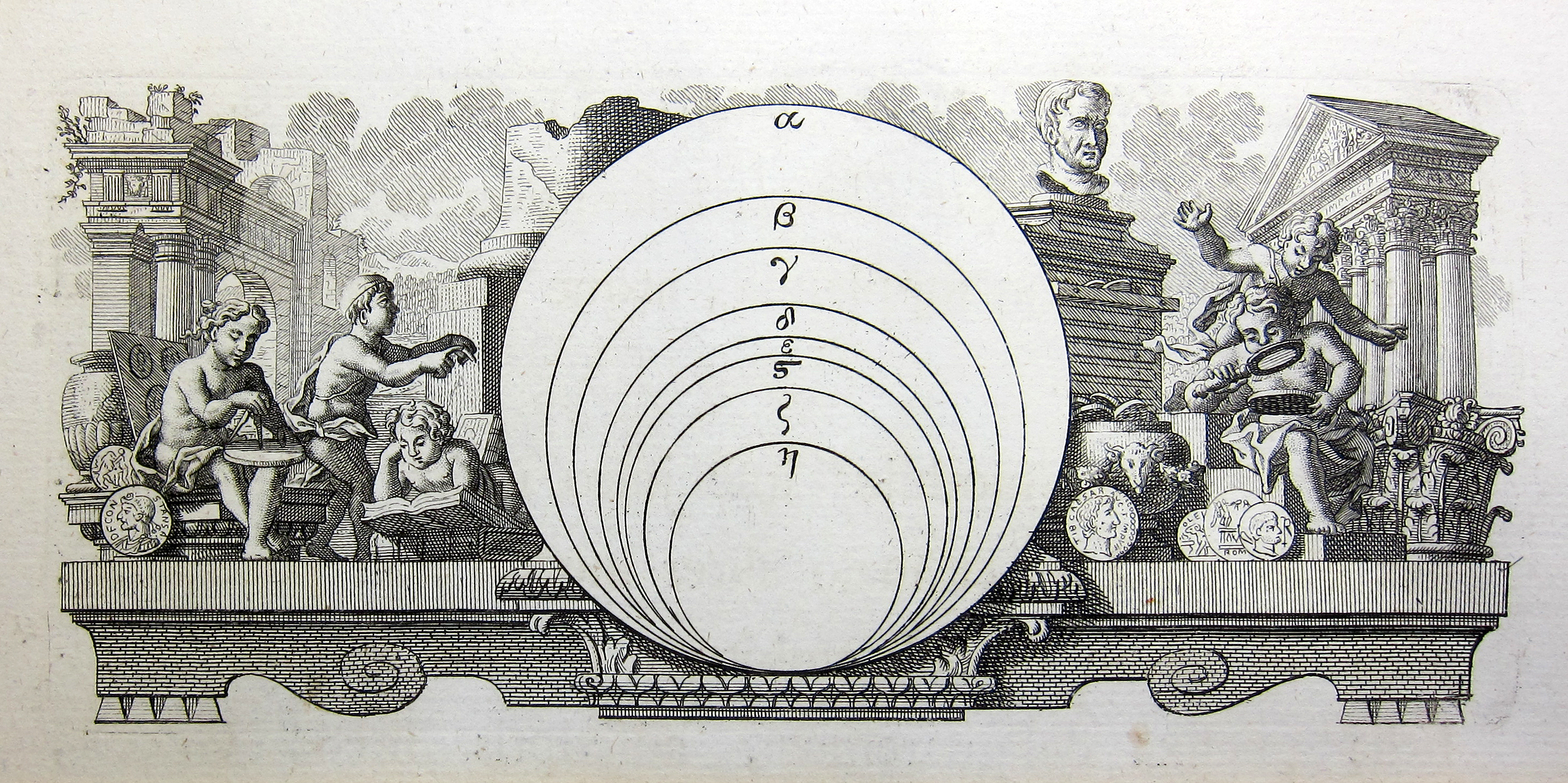
This is the first conference to explore the development of ordering systems for ancient coinage in the Early Modern period.
Greek and Roman coins have been collected avidly in Europe since the Renaissance. They were produced in incredibly large numbers from the seventh century BCE onwards, circulating across continental Europe, throughout the Mediterranean, and in Western Asia in antiquity. Large quantities of these pieces survive. Being highly portable objects, coins were readily available to early modern antiquaries who swiftly recognised the value of coinage as a key source for the history, economy, and culture of the ancient world.
From the beginning of numismatic studies, the practical arrangement of ancient coins in cabinets as well as their ordering in numismatic catalogues and publications presented challenges to scholars and collectors: coin types are incredibly varied, chronology is often uncertain, and the geographical attribution in many cases insecure. Hence, several different approaches to systematising these objects were devised from the 16th to the 19th centuries. Naturally, the way in which the material was arranged had immediate repercussions on how coins were analysed as sources.
This international conference brings together several case studies, partly drawn from current research in the project Fontes Inediti Numismaticae Antiquae(FINA), as well as overarching contributions on the emergence of the numismatic ordering systems in use today.
Informationen
Termin
16.-18 Juni 2026
Ort
Universität Wien, Institut für Numismatik und Geldgeschichte
Österreichische Akademie der Wissenschaften
Theresianische Akademie, Bibliotheca Theresiana
Organisator
Universität Wien
Österreichische Akademie der Wissenschaften
Kontakt
Bernhard Woytek (Universität Wien)
bernhard.woytek(at)univie.ac.at