


MIDEA IN THE ARGOLID: FROM A PREHISTORIC SETTLEMENT TO THE MYCENAEAN CITADEL
21.10.2015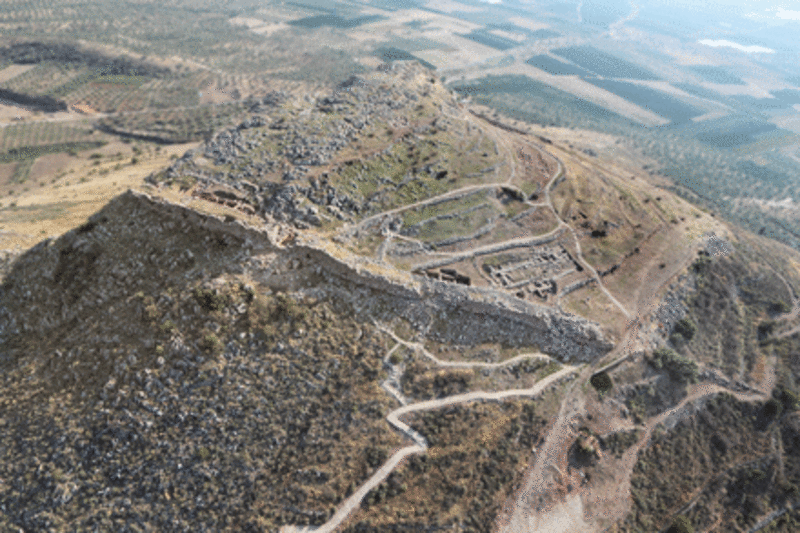
The recent Greek-Swedish excavations in the fortified area of the Mycenaean acropolis of Midea have led to a better understanding of its settlement history. The site was occupied in Late and Final Neolithic and throughout the Bronze Age from Early Helladic I to Late Helladic IIIC without interruption. Midea reached its height in the Mycenaean period, notably in the 14th and 13th centuries BC, with the establishment of the great fortified acropolis.
The excavations brought to light extensive and significant Mycenaean architectural remains all over the site. Also found were abundant fine and coarse pottery, terracotta figures and figurines, fresco fragments, sealstones, objects of ivory, bronze and stone, precious raw materials and finished luxury objects. In addition, transport stirrup jars and clay sealings with Linear B inscriptions show that Midea, the third of the great citadels of the Argolid, after Mycenae and Tiryns, was an administrative and craft centre. These discoveries have added to our knowledge about the role and function of Midea among the great centres of the Mycenaean period.
Postgasse 7/1/10, Seminarraum