


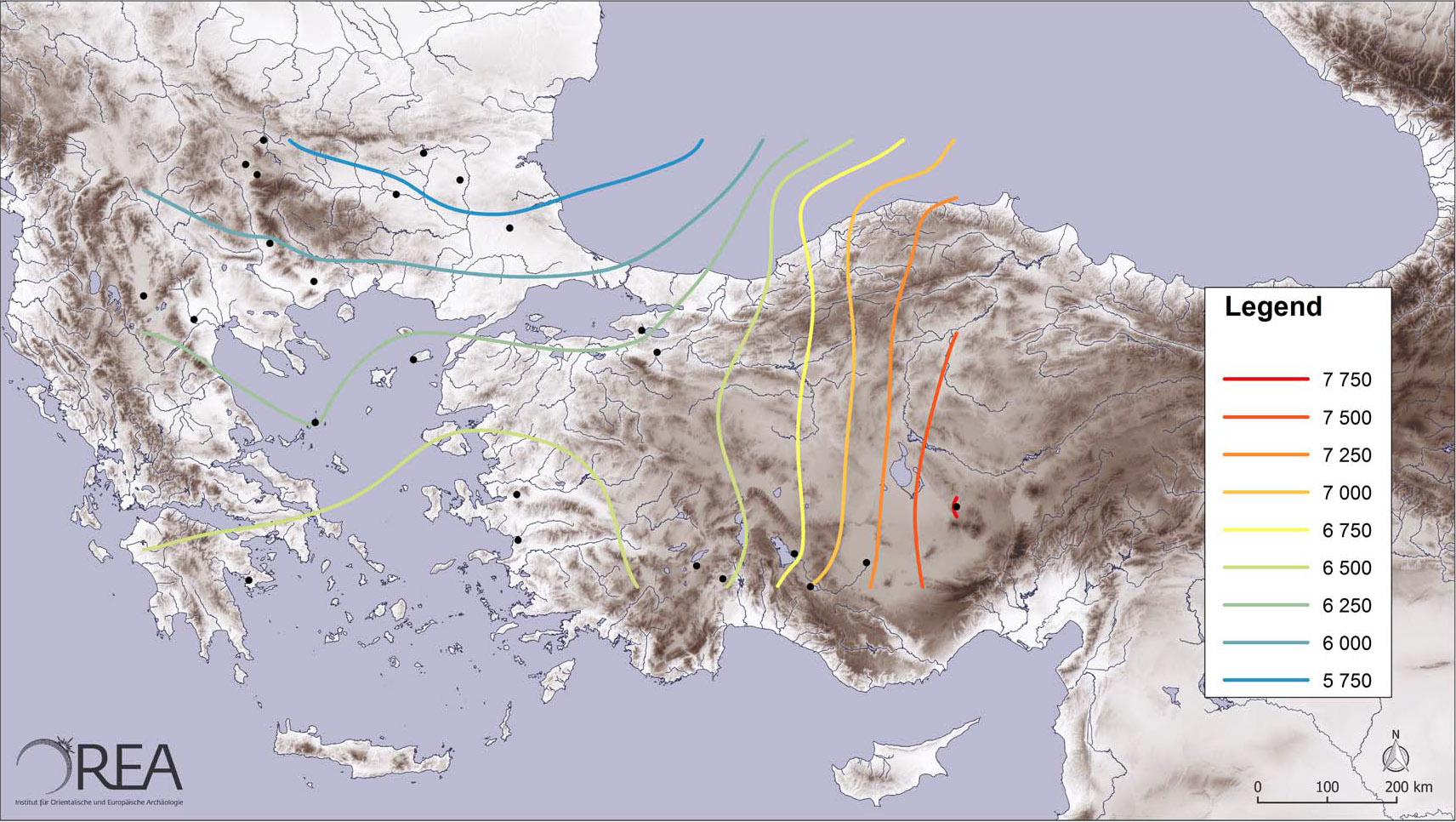
Archaeologists have long assumed that, as soon as sedentary farming was invented, c. 10,000 years ago in the Near East, it slowly expanded across Europe like an epidemic. Recent archaeological and demographic models highlight a more dynamic process in fits and starts, involving phases of rapid expansion over vast landscapes, typically spanning multiple modern countries, followed by centuries-long stases in key frontier regions, such as the Great Hungarian Plain and the southern Adriatic coast. One implication of this pattern is that it involved prolonged standoffs between foragers and farmers, acting as autonomous groups on either side of a fault-line – a situation in which opportunities existed for complex and potentially transformative interactions. This seminar will introduce one of the oldest such fault lines, situated between the Central Anatolian Plateau and the Aegean Basin. This region lies at the juncture of two distinct Neolithic phenomena or processes, which appear to have been segregated spatially: long-term adaptation through plant and animal domestication on the one hand, introduction of an exogenous ‘package’ of crops and animals on the other hand. Questions to be addressed include: When did farming spread into Europe? Along which routes did farming spread? And who spread farming? The latest archaeological and palaeogenetic data suggest that early farming expansion beyond the Near East was made on the back of a great migration, starting c. 8,600 years ago.
OREA Seminarraum, Hollandstraße 11–13, 1020 Wien