


The breadth and diversity of physical and chemical processes that combine to create a habitable environment are vast, spanning scientific disciplines that were compartmentalized most of the last century. The last 15 years, however, has seen slow and steady progress toward constructing comprehensive planetary evolution models, but significant challenges remain. Even after domain divides have been bridged, the relevant phenomena must be coupled so that any planet in any system can be simulated for billions of years. The complexity, non-linearity, and dynamic range of the processes creates a daunting computational challenge. Further complicating progress is that the number
of free parameters far outstrips the number of observational constraints, i.e., the problem is woefully underconstrained. Thus, a grand challenge in astrobiology and exoplanet science has emerged: the creation of a comprehensive, unified model of terrestrial planet evolution that is coupled to a statistical framework that can robustly quantify the likelihood that a planet can support life. The pursuit of this goal may be called "computational habitability." I will describe recent efforts to construct such a whole planetary system model as well as novel machine learning methods to infer Bayesian posteriors of the probability that a planet was, is, or will be habitable. These advances provide confidence that the computational habitability challenge will be overcome prior to the launch of next generation space telescopes such as HWO and/or LIFE.
Informationen
IWF Seminar series
Speaker
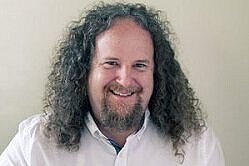
Prof. Rory Barnes
When
18.9.2025, 14.00 Uhr
Where
U.a.4 in-person and via Zoom
Recordings
Please be aware that the talks may be recorded, including the questions asked by the audience after the talk.