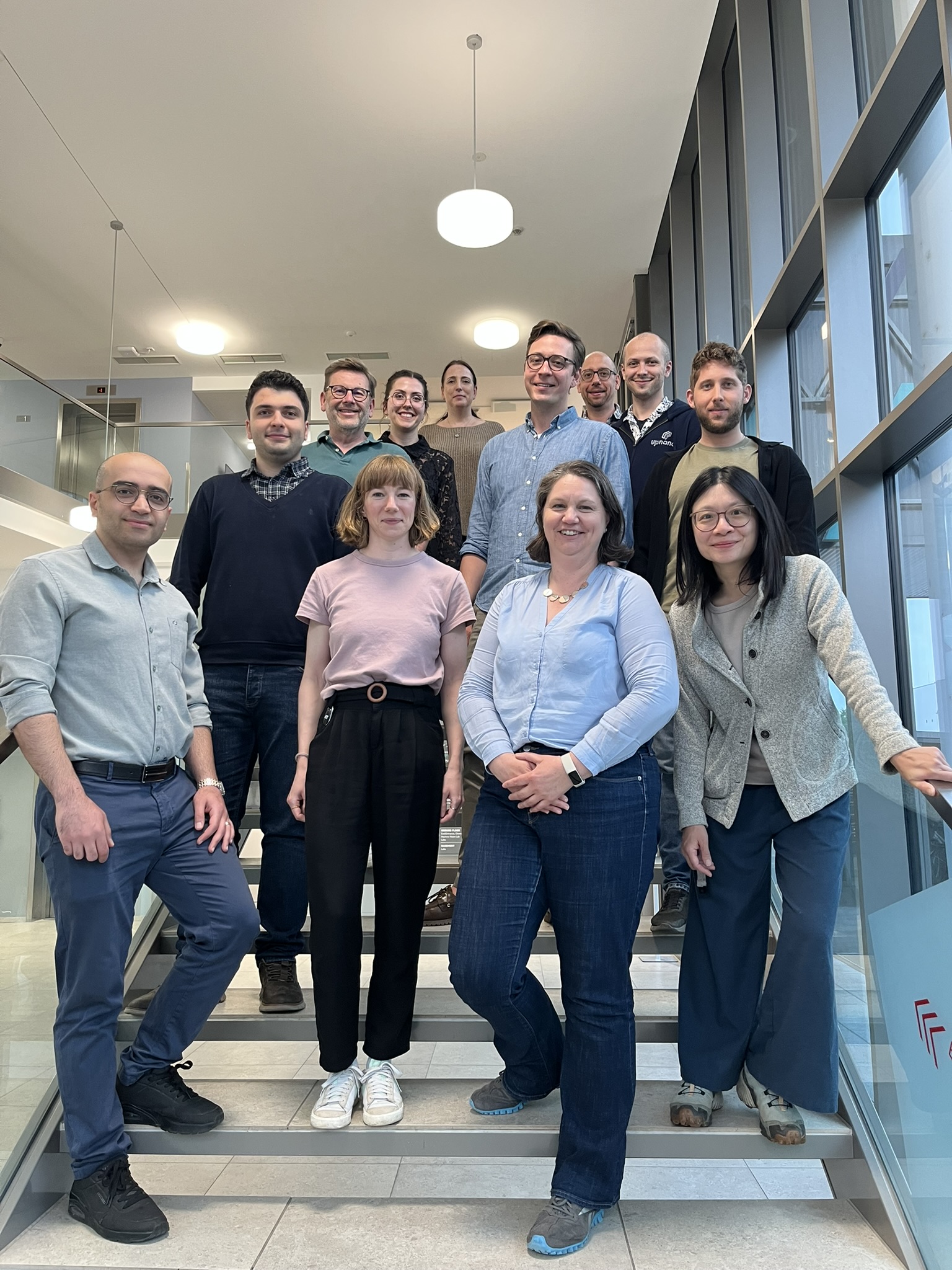
ESI Project Leader: Megan J. Cordill
UniWien Team Members: Jia min Chin, Majid Moussaei
Austrian Institute of Technology GmbH: Selina Götz, Rainer Hainberger, Moritz Eggeling, Rita Ebner
Hueck-Folien GmbH: Stephan Trassl, Sophie Moser
UpNano GmbH: Markus Lunzer, Maximilian Traunfellner, Michael Kainz
Project Summary:
The NanoCool FFG-funded project led by the Erich Schmid Institute of Materials Science of the Austrian Academy of Sciences with a team of researchers from University of Vienna, the Austrian Institute of Technology, HueckFolien and UpNano, solar cell efficiency and environmentally conscious solar energy solutions are investigated.
Solar panels are a vital source of clean energy, but they have a problem — the more they heat up, the less efficient they become. Higher temperatures not only reduce how much electricity panels produce, but also cause them to age faster. One promising solution is passive radiative cooling — a way of releasing heat without using any extra energy. The NanoCool project is developing special films that tackle this problem by combining several features in one coating: heat release, protection against dirt and ice, and improved light management.
These films work by carefully controlling how they interact with different types of light — letting visible light through, reflecting heat-generating infrared light, and releasing thermal energy into the atmosphere. Achieving this requires precise material choices and fine-tuning at the nanoscale. The films are designed as a multi-layer coating that balances optical performance, durability, and the ability to be manufactured at scale. Once the ideal designs are found, they will be produced using advanced high-speed manufacturing techniques suitable for mass production.
Crucially, these films can be applied to both new and existing solar panels, and can be replaced individually if damaged — without needing to replace the entire panel. This makes them a practical and cost-effective upgrade. Beyond solar panels, the technology developed through NanoCool could also be applied to cool windows, rooftops, and machinery, making it a versatile tool for tackling heat management across many industries.
This project is funded by the granting organization (Bundesministerium für Klimaschutz, Umwelt, Energie, Mobilität, Innovation und Technologie) and the FFG (www.ffg.at). The FFG is the central national funding agency and strengthens Austria’s innovative capacity.
FFG via the Energieforschung 2. Call 2024
FFG Project Number: F0999926756
Project Duration: November 2025 - October 2028