


Austrian Piety and Visual Media in the Early Modern Period
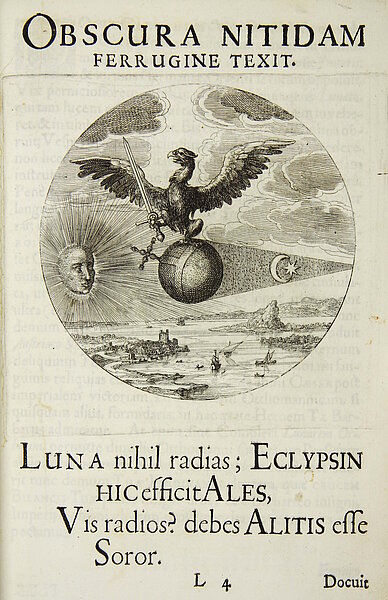
Pietas Austriaca refers to the distinctive form of Catholic piety associated with the Habsburg dynasty. This form of devotion was presented as unique and divinely ordained, reinforcing the dynasty’s supposed role as a chosen power in global politics. As a powerful political construct within the competition among European royal houses, Pietas Austriaca had far-reaching implications for visual media such as architecture, paintings, graphic arts, illustrated publications and decorative schemes. This dynastic piety could only be effectively conveyed if it permeated everyday life, public spaces, dynastic propaganda, and the broader social spheres of the nobility and the Church. Visual culture played a crucial role in making this vision both credible and pervasive. Visuality in relation to images and texts is explored in this context.
Building on this premise, research into Habsburg visual culture in the early modern period focuses on uncovering the diverse traditions and strategies embedded in the concept of dynastic piety. The goal is to demonstrate that Pietas Austriaca is not a monolithic phenomenon but rather a complex and adaptable network of ideas. Its power – whether symbolic or perceived – stems from the intricate interweaving of political and theological topoi. Importantly, the promotion of this piety was not confined to members of the Habsburg dynasty; various social classes independently adopted and propagated the idea of the dynasty's divine election, thereby reinforcing collective expectations.
The studies and projects grouped under this research unit highlight the breadth of its cultural manifestations. These range from Habsburg heraldry and emblematics, to religious and secular ceiling paintings, the role of Pietas Austriaca in the staging of Baroque religiosity (Doing Baroque), and the canonisation and popularisation of saints such as St. John of Nepomuk and Felix of Cantalice. Temporary decorations in sacred and urban spaces also form part of this multifaceted visual culture. One key project explores the foundational role of Catholic pilgrimage in relation to the Habsburgs. It examines a wide array of printed materials, spatial compositions, and decorative programmes, under the theme Salvation Economics and Media. To support this research, the digital tool ITEM provides advanced organisational and search capabilities for working with textual sources.
Through this wide-ranging inquiry, the aim is to offer a more nuanced understanding of Pietas Austriaca, building on the foundational work of Austrian historian Anna Coreth (since the 1950s), and to reposition the concept within the broader context of continuity and transformation in the early modern period.
Ongoing Research Projects
• SALVEMED
• Baroque Ceiling Painting
Contact