M2M is making scientific 3D reconstructions from Ephesus available to the European Collaborative Cloud for Cultural Heritage (ECCCH). Through the Infrastructure for Documentation of Virtual Reconstructions (IDOVIR) platform, uploaded models, metadata and paradata are linked in such a way that their creation, interpretation and reuse become transparent, citable and available in the long term.
M2M makes scientific 3D reconstructions from Ephesus transparently reusable for research and outreach. This involves documenting the decision-making processes (paradata) so that the relationship between research sources, implicit knowledge, explicit conclusions and visualisation-based results can be understood (London Charter).
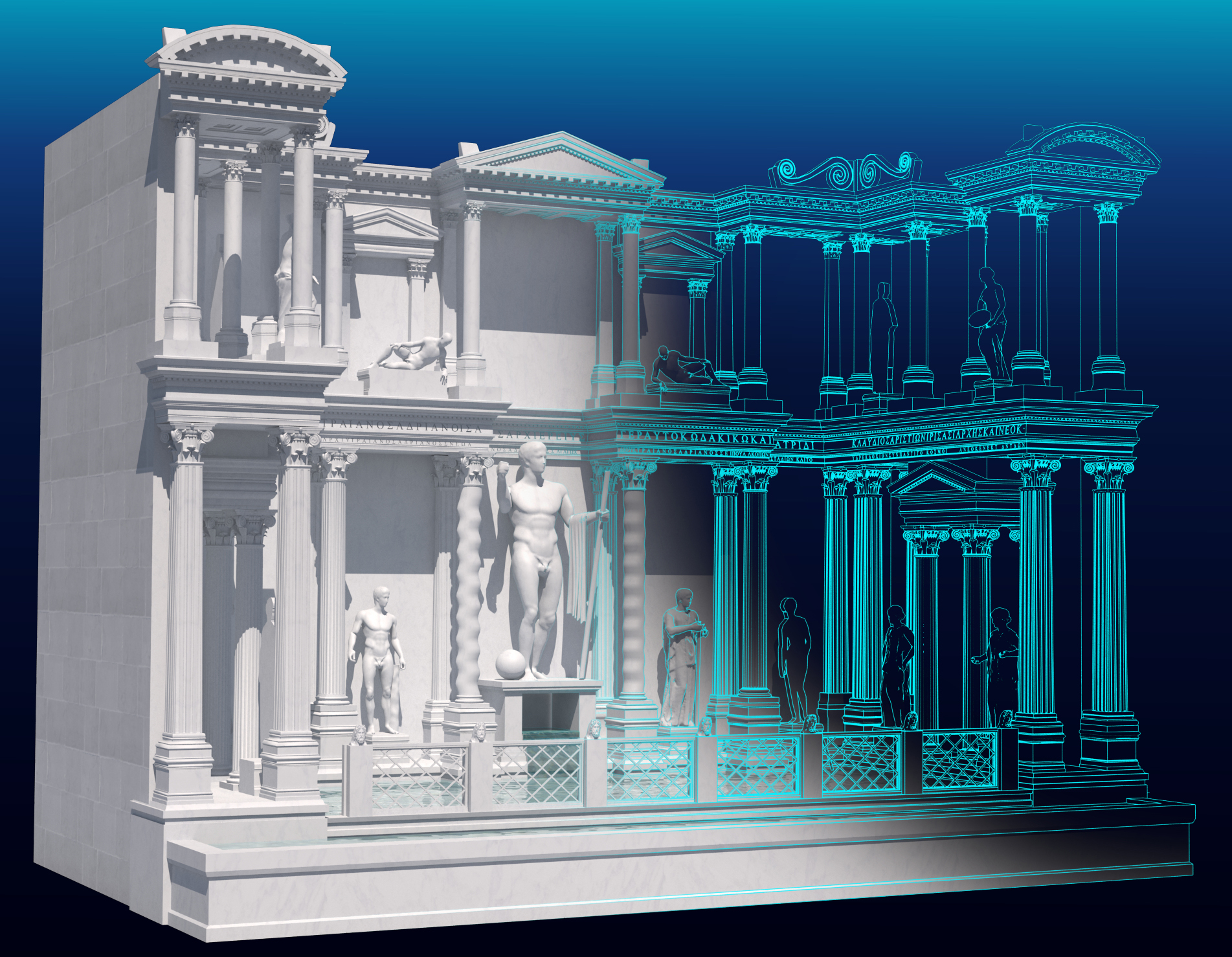
Virtual reconstructions are now an important tool in archaeological research and outreach. However, their scientific value depends crucially on how comprehensively their creation is documented. This is precisely where M2M comes in: the project links the IDOVIR platform [https://idovir.com/] with the ECCCH [https://www.echoes-eccch.eu/], so that 3D reconstructions can be made available to the general public not only as illustrative models, but also as transparently documented research data.
The starting point is a curated collection of scientifically sound 3D reconstructions of key monuments and building complexes within the UNESCO World Heritage Site of Ephesos. From the 52 models currently available, ten representative examples will be selected that illustrate a broad spectrum of architectural functions – ranging from memorial, religious and ceremonial architecture to public, administrative and commercial facilities. The pilot set thus provides a versatile foundation for developing transferable workflows for the semantic enrichment, documentation and sustainable provision of complex 3D cultural heritage data.
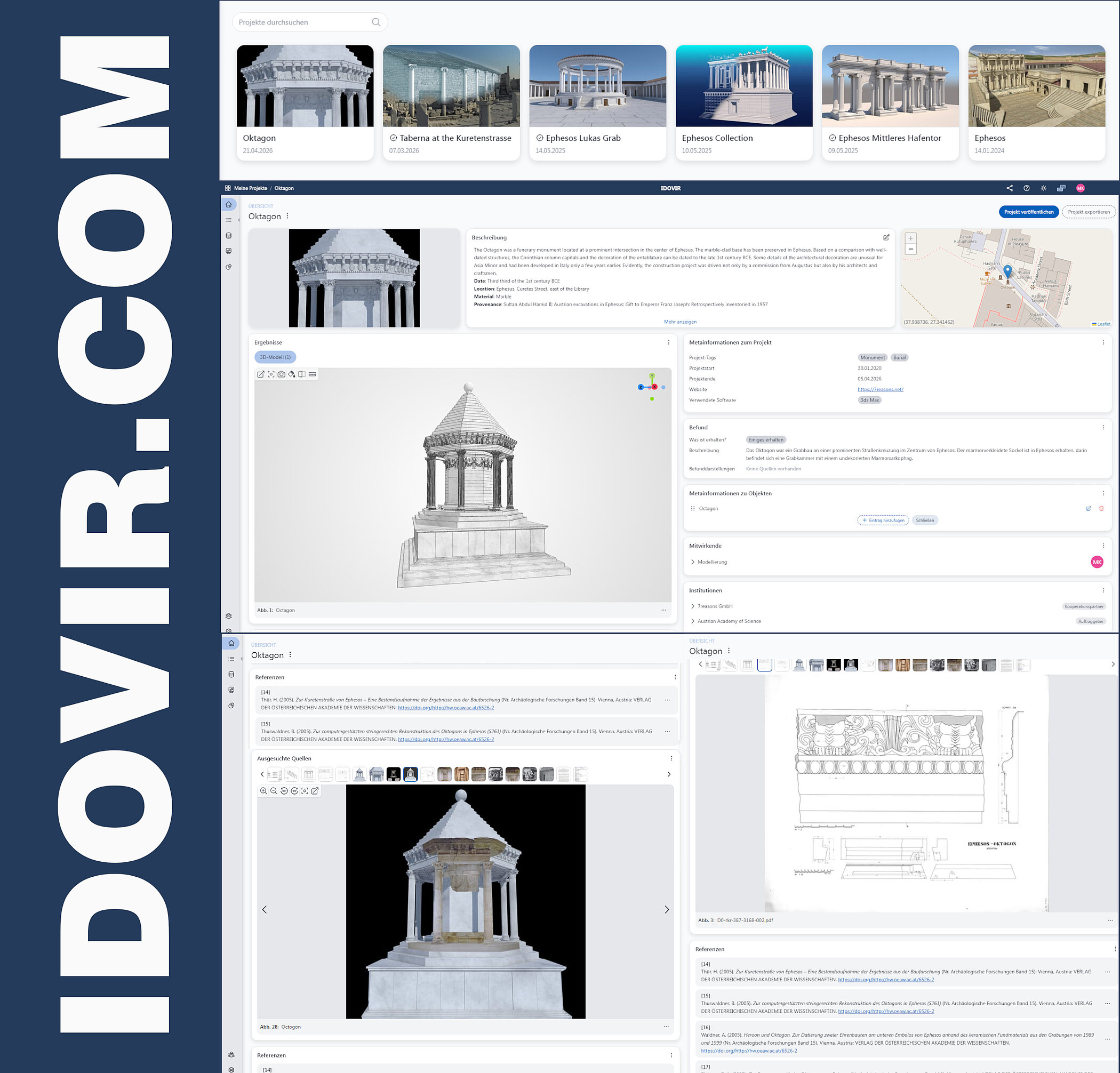
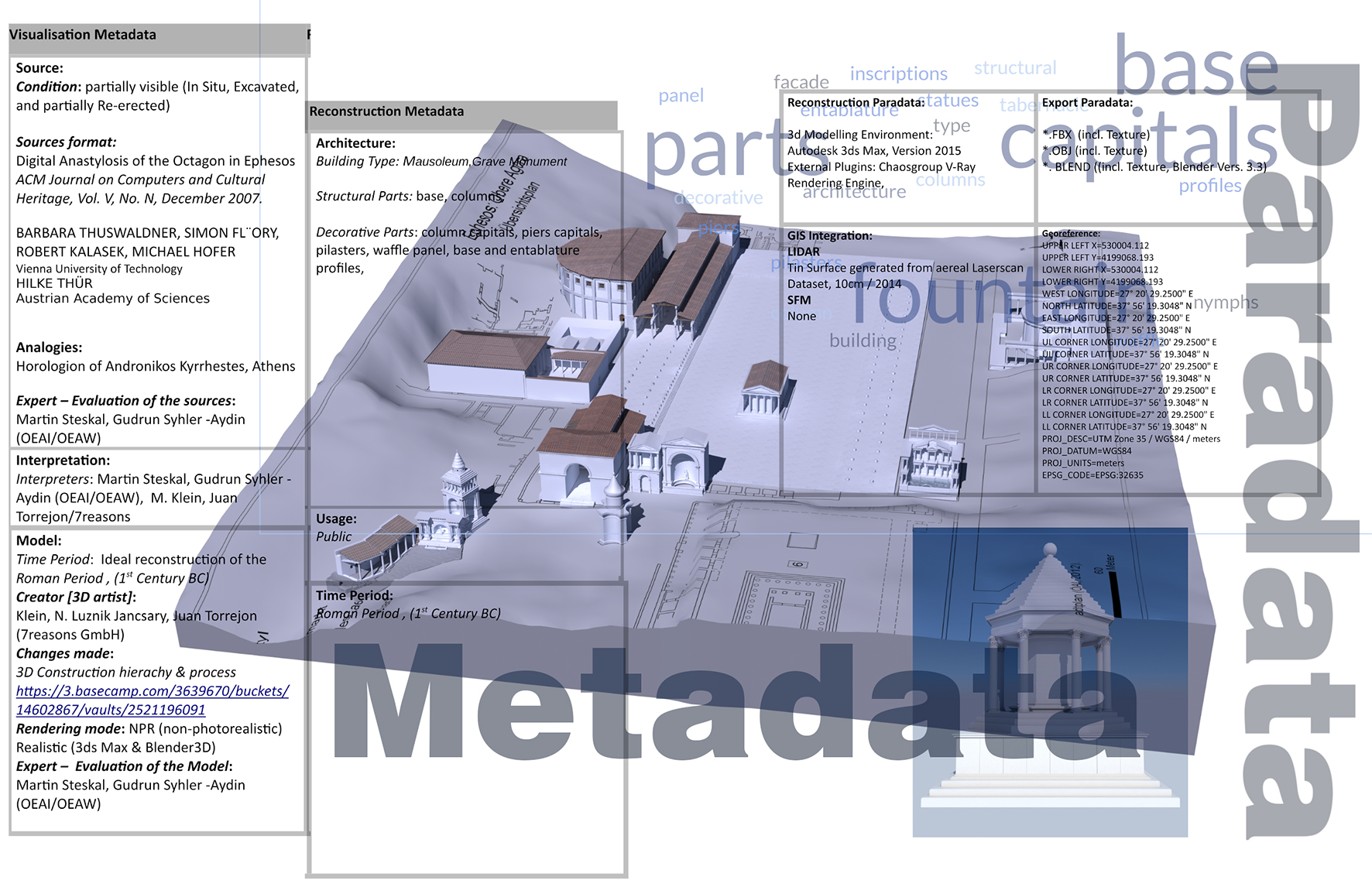
Technically, M2M IDOVIR is aligned with established standards such as CIDOC CRM, CRMinf and the emerging Heritage Digital Twin Ontology (HDTO). The data is exported in machine-readable formats and made compatible with the ECCCH via search and interface functions. Plans include RDF/Turtle exports, a SPARQL endpoint and a documented API for bidirectional exchange between IDOVIR and the cloud infrastructure.
The processed datasets are quality-checked, linked to controlled vocabularies, assigned persistent identifiers and archived long-term in a suitable repository. This results in FAIR-compliant 3D data that can be used in research, teaching, museums, digital exhibitions, as well as in VR/AR applications, serious games and other educational formats. M2M thus not only makes data from the Ephesus excavation project available, but also develops a transferable method for making scientifically documented virtual reconstructions interoperable, citable and permanently accessible.

This project has received support through a cascading grant from ECHOES, which is funded by the European Union under Grant Agreement No. 101157364, with the support of UK Research and Innovation (UKRI) under the UK Government’s Horizon Europe funding guarantee No. 10110142 and No. 10110466.
05/2026 – 04/2027