


Konrad Schwingenschuh studied physics at the University of Graz. He obtained his doctorate in 1977 with a thesis on the afterglow of quartz crystals excited by X-ray flashes and then worked as a research assistant at the Institute of Experimental Physics, measuring tiny changes in the magnetic field using SQUID technology.
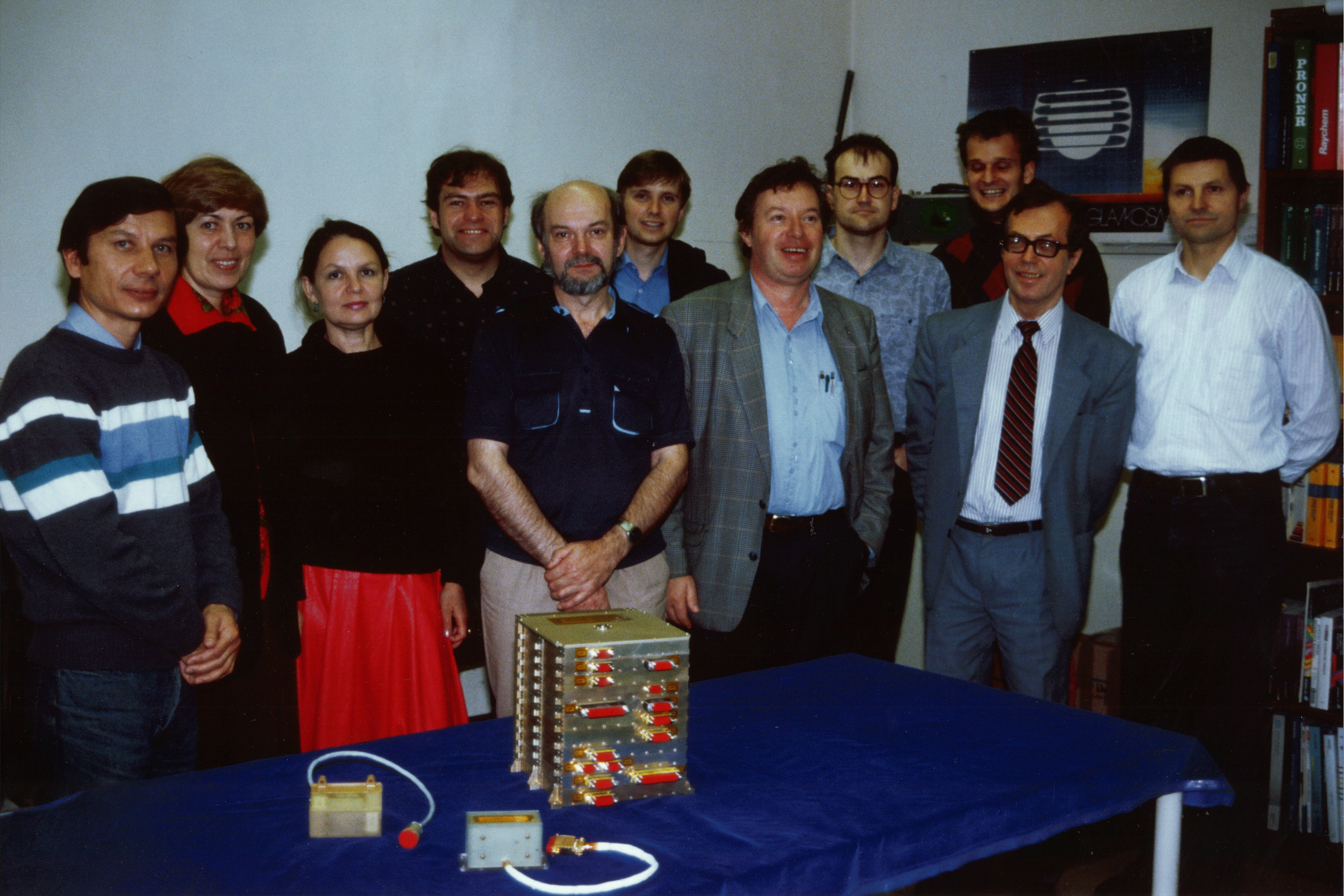
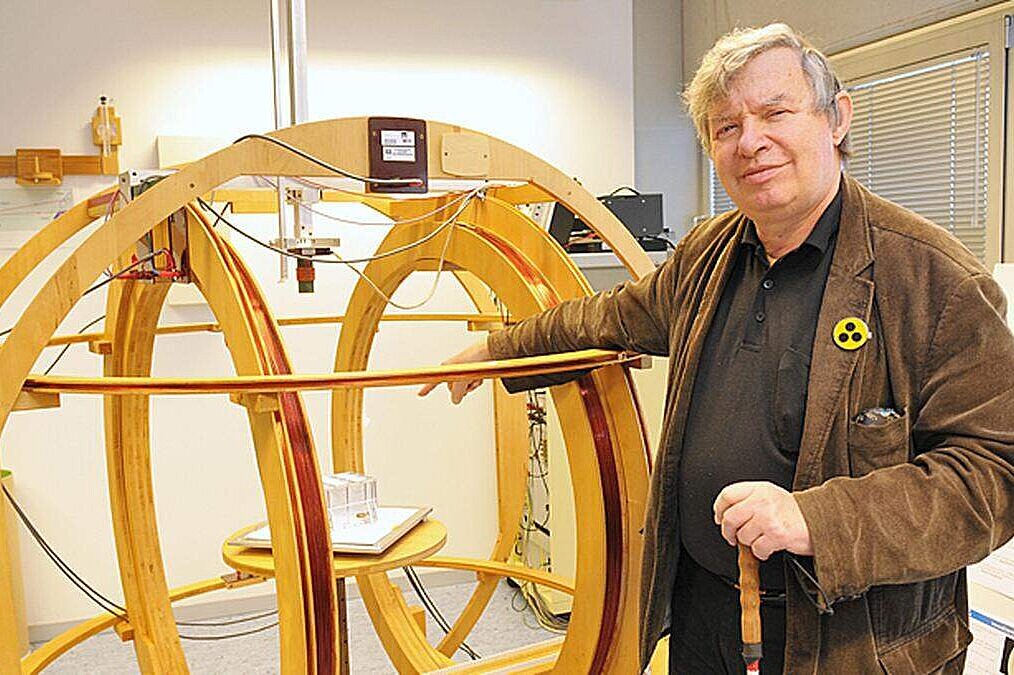
Konrad started to work at the Space Research Institute (IWF) of the Austrian Academy of Sciences in January 1979. He was able to apply his knowledge in the field of magnetic field measurements directly to his first project, the construction of a magnetometer for Spacelab 1 (launch: 1983). At the same time, the magnetometers for the Soviet space probes Venera 13 and 14 (launch: 1981) were developed. On their way to Venus, the instruments from Graz provided completely new insights into the structure of the solar wind. Further participation in Soviet missions followed: the magnetometers on board the space probes Vega 1 and Vega 2 (launch: 1984) to Venus and Comet Halley provided new data on the propagation of the solar wind and its interaction with small bodies in the solar system. These investigations were continued with the magnetometers on board the Mars probes Phobos 1 and 2 (launch: 1988). Various plasma-physical boundary layers in the vicinity of the Red Planet were identified for the first time. For participation in the Mars 96 mission, which did not make it beyond Earth orbit due to a defect in the fourth rocket upper stage, the simulation and test facilities in Konrad's magnetometer laboratory were extensively expanded from which all subsequent magnetometer projects benefited greatly.
Austria's accession to ESA in 1987 enabled the institute to participate in the four-satellite Cluster mission (launched in 1996 and 2000) to study the Earth's magnetosphere, which opened a new chapter in Konrad's research life. The international success continued: the technical and scientific participation in the Chinese Double Star mission (launch: 2003) provided further data on the Earth's magnetosphere. A ground magnetometer chain along a magnetic longitude in China and further ground magnetometers in Europe supplemented the measurements in space.
Participation in ESA’s Rosetta mission (launched in 2004) was another highlight. During the two-year measurement campaign around Comet 67P/Churyumov-Gerasimenko, both the magnetometer on the orbiter and the one on the Philae lander contributed significantly to the success of this mission.
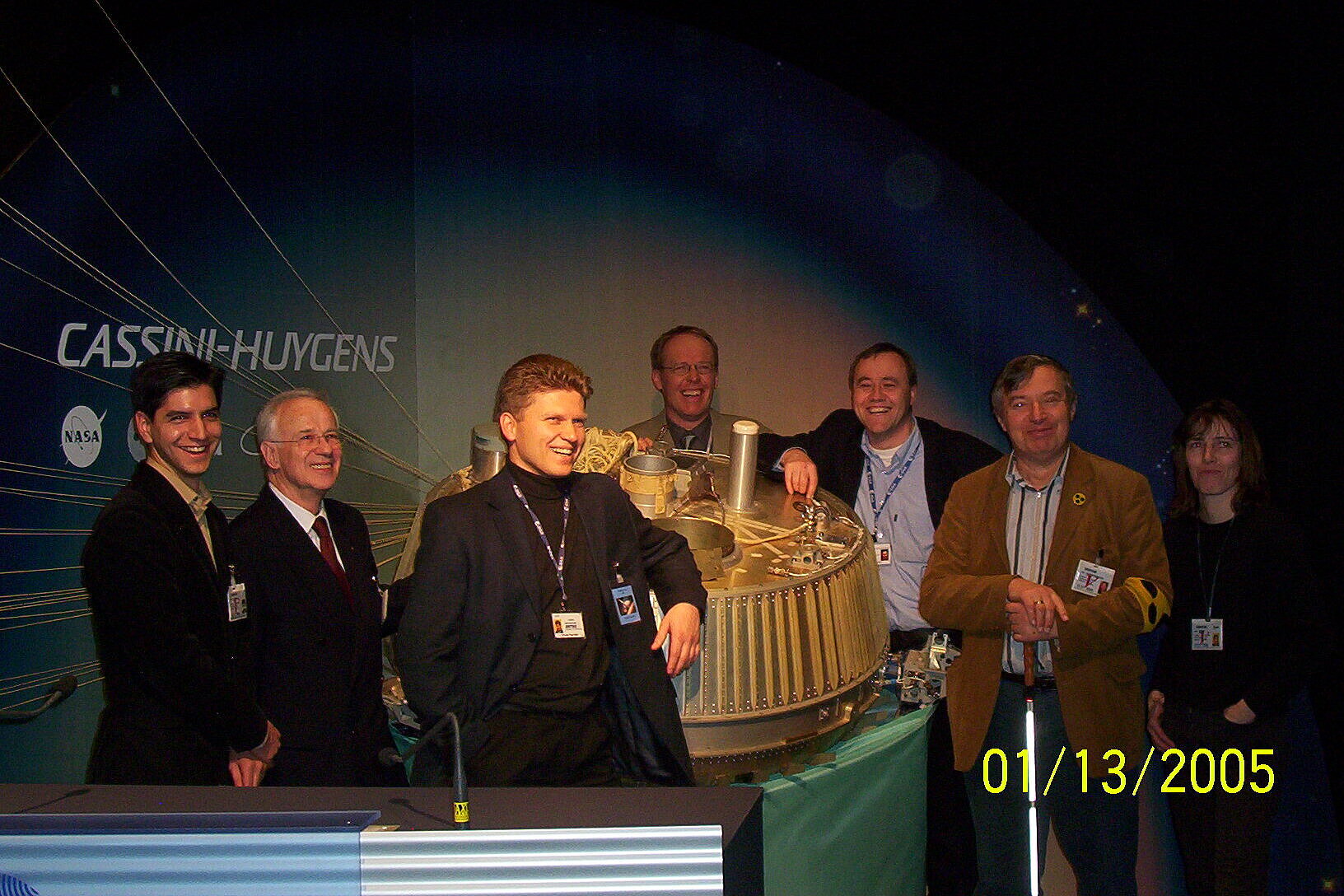
However, Konrad's research activities were not limited to analysing magnetic field measurements. As part of the Cassini/Huygens mission (launch: 1997), he focused on the investigation of atmospheric electricity and acoustic phenomena on Saturn's moon Titan. Konrad's good international networking in technical development and science ultimately enabled the identification of fundamental physical processes in Titan's ionosphere.
Even after his retirement at the end of 2012, Konrad researched the emission of electromagnetic radiation as a result of natural hazards such as earthquakes or volcanic eruptions. He also significantly contributed to the installation of a receiving station for electromagnetic waves at the institute, whose measurement data not only supports the Chinese satellite mission CSES-1, but will also other space projects in the future.
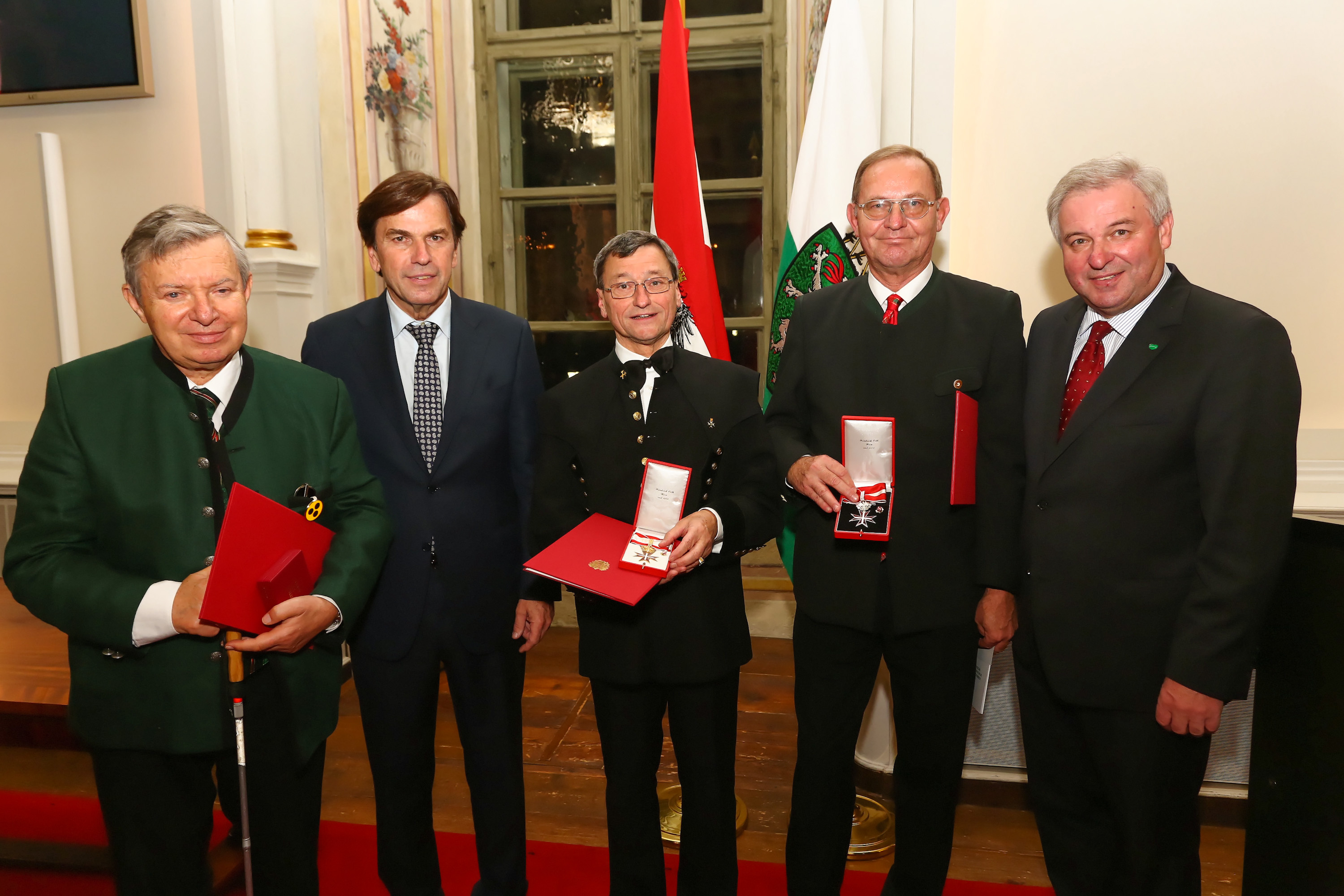
Konrad was involved in more than 150 scientific publications and was a member of the ESA Solar System Working Group from 1998 to 2000. In autumn 2012, he was awarded the Austrian Cross of Honour for Science and Art for his outstanding achievements in space research.
Konrad was an innovative researcher who had a decisive influence on the development of the institute over several decades. Until a few years ago, he passed on his extensive knowledge to students by lecturing at Graz University of Technology and supervising diploma and doctoral theses. The people who had the honour of working with him not only appreciated his inexhaustible thirst for research, but above all his open and cordial manner and his unshakeable optimism.
Our sincere sympathy and deepest condolences go to Konrad's family.