From 7 to 11 November 2022, the Cluster 22nd Anniversary Symposium will take place at the European Space Operations Centre (ESOC) in Darmstadt, Germany.
Seminar: Human Space Flight Operations and SEP modelling
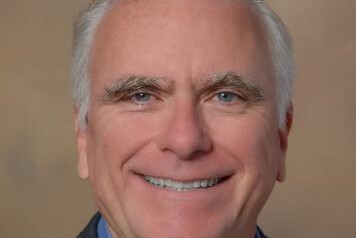
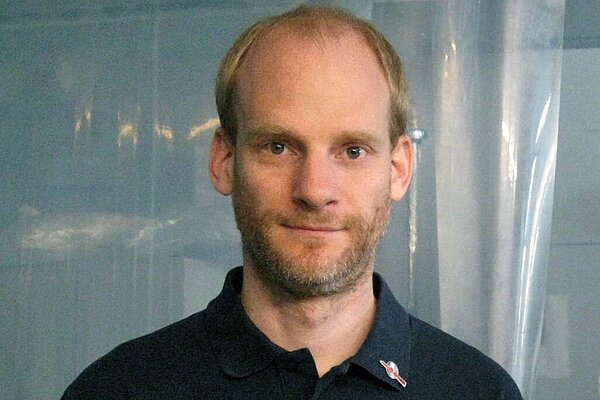
Dr. Philip Quinn from the NASA Johnson Space Center, TX, will talk about Human Space Flight Operations and SEP modelling within NASA's ARTEMIS space program.
Colloquium: Atmospheric winds of hot exoplanets in interaction with stellar winds
Prof. Dr. Ildar Shaikhislamov, Institute of Laser Physics SB RAS, Novosibirsk, Russia, will talk about "Modeling the atmospheric winds of hot exoplanets in interaction with stellar winds and interpretation of observations"
Prof. Dr. Sascha Quanz, ETH Zürich, will talk about the LIFE initiative - the atmospheric characterization of terrestrial exoplanets in the mid-infrared with a large space-based nulling interferometer.
Dr. Oliver Herbort, University of Vienna, will talk about the atmospheres of rocky exoplanets - from clouds to crusts and constraints on habitability by nutrient availability.
Die Sommerschule Alpbach ist eine Ideenfabrik und Kaderschmiede für die europäische Raumfahrt. Alljährlich ermöglicht sie 60 jungen WissenschafterInen und IngenieurInnen vertiefende Studien zu jeweils verschiedenen Themen der Weltraumforschung.
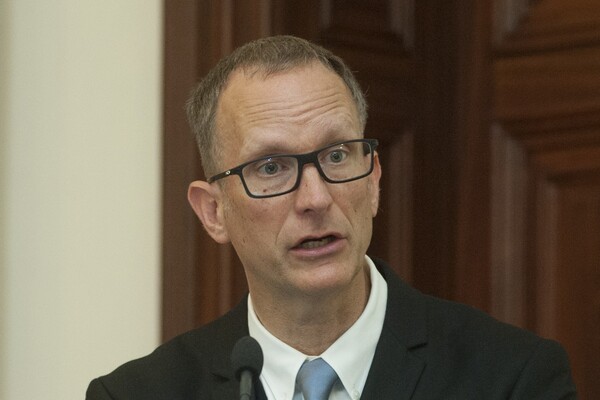
Associate Prof. Robert Peharz (TU Graz) will introduce us to his research topic - relevant for all future projects seeking collaboration with the TU Graz in the area of artificial intelligence.
Colloquium: How does Magnetic Reconnection work: what we know, and what we don’t
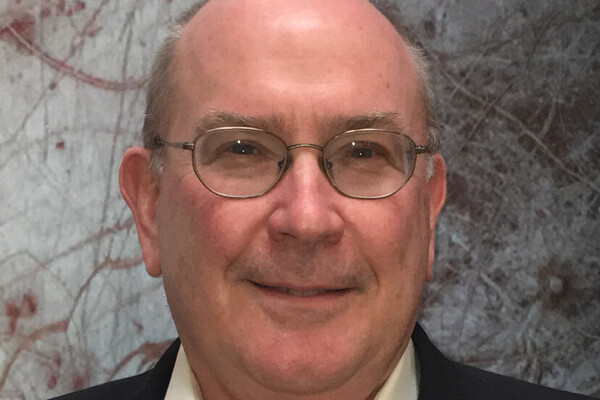
Prof. Michael Hesse, Director of Science at NASA's Ames Research Center, will introduce magnetic reconnection, the most important energy conversion and transport process in plasmas in the universe.
From 10 to 12 June 2022, the "Pro-Am Comet Community (Hybrid) Workshop" will take place at the Stefanik Observatory in Prague, Czech Republic (and online).
Colloquium: Rocky differentiated planets and the Lavoisier-Lomonosov bridge from non-life to life
Stephen Mojzsis, Origins Research Institute, Budapest (Hungary) will explain what we know about the formation and very early history of Earth some 4.48-4.0 Gyrs ago.
Colloquium: The Search for Life on Planets Around Other Stars
Prof. James Kasting (Dept. of Geosciences, Penn State University) will talk about the characterisation of exoplanets with the next generation of instruments like the JWST, LIFE, and LUVOIR.
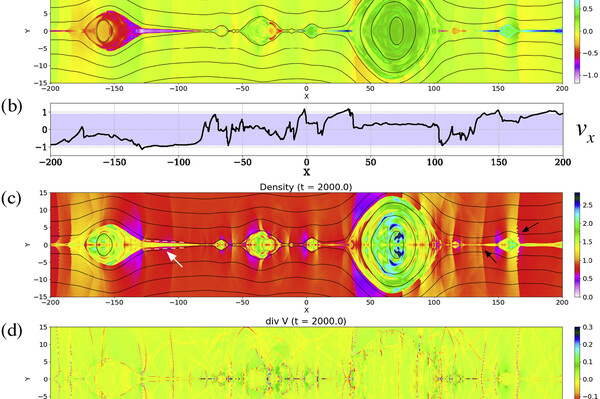
Seminar: Machine learning in heliophysics - trailblazers in Graz
Ute Amerstorfer, Rachel Bailey (ZAMG), Martin Reiss and Hannah Rüdisser (TU Graz Know Center) present an overview of ongoing efforts to apply machine learning in various heliophysical contexts.
Colloquium: Polarimetry as a tool for characterising planets and exoplanets
Daphne Stam (TU Delft, The Netherlands) will show how spectro-polarimetry can be used to characterise planets and exoplanets, connected to missions like ENVISION (Venus) and SELFIE (Earth).
Colloquium: The Evolving ALMA Perspective on the Chemistry and Physics of Planet-Forming Disks
Prof. Edwin Bergin, University of Michigan (US) will report on the conclusion from ALMA observations about the chemistry and planet formation process in protoplanetary disks.
Colloquium: Playing with sand: How collisional charging impacts planetary science from planet formation to planetary surfaces and atmospheres
Prof. Gerhard Wurm (Universität Duisburg-Essen, Germany) will tell us about his lab experiments with dust grains related to planetary atmospheres and planet formation.
Colloquium: Bridging the Exoplanet - Planetary Divide
Prof. Mark Marley (University of Arizona / NASA Ames) will discuss why there is often a lack of collaboration between exoplanet researchers and the more traditional solar system researchers, and demonstrate the potential of exoplanet/Solar System…
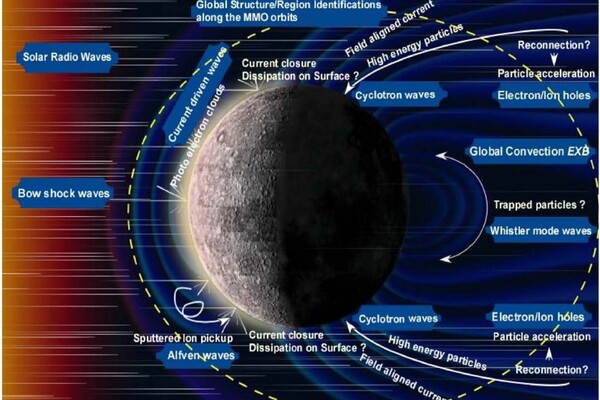
Colloquium: The Exploration of Mercury -- A Space Plasma Physicist’s Perspective
Prof. James A. Slavin (University of Michigan) will summarise previous results from space exploration missions to Mercury, as well as future prospects with BepiColombo.
Colloquium: The space debris problem - a challenge to further space exploitations
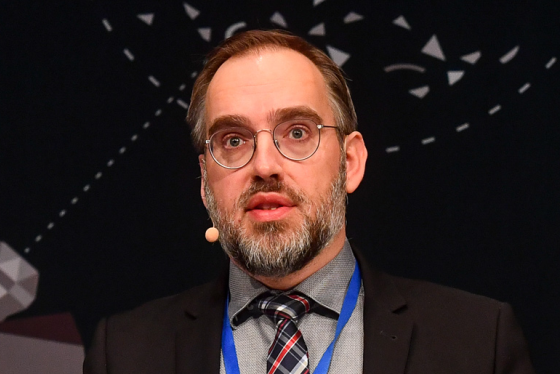
Tim Flohrer (head of the Space Debris Office, Space Safety Programme Office, ESA-ESOC, Darmstadt, Germany) will present
the Space Debris problem. How can laser technology contribute to a sustainable solution?
Seminar: On the extended hydrogen exosphere of Mercury
Daniel Schmid and Helmut Lammer will present the first in-situ measured atomic hydrogen density profile derived from magnetic field observations by MESSENGER.
Colloquium: The Path to Habitable Worlds: Roadmaps, Missions, and Astro2020
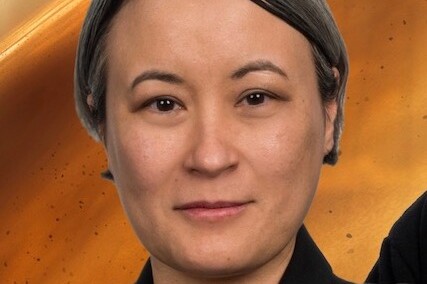
Dr Aki Roberge (NASA Goddard Space Flight Center, Exoplanets and Stellar Astrophysics Laboratory) will report on the 2020 US Astrophysics Decadal Survey and the LUVOIR and HabEx Missions.
Notice about cookies
This site uses cookies. They ensure essential functionalities of the website and enable us to continuously optimize content. Help us by agreeing to the collection of statistical data and the presentation of external multimedia content. You can change your cookie settings at any time. Further information can be found in the privacy settings and by clicking the Data Protection Link.












![[Translate to English:]](/fileadmin/_processed_/e/a/csm_Pro-Am_Comet_Community_Workshop_10-12_06_2022_a7b7e783f0.png "[Translate to English:]")