ToNoWaste: The scope of this project is to develop a holistic assessment for food waste prevention.
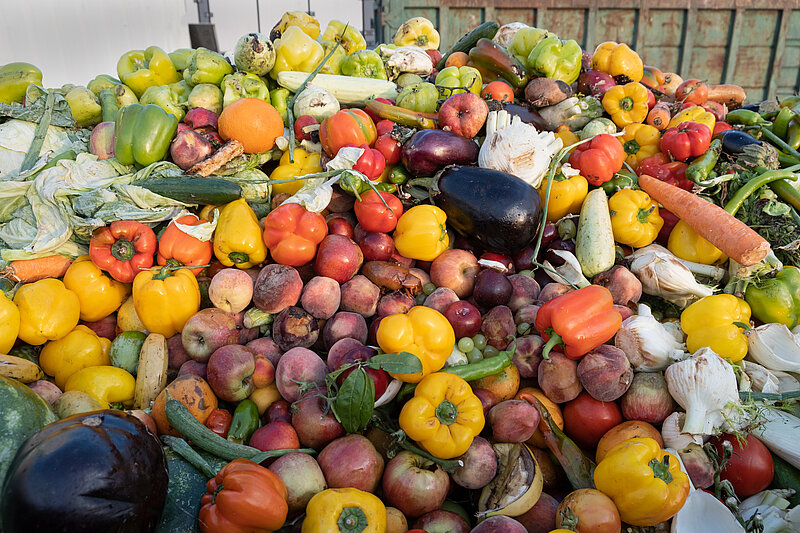
The EU project ToNoWaste aims to assess the impact of food waste in Europe in order to contribute to the reduction of food waste.
The project, "Towards a new zero food waste mindset based on a holistic assessment (ToNoWaste)," will involve 21 institutions from seven countries working together, taking an interdisciplinary approach. Not only will agronomic, economic, environmental and business model challenges be considered, but other key areas such as law and social innovation to prevent social inequalities will also be addressed.
ToNoWaste develops scientific and evidence-based assessment tools for market actors and provides validated data to make better food production and consumption decisions for sustainable development. The research starts by analyzing what a "best decision" can mean in terms of food waste prevention and reduction in fresh food value chains.
Among other things, ITA is leading work package 5 on the validation of assessment tools in four pilot projects in Spain, Austria, Sweden and Greece.
Current food systems provide relative food security but compromise planetary health and largely fail to address climate change challenges. Regional food supplies can contribute to sustainable production and consumption, reducing the dependence on global supply chains. However, food systems’ complexity and rigidity hinder the implementation of climate-conscious, healthier practices. The City.Food.Basket project explored regional food baskets in urban and peri-urban settings in Austria for the City of Graz and its surroundings, developing models for regional, healthy, and low-climate-impact diets. Against this background, we present a qualitative study that generated three explorative scenarios for promoting regional diets using a Delphi-based expert-stakeholder survey method with participatory elements. A scenario workshop elaborated on interconnecting actions to strengthen regional food supply, including making regional food a tender criterion, reducing waste, ensuring affordability, and shifting subsidies to climate-conscious practices for Graz. While the method successfully provides socio-technical futures for policy orientation, its direct policy impact remains low due to time constraints, short project duration, limited project resources, and differing rationalities between research and policymaking. This study highlights the need for improved connectivity between transdisciplinary research, foresight methods, and regional policy cycles to enhance such projects’ effectiveness.
-> Lebensmittelverschwendung ist ein ernstes sozial-ökologisches Problem und eine Bedrohung für eine zukunftsfähige Entwicklung. -> Die Bewältigung dieser sektorübergreifenden Herausforderung erfordert sowohl wissenschaftliche als auch praktische Kenntnisse. -> Verschiedene Akteure des gesamten Lebensmittelsystems müssen die Art und Weise, wie Lebensmittel produziert und konsumiert werden, verändern. -> Die Verknüpfung von unterschiedlichen Arten von Wissen vom „Acker bis zum Teller“ und eine gemeinsame Verantwortung führen zu robusteren Lösungen.
-> Food waste is a serious socio-ecological problem and a threat to a sustainable future. -> Overcoming this cross-sector challenge requires both scientific work and practical knowledge. -> Various actors across the entire food system must transform the way food is produced and consumed. -> Linking different types of knowledge from “farm to fork” and sharing responsibilities lead to more robust solutions.
Sotoudeh, M. (Speaker), Bechtold, U. (Speaker), Favreuille, S. (Speaker) & Schulz, F. (Speaker)
Schulz, F. (Speaker), Favreuille, S. (Speaker), Bechtold, U. (Speaker) & Sotoudeh, M. (Speaker)
Favreuille, S. (Speaker), Bechtold, U. (Speaker), Schulz, F. (Speaker) & Sotoudeh, M. (Speaker)

The ToNoWaste project is coordinated by the Universitat Jaume I de Castellón (Spain) and includes project partners from Austria, Greece, the Netherlands, Norway, Portugal, Spain and Sweden.
TNW Valencia Winter School 2025-02 SaveTheDate (pdf)
ToNoWaste general assembly 2024-01 press release (pdf)
ToNoWaste kick-off press release (pdf)
Deliverables
D1.2 Requirements & science-based decision-making standards (pdf)
D1.3 Initial Portfolio of selected FWPR solutions (pdf)
Practice abstracts
Events
Exibition: 'Food (Waste) in the city' Valencia (Folder, pdf)