


SOUNDS & SIGHTS OF SCIENCE #45
05.09.2025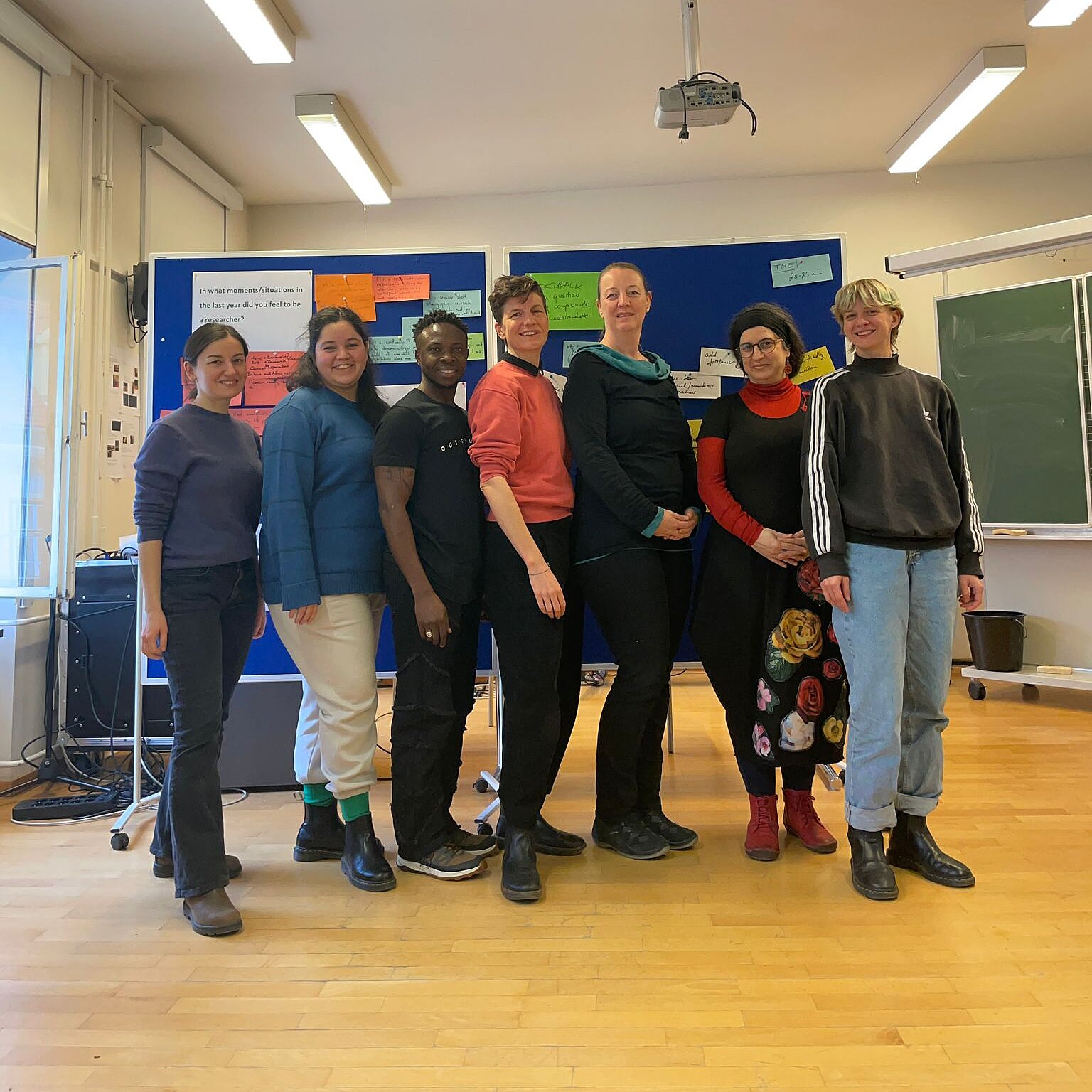
WHAT CAN BE HEARD?
This recording is an excerpt from the first episode of “Reversas en Conversa,” a podcast about Latin fem* musicians in Vienna. Here, Laura Valbuena, saxophonist, producer, and musical director, tells us about her experience leading various musical projects, especially Visa Mestiza, and how gender has (or has not) affected her relationship with the other musicians. It was recorded in conversation with, and by, Gabriela Dossow Ponce in January 2025.
WHAT IS PARTICULARLY INTERESTING ABOUT IT?
Although it is becoming increasingly common, it is still striking that a group of musicians playing Latin music in Vienna is led by a woman. It could be considered a feminist “victory,” but research shows that it is far more complex. Gabriela Dossow Ponce conducted a research project with fem* musicians from Latin America in Vienna for one-and-a-half years, and carried out long interviews with six fem* musicians.
It is also interesting to see how Laura Valbuena describes it as a coincidence that the musicians in her band are all men, when in general in the Viennese Latin music scene it is common to see bands exclusively made up of men, or bands with one or two women on stage. Men in the scene are more present on stage and thereby form the largest visible part of musicians’ networks, even though many women musicians also exist and work in Vienna. Having more than one woman in a band therefore requires intention and extra work – whereby the “default mode” remains seemingly“ coincidental”.
HOW DO WE DEAL WITH IT?
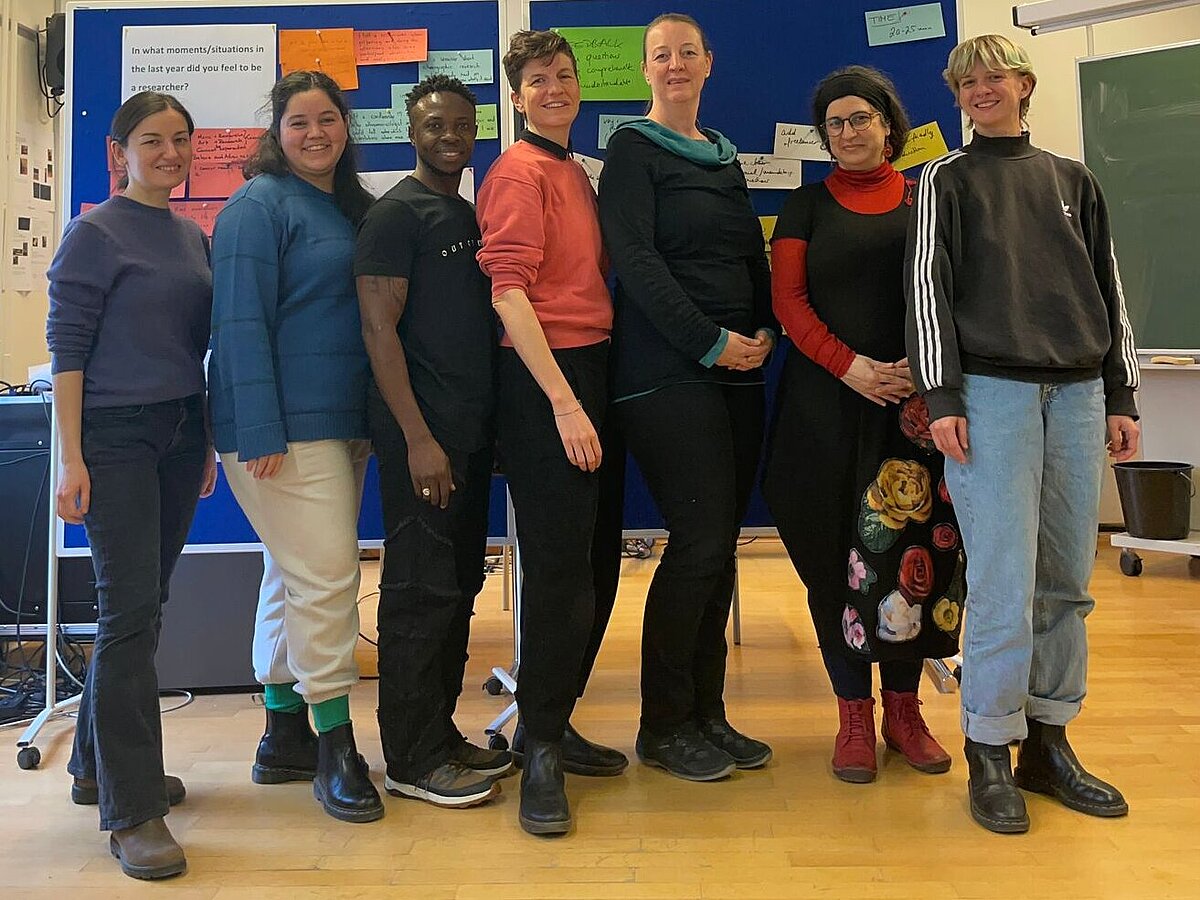
© Reverse Ethnomusicology, mmrc, mdw
Together with Anja Brunner (mdw), Conny Gruber (PHA) is examining which kind of research questions musicians as researchers develop after having migrated to Austria, thereby recognizing them as knowledge producers and not merely as “knowledge bearers of their own” music. From September 2023 to March 2025, five musicians with experiences of migration created their own research projects about music practices, spaces and structures in Vienna and Austria within the larger project framework of “Reverse Ethnomusicology” (FWF – 1000 Ideas: TAI724).
Gabriela Dossow Ponce was one of the musicians. Her project is called “Women and fem Latin American musicians in Vienna: en plural.” She examined which challenges these musicians face due to gender and/or cultural background. Based on the interviews she conducted within the project, she is creating a podcast and a two-day festival in 2026.
"Reverse Ethnomusicology" tests new methodological approaches, and questions common power relations in scholarly knowledge production. Recordings from the project will be archived at the Phonogrammarchiv.
Conny (Cornelia) Gruber is an ethnomusicologist at the Phonogrammarchiv responsible for editions and publications. One of their central research foci is (the coloniality of) ethnomusicological research methodology. Together with Anja Brunner (mdw), Gruber is currently analyzing and interpreting the data and critically examining the process of the project “Reverse Ethnomusicology.”
Gabriela Dossow Ponce B.A. is a Chilean singer who lives in Vienna. Gabriela’s repertoire includes Chilean and Latin American music, with a special focus on female composers and artists. She has finished her studies in voice pedagogy (IGP) at the University for Music and Performing Arts Vienna (mdw). IG: @gabriela.dossow
LINKS
Project description with links to the five musician-researchers and their projects
REFERENCES
Brunner, Anja and Conny Gruber. 2023. “An Experimental Project to Turn Ethnomusicology Upside Down. Or Put it on Its Feet?” In mdw-WEBMAGAZIN
Bunea, Maria. 2025. “Rediscovering Music through Research.” In mdw-WEBMAGAZIN
Lecaros, Constanza. 2025. “Between Excellence and Belonging: Latin American Migrant Musicians in Vienna.” In mdw-WEBMAGAZIN