


WHAT CAN BE HEARD?
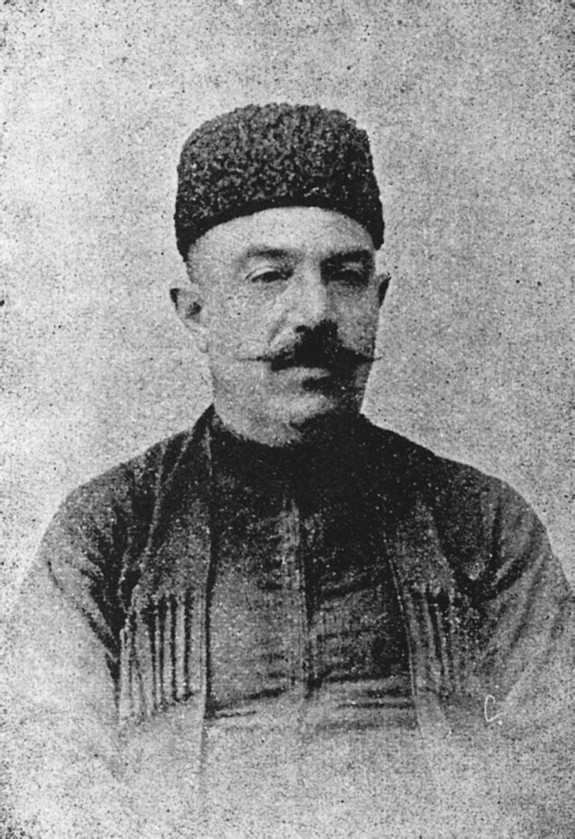
A commercial recording made in 1907 by The Gramophone Company of London, in the city of Tiflis to the south of the Russian empire (now Tbilisi, the capital of the Republic of Georgia). It features the song Shur, performed by singer and daf (frame drum) player Bagrat Bagramiants, accompanied by two duduk players.
Bagramiants was one of the most popular and prolific recording artists in Tiflis, from 1903 until the outbreak of World War I, after which the 1917 revolution in Russia brought an end to the work of the various private recording companies in the region.
WHAT IS PARTICULARLY INTERESTING ABOUT IT?
Tiflis has long had a reputation as a multicultural centre, sitting as it does in one of the most linguistically rich regions on earth. The most common languages heard in Tiflis at that time, other than the Russian spoken by the imperial administration, were Georgian, Armenian and Azerbaijani. This recording neatly symbolizes the manner in which languages and cultures were intertwined there: Bagramiants, an Armenian singer, performs an Azerbaijani Mugham, while singing a text in Georgian.
For the past century or so, historical narratives of the Caucasus have tended to emphasise distinctions between ethnic and national groups. This recording hints at more complex relationships which are discussed less often.
HOW DO I DEAL WITH IT?
My research into early commercial sound recordings from the Caucasus and Central Asia aims to contextualise what can be heard, to better understand the degree to which early commercial recordings might be considered of ethnographic value. The companies making recordings in the region at the time, while utterly disinterested in the culture they documented, were at the same time keenly attuned to the desires of their potential audiences, monitoring carefully the relative popularity of different artists and repertoire, accumulating data sets coloured by no ideological question beyond “What do these people want?”
Will Prentice is audio engineer and preservation specialist at the Phonogrammarchiv; in his research he focuses on early commercial recordings.