


Bildung
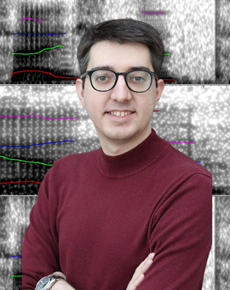
Dušan Nikolić erhielt 2015 seinen BA-Abschluss (mit Auszeichnung) an der Universität Niš (Serbien). Von 2015 bis 2017 absolvierte er ein MA-Studium an der Universität Belgrad und der Universität Niš, in dem er die akustischen Eigenschaften der Sprache bei serbischen Englischlernenden untersuchte. 2016 nahm er an einem Erasmus+-Austauschprogramm an der Universität Warschau (Polen) teil.
2018 begann er sein PhD-Studium an der University of Calgary (Kanada), wo er zur Wahrnehmung akustischer Hinweise auf lexikalische Tonakzente bei Muttersprachler:innen und Nicht-Muttersprachler:innen forschte. Von 2018 bis 2023 war er zudem als Lehrender sowohl an der University of Calgary als auch an der Mount Royal University tätig. 2021 erhielt er eine renommierte kanadaweite Auszeichnung, den Izaak Walton Killam Award, für seine akademischen, führungsbezogenen und beruflichen Leistungen. Darüber hinaus wurde er mit dem Eyes High Doctoral Award, dem Eyes High International Award, dem Dositeja Fund, dem Dean’s Entrance Award sowie LRC Fellowships ausgezeichnet.
2023 schloss er seine Promotion ab und wurde anschließend Visiting Researcher an der University of Calgary, wo er an einem Projekt zur Integration akustischer Hinweise bei der Echtzeit-Erkennung gesprochener Wörter arbeitete.
2025 erhielt er für das Forschungsprojekt „Processing of Acoustic Properties of Lexical Prosody“ das „Seal of Excellence“ der Europäischen Kommission im Rahmen von Horizon Europe (Marie Skłodowska-Curie Actions – MSCA). 2026 zog Dušan nach Wien und begann als Postdoc am ISF der ÖAW, wo er dem Phonetics Cluster beitrat. In diesem Projekt arbeitet er mit Dr. Eva Reinisch und Dr. Robert Baumgartner zusammen.
Derzeitige Forschung
Dušan Nikolić interessiert sich für die Echtzeitverarbeitung akustischer Hinweise, die Muttersprachler:innen und Nicht-Muttersprachler:innen bei Sprachwahrnehmung und Sprachproduktion nutzen. In der Kommunikation besteht die Aufgabe der Zuhörenden darin, die Botschaft der Sprechenden anhand akustischer Eigenschaften der Sprache zu rekonstruieren. Obwohl diese akustischen Eigenschaften graduell sind und häufig nicht synchron auftreten, gelingt es Zuhörenden, sie zu integrieren und innerhalb von Millisekunden zu verarbeiten, um eine lexikalische Entscheidung zu treffen. Das setzt eine Art Integrations- und Gedächtnismechanismus voraus.
Zur Erklärung der Integrationsmechanismen wurden zwei Modelle vorgeschlagen: (1) Das Buffered-Integration-Modell geht davon aus, dass Hinweise in einem Gedächtnispuffer gespeichert werden und Zuhörende erst dann eine lexikalische Entscheidung treffen, wenn alle Hinweise im Signal verfügbar sind. (2) Das Continuous-Cascaded-Modell nimmt an, dass Zuhörende eine Entscheidung treffen, sobald der erste Hinweis verfügbar ist, und diese Entscheidung dann fortlaufend aktualisieren, wenn weitere Hinweise eintreffen.
Ziel des Seal-of-Excellence-Projekts ist es, diese Modelle der Integration akustischer Hinweise zu präzisieren, indem untersucht wird, welche akustischen Hinweise Zuhörende mit unterschiedlichen sprachlichen Hintergründen für die Sprachverarbeitung nutzen und wie der zeitliche Verlauf der Verarbeitung dieser Hinweise aussieht. Dazu setzt das Projekt kognitive und neurobiologische Methoden wie Eye-Tracking und ereigniskorrelierte Potenziale (ERP) ein, um nachzuverfolgen, wie sich gesprochene Sprache über die Zeit entfaltet.
ISF Publikationen
- Perception of the acoustic properties of Serbian lexical pitch accents. / Nikolic, Dusan.
in: Journal of Experimental Phonetics, Jahrgang 35, 30.01.2026, S. 1-32.<p>In this study, we explored to what extent native speakers of Serbian are perceptually sensitive to the acoustic properties of Serbian lexical pitch accents—namely pitch and length—and how accurately they distinguish between different lexical pitch accent types. To this end, we conducted two perception experiments. The first was an AX discrimination task in which listeners contrasted the two main acoustic properties of lexical pitch accents: pitch and length. The results showed that Serbian listeners were generally highly sensitive to these contrasts, with length carrying greater perceptual weight than pitch. In the second experiment, listeners performed an identification task in which they attempted to determine the type of lexical pitch accent based on the stimulus they heard. The results revealed below-chance performance, attributed to the potentially low functional load of Serbian lexical pitch accents in perception.</p>
Weitere Publikationen
Publikationen
Nikolić, D. & Winters, S. (to appear, 2026). Native and non-native listeners’ perception of Serbian lexical pitch accents. Canadian Journal of Linguistics/Revue Canadienne De Linguistique.
Nikolić, D. (2026). Perception of the acoustic properties of Serbian lexical pitch accents. Journal of Experimental Linguistics, 35, 1-32. doi.org/10.1344/efe-2026-35-1-32
Coretta, S., Casillas, J. V., Roessig, S., Franke, M., Ahn, B., Al-Hoorie, A. H., ... & Wood, A. (2023). Multidimensional signals and analytic flexibility: Estimating degrees of freedom in human-speech analyses. Advances in Methods and Practices in Psychological Science, 6(3), 25152459231162567.
Nikolić, D. & Winters, S. (2022). Are Serbian and English listeners insensitive to lexical pitch accents in Serbian?. Phonetica, 79(4), 397-423. doi.org/10.1515/phon-2022-2023
Nikolić, D. (2021). Effects of F0 acoustic parameters on the perception of Serbian lexical pitch accents. Anali Filološkog Fakulteta 33(1), 13–27. doi.org/10.18485/analiff.2021.33.1.1
Nikolić, D. (2021). F0 Acoustic Parameters’ Effects on Discrimination of Lexical Pitch Accents. In Hernández, A. & Butterworth E. (eds.) 2020 CLA Conference Proceedings. Western University, Canada.
Nikolić, D. (2020). Distribution of PRO in Serbian Subjunctives. In Nikolić, D., Daniel, A.D., Nelson, B.C., Oguz, M., & Xu, K. (eds.). Calgary Working Papers in Linguistics (CWPL). University of Calgary, Canada.
Nikolić, D. (2019). Tone and break-index (ToBi) theoretical framework applications with EFL speakers. Proceedings from Language, Literature, Theory. University of Nis, Serbia (27-28 April, 2018).
Nikolić, D. (2018). Empirical Analysis of Intonation Activities in EFL Student’s Books. International Journal of Applied Linguistics and English Literature, 7(3), 181-187.
Nikolić, D. (2017). Intelligibility within a Modified CLIL Framework. Glottodidactica. An International Journal of Applied Linguistics, 44(1), 119-130.
Nikolić, D. (2016). Acoustic analysis of English vowels produced by American speakers and highly competent Serbian L2 speakers. Facta Universitatis, Series: Linguistics and Literature, 85-101.
Book Reviews
Nikolić, D. (2023). Daniel Silverman. 2017. A Critical Introduction to Phonology. Functional and Usage-Based Perspectives. 2nd edition. London: Bloomsbury. Pp. xxi + 360. US $33.95. Canadian Journal of Linguistics/Revue Canadienne de Linguistique, 68(1), 152–157. doi:10.1017/cnj.2022.17
Nikolić, D. (2022). Clausal complementation in South Slavic: edited by Björn Wiemer and Barbara Sonnenhauser, Berlin, De Gruyter Mouton, 2022, viii+ 490 pp., US $154.99 (hardcover), ISBN 978-3-11-072585-8.
Konferenzen
Nikolić, D. (2026). Perception of Lexical Pitch Accents: The Native Language Acoustic Cue Approach vs. The Target Language Acoustic Cue Approach. Presented at the Linguistic Society of America Annual Meeting (LSA2026), New Orleans, USA (09 January, 2026).
Nikolić, D. (2025). Sci-fi Phonetics: Teaching Phonetics through Science Fiction. Presented at the Methods and Techniques in Phonetic Sciences conference (MATIPS 2025), University of Alberta, Canada (18 October, 2025).
Nikolić, D., Russell, C., Sheppard, B., Winters, S. (2025). Mapping the unknown: Exploring similarities in speech perception through a free classification method. Presented at the Methods and Techniques in Phonetic Sciences conference (MATIPS 2025), University of Alberta, Canada (18 October, 2025).
Nikolić, D. (2025). Perception of Serbian restricted tone by native and non-native listeners: Evidence from anonline free classification task. Presented at the Phonetics and Phonology in Europe conference (PaPE 2025), University of the Balearic Islands, Spain (25 - 27 Jun, 2025).
Nikolić, D. (2024). Processing of Serbian Restricted Tone by Native and Non-native Listeners. Presented at the Austrian Linguistics Conference (Österreichische Linguistiktagung, University of Innsbruck, Austria (17 - 19 Dec, 2024).
Nikolić, D. (2024). Dialectal Variation in the Perceptual Similarity Space of Serbian Lexical Pitch Accent. Presented at Language, Literature, Intersectionality (LLI), University of Niš, Serbia (27 April, 2024).
Nikolić, D. (2023). Perceptual similarity space of Serbian lexical pitch accents: evidence from Serbian and French listeners. Presented at International Congress of Phonetic Sciences (ICPHS).(7-11 August, 2023).
Nikolić, D. (2022). Word Stress Acoustic Correlates: English Speakers versus Exemplar Models. Presented at Amlap 2022. University of York, England (7-9 September, 2022).
Nikolić, D. (2022). Can Exemplar Models Replicate Human Production of Word Stress? A Case of Canadian English Speakers. Presented at SICOL , Sunkyungwan University (11-12 August, 2022).
Nikolić, D. (2022). Is There “Deafness” to Stress Contrasts: A Case of English and Serbian Speakers? Presented at Canadian Linguistic Association (CLA). University of Manitoba, Canada (1-4, June, 2022).
Nikolić, D. (2021). Are Non-Native Speakers “Deaf” to Lexical Pitch Accents? Presented at Phonetics and Phonology in Europe 2021. Pompeu Fabra University, Barcelona, Spain (21- 23, June, 2021).
Nikolić, D. (2021). “Deafness” to Lexical Pitch Accents: The Case of Non-native Listeners. Presented at Canadian Linguistic Association (CLA). University of Alberta, Alberta, Canada (4 June, 2021).
Nikolić, D. (2021). Is There “Deafness” to Lexical Pitch Accent. Presented at STEP (LSA) (19 May, 2021). Poster.
Nikolić, D. (2021). F0 Acoustic Parameters Effects on Discrimination of Lexical Pitch Accents. Presented at Linguistic Society of America (LSA) (7-9 January, 2021).
Nikolić, D. (2020). Effects of Acoustic Parameters on the Perception of Serbian Lexical Pitch Accents. Presented at Canadian Linguistic Association (CLA). Western University, Ontario, Canada (30 May, 2020).
Nikolić, D. (2020). Effects of F0 Acoustic Parameters on the Perception of Serbian Lexical Pitch Accents. Presented at BIMEP (Belgrade International Meeting of English Phoneticians). University of Belgrade, Serbia (20 March, 2020).
Nikolić, D. (2019). Perception of L2 Lexical Pitch Accents. Presented at Northwest Conference on Phonetics/Phonology (NowPhon). University of Calgary, Calgary, Canada (21 Sep, 2019).
Nikolić, D. (2018). ToBi Analysis of EFL Serbian Speakers’ Intonation Use. Presented at Alberta Conference on Linguistics. University of Calgary, Canada (27 October, 2018).
Nikolić, D. (2018). Contribution of Segmental and Intonation Features to the Perception of Foreign Accent. Presented at BIMEP (Belgrade International Meeting of English Phoneticians). University of Belgrade, Serbia (30 March, 2018).
Nikolić, D. (2017). Communication: An Overview of CLIL and Non-CLIL Classroom Practices. Presented at Osterreichische Linguistiktagung. Alpen-Adrian University Klagenfurt, Austria (7-10 December, 2017).
Vorträge
Nikolić, D. (2022). Perception of Lexical Pitch Accents by Serbian and French Listeners. Given at University of Trier. (13 December, 2022).