


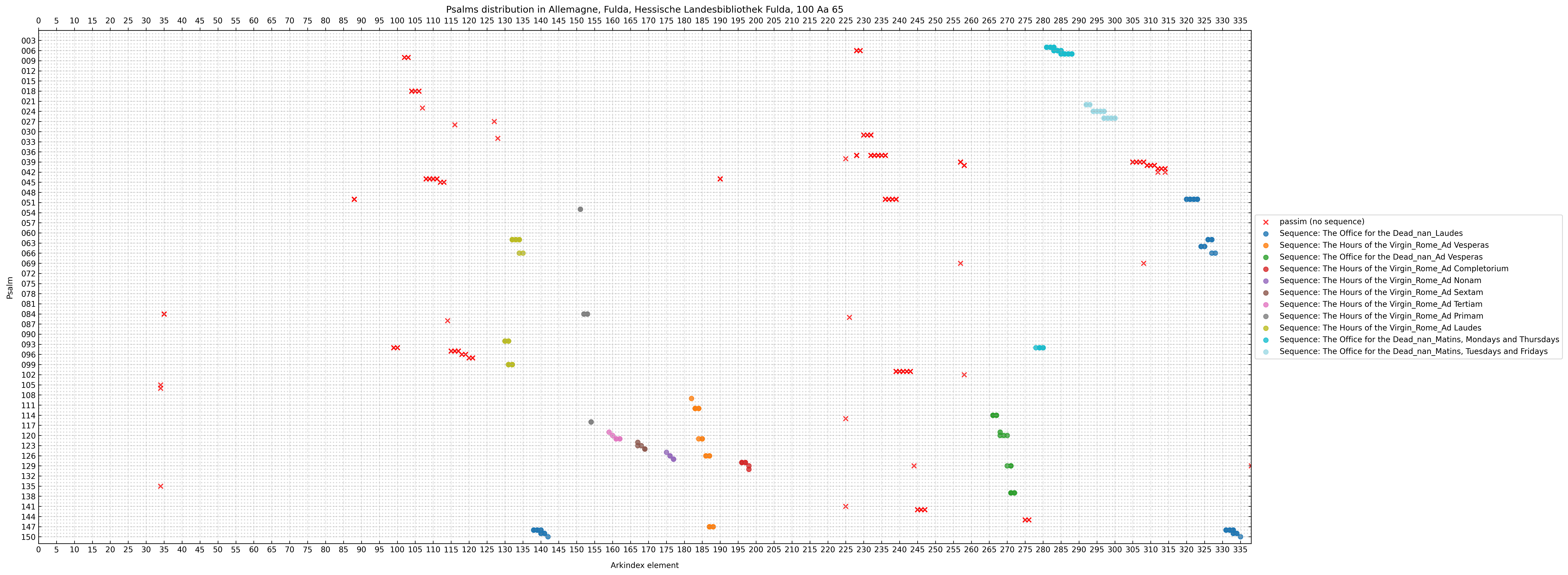
Books of Hours, with more than 10,000 surviving copies worldwide, represent a crucial source for understanding the medieval mental universe. However, despite their vast production, the textual content of these manuscripts remains largely understudied.
This study focuses on the most stable sections of Books of Hours: the Hours of the Virgin and the Office of the Dead, paying special attention to the Psalms that structure them. Our primary goal was to refine the description of the textual content of Books of Hours, including those cataloged in the HORAE project database. A secondary objective was to assess the degree of stability in the Psalm sequences characteristic of different liturgical uses.
Using passim, a text-reuse detection tool, we analyzed automatically generated transcriptions of over a thousand Books of Hours. The results demonstrated a high level of accuracy, shedding light on patterns of textual transmission and variation. The presentation will address challenges of formalizing accuracy assessment for passim, working with high-granularity texts, and the methods used to identify psalm sequences within the corpus.

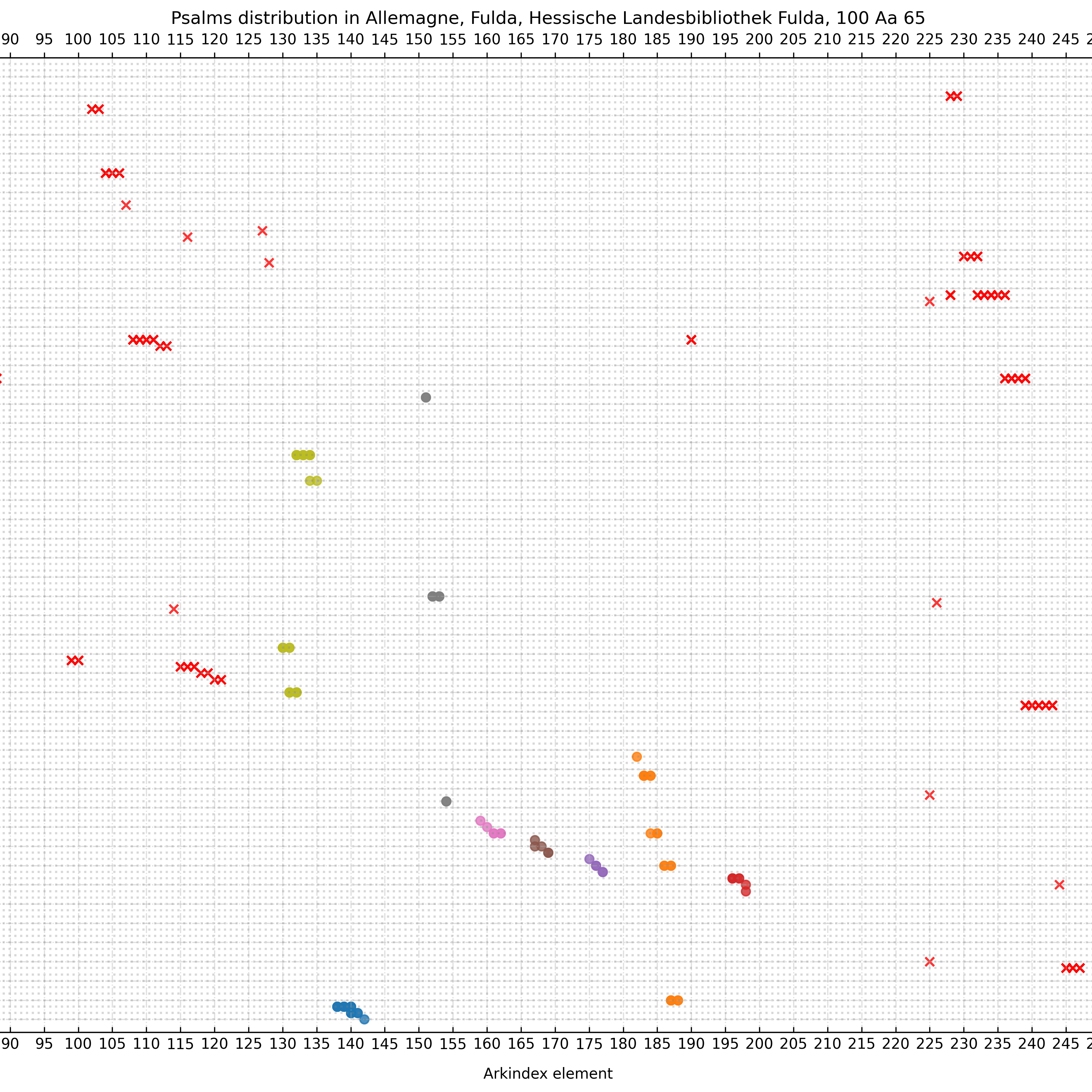
Books of Hours, with more than 10,000 surviving copies worldwide, represent a crucial source for understanding the medieval mental universe. However, despite their vast production, the textual content of these manuscripts remains largely understudied.
This study focuses on the most stable sections of Books of Hours: the Hours of the Virgin and the Office of the Dead, paying special attention to the Psalms that structure them. Our primary goal was to refine the description of the textual content of Books of Hours, including those cataloged in the HORAE project database. A secondary objective was to assess the degree of stability in the Psalm sequences characteristic of different liturgical uses.
Using passim, a text-reuse detection tool, we analyzed automatically generated transcriptions of over a thousand Books of Hours. The results demonstrated a high level of accuracy, shedding light on patterns of textual transmission and variation. The presentation will address challenges of formalizing accuracy assessment for passim, working with high-granularity texts, and the methods used to identify psalm sequences within the corpus.
Date:
Wednesday
5th March 2025
Time:
15:00-16:30h
Place:
ÖAW/PSK
Georg-Coch-Platz 2
5th floor, room 08
Type:
hybrid
Svetlana Yatsyk (in presence)
Dominique Stutzmann (virtual)
Registration: