


Fragments of Eternity: Extraordinary Fragments of the Book of the Dead from the Tomb of Anch-Hor (TT 414)
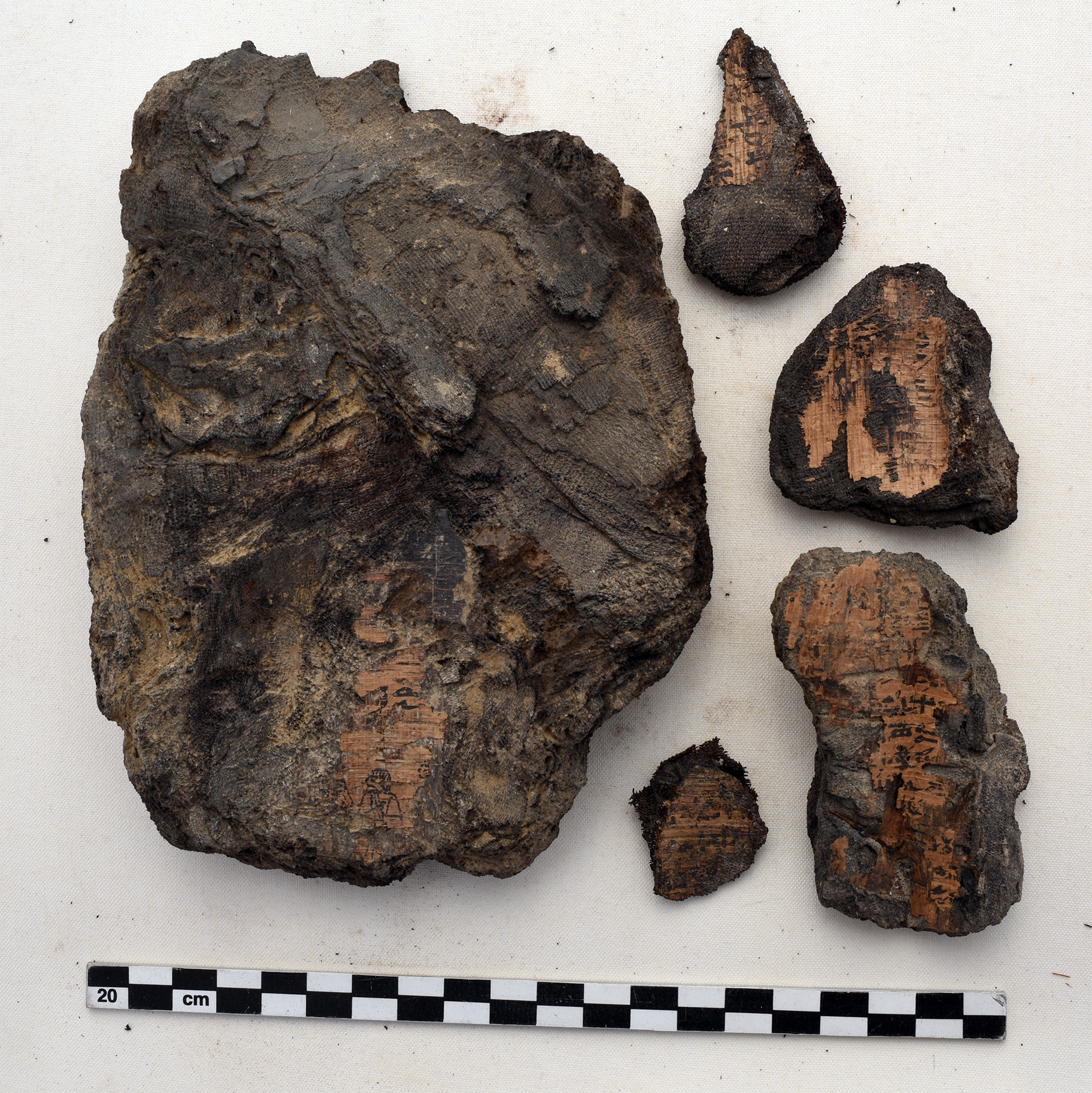
The tomb of Anch-Hor (TT 414) in the Asasif (Thebes) is one of the most significant funerary complexes of the Late Period in Egypt. Originally built for the chief steward of the divine adoratrice Nitokris, it was used as a burial site by various priestly families of the Karnak Temple from the 30th Dynasty onwards. As part of the LMU Anch-Hor Project, the results of the Austrian excavations are being systematically re-evaluated and supplemented by current fieldwork. This article brings together two complementary perspectives on this extraordinary complex of finds.
Firstly, the funerary complex of TT 414, the ongoing work, and the archaeological context of the finds under investigation will be addressed, and secondly, a philological analysis of several fragments of texts belonging to the Book of the Dead will be presented. Palaeographic, iconographic and textual criteria allow to date the fragments right into the time of transition between the 30th Dynasty and the early Ptolemaic Period. A funerary practice that becomes clearly discernible for the first time during this period Is of particular interest: placing the papyrus right onto the mummy wrappings, sometimes kept in place by resin. Comparable material from Thebes, Akhmim, and Memphis shows that this was a phenomenon extending beyond the Theban region.
By combining archaeological and philological research, the significance of the Book of the Dead papyrus can be better understood because it served not only as a text carrier, but as a material object with a specific role to play within the funerary concept of the Late Period.
Information
»Kulturen und Sprachen des Altertums«
Date
20 October 2026 | 18:00 CEST
Location
Otto Wagner Postsparkasse, Georg-Coch-Platz 2, 1010 Vienna, Room 2-3, 3rd Floor
Organizer
OeAI, OeAW
Contact
Roman Gundacker