


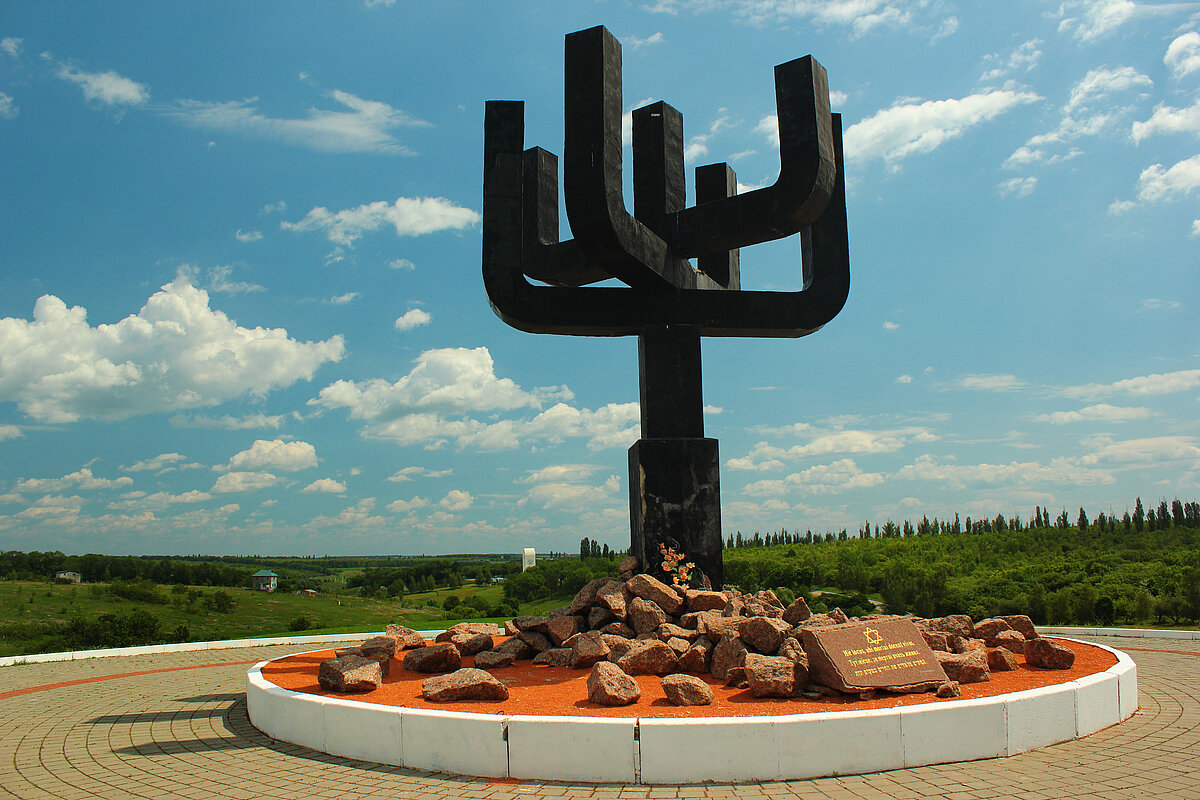
Ukrainian memorial museums are not well known in Europe, including local Holocaust museums established on the initiative of Jewish communities (in Dnipro, Odesa, Kharkiv, and other cities). A comprehensive critical analysis of them from a perspective considering European “standards” of memorialization will fill this gap in the European landscape of commemoration of WWII and the Holocaust.
Associated with the project “Globalized Memorial Museums. Exhibiting Atrocities in the Era of Claims for Moral Universals”, this project looks at three analytical layers: the Holocaust archetype of memorial museums, negative memory (confronting the crimes committed, not suffered by one’s own community), and the “forensic” aspect focusing on material traces of mass violence. It will demonstrate how the Holocaust archetype and negative memory are represented in Ukraine’s memorial landscape, to what extent it focuses on the material traces of the crimes, and what is the trend of museum activism itself, if it focuses on an inclusive or exclusive model of memorializing victims of mass war crimes.
The second layer of research includes the period of the ongoing Russian aggression against Ukraine, when museums compare the Holocaust and the current war crimes of Russians in Ukraine (for example, the exhibition “Bakhmut – the Face of the Genocide of 1942/2022” at the National Historical and Memorial Reserve “Babyn Yar”). There is also a tendency to decontextualize the memory of the Holocaust to interpret the Russian Federation's war crimes against Ukrainian civilians (as the “Bucha massacre” in the non-governmental Museum of the Occupation of Bucha). In this regard, there is a need for special reflection on these museum practices that resonate with the iconography of the Holocaust.
Researcher: Galyna Fesenko
Academic mentor: Ljiljana Radonić
Funding: Marie Skłodowska-Curie Actions (MSCA4Ukraine)
Duration: 01.06.2025 – 30.11.2026