Classical Studies

Historical Archaeology

Prehistory & West Asian/Northeast African Archaeology

News

Barbara Horejs elected as a foreign member of the Polish Academy of Sciences
CVA Conference 2027 in Graz
Three new FWF projects approved
Auf Spurensuche neben dem Tempel der Artemis von Ephesos

About the OeAI

The OeAI is an institute of the Austrian Academy of Sciences and Austria's largest research institution in the field of archaeology and classical studies, with around 150 employees. Its core task is to study the history of mankind from the Quaternary period to modern times, taking into account material archaeological sources and written records.

Read more about the OeAI

Events

Back

» The value of mothers to society«

Lecture, Vienna (OeAI)

Wednesday 23.02.2022 05:02 pm
»The value of mothers to society: showcasing and celebrating the achievements of an ERC-Starting-Grant team«

Katharina Rebay-Salisbury | Austrian Archaeological Institute


From 2016 to 2021, an interdisciplinary team of researchers set out to investigate motherhood and mothering practices in prehistoric Europe. Analysing the link between reproduction and women’s social status, this project explored social responses to pregnancy, birth and childrearing from the late Neolithic to Iron Age (c. 3000–15 BC) through case studies in Central Europe. As this ERC project concludes, we celebrate a collaboration that produced a new research group, Prehistoric Identities, and look forward to pursuing the many research threads that spun from VAMOS.

Our project forged new understandings of motherhood and childrearing as foundations of societies by melding the latest developments in archaeological science with developments in social theory. We integrated osteology, ancient DNA, protein and isotope analyses, histology, and organic residue analysis, as well as various modelling and imaging approaches to explore lifeways of mothers and their children. Through this process, we explored the value of mothers to long-term cultural developments such as social stratification, increasing population density and the entrenching of gender roles.

This event will review our research highlights from the last five years, discuss how our vision of motherhood in the past has changed, reflect on lessons learned and new research opportunities, and celebrate our success.


Principal investigator: Katharina Rebay-Salisbury
Funding: ERC Starting Grant 2015, Project No. 676828
Gustav Klimt, The Three Ages of Woman, 1905 (Rome, National Gallery of Modern Art, by permission of Ministero per i Beni e le Attività Culturali)
»The value of mothers to society: showcasing and celebrating the achievements of an ERC-Starting-Grant team«

Katharina Rebay-Salisbury | Austrian Archaeological Institute


From 2016 to 2021, an interdisciplinary team of researchers set out to investigate motherhood and mothering practices in prehistoric Europe. Analysing the link between reproduction and women’s social status, this project explored social responses to pregnancy, birth and childrearing from the late Neolithic to Iron Age (c. 3000–15 BC) through case studies in Central Europe. As this ERC project concludes, we celebrate a collaboration that produced a new research group, Prehistoric Identities, and look forward to pursuing the many research threads that spun from VAMOS.

Our project forged new understandings of motherhood and childrearing as foundations of societies by melding the latest developments in archaeological science with developments in social theory. We integrated osteology, ancient DNA, protein and isotope analyses, histology, and organic residue analysis, as well as various modelling and imaging approaches to explore lifeways of mothers and their children. Through this process, we explored the value of mothers to long-term cultural developments such as social stratification, increasing population density and the entrenching of gender roles.

This event will review our research highlights from the last five years, discuss how our vision of motherhood in the past has changed, reflect on lessons learned and new research opportunities, and celebrate our success.


Principal investigator: Katharina Rebay-Salisbury
Funding: ERC Starting Grant 2015, Project No. 676828
Information


Date
23 February 2022, 5:30 pm

Location
Hollandstraße 11–13,  1st floor, 1020 Vienna.
Link: https://oeaw-ac-at.zoom.us/j/95140779012?pwd=KzFWMnhjT2V2VHBHYklNZWdtVmtrdz09
Meeting ID: 951 4077 9012
Passcode: 48YCbG
ACHTUNG: bei persönlicher Teilnahme Anmeldung zur Veranstaltung unter: domnika.verdianu(at)oeaw.ac.at
Es gelten die 2-G-Regel bzw. die zum Zeitpunkt gültigen COVID-Maßnahmen.

Organiser
OeAW-OeAI

Contact
Domnika Verdianu


Invitation


OeAI Series and journals

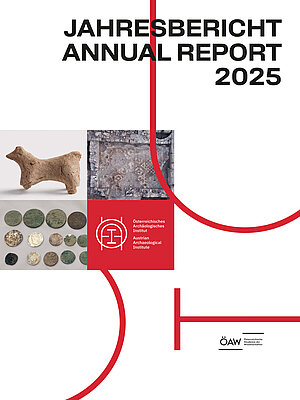
Jahresbericht 2025
2025 | Österreichisches Archäologisches Institut

Jahresbericht 2025

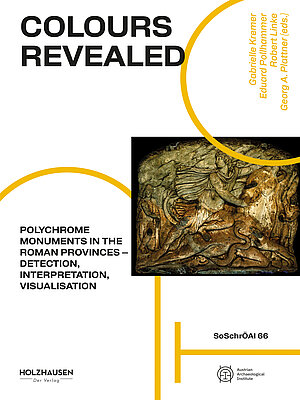
COLOURS REVEALED – Polychrome Monuments in the Roman Provinces – Detection, Interpretation, Visualisation
SoSchrÖAI 66 | Gabrielle Kremer | Eduard Pollhammer | Robert Linke | Georg A. Plattner (eds.)

COLOURS REVEALED – Polychrome Monuments in the Roman Provinces – Detection, Interpretation, Visualisation

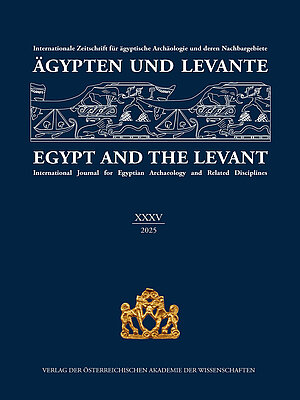
Ägypten und Levante
Band XXXV (2025) | Österreichisches Archäologisches Institut | Institute of Mediterranean and Oriental Cultures, Polish Academy of Sciences – Warsaw | Institut für Ägyptologie, Universität Wien | Departments of Near Eastern Languages and Civilizations, Yale University (Hrsg.)

Ägypten und Levante

Papers

In the media