


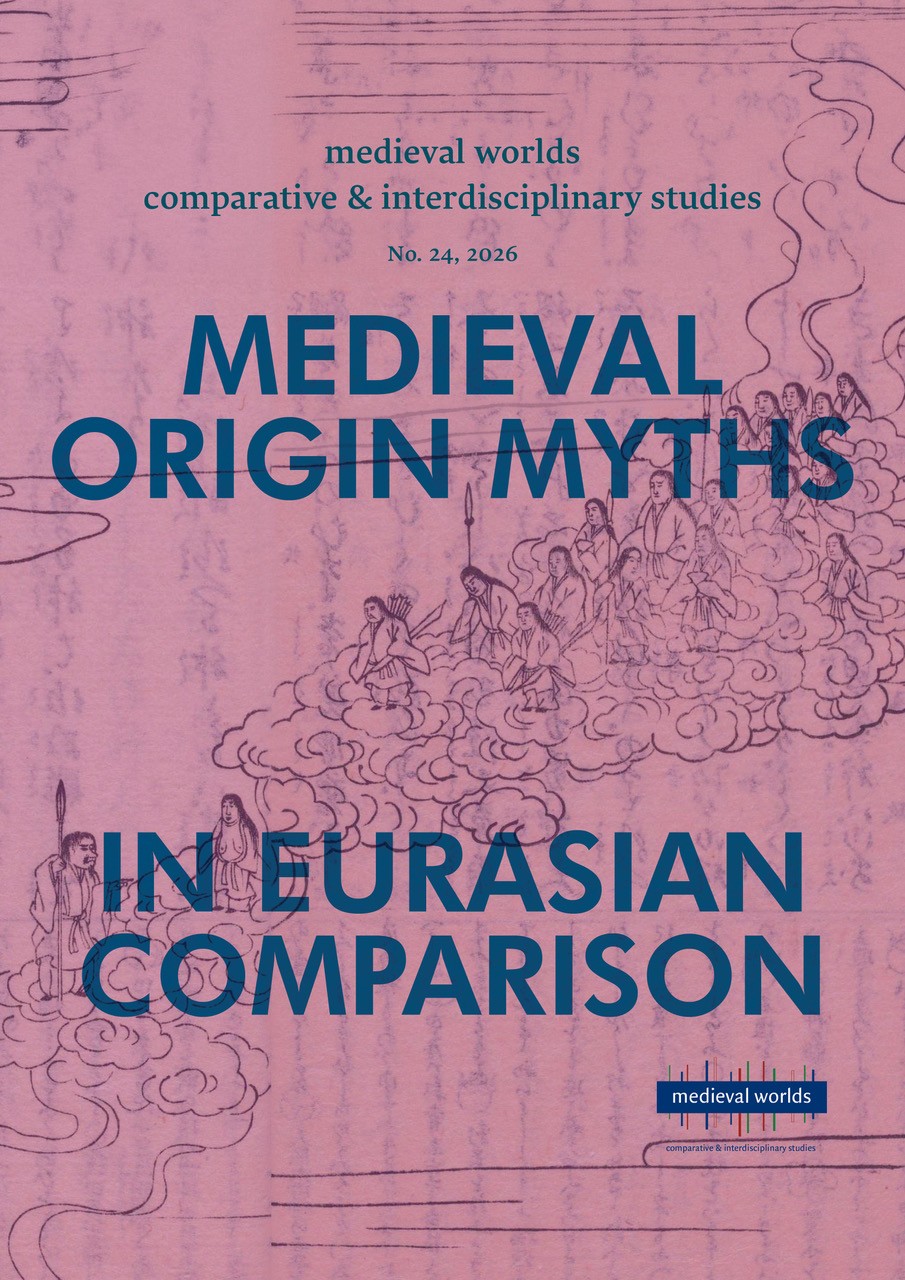
Stories are at the core of our summer 2026 volume. The thematic cluster, which gives this volume its title and cover illustration, presents origin narratives from 8th-century Japan all the way to early medieval Europe (guest editor: Reinier Langelaar). Its introductory article provides methodological approaches that allow these myths to be read as valuable evidence of historical identity formation. The ensuing seven case studies illustrate the variations and narrative strategies found in early medieval origin stories across Eurasia. Their recurring themes are outlined in the concluding comparative article, which also reflects on the narrative change of these tales.
In the individual article section Christian Gastgeber opens the discussion of practical texts such as prognostics and handy tables for daily use, which circulated widely in the early Middle Ages and were regularly translated. Giving an overview of extant Greek and Latin material, he also provides text editions and translations.
Using the example of the Sinbad/Seven Sages of Rome tradition, Emilie van Opstall develops a new tool for literary comparison to examine shared narratives in different cultural and linguistic contexts. Drawing on the metaphor of a kaleidoscope, her comparison of Greek, Hebrew, Arabic and Latin versions yields new insights into the similarities and differences between the societies that shaped these narratives.
Submissions for our upcoming volumes are always welcome.
Medieval Worlds 24: Medieval Origin Myths in Eurasian Comparison