Art and Science are two disciplines that naturally overlap. They are driven by investigation, they test different ideas and theories, and they transform abstract information into something tangible. Scientists and artists both seek to expose what is not apparent or known.
“Good science is like good art, it‘s about raising unexpected questions, identifying relationships beyond the obvious, and developing completely new ideas.
For many years, IMBA has promoted synergies between arts and science, and continues to build bridges between these two worlds. Here you can learn more about art at IMBA.
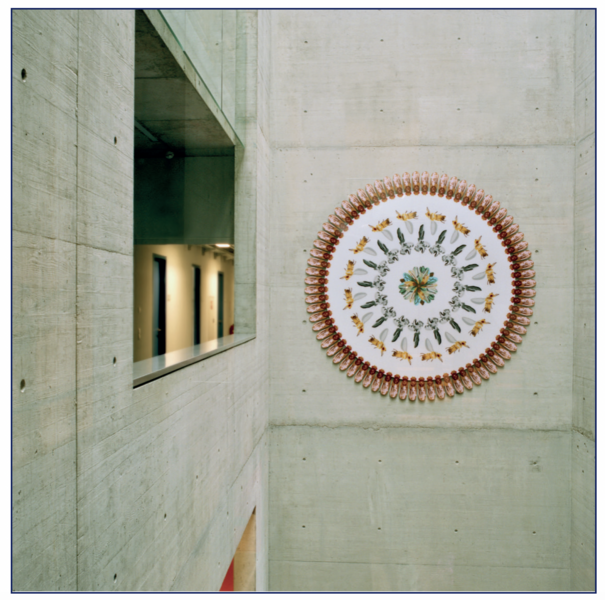
Leander Schönweger has decorated one of the light canyons in the IMBA & GMI building with three large-format graphics. The graphics are ornamental-decorative in their size. At second glance, they reveal themselves to be an infinite repetition of various plants and animals arranged in concentric circles. Science informs the graphics’ creation by using model organisms e.g. mice, fruit flies, and plants, representing the research of IMBA and GMI. At the same time, the graphics serve as spatial signposts in the building, positioned in those areas where these organisms are the research subject.
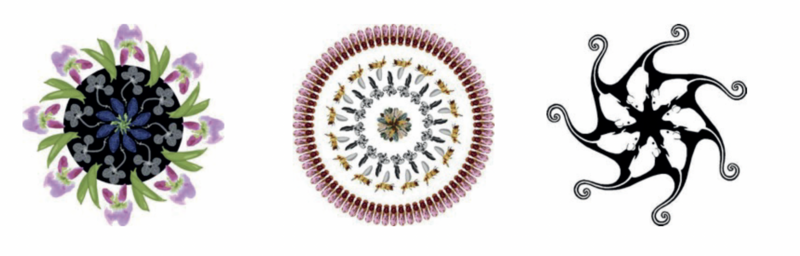
Formally, the graphics’ shape and ornamental color suggest a relationship to the rose windows of Christian churches. Visually and in terms of content, Leander Schönweger also borrows from Buddhist mandalas and the art tradition of India in these animal and plant prints. This reference addresses themes such as meditation, concentration, unity, and perfection and, in the site-specific context, establishes an intersection with the system of science. A system that, on the surface, does not seem to harmonize with the system of religion. Thus, the graphics form a kind of forced symbiosis of science and religion, in which themes from both systems are fused into a single entity. At the same time, the geometric form of the circle is given meaning here - as a metaphor for an effort without progress. The mutual, constantly renewed accusation of both systems of “going round in circles” is provided here with an irony, as Leander Schönweger makes both systems go round in circles hand in hand in his “Science Mandalas”.
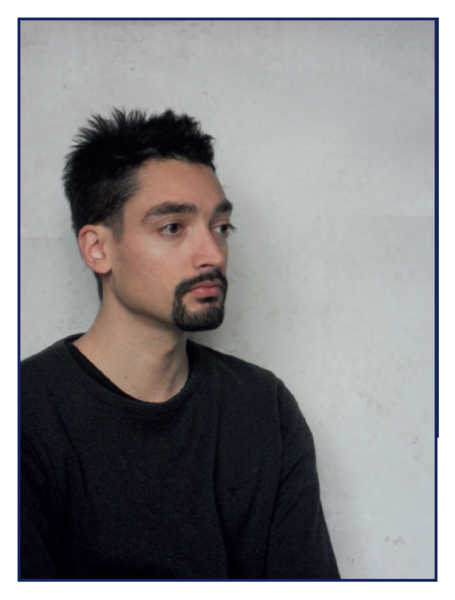
Art and life seem closely connected in Leander Schönweger's works. His - mostly site-specific - installations seem like familiar, everyday-banal situations and at the same time evoke something dreamlike. Through subtle breaks with the familiar, the artist creates atmospheric spaces that lead us as viewers to a place of imagination. They create space for subjective experience, which seems to be less and less possible in times of increasing rationalization and the urge for visibility and transparency. Schönweger uses the opaque, the poetically diffuse to reflect on the world and his position in it. (Nicolaus Schafhausen, 2018)
Leander Schönweger, born in 1986 in Merano, studied sculpture and multimedia with Erwin Wurm at the University of Applied Arts Vienna, where he graduated in 2014 under Martin Walde. Schönweger is a 2018-graduate of the postgraduate programm Hoger Instituut Voor Schone Kunsten - Vlaanderen in Gent. His activities include solo exhibitions Getting Better, Lichtekooi, Antwerp (2023), Schlösser, Stiege 13, Vienna (2022), and participation in the group exhibitions Chambre Double, Les Tanneries, Amilly (2021), Open Skies, Wiels, Brussels (2019), and the 15th Istanbul Biennial (2017). In 2014, Schönweger received the prize of the Kunsthalle Wien. He lives and works in Vienna and Brussels.
IMBA is a globally pioneering research center for genetics, a field of biology that is still considered controversial despite its extraordinary possibilities. The fact that genetics is producing new, essential findings in medicine, for example, but also enables targeted interventions in the genetic material of living beings, is a fascinating and at the same time alarming conjuncture.
The work realized by Lukas Troberg at IMBA addresses this controversy. In IMBA’s winter garden, the sentence “WHAT IF GOD WAS WRONG” - about 12 meters high and 5 meters wide - can be read. Whether this is to be understood as a question or a statement is kept open by Lukas Troberg, as indicated by the deliberate omission of the punctuation mark. The missing sign marks a shift in the human conception of God; a shift that finds its societal expression in the drifting apart to the extremes of idealism or materialism. This shift, in its duality, also finds its meaning in the place specifically chosen by the artist, since at IMBA changes are made to what we have learned to call creation. This question connects the possibility of errors in divine creation to the idea of human error. By not just attempting to enhance and refine life but creating it, we seem to have assumed the place of God. The belief in an infallible, universal Creator fades away, giving rise to diverse ethical criteria that shape various aspects of our everyday lives. These criteria are created by humans and become like new commandments.
Thus, the phrase “WHAT IF GOD WAS WRONG” is not only an obvious question, but also an invitation in the sense of our newly created - although always changeable - commandments.
The installation also found its way into fiction: in Dan Brown's novel “Inferno”, the character Robert Langdon encounters the monumental words “WHAT IF GOD WAS WRONG” while arriving for a lecture in Vienna. The work is explicitly attributed to Lukas Troberg. Asked for his opinion, Langdon sidesteps its philosophical provocation with a wry comment about the artist’s command of the subjunctive.
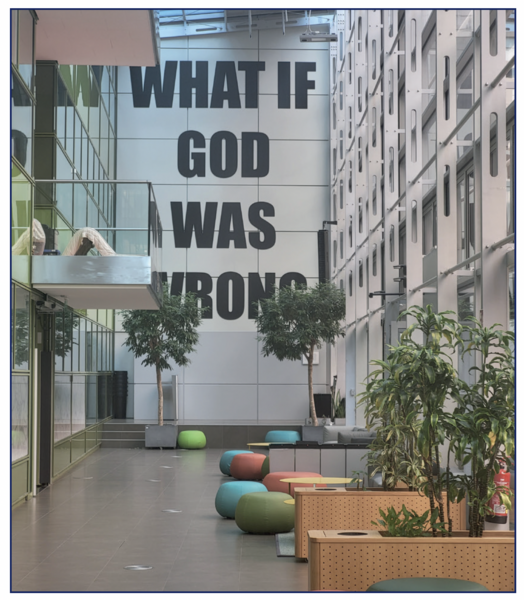
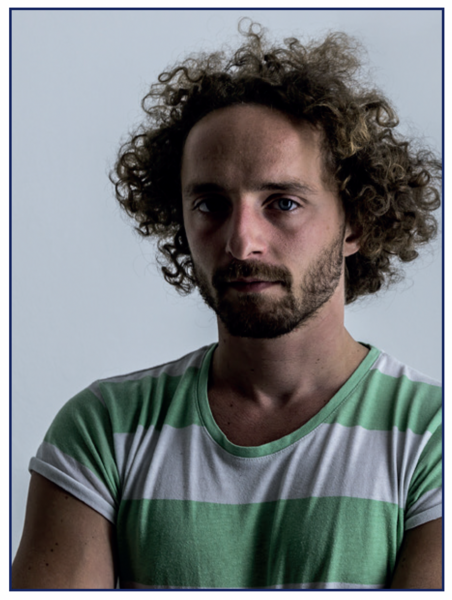
Lukas Troberg's artistic roots lie in graffiti and street art. The signs and typefaces of this genre are therefore frequently found in his multifaceted work, which includes performances, but above all objects and also in-situ works. Permanently searching for new perspectives on the familiar, he immerses the viewers of his works in a world that seems both familiar and foreign in equal measure. Thus he created a series of objects that build on this duality [...] No matter which forms of representation Lukas Troberg uses, he always gives the viewer an emotional roller coaster of closeness and distance. Not least for this reason, his work eludes any kind of appropriation. (Manisha Jothady; writer, journalist; Vienna)
lukastroberg.com
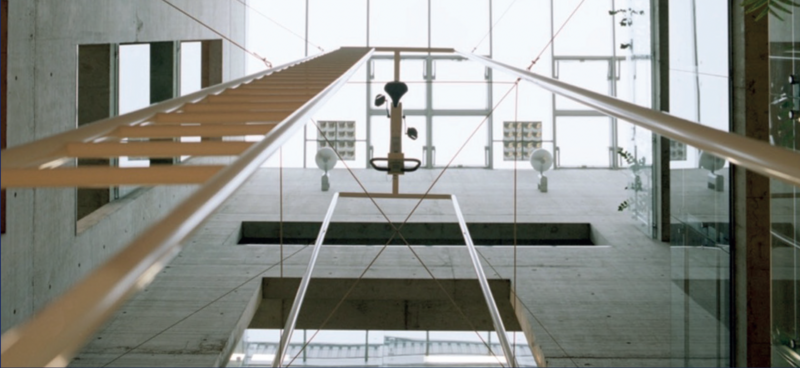
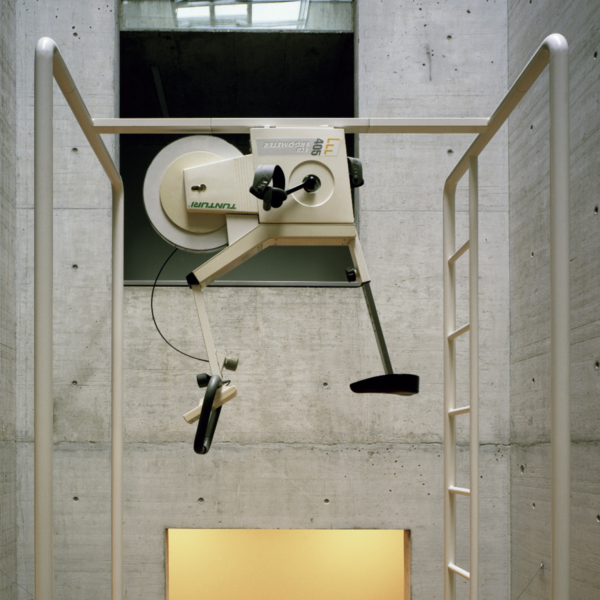
The gaze wanders upward: at the end of a white scaffolding made of poles and a ladder, a home trainer hangs upside down at a height of 12 meters. With the ascending gaze, discomfort arises and at the same time a feeling of desire: I have to try it, I can do it. The empirical values appear as mere archived entries - what is presently expressed is the libidinous feeling; the urge to go up. This tense relationship of closeness and distance at the same time, now creates a space of reference, similar to a theatrical situation: the setting becomes an imaginary stage-like space of possibility, which as a space of potentiality - between desire and fulfillment - always remains in limbo. Thus, the given situation appears as an uncovential experimental arrangement, whose absurd moment one cannot escape. Associations with the myth of Icarus may arise, or even with the boundary-pushing event of the moon landing. Where are the limits of the possible, where is the responsibility of the individual? What moves us humans to always go to these edges and beyond? Is the scientist really a purely objective observer or only an emotion-driven being? Always subject to the will for certainty and driven by the fear of leaving nothing to chance and uncertainty? In his expansive sculptural works, the artist Kay Walkowiak deals with the questions of human behavior: Who controls our body? Who controls us? Are our actions deliberately planned or simply reactions, repetitive patterns of behavior that automatically repeat themselves continuously?
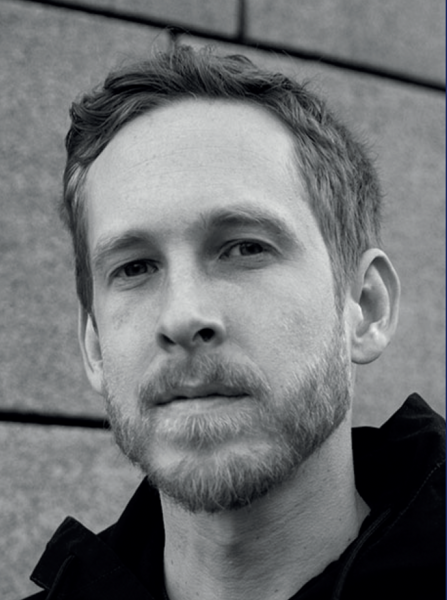
Kay Walkowiak was born 1980 in Salzburg and now lives and works in Vienna. He studied Sculpture and Multimedia at the University of Applied Arts Vienna, Photography and Video Art at the Academy of Fine Arts Vienna and Expanded Expression at the Zokei University in Tokyo. Walkowiak’s work is a complex mixture of installation, sculpture, video art and photography and combines conceptual and post minimal strategies. In many of his works the artist explores the historically and socioculturally defined handling of form and questions its functional positing as a projection surface for timeless utopias. Walkowiak has participated in various international group exhibitions since 2004, most recently at the ACF New York (2020). Solo exhibitions include the MAK – Austrian Museum of Applied Arts, the Soulangh Art Space in Tainan, the Austrian Cultural Forum in New Delhi and the Node Gallery in Tokyo. He also features at the Vienna Biennale and the 4th Mediterranean Biennale in 2021.

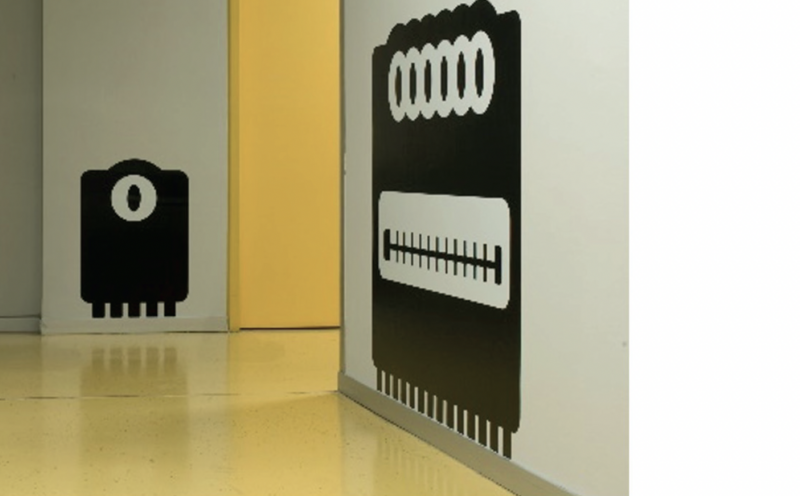
Two pixel graphics (a, b) are freed from the constraints of the surrounding digital image description system to be transferred to an alternative vector-based representation system. In this process, the pixels arranged in the raster are replicated by graphical primitives such as lines, circles, or curves, and undesirable characteristics are replaced by new attributes such as lossless geometric scalability. These vector replicas (a’, b’) created during the transformation are then combined and modulated using geometric modeling. The resulting variations (c’, d’, e’, e’’...) represent a broad variability of the source material to generate maximum attention and identification by the viewer for later application as an intervention.
“The unexpected result of an euphoric relationship” uses the seemingly exact world of scientific research with an undisguised delight in imagery and vocabulary. The interpretation of scientific production and working methods through creative, experimental processes and the formal graphic representation of unpredictable results by means of diagrams question the boundary between a principle of originality that seems to be reserved exclusively for artistic creation and the reproducible character assigned to scientific innovation. In this field of tension, the intervention is at once visual feedback and a reflection on the modes of production of art and science.
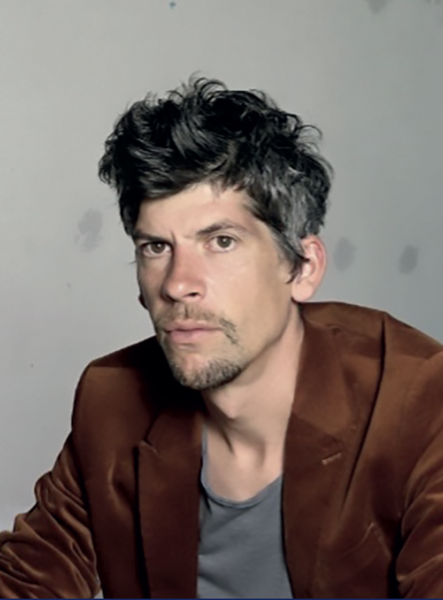
*1979, lives and works in Innsbruck and Vienna (A)
2001 - 2007 University of Applied Arts, Vienna (A).
Since 2018 Christian Deschka publishes his artistic work in the artist duo EXPERIMENTAL SETUP founded with Kata Hinterlechner. EXPERIMENTAL SETUP describes an artistic practice of constantly changing experimental arrangement between poetic fiction and detailed craft.
Painting, drawing, sculpture, objects, installations and performative actions: With humorous abysmalness, sharp punchlines, bold aesthetics and a great love of experimentation, EXPERIMENTAL SETUP treads a unique path and is currently developing a visionary and diverse body of work both nationally and internationally. EXPERIMENTAL SETUP is represented by Semjon Contemporary gallery in Berlin.
experimentalsetup.com
Instagram: @kollektiv_experimentalsetup
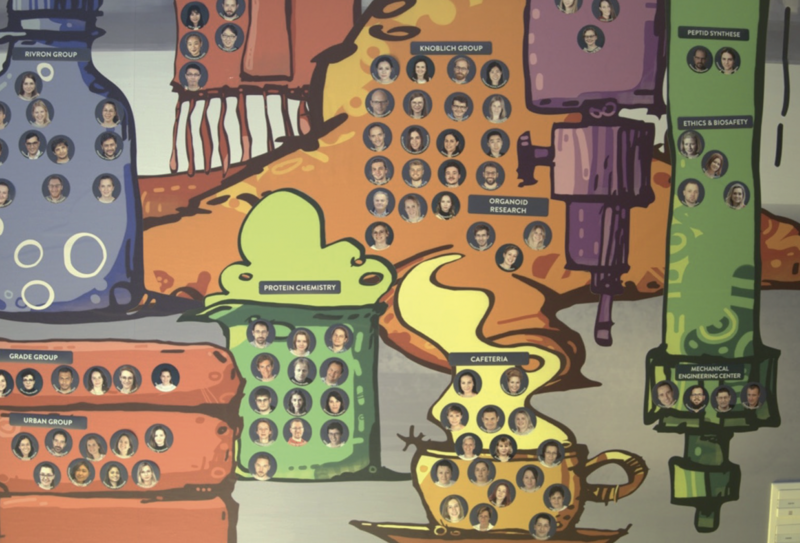
The oversized lab bench serves as the central hub for scientists, where the majority of discoveries at IMBA take place. It is adorned with containers, including chill boxes, centrifuges, and coffee cups, symbolizing the range of activities occurring in the institute. Despite this diversity, there is a shared purpose among all researchers: making groundbreaking discoveries. The containers and portraits of employees on the lab bench are magnetic and easily rearrangeable, providing a flexible workspace that promotes collaboration and innovation.

When I was 9 years old, I wanted to be a painter, a scientist and a pirate. I had a gallery in my bedroom and caught salamanders for my terrarium. I also always loved to travel.
Fast forward to 2023: I hold a PhD in life sciences from Cambridge University (UK), have spent 10 years doing research in San Francisco and draw (almost) every day. Over time, I discovered that my combination of skills, interests and background is unusual and valued. About 10 years ago I started to illustrate the findings of life scientists for covers of magazines, posters, presentations, websites, social commentary etc.
I understand the needs of the research community, their language and I am able to translate an often specialized research topic into an image of charm and broad appeal to a wide audience. Whenever possible I like to work with analogies to tell a story; an appealing image can form an emotional bridge that lures people deeper into the topic, if they so choose. If I can sneak in a dash of humor, all the better. I was honored by a recent exhibition of my works at HHMI’s Janelia farm. These days I am fortunate to divide my time between illustration for clients and teaching drawing workshops all around the world.
oliverhoeller.com
Instagram: @hoelleroliver
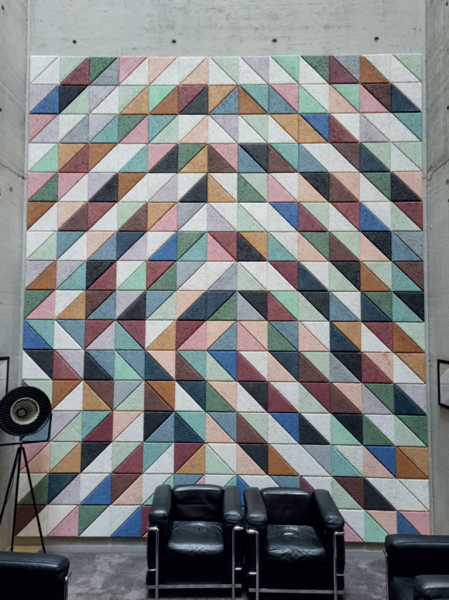
The possible effects of scientific achievements are growing exponentially. Powerful new technologies combined with human creativity enable us to change our world forever – for better or for worse. The human effect – best symbolized as fingerprint – puts a personal responsibility on every scientist. This responsibility is big, but can hide behind daily routines in the lab.
The seemingly random mosaic induces the viewer to step backwards in an attempt to tease the meaning. The vague image gains shape only when a certain distance is reached – by taking the glass elevator or going upstairs and looking over a parapet. The purpose of the design is to induce scientists to make the same movement mentally, to take a step back from the routines of their day-to-day work. By doing so, they might be able to see the moral load they carry, and their research in context with its broader implications and possible consequences. I believe that this is key for a less frightening, more human-centered and more environment-friendly future.
My mental origin story is pretty Gerald-Durrellian. As a child, I turned over decaying logs to observe the millipedes, pillbugs, and the otherworldly harvestmen. I collected skulls and bones and feathers. At home, I kept frogs, turtles, and meal beetles. Once a praying mantis. And I was drawing and drawing and drawing. Most of the time I designed fantasy animals that – for all I knew – could really exist. I spent long times - that only teenagers have - creating a whole planet with photosynthetic megafauna. Art and design were just tools for my mind to refine my imagination, to re-tool my fantasy. From the very beginning, shape and function meant always just two sides of the same coin. Not surprisingly, I tried to enroll in two secondary schools. An art school, and a school with a strong biology curriculum. As chance would have it, I got enlisted in the latter. As a biologist, 30 years later, the thing that excites me the most is microscopy. The specimen is the ‘shape’, and all I am doing is trying to find the function.
Looking Glass - Photographic Essays on the Mechanisms of Life is a publication that resulted from a collaboration between the Institute of Molecular Biotechnology (IMBA) and the University of Applied Arts in Vienna, Austria. The centerpiece of the Book consists of 15 impactful papers in the history of IMBA – and their unique visual interpretations by the young photo-artists. A dialogue between scientist and artist laid the basis for these artworks: Researchers at IMBA, from PhD to PI level, got together with the artist and tried to convey their research - the individual photo essays were then realized as a result of this exchange.
With the establishment of the Applied Innovation Laboratory (AIL), the University of Applied Arts Vienna seized the idea of the 19th century Viennese salon. The place was created to facilitate an open dialogue between people from different disciplines. This exchange among artists, economists and scientists should foster creativity and innovative breakthroughs.
IMBA was among the first partners for the AIL project. The facilities can be used by Vienna BioCenter members for any occasion beyond the lab. Networking with other creative minds in this relaxed surrounding can stimulate inspiring insights and ideas.
The AIL offers an ideal platform for various forms of communication and exchange. It is an ideal setting for exhibitions, lectures, performances and discussions. Moreover, the AIL Lounge offers a place to ponder. Information on the current talks and exhibitions can be found at http://www.ailab.at.
The series “Art and Science: Bridging Two Culture “, a joint project of IMBA and viennacontemporary, was initiated by Josef Penninger, former Scientific Director of IMBA, and Dmitry Aksenov, Chairman of the Board of viennacontemporary. It is named after Nobel Prize Laureate Prof. Eric Kandel, who also held the inaugural lecture.
The series aimed to build bridges between the industries of art and science. It offered unique insights into the relationships between art and science, and the possibilities of collaboration between professionals in both fields. Internationally renowned scientists and contemporary artists discussed their ideas in an interdisciplinary setting.
Prof. Eric Kandel held the first lecture of the series in 2017 and presented his concept of Reductionism in Art and Brain Science. He demonstrated how science can inform the way we experience a work of art and seek to understand its meaning, and illustrated how reductionism, the distillation of larger scientific or aesthetic concepts into smaller, more tractable components, has been used by scientists and artists alike to pursue their respective truths.