


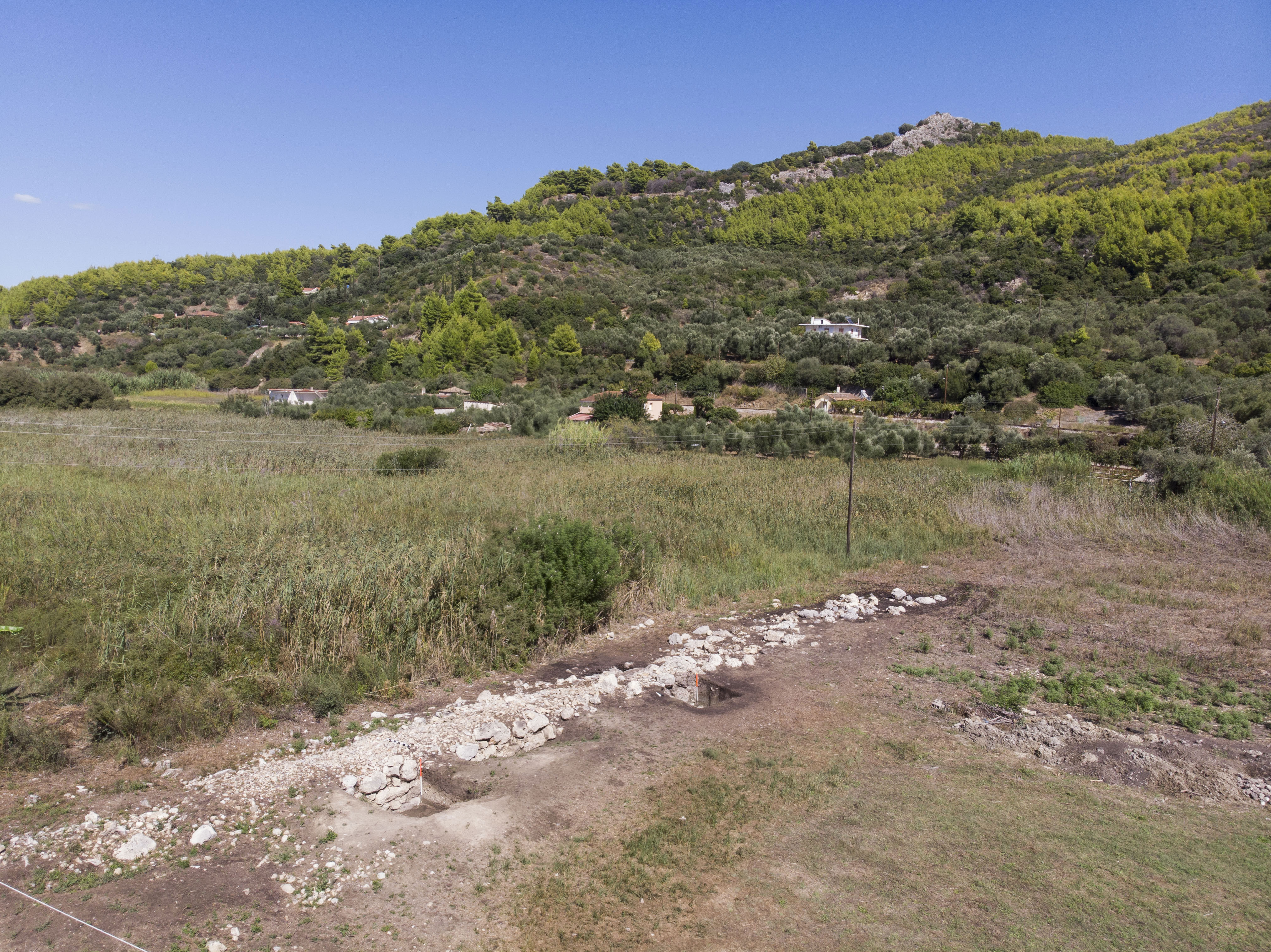
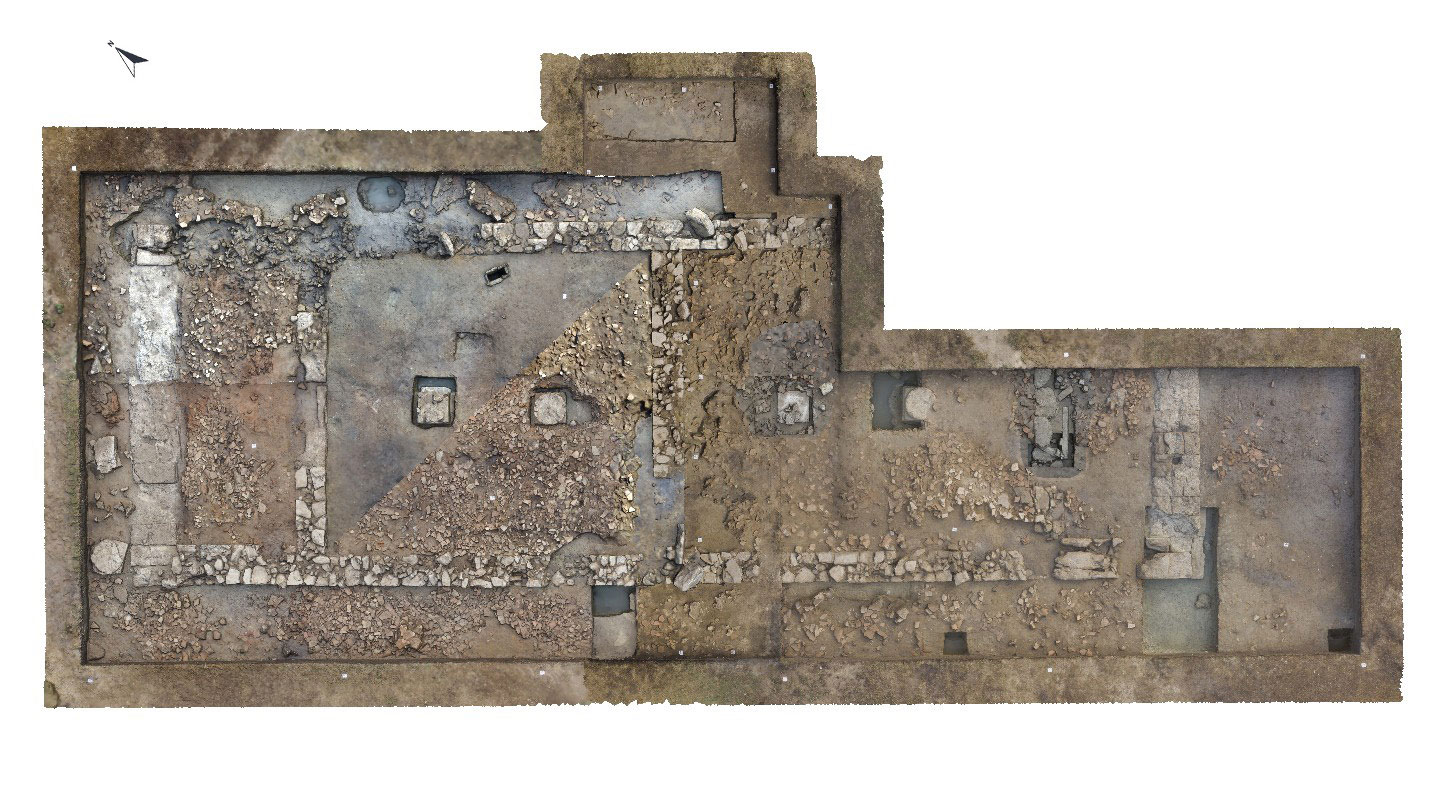
As part of the five-year research program at Kleidi Samiko (2022–2026), the Greek-Austrian research project – conducted in collaboration between the Ephorate of Antiquities of Ilia and the Austrian Archaeological Institute of the Austrian Academy of Sciences under the direction of Birgitta Eder and Erofili-Iris Kolia – has once again achieved important new results in 2025. The excavation campaign took place from August to the end of September 2025 at the Sanctuary of Poseidon at Samikon and focused on the continued investigation of the large temple that has been under excavation since 2022.
The temple, measuring 28 m in length and 9.5 m in width, comprises two large, separate halls with centrally aligned columns along their axes, each accessible via a pronaos with two columns in antis. It was probably built in the second half of the 6th century BC and destroyed in the first half of the 3rd century BC. The 2025 work concentrated on the complete excavation of the northwestern hall, where a large bronze inscription and an almost complete marble perirrhanterion had come to light the previous year. The thick deposit of collapsed roofing made of Laconian tiles was removed, revealing numerous traces of the fire that destroyed the building. In the eastern half of the hall, a small stone cist set into the floor was found, half of it still covered with a stone slab. This may have served as a kind of offering box for the safekeeping of money, although it was empty.
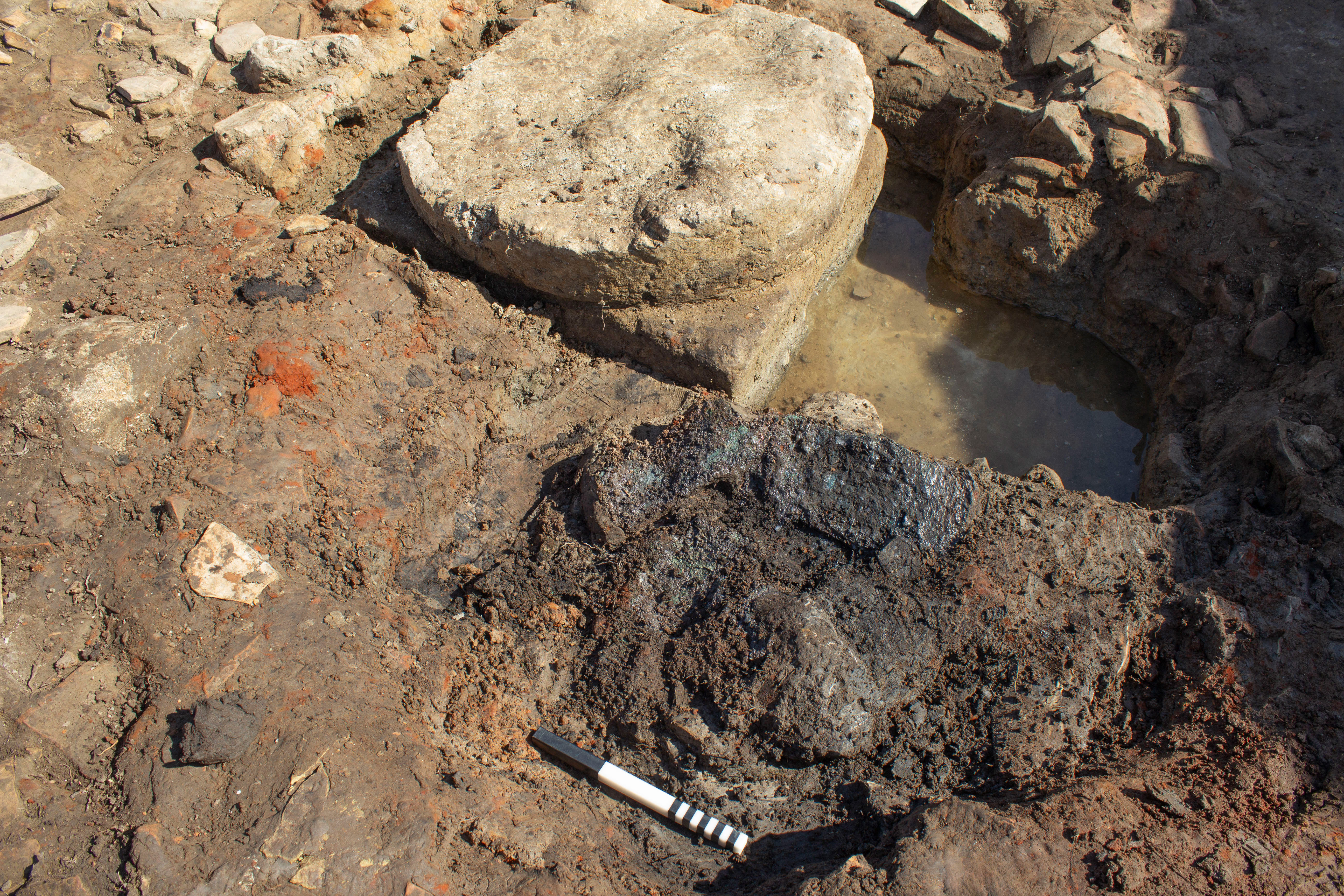
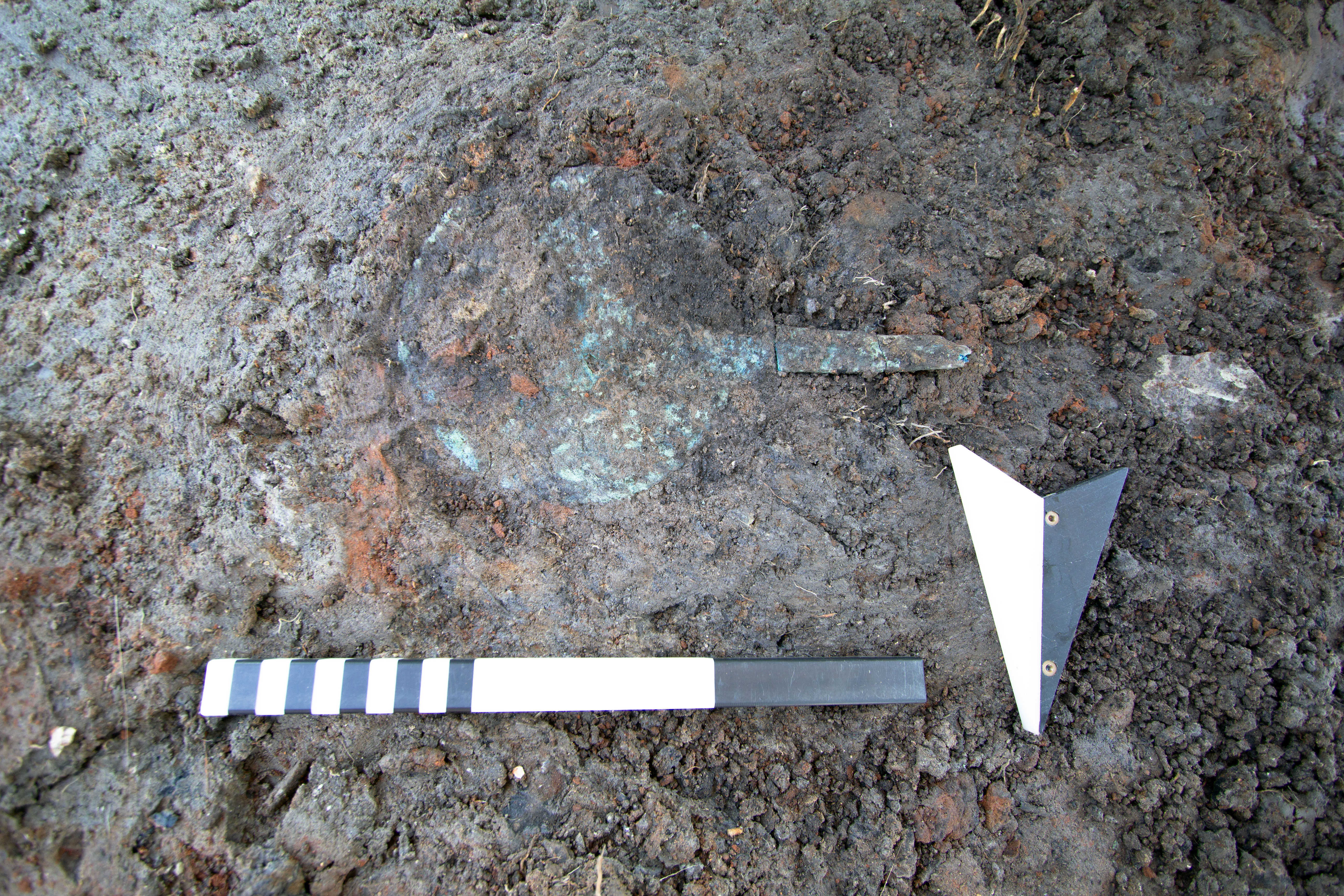
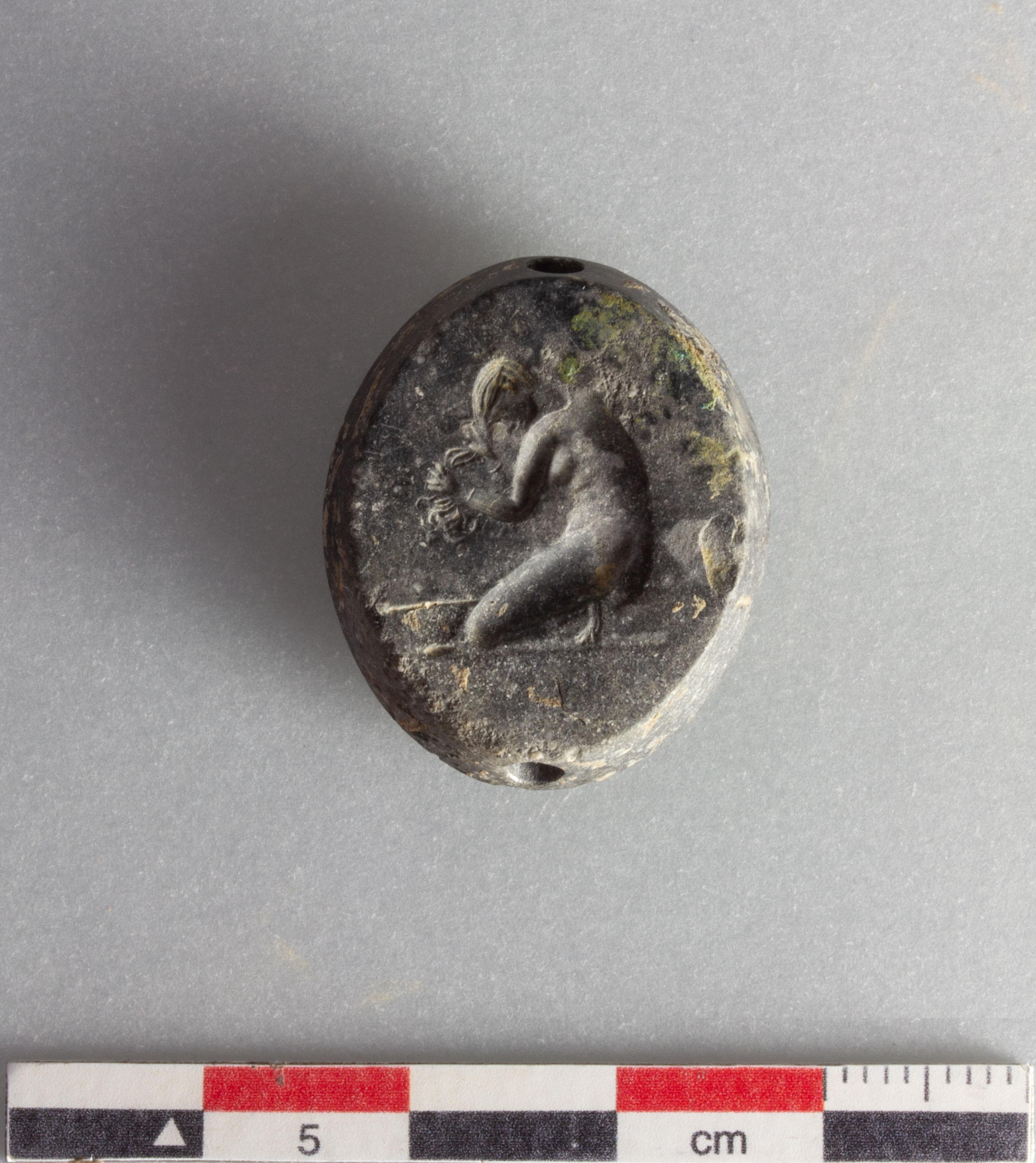
On the floor of the hall lay numerous finds, including a stack of bronze sheets heavily affected by fire and water. Together with the inscription found the previous year, this provides further evidence for an archival function of this room within the temple. Other finds on the floor included a mirror, several coins, and a steatite seal. The seal depicts a young woman bathing, washing her hair – a well-known motif in vase painting of the 4th century BC. The connection to the Nymphs of the Anigriades, who were worshipped in the nearby grotto at Kaiafa close to the Sanctuary of Poseidon, seems particularly fitting in this context.
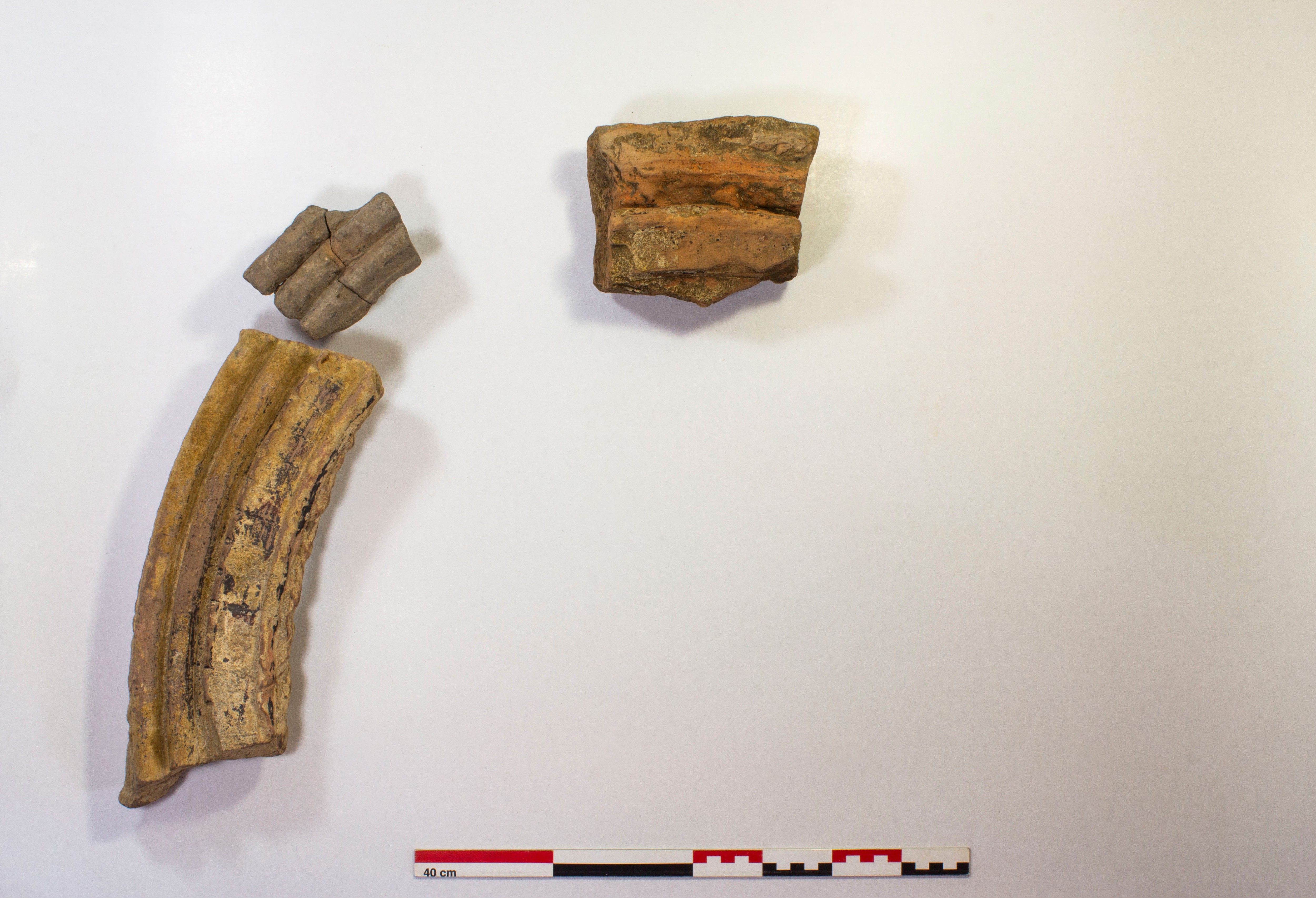
The discovery of three fragments of a disc acroterion is especially significant for reconstructing the Laconian roof, which can now be shown to have been crowned by a terracotta disc, at least one meter in diameter, decorated with black and red paint and various relief bands.
The continuation of the massive wall on the northern edge of the site – likely serving both to protect the sanctuary from the lagoon and to form its northern boundary – was also investigated further. Here, evidence was found for the wall’s construction technique as well as traces of earlier structures beneath it.
The archaeological work is supported by the Gerda Henkel Foundation and the Austrian Archaeological Institute of the Austrian Academy of Sciences. In the coming years, the research team will continue its investigations to gain further information about the extent and layout of the Sanctuary of Poseidon.