


Hunting Mammoths: How ancient DNA provides insights into the relationship between humans and animals during the Ice Age
17.08.2026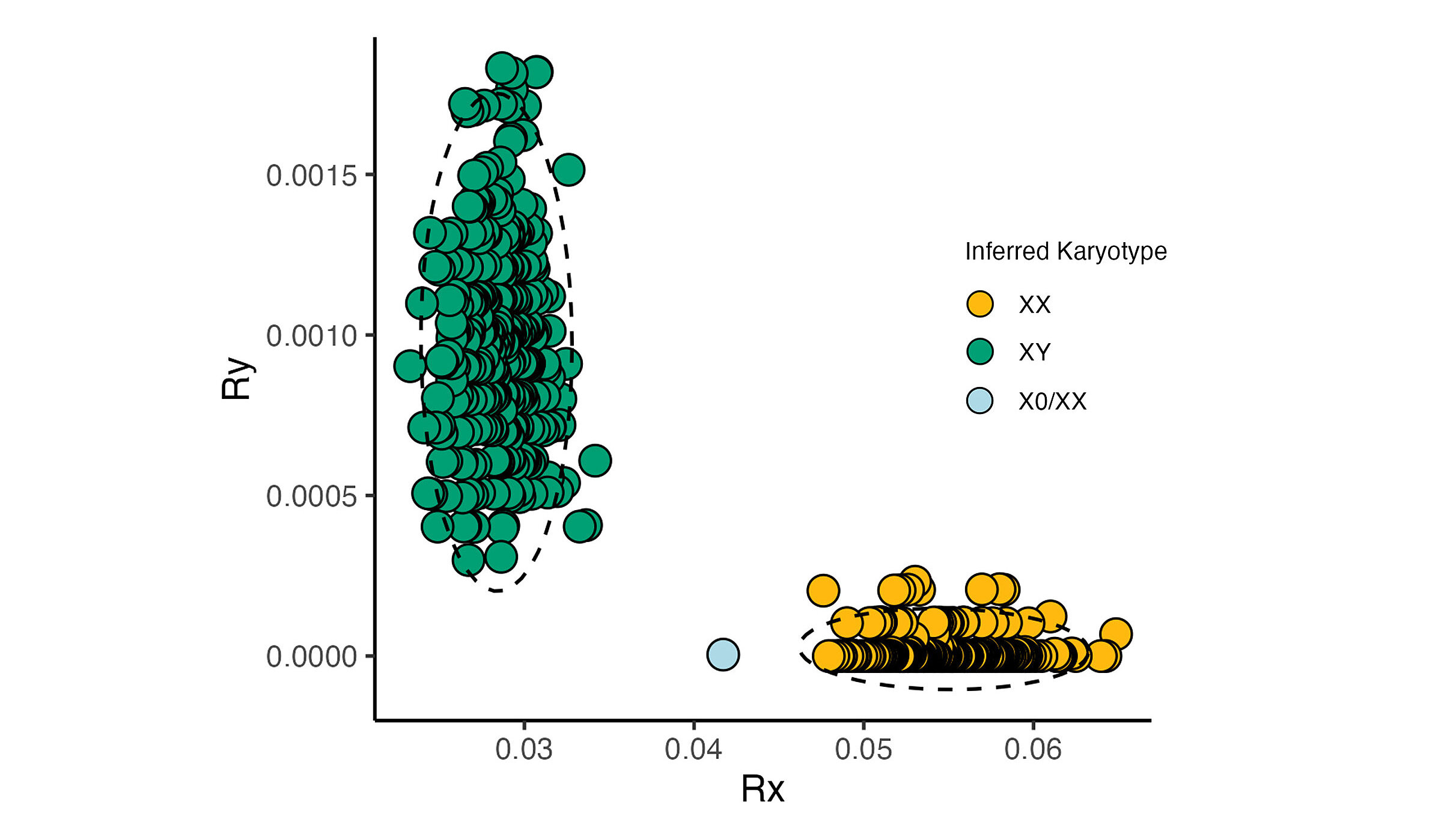
Accumulations of mammoth bones are among the most impressive finds from the Ice Age. But how did they come about — through natural processes or human activity? A new study in »Current Biology« now provides insights into this by analysing the palaeogenome: Whilst finds of individual animals usually represent males, large bone accumulations at Upper Palaeolithic sites containing several individuals consist predominantly of female mammoths. This suggests that Upper Palaeolithic people, who lived between 40,000 and 11,700 years ago and used mammoths as a source of food and raw materials, preferred to hunt female animals.
In this interview, archaeologist Marc Händel from the Austrian Archaeological Institute (OeAI) of the Austrian Academy of Sciences (OeAW), who was involved in the study, explains what ancient DNA reveals about the relationship between humans and mammoths, the role played by the Austrian site at Langmannersdorf, and how these findings are being incorporated into the ERC project »Exploring Mammoth Bone Accumulations in Central Europe« (MAMBA).
Were the accumulations of mammoth bones created by humans, or are they simply the result of natural mortality processes? A new study in which you were involved provides fresh genetic evidence on this matter. What did you find out?
In our study, we were able to confirm [...] that the sex ratio is reversed in mammoth bone accumulations comprising several individuals at sites that also show evidence of human influence [...] where female animals predominate.
Marc Händel: An earlier study had already established that mammoths found in isolation – which often died of natural causes and show no signs of human use – are approximately two-thirds male. In our study, we were able to confirm this finding and, furthermore, show that the sex ratio is reversed in mammoth bone accumulations comprising several individuals at sites that also show evidence of human influence – that is, sites with an archaeological context – where female animals predominate.
In natural archaeological contexts, it is mainly male mammoths that are found, whereas at sites influenced by human activity, it is mainly female ones. Why is this contrast in particular so fascinating?
Händel: This contrast shows that Ice Age humans chose which mammoths to use. And it appears that they preferred female animals, or groups or herds in which female animals were more common.
Does that mean that people in the Upper Palaeolithic period deliberately hunted female mammoths or herds of mammoths?
Händel: That is precisely what we suspect. As with modern-day elephants, we suspect that adult female mammoths lived in herds with their young. Male animals would therefore have left the herds upon reaching sexual maturity and roamed alone or, initially, in small bachelor groups. The proportion of 70 per cent female animals found in the bone accumulations at Upper Palaeolithic sites, as established in our study, corresponds to the expected sex ratio in such mammoth herds. We now wish to pursue and test this hypothesis further.
What other explanations — such as scavenging or more frequent encounters with herds — need to be taken into account?
Händel: Apart from hunting, there are other possible scenarios. For example, the mammoths may have died of natural causes, and humans may have used these dead mammoths as a source of raw materials such as ivory, bones, tendons, fur or other materials.
What we must certainly assume is that a concentration of mammoth bones does not necessarily result from a single hunt.
However, this is contradicted by stone projectile points found embedded in mammoth bones at several sites. Furthermore, the distribution patterns of the body parts – as seen, for example, in our recent excavations at Langmannersdorf – show that the animals were butchered and that not all parts were deposited at the site. What we must certainly assume is that a concentration of mammoth bones does not necessarily result from a single hunt.
The aDNA from mammoth bones found at Langmannersdorf in Lower Austria formed part of the study. What makes this site special?
Händel: In addition to examining mammoth teeth and jaws from museums and collections, we are also carrying out new field investigations at three Upper Palaeolithic sites in Eastern Central Europe as part of the ongoing ERC project MAMBA: Dolní Věstonice in the Czech Republic, Kraków Spadzista Street in Poland, and Langmannersdorf in the Perschling Valley in Austria. Langmannersdorf, dating back some 25,000 years, is the youngest of these sites and also the youngest archaeological site in Central Europe where the use of mammoths was the focus of research. Although many finds from the early excavations, which took place at the beginning of the 20th century, have been lost, several dozen animals are documented here.
What evidence of human activity is there in Langmannersdorf?
Also noteworthy is the distribution of the bones at the site, which suggests that the animals were probably butchered outside the area examined so far and then processed further after being transported.
Händel: During past and present excavations, in addition to thousands of stone artefacts, man-made features such as hearths, pits and post holes have been discovered. Also noteworthy is the distribution of the bones at the site, which suggests that the animals were probably butchered outside the area examined so far and then processed further after being transported. Dyes and jewellery also indicate that the site was not used solely for the butchering of mammoths.
What do we learn from genetic sex determination that archaeological findings alone could not reveal?
Händel: It is not possible to determine with certainty whether mammoth bones belong to female or male animals. Consequently, without genetic sex determination, it is not possible to carry out a reliable reconstruction of the group of mammoths that were hunted or died. Furthermore, under favourable conditions, it is even possible to establish the kinship relationships between individual mammoths, which would allow for very specific conclusions to be drawn about the herd structure.
Which new questions raised by the study would you like to investigate in future?
Händel: We regard this study merely as the first step in our research. Next, we would like to cross-reference the genetic data on sex determination with our data on the ontogenetic ages of the mammoths in order to determine the age structure, taking sex determination into account. This will enable us to reconstruct the structure of mammoth herds – for example, whether male individuals found at anthropogenic sites are predominantly juveniles. In addition, we are also carrying out analyses of various stable isotopes in the same individuals. Strontium and oxygen, for example, can provide us with clues as to the seasonal patterns of mammoth migration or the movements of mammoth herds.
What fascinates you most personally about research into mammoths and Palaeolithic human–mammoth interactions?
Händel: Mammoths are very large animals and certainly could not have been hunted, killed, butchered and transported by individuals acting alone. Social networks and co-operation are therefore essential. Furthermore, these activities must be co-ordinated in terms of both space and time, taking into account the behaviour of mammoth herds, which was undoubtedly a major challenge for mobile hunter-gatherer societies.
Publication
Hannah M. Moots et al.: “Paleogenomic sex inference of mammoth remains sheds light on the anthropogenic nature of bone accumulations”, Current Biology 36 (2026), 1–10. doi.org/10.1016/j.cub.2026.07.023
About
Marc Händel is an Academy Scientist at the Austrian Archaeological Institute of the Austrian Academy of Sciences and a member of the »Quaternary Archaeology« research group.

ROHRINGER Hannah | EINWÖGERER Thomas
Eiszeit ‒ Ice Age
Neue Ergebnisse zum Paläolithikum in Österreich. New Results on the Palaeolithic in Austria
1st edition, 2025